
UCB
A long-dismissed scientific controversy and a small-scale device at the University of British Columbia (UBC) may hold the secret to making fusion reactors more efficient by improving the likelihood of nuclear reactions.
The Bold Claim of 1989
Back in March 1989, electrochemists Martin Fleischmann and Stanley Pons shocked the world when they announced that they had achieved nuclear fusion in a simple glass container. Their setup involved heavy water, a palladium cathode, and a platinum anode, where electrolysis supposedly caused deuterium atoms to fuse within the palladium’s structure.
The claim was extraordinary. If true, it would have overturned core principles of nuclear physics and potentially delivered fusion energy in a package no larger than a car battery.
But the breakthrough quickly collapsed. Their experiments were riddled with errors, couldn’t be replicated, and relied on faulty assumptions. By the end of 1989, the so-called “cold fusion” hype had disintegrated, leaving the concept tainted and relegated to pseudoscience and conspiracy theories.
A New Approach with Palladium
Now, palladium’s link to fusion is being revisited, but from a very different perspective. One of fusion’s biggest challenges is initiating the reaction, which demands high concentrations of deuterium—a process that usually consumes vast amounts of energy. To address this, UBC researchers turned to electrochemistry, using palladium as a medium to load deuterium more efficiently.
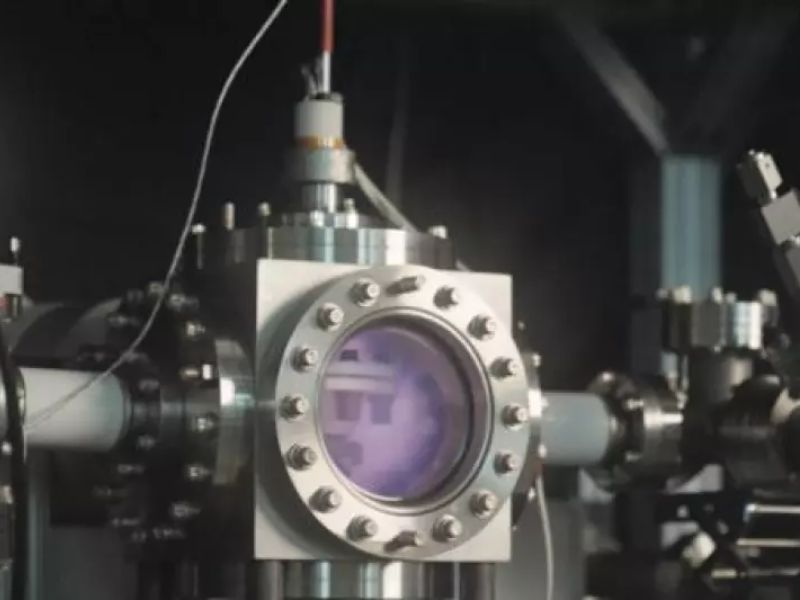
Their experiment involved creating a palladium target, with one side exposed to the “Thunderbird reactor,” which generated a plasma field that infused the material with deuterium. At the same time, the opposite side was fed additional deuterium via another electrochemical cell.
The key innovation was efficiency: instead of requiring 800 atmospheres of pressure, the team managed to achieve the same deuterium loading using just one volt of electricity.
Promising Results Without Net Energy
Because fusion depends on deuterium atoms fusing together, this overloading boosted the probability of fusion events by roughly 15%. While it did not yet produce net energy, the researchers see it as a promising step toward practical fusion energy.
Crucially, unlike the discredited 1989 experiments, the UBC team confirmed their results by detecting neutron emissions rather than relying solely on heat output.
We hope this work helps bring fusion research out of massive national labs and onto the laboratory bench,” said Professor Curtis P. Berlinguette, lead author of the study. “By combining nuclear fusion, materials science, and electrochemistry, we’ve created a platform that allows systematic testing of both fuel-loading methods and target materials. This is only the beginning—an open invitation for the scientific community to refine, iterate, and build on our findings.
Read the original article on: New Atlas
Read more: See Spot Backflip: Robodog Achieves an Unexpected Feat