


Depositphotos
Plastic is among the most useful, versatile, and affordable materials ever created. However, its low price comes with significant environmental and health costs linked to its production and waste.
Plastic pollution also carries major financial and health costs, with BPA and phthalates linked to heart, kidney, and lung disease, birth defects, and cancer.
Plastic Waste Persists for Centuries and Threatens Marine Life
Around 65% of plastic is used for less than a month, yet it can take anywhere from 100 to 1,000 years to break down. About 80% ends up in landfills or the environment, while millions of tons enter the oceans, where plastic can trap wildlife, harm marine ecosystems, and break down into dangerous microplastics.
So, if there were a way to transform this global environmental threat into something beneficial for agriculture and ecosystems, that would certainly be a major breakthrough.

Inspired by Hayao Miyazaki’s 1978 anime series Future Boy Conan, which imagined converting plastic into edible bread, Associate Professor Daisuke Aoki of Japan’s Chiba University has developed a process he describes as highly desirable. In their open-access paper published in Scientific Reports, Aoki and his colleagues present a polymer-based system designed to transform waste plastic into “fertilizers that actively benefit ecosystems.”
Rethinking Plastic Recycling for Active Environmental Benefits
“We are at a critical turning point in the history of plastics,” Aoki says. He explains that although approaches such as reducing plastic use and conventional recycling remain important, they are largely “passive” and do not provide direct environmental benefits.
Aoki’s earlier research showed that aqueous ammonia could break down isosorbide-based poly(isosorbide carbonate) (PIC) through ammonolysis into isosorbide (ISB), urea, and other compounds with potential fertilizer uses.

Unfortunately, PICs were hard and brittle, much like many biodegradable plastics, which limited their practical applications. Their fragility also shortened their lifespan, potentially increasing waste and creating demand for more replacement plastics.
To address this issue, Aoki’s team developed an ISB-based plasticizer, a chemical additive that improves flexibility. The material increased elongation from 4.3% to 45.2% while remaining convertible into fertilizer. The plasticizer itself can also become fertilizer. The fertilizers grew Arabidopsis thaliana and komatsuna as effectively as commercial urea.
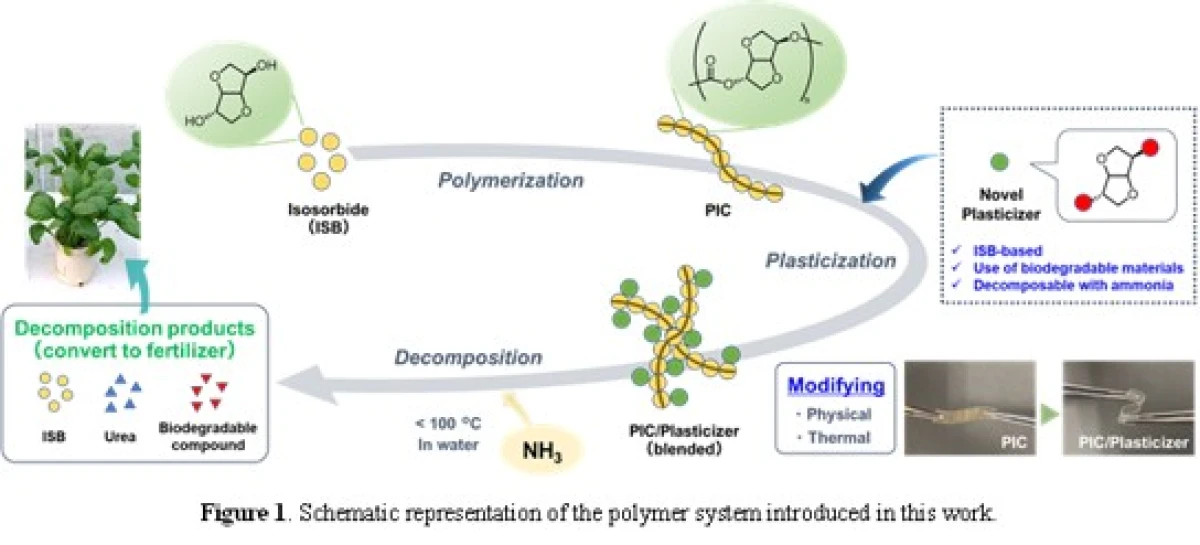
“We aimed to create an ‘active’ environmental solution,” Aoki explains, “by developing materials that tackle plastic waste while also conserving resources and promoting sustainable agriculture.”
If the team’s approach proves successful, plastic could continue to serve industrial and consumer needs without causing the same level of harm to ecosystems and human health. The new polymers and plasticizers could serve in flexible packaging, bags, seedling containers, and agricultural mulch films. Aoki believes the research could ultimately transform plastic from unwanted waste into a valuable resource for food production.

Read the original article on: newatlas
Read more: China Lets AI Take Charge of an Eye Clinic


