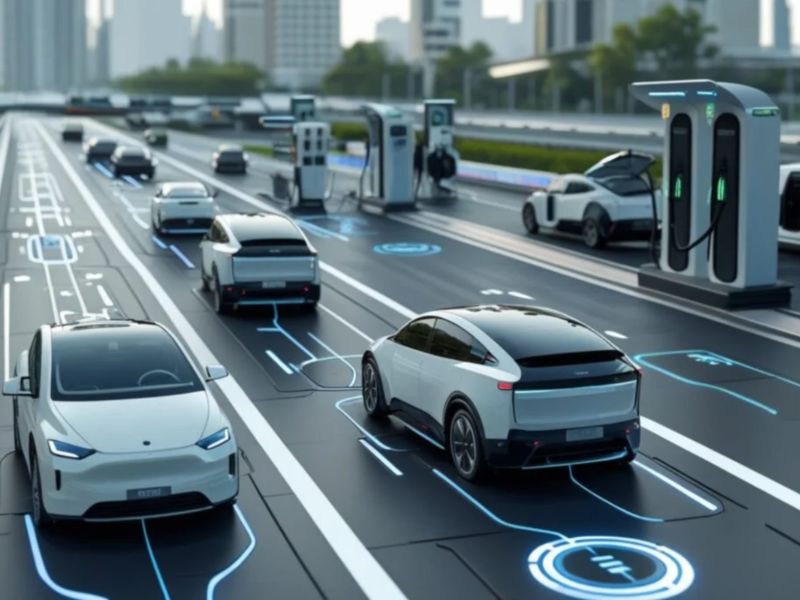

For a long time, the biggest barrier to making electric cars mainstream wasn’t the motors—it was charging. Long waits, scarce charging stations, and bulky batteries have consistently posed tough challenges. Now, a daring new approach is emerging, already functioning in real-world settings, suggesting that electrified roads may become the next major breakthrough in sustainable transportation.
The setup uses copper coils embedded beneath the pavement, which create a magnetic field that transfers power to vehicles equipped with dedicated receivers. This “Charge as You Drive” system enables cars, buses, and trucks to recharge continuously while moving.
300 kW On-the-Move Power That Works in Any Weather
The output reaches 200 kW, with peaks up to 300 kW—comparable to today’s ultra-fast charging stations. A key benefit is that the infrastructure works reliably in rain, ice, or snow, without affecting safety or efficiency. It can also be installed on existing highways, avoiding the need to rebuild entire roads.
The initial stretch measures just 1.5 kilometers and sits near the A-10 highway on the outskirts of Paris. Although short, it forms part of an ambitious plan to electrify 9,000 kilometers of roads by 2035.
Early trials used four vehicle types—a truck, van, bus, and passenger car—and each managed to regain energy within minutes of driving, greatly reducing the need for lengthy charging stops. This approach could also allow for smaller batteries, currently one of the most costly and environmentally demanding components of electric vehicles.
With large-scale adoption, this technology could virtually eliminate one of the major challenges of electric mobility: limited range. Charging would occur seamlessly during travel, removing the need for station lines or meticulous route planning.
Lighter, Greener Vehicles With Low-Maintenance Infrastructure
Using smaller batteries would also make vehicles lighter, cheaper to produce, and less dependent on raw materials, while significantly reducing their environmental footprint. Another benefit is the system’s minimal upkeep—its lack of moving parts means it can withstand heavy traffic with high durability.
France is stepping ahead by developing a fully integrated dynamic charging network, while many other nations remain limited to small, independent pilots. The initiative is about more than advanced engineering—it aims to reshape the act of driving itself, turning charging into an invisible, automatic, and uninterrupted process.
Rather than simply creating a road that powers vehicles, the project suggests a future in which electric mobility operates smoothly and intuitively, without requiring drivers to change their habits.
Read the original article on: Gizmodo
Read more: Scientists Watch Flu Viruses Enter Human Cells Live