
Converting waste carbon into valuable products is essential for sustainable manufacturing. We can recycle carbon dioxide into carbon monoxide and then convert it into energy-dense compounds using electricity. However, current systems rely on anion exchange membranes that degrade over time when exposed to organic substances, reducing their overall efficiency.
Low-Cost Diaphragms Offer Efficient Alternative for Carbon Conversion
A research team led by Feng Jiao, the Lauren and Lee Fixel Distinguished Professor at the McKelvey School of Engineering, Washington University in St. Louis, discovered that durable, low-cost materials known as porous diaphragms can serve as effective substitutes for traditional membranes in the carbon monoxide conversion process.
Through testing multiple types of diaphragms, the team found that some matched or even outperformed commercial polymer-based membranes under various operating conditions.
The study, published on September 26 in Nature Communications, lists postdoctoral researcher Wanyu Deng and doctoral student Siyang Xing as the paper’s first authors.
Zirfon Diaphragms Enhance Electrolyzer Performance
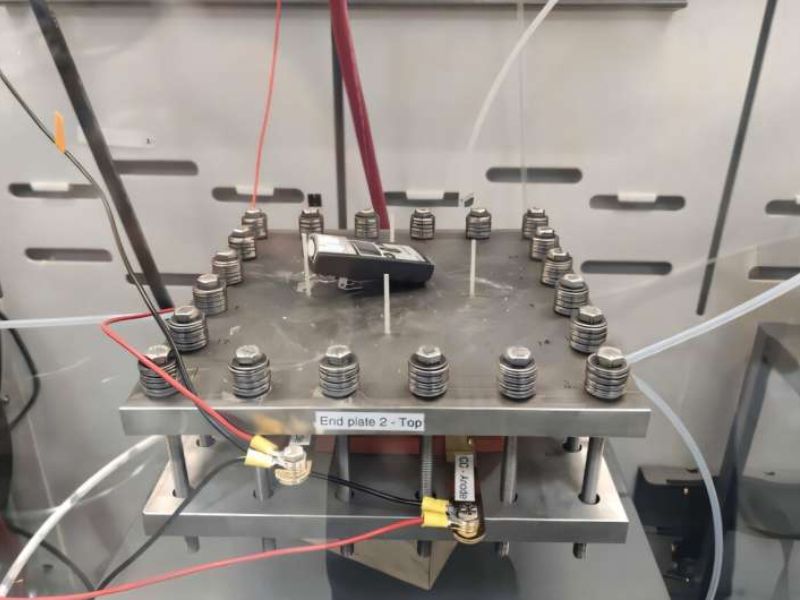
Diaphragms efficiently block the crossover of gas products between the cathode and anode while being made from inexpensive materials. Jiao’s team created a carbon monoxide electrolyzer using Zirfon diaphragms, which ran over 250 hours at 60°C—outlasting commercial membranes (~150 hours). A larger Zirfon-based electrolyzer also operated reliably for 700 hours.
“These findings demonstrate that diaphragms offer a scalable and durable option for carbon monoxide conversion, reducing costs and improving compatibility with renewable energy systems,” said Jiao, who also serves as director of the Center for Carbon Management and associate director of the NSF CURB Engineering Research Center.
The researchers plan to further enhance their electrolysis technologies to improve efficiency, recognizing that making the waste-gas conversion process more cost-effective and efficient will accelerate the transition toward circular and sustainable manufacturing systems.
Read the original article on: Tech Xplore
Read more: Magnetic Gel May Offer a more Efficient Way To Eliminate Kidney Stones