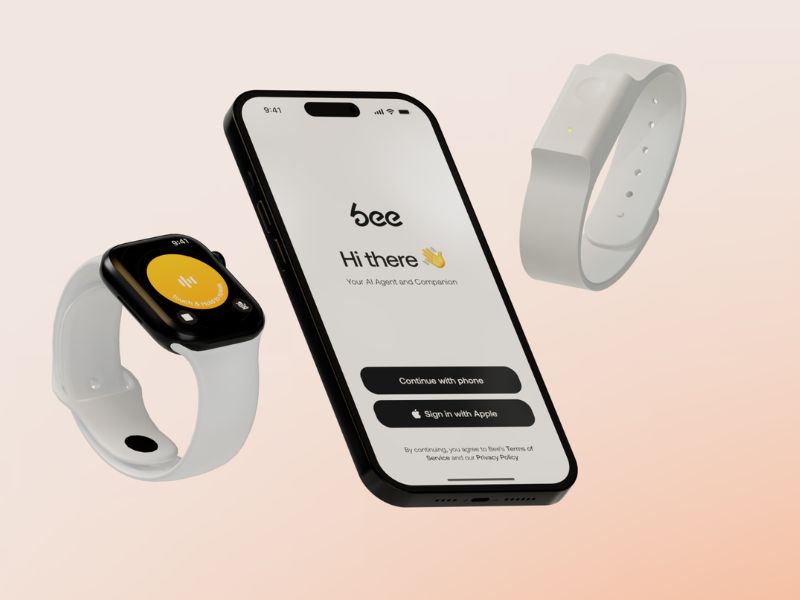

Amazon has acquired AI wearables startup Bee, according to a LinkedIn post by co-founder Maria de Lourdes Zollo. Amazon told TechCrunch it acquired the company, but added that the deal still awaits finalization.
Bee, which raised $7 million last year, offers a wearable device resembling a Fitbit (sold for $49.99 with a $19 monthly subscription) and an Apple Watch app. The device continuously records audio—unless muted manually—to help generate reminders and to-do lists from conversations.
Bee Envisions a “Cloud Phone” for Seamless Access to User Accounts and Notifications
Zollo previously told TechCrunch the company aims to develop a “cloud phone,” essentially a digital reflection of the user’s smartphone, allowing the Bee device to access notifications and accounts to enable features like event reminders and messaging.
On its website, Bee describes its mission as making “personal, ambient intelligence” accessible—technology that acts more like a trusted companion than a tool, helping users remember, reflect, and navigate daily life more freely.
Companies like Rabbit and Humane AI have also ventured into AI-powered wearables but have struggled to gain traction. Bee, however, stands out with a more accessible $50 price point, appealing to consumers curious about the technology without a major financial risk—especially compared to the $499 Humane AI Pin.
An Amazon spokesperson told TechCrunch that Bee’s team members have been offered roles within Amazon.
The acquisition highlights Amazon’s growing interest in AI wearables, marking a shift from its traditional focus on voice-driven home devices like the Echo.”Meanwhile, OpenAI is building its own AI hardware, Meta is integrating AI into smart glasses, and Apple is reportedly developing AI-enabled eyewear.“
Always-On AI Wearables Spark Privacy Concerns Over Voice Data Handling
However, these always-on devices raise significant privacy and security concerns, as they continuously record ambient audio. Companies differ in how they handle voice data, including how it’s stored, processed, and potentially used for training AI models.
Bee’s current privacy policies let users delete their data at any time and clarify that the company neither saves audio recordings nor uses them for AI training. However, the app does retain information the AI learns about the user in order to function as a personal assistant.
Previously, Bee said it would only record individuals who had given verbal consent. The company is also developing features that let users set boundaries—such as specific topics or locations—where the device will automatically stop recording or learning. “Additionally, Bee plans to shift toward on-device AI processing, a move many view as a more privacy-friendly alternative to cloud-based data handling.“
It remains uncertain whether these privacy practices will change once Bee becomes part of Amazon. The tech giant has a mixed track record when it comes to user data. In the past, Amazon provided law enforcement with footage from Ring security cameras without user consent or a warrant. In 2023, Ring also settled with the Federal Trade Commission over allegations that its employees and contractors had unfettered access to customer videos.
Read the original article on: Techcrunch
Read more:Breakthrough Cryocooler Paves the Way for Crewed Missions to Mars