Author: cumbonguala

  • Engineers are Creating a Jet-Powered Flying Robot for Disaster Response

    Engineers are Creating a Jet-Powered Flying Robot for Disaster Response

    Imagine you're injured on a remote mountain trail and have contacted emergency services. If Italian research is successful, a small humanoid robot with a jetpack might be the first responder to reach you.
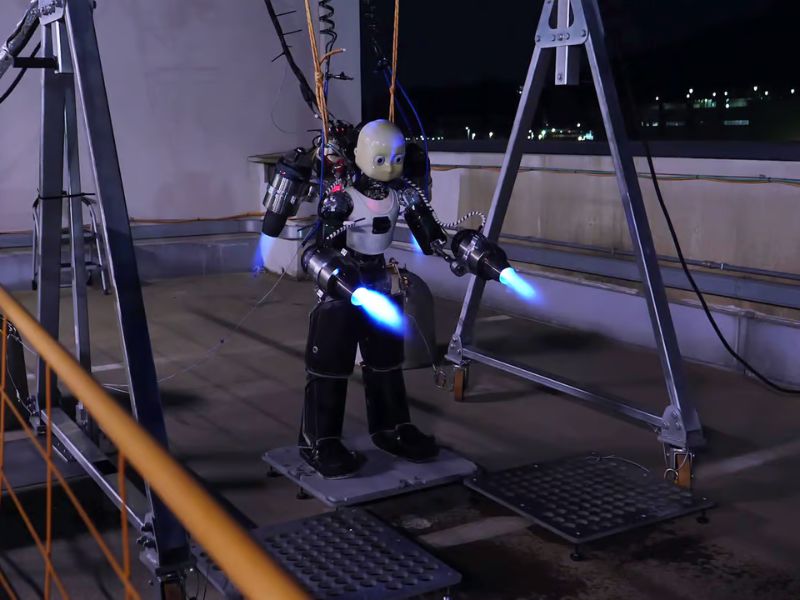
    Jets for hands plus two more on the jetpack: the iRonCub3 is being designed for fast disaster response
    Istituto Italiano di Tecnologia

    Imagine you’re injured on a remote mountain trail and have contacted emergency services. If Italian research is successful, a small humanoid robot with a jetpack might be the first responder to reach you.

    This project, developed by the Artificial and Mechanical Intelligence group at the Italian Institute of Technology (Istituto Italiano di Tecnologia), is focused on getting the iCub, a child-sized biped originally designed for AI research, airborne using jet propulsion.

    Jet-Powered Enhancements to Humanoid Design

    In addition to attaching a twin jet pack to the robot’s back, the team replaced the original flexible, human-like hands with additional jet engines, known as JetCats. According to the researchers, these engines can produce a maximum thrust of 1,000 N (approximately 225 lbf) and reach exhaust temperatures of up to 800 °C (1,472 °F).

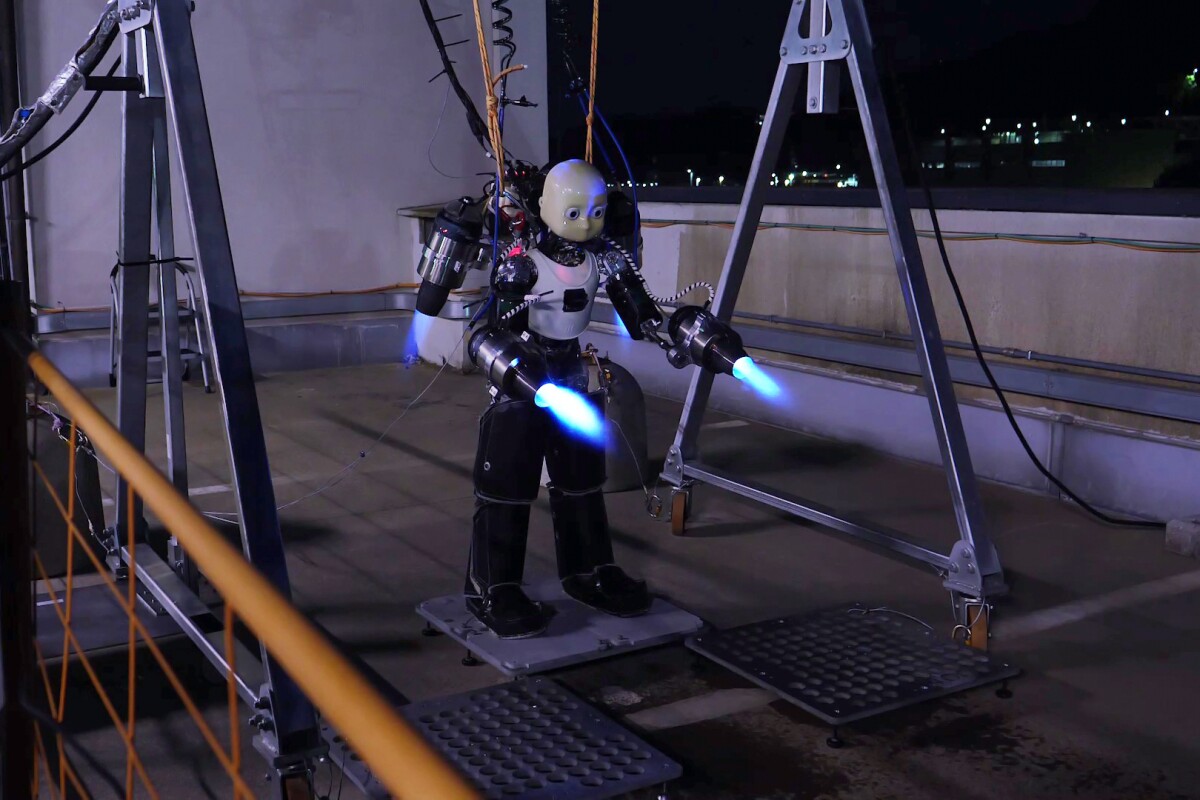
    iRonCub3 sneak peek: experimental area and preliminary validations

    Upgrades for Strength and Durability

    The Tony Stark-inspired iRonCub3 has been upgraded with a newly designed titanium spine to withstand the forces it will encounter and now features heat-resistant covers instead of the stylish outer suit used on an earlier prototype.

    The team has also designed new electronics, installed force-torque sensors in the jetpack, and removed certain components to accommodate the updated system.

    As shown in the video above, the project is still in its early development stages. However, the team has already tested the jet-powered humanoid in a wind tunnel to verify aerodynamic simulations. Although the jets have been activated several times, the iRonCub3 has not yet taken flight. Despite this, the team is confident that it will soon achieve hovering.

    In addition, flight control algorithms have been developed and tested, and a trajectory planner has been validated through simulations. The team is now working on estimating the robot’s position and orientation in space using data from its inertial measurement unit and a chest-mounted RealSense depth camera.
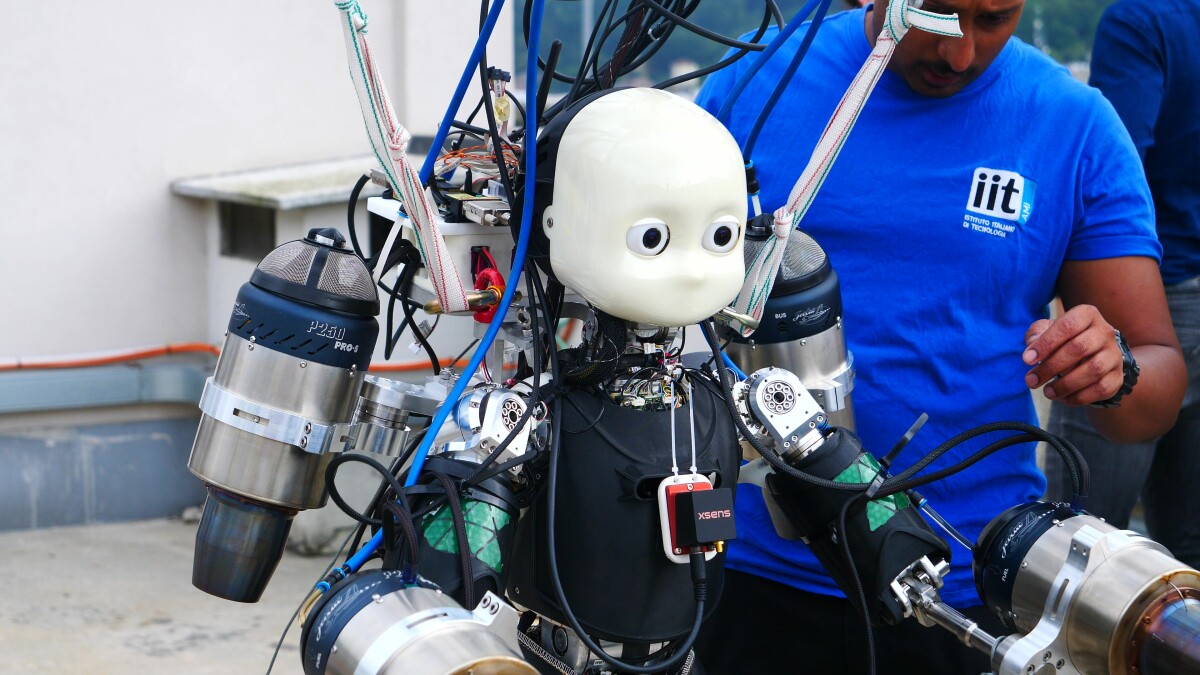
    The iRonCub3 sports four JetCat P250 Pro-S turbo-jet engines, which were designed as propulsion units for RC aircraft/drones
    Istituto Italiano di Tecnologia

    Unique Challenges in Jet-Powered Robotics

    The complexity of this research is quite different from the typical challenges in humanoid robotics,” the researchers noted. Thermodynamics is crucial because the turbine exhaust gas reaches around 800 degrees Celsius and nearly the speed of sound.

    The aerodynamics of multi-body systems require neural networks with physics-informed components to be evaluated in real time. Controller settings must integrate high- and low-bandwidth actuators for both joints and turbines, and planners need to generate trajectories not just for the motors but also for the turbines. Experimental validation is both serious and hazardous, leaving little room for error.

    The ultimate goal is to develop humanoid robots capable of flying to disaster or emergency sites to perform aerial inspections or provide crucial data to remote teams. These robots would also be able to land, walk, navigate obstacles, climb stairs, open doors, and more. Such capabilities would be useful for early-stage rescues and for inspecting dangerous buildings or infrastructure.


    Read the original article on: New atlas

    Read more: Video: Google Robot Plays Table Tennis with Humans
  • Preliminary Studies Suggest Manuka Honey Reduces Breast Cancer Cell Growth by 84%

    Preliminary Studies Suggest Manuka Honey Reduces Breast Cancer Cell Growth by 84%

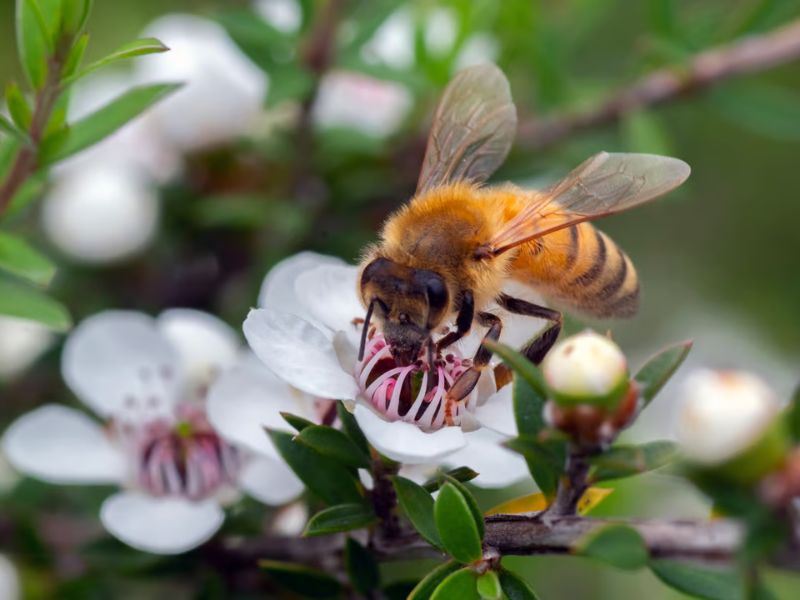
    Preliminary studies indicate that Manuka honey can decrease breast cancer cell growth by 84% while sparing healthy cells and causing minimal side effects. This suggests potential for developing a natural, non-toxic cancer treatment, either as a supplement or a standalone therapy.
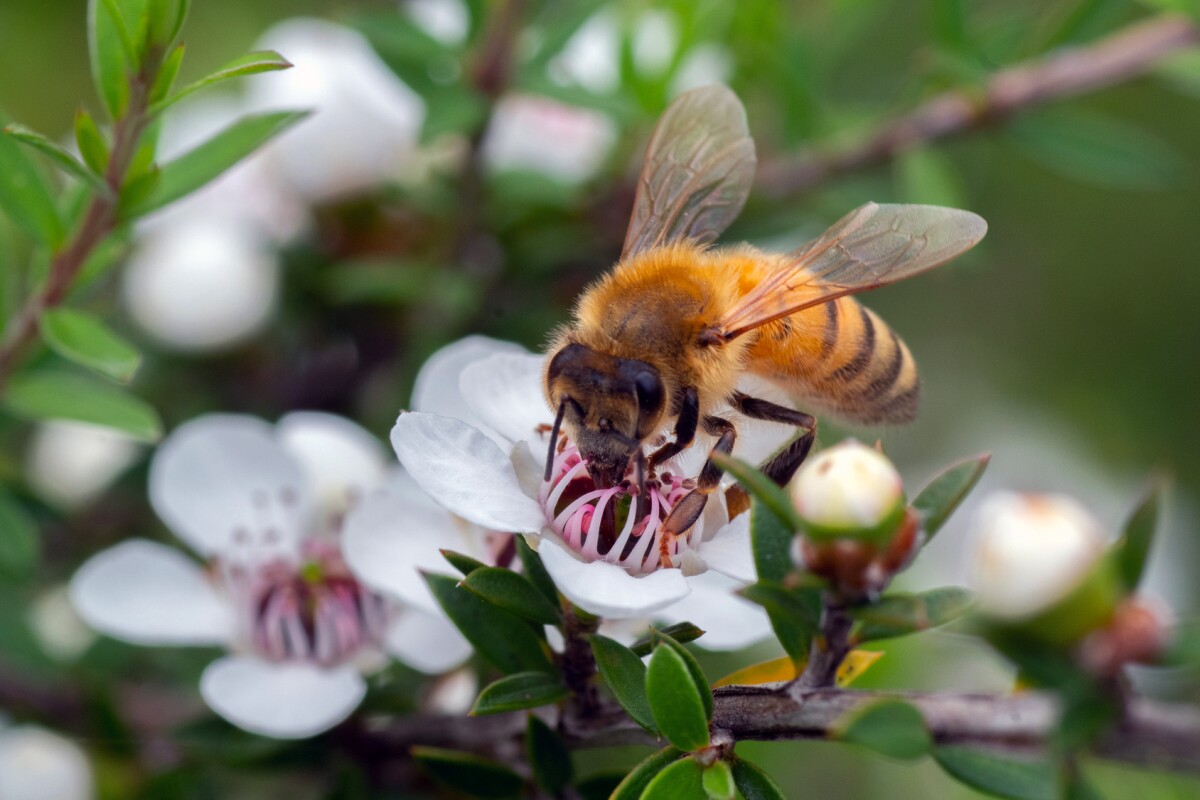
    Manuka honey, produced from nectar from the mānuka tree, has potent anticancer properties
    Depositphotos

    Preliminary studies indicate that Manuka honey can decrease breast cancer cell growth by 84% while sparing healthy cells and causing minimal side effects. This suggests potential for developing a natural, non-toxic cancer treatment, either as a supplement or a standalone therapy.

    Nutraceuticals—essentially a blend of “nutrition” and “pharmaceuticals” that can sound like marketing jargon—are products that offer both nutritional benefits and health-enhancing properties. Examples include ginseng, green tea, Echinacea, omega-3, and Manuka honey. The latter is made from nectar collected by honey bees from the mānuka tree, a plant native to New Zealand and southeast Australia.

    Manuka Honey’s Unique Properties and Its Potential Role in Breast Cancer Prevention and Treatment

    Manuka honey has shown antibacterial, antioxidant, and healing properties, likely due to its unique composition compared to other honeys. Preliminary research from UCLA suggests that this nutraceutical may assist in breast cancer prevention and treatment.

    Dr. Diana Márquez-Garbán, associate professor of medicine at the UCLA David Geffen School of Medicine and the study’s lead author, noted, “The findings offer promise for developing a natural, less toxic alternative to traditional chemotherapy. While further research is needed to fully explore the benefits of natural compounds in cancer therapy, this study provides a solid foundation for future investigations.

    In cases of estrogen receptor (ER) positive breast cancer—affecting about 60% to 70% of patients—the cancer cells use estrogen to fuel their growth. Although anti-estrogen therapy usually hinders tumor growth, some patients develop resistance, leaving chemotherapy as a last resort.

    Manuka Honey Significantly Inhibits ER-Positive Breast Cancer Cell Growth and Enhances Effects of Tamoxifen

    In laboratory experiments, researchers grew ER-positive and triple-negative breast cancer cells. They found that Manuka honey and its dehydrated powder significantly inhibited the proliferation of ER-positive cells in a dose-dependent manner compared to controls.

    The effect on triple-negative cells was less pronounced. Combining Manuka honey with tamoxifen, a common anti-estrogen drug, greatly reduced ER-positive cell proliferation more effectively than either treatment alone.

    Further analysis revealed that Manuka honey reduced blood estrogen levels and estrogen receptors in tumors, and promoted apoptosis (cell death) in cancer cells, disrupting cancer progression.

    Manuka Honey Significantly Reduces Tumor Growth in Mice with ER-Positive Breast Cancer

    The researchers then tested Manuka honey in animal models. Mice implanted with human ER-positive breast cancer cells and subsequently developed tumors were given Manuka honey orally. The mice treated with honey exhibited a significant reduction in tumor growth—by 84%—compared to the control group, without harming healthy cells.

    The researchers concluded that natural compounds like Manuka honey, which show strong antitumor activity and target hormone receptor-positive breast cancers selectively, could be developed as a supplement or a potential alternative to traditional cytotoxic cancer drugs, which often have more widespread adverse effects.


    Read the original article on: New Atlas

    Read more: Honeybees Can Detect Lung Cancer by Scent