Author: Evelina Jeremias

  • Brain Pathway May Explain Higher Depression Rates in Teen Girls

    Brain Pathway May Explain Higher Depression Rates in Teen Girls

    Depression affects 280 million people globally and is twice as prevalent in women as in men, a trend that emerges during adolescence. While researchers have linked the kynurenine pathway to depression in adults, this study is the first to examine its role in adolescents based on biological sex.
    Credit: Pixabay

    Depression affects 280 million people globally and is twice as prevalent in women as in men, a trend that emerges during adolescence. While researchers have linked the kynurenine pathway to depression in adults, this study is the first to examine its role in adolescents based on biological sex.

    The study, “Sex-Specific Alterations of the Kynurenine Pathway in Association with Risk and Remission of Depression in Adolescence,” was published in Biological Psychiatry.

    The kynurenine pathway is a series of chemical reactions that break down tryptophan, an amino acid found in food. When processed in the brain, tryptophan can follow two pathways: one producing neuroprotective compounds and another generating neurotoxic ones. Key byproducts of this process include kynurenic acid, which supports brain health, and quinolinic acid, which can be harmful.

    Understanding Biological Factors in Adolescent Depression

    Professor Valeria Mondelli, senior author and Clinical Professor of Psychoneuroimmunology at King’s IoPPN, emphasized the significance of adolescence as a period of major brain and body changes. However, she noted that little is known about the biological factors contributing to depression and the differences between teenage boys and girls.

    Our study suggests the kynurenine pathway plays a role in the onset of depression during adolescence, potentially explaining the higher prevalence among girls,” Mondelli said. “Since mental health is shaped by various social and individual factors during this time, identifying the biological mechanisms involved could provide a clearer understanding of how to support teenagers struggling with depression.”

    The study used blood tests to measure levels of kynurenic and quinolinic acids in 150 Brazilian teenagers aged 14 to 16. Participants were divided into three groups: those at low risk for depression, those at high risk, and those already diagnosed with depression.

    Tracking Depression Risk and Gender Differences in Adolescents

    Depression risk was assessed using a method developed as part of the Identifying Depression Early in Adolescence (IDEA) project, which considers multiple factors. Each group included 50 adolescents, evenly split by biological sex, allowing researchers to analyze differences between males and females. The participants were tracked over three years to monitor changes in their depression symptoms.

    Researchers at King’s College London found that adolescents with a high risk of depression or a current diagnosis had lower levels of kynurenic acid, a neuroprotective compound. This reduction was more pronounced in female adolescents, suggesting that an imbalanced kynurenine pathway may make girls more vulnerable to depression, potentially explaining why they experience the condition at higher rates.

    Inflammation’s Role in Depression and the Kynurenine Pathway

    The study also measured blood proteins linked to inflammation, which the body releases during stress, illness, or infection. Findings showed that elevated levels of these inflammatory markers were associated with increased production of neurotoxic chemicals in the kynurenine pathway. This pattern was observed in high-risk and depressed adolescents but not in those at low risk.

    These results suggest that inflammation may push the kynurenine pathway toward producing harmful neurotoxic compounds, increasing the likelihood of depression.

    In a follow-up three years later, researchers found that female adolescents with persistent depression had higher levels of neurotoxic metabolites than those who recovered, indicating that heightened neurotoxic activity in the kynurenine pathway may make depression more difficult to overcome.

    Dr. Naghmeh Nikkheslat, first author and Senior Research Associate at King’s IoPPN, highlighted the potential clinical relevance of these findings.

    Our study suggests that measuring kynurenine pathway chemicals could help identify individuals at risk of persistent depression, especially females, and guide more effective support strategies,” she said. “This insight could pave the way for targeted interventions, from medication to lifestyle changes such as diet and exercise.”


    Read the original article on: Medical X Spress

    Read more: How Depression Alters Your Appetite and Boosts Carb Cravings

  • They’re Back! Stranded Astronauts Safely Touch Down on Earth

    They’re Back! Stranded Astronauts Safely Touch Down on Earth

    An eight-day mission to the International Space Station (ISS) unexpectedly turned into a nine-month wait for a return to Earth.
    Credit: Pixabay

    An eight-day mission to the International Space Station (ISS) unexpectedly turned into a nine-month wait for a return to Earth.

    Safe Return to Earth

    Now, astronauts Butch Wilmore and Suni Williams have finally felt gravity’s pull again, safely splashing down off the Gulf Coast of Florida on Tuesday evening alongside NASA crewmate Nick Hague and Russian cosmonaut Aleksandr Gorbunov.

    Suni Williams and Butch Wilmore on board the ISS. (NASA)

    The Boeing Crew Flight Test, launched on June 5, 2024, aimed to transport Wilmore and Williams to the ISS as a demonstration of the Starliner spacecraft’s capabilities.

    Starliner Malfunction Delays Crew’s Return

    However, in a significant setback for Boeing’s commercial space efforts, the spacecraft experienced engine malfunctions while approaching the station. A subsequent review determined that Starliner would return to Earth without passengers, leaving the crew aboard the ISS to await a “rescue” mission.

    The Starliner spacecraft docked to the ISS on NASA’s Boeing Crew Flight Test. (NASA)

    While NASA never officially labeled the astronauts as stranded, their mission stretched from days to weeks and eventually months as plans for their return were finalized.

    Although they missed their friends and family, Williams and Wilmore said they enjoyed their time aboard the station. They stayed engaged with daily routines, took part in over 150 scientific experiments, and even conducted spacewalks.

    Splashdown! SpaceX Dragon spacecraft lands in the water off the coast of Tallahassee, Florida on March 18, 2025. (NASA/Keegan Barber)

    Early Tuesday morning, the crew boarded a SpaceX Crew Dragon capsule for a 17-hour journey back to Earth. Once in orbit, a brief engine burn guided the spacecraft into its final trajectory toward Florida’s Gulf Coast.

    At 5:57 p.m. ET, the capsule safely splashed down, marking the conclusion of a mission that will be remembered in space history.


    Read the original article on: Science Alert

    Read more: SpaceX Launches Astronauts for a Long-Awaited ISS Crew Swap

  • Google Introduces the Canvas Feature to Gemini, Along with Audio Overview

    Google Introduces the Canvas Feature to Gemini, Along with Audio Overview

    Image Credits:Andrey Rudakov/Bloomberg / Getty Images

    On Tuesday, the company introduced a new feature for its AI-powered Gemini chatbot called Canvas. Much like OpenAI’s Canvas tool for ChatGPT and Anthropic’s Artifacts, Canvas offers Gemini users an interactive space to create, refine, and share writing and coding projects.

    Canvas is designed for seamless collaboration with Gemini,” wrote Dave Citron, Gemini’s product director, in a blog post shared with TechCrunch. “With these new features, Gemini is becoming an even more effective collaborator, helping you bring your ideas to life.”

    AI Workspaces Transform Chatbot Platforms

    AI companies are increasingly developing dedicated workspaces like Gemini Canvas, ChatGPT Canvas, and Artifacts to enhance their chatbot platforms. These workspaces provide greater precision than traditional text-based interfaces and enable real-time code previews, further positioning AI tools as comprehensive productivity solutions.

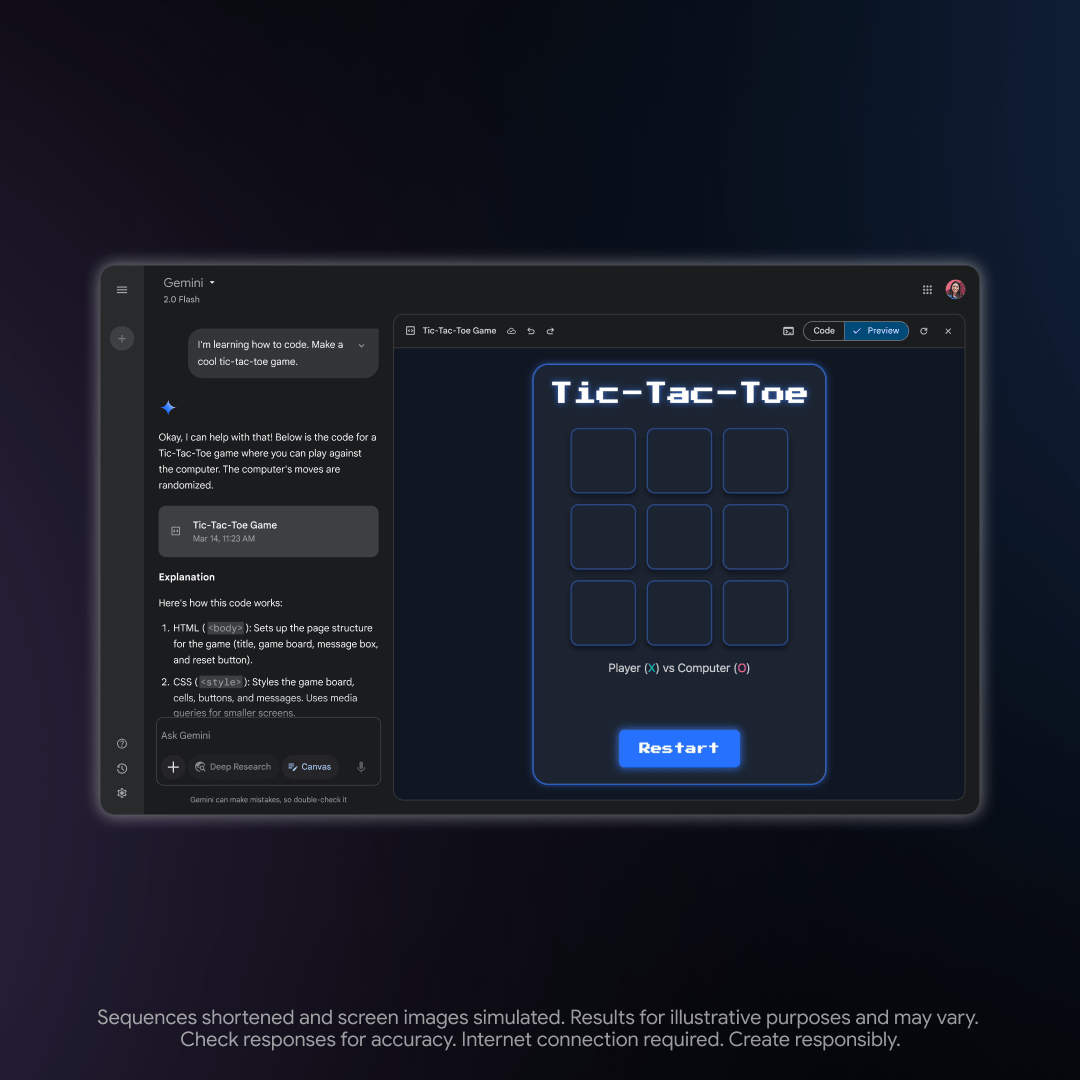
    Coding using Gemini’s new Canvas tool.Image Credits: Google

    Refining Content with Gemini Canvas

    Gemini Canvas, accessible through the prompt bar in the Gemini app on both web and mobile, allows users to draft extensive messages with Gemini and refine them as needed. The tool enables users to edit specific sections, modify the tone, adjust length, and tweak formatting using built-in controls.

    For instance, you can highlight a paragraph and ask Gemini to make it more concise, professional, or informal,” Citron explained in the blog post. “If you want to collaborate with others on the content, you can export it to Google Docs with a single click.”

    In addition to text editing, Canvas includes programming-focused features, allowing users to generate and preview HTML, React code, and other web app prototypes. Users can request changes to the preview, and Canvas will update it dynamically in response.

    For instance, if you need an email subscription form for your website,” Citron wrote, “you can ask Gemini to generate the HTML and preview how it will look and operate within your web app.”

    The new Gemini Canvas can be used to write and edit longer docs.Image Credits:Google

    Expanding Features with Audio Overview

    In addition to Canvas, Google is integrating the Audio Overview feature from NotebookLM into Gemini, the company announced Tuesday. NotebookLM gained popularity last year for Audio Overview, which generates natural-sounding, podcast-style audio summaries of documents, webpages, and other sources.

    Similar to its implementation in NotebookLM, Audio Overview in Gemini supports various file formats. When users upload a document via the prompt bar, the Audio Overview shortcut activates, generating a summary that can be downloaded or shared through the Gemini app on web and mobile.

    As of Tuesday, both Canvas and Audio Overview are available for free to Gemini users worldwide. However, Canvas’ code preview feature is currently web-only, and Audio Overview summaries are limited to English.


    Read the original article on: TechCrunch

    Read more: Google’s Gemini AI Beats GPT & Human Experts Across 57 Subjects

  • Robotic Rehab and Synced Zaps Restore Movement After Spinal Injuries

    Robotic Rehab and Synced Zaps Restore Movement After Spinal Injuries

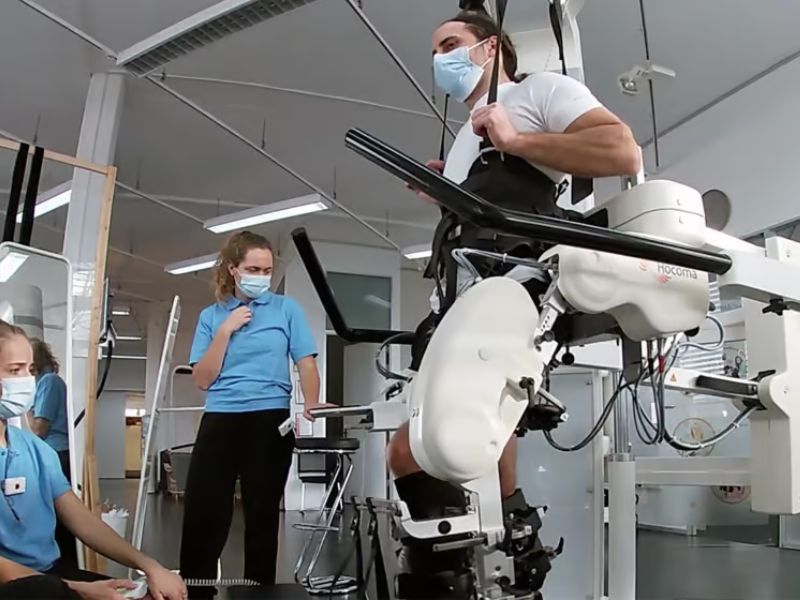
    Spinal stimulation synced with rehabilitation robotics allows paralysed people to move
    .NeuroRestore/EPFL/CHUV 2025 CC BY-SA 4.0

    A recent study has tested a groundbreaking proof-of-concept technology that combines electrical stimulation with rehabilitation robotics, allowing individuals paralyzed by spinal injuries to regain more natural movement. This innovation aims to enhance recovery outcomes.

    In 2022, New Atlas covered how a spinal cord stimulator enabled nine paralyzed patients to walk. Developed by Swiss neurotech company .NeuroRestore, the device was supported by a “molecular map” identifying neurons responsive to stimulation.

    .Neu roRestore recently introduced a new system that synchronizes spinal cord stimulation with “rehabilitation robotics” to restore coordinated, natural movement in individuals with spinal cord injuries. This announcement coincided with the release of a proof-of-concept study demonstrating the system’s effectiveness.

    Integrating Spinal Stimulation and Robotics to Advance Spinal Cord Injury Therapy

    The seamless integration of spinal cord stimulation with rehabilitation or recreational robotics will accelerate the adoption of this therapy into standard care and the spinal cord injury community,” said Grégoire Courtine, neuroscientist and professor at EPFL, and one of the study’s corresponding authors. Courtine and Adjunct Professor Jocelyne Bloch, also a corresponding author, spearheaded the system’s development.

    Rehabilitation robotics bridges science fiction and reality—an increasingly familiar concept given today’s rapid technological advancements. This field focuses on designing robotic devices to assist individuals with movement impairments, particularly in therapy, by guiding and enhancing motion during rehabilitation.

    Like .NeuroRestore’s previous device, the new system uses a surgically implanted stimulator to send targeted electrical pulses to the spinal cord, activating muscles. However, what sets this technology apart is its synchronization with robotic devices, allowing for more natural and coordinated muscle movement during rehabilitation exercises, such as cycling or walking on a treadmill.

    Spinal Stimulation and Robotics Restore Muscle Control in Paralysis Patients

    In their proof-of-concept study, researchers tested the system on five individuals with paralysis due to spinal cord injuries. The participants not only regained the ability to activate muscles during robotic-assisted therapy, but some also showed improved voluntary movement even after the stimulation was turned off.

    A key advantage of this technology is its ‘agnostic’ design, meaning it can integrate with various robotic systems. It’s also user-friendly, making it accessible to both experts and non-experts alike.

    We visited several rehabilitation centers to test our stimulation technology with the robotic systems they commonly use, and it was incredibly rewarding to see their enthusiasm,” said study co-lead authors Nicolas Hankov of.NeuroRestore and Miroslav Caban from EPFL’s Biorobotics (BioRob) Laboratory. “Observing how seamlessly our approach integrates with existing rehabilitation protocols reinforces its potential to revolutionize spinal cord injury care by providing a user-friendly, adaptable framework for widespread adoption.”

    Beyond clinical settings, the technology also enabled participants to walk and cycle outdoors, demonstrating its real-world impact. However, researchers hope this innovation will offer new hope to individuals with spinal cord injuries and enhance recovery through more effective rehabilitation. Further studies and clinical trials will determine its long-term benefits.

    The video below illustrates how spinal stimulation, combined with rehabilitative robotics, helps restore movement.

    Robotics and spinal stimulation restore movement in paralysis

    Read the original article on: New Atlas

    Read more: Most Powerful Non-Hydraulic Robotic Arm Lifts a Ford F-250

  • The Crypto Wallet Integrated with Telegram Now Offers Crypto Trading and Yield-Generating Features

    The Crypto Wallet Integrated with Telegram Now Offers Crypto Trading and Yield-Generating Features

    Telegram’s crypto wallet, developed by third-party company The Open Platform (TOP), has introduced new features for users who engage with Telegram beyond messaging. These updates include multi-asset trading and yield-generating options.
    Image Credits: Telegram

    Telegram’s crypto wallet, developed by third-party company The Open Platform (TOP), has introduced new features for users who engage with Telegram beyond messaging. These updates include multi-asset trading and yield-generating options.

    Built on the TON blockchain, TOP launched the wallet in 2023. The company reported that over 100 million users have signed up for a Wallet account on Telegram, with most being newcomers to the crypto space.

    Expanding Beyond Toncoin

    Initially focused on Toncoin, which can be used within Telegram for tipping creators and paying for mini-games and apps, the wallet also supports Bitcoin and USDT on the TON blockchain. Since its launch, it has expanded to include other currencies like Notcoin.

    Image Credits: TOP

    With this update, TOP states that users can now buy, sell, and hold crypto without requiring on-chain deposits, simplifying the process for newcomers to crypto trading and storage.

    New Earning Opportunities for Toncoin and USDT Holders

    Additionally, the company is introducing an earning feature for users who hold a certain amount of Toncoin. While the average yield is around 4%, it will fluctuate based on validator rewards. Later this year, TOP plans to extend yield options to USDT holdings and introduce loyalty programs benefiting Toncoin holders.

    The Telegram Wallet has also received a redesign, featuring a new bottom navigation bar and a streamlined way to switch between the Wallet, Trade, and Earn sections.

    Image Credits: TOP

    TOP’s CEO, Andrew Rogozov, stated that the update expands Wallet’s capabilities to align with consumer expectations for an open and expansive market. With these changes, Wallet now functions as a full-fledged crypto platform within Telegram while maintaining its simplicity and accessibility. He also mentioned plans to introduce a loyalty program for Toncoin holders to further drive adoption of the TON ecosystem.

    The updated wallet will begin rolling out to users between March and April. However, TOP noted that certain features may be restricted in some countries due to local regulations.

    In December, Telegram’s founder, Pavel Durov, announced that the company had reached profitability. With over 950 million monthly active users, Telegram has benefited from cryptocurrency integrations, particularly through content and mini-app payments.


    Read the original article on: TechCrunch

    Read more: What’s the Buzz About Bitcoin Cryptocurrency and Blockchain Technology?

  • Scientists Unveil Battery Powered by Nuclear Waste

    Scientists Unveil Battery Powered by Nuclear Waste

    Nuclear energy produces minimal greenhouse gas emissions but presents challenges due to radioactive waste.
    Credit: Pixabay

    Nuclear energy produces minimal greenhouse gas emissions but presents challenges due to radioactive waste.

    A recent study explores a potential solution: using this waste to power microelectronics.

    Researchers in the U.S. harnessed ambient gamma radiation from nuclear waste to generate enough energy to run microchips. While currently limited to small sensors, the team believes the technology could be scaled up.

    We’re taking something regarded as waste and transforming it into value,” says nuclear engineer Raymond Cao from Ohio State University.

    Nuclear power currently supplies about 10% of global energy needs. If its waste can be repurposed effectively, the technology may become an even more attractive alternative to fossil fuels.

    Nuclear batteries, which convert radioactive decay into electricity, have been under development for decades, but the technology has yet to reach practical viability.

    Two-Step Energy Conversion in a Compact Prototype

    In this approach, energy production occurred in two steps: scintillator crystals first transformed radiation into light, which was then converted into electricity by solar cells. The prototype battery had a compact size of approximately 4 cubic centimeters (0.24 cubic inches).

    During testing with two radioactive sources—cesium-137 and cobalt-60, both common byproducts of nuclear fission—the battery produced 288 nanowatts and 1.5 microwatts, respectively.

    The experimental battery combined scintillator crystals with solar cells. (Oksuz et al., Optical Materials: X, 2025)

    This represents a significant breakthrough in power output,” says Ibrahim Oksuz, an aerospace engineer at Ohio State University.

    This two-step process is still in its early stages, but the next goal is to scale up and generate higher power outputs.”

    Targeted Deployment and Potential Applications

    These batteries would primarily be deployed near nuclear waste facilities rather than for public use. However, they hold promise for powering low-maintenance sensors and monitoring devices.

    According to the researchers, the battery is safe to handle and does not pose an environmental hazard. However, questions remain about its long-term durability once installed.

    The radiation resistance of both the scintillator and the photovoltaic cell is a crucial factor and should be a primary focus for future research,” the team notes.

    The technology could also be adapted for environments with natural gamma radiation, such as space. While significant improvements are still needed, the researchers are confident in the viability of the concept.

    During the study, the team also identified how the arrangement of scintillator crystals and solar cells influences energy conversion and output—insights that will inform future developments.

    The nuclear battery concept has great potential,” says Oksuz.

    There’s still plenty of room for refinement, but I believe this approach will eventually establish itself as a key player in both energy production and sensor technology.”


    Read the original article on: Science Alert

    Read more: Scientists Discover Mysterious Nuclear “Bump” Challenging Existing Physics Models

  • Canoo CEO to Buy Assets After Bankruptcy, No Revival Expected

    Canoo CEO to Buy Assets After Bankruptcy, No Revival Expected

    Modular electric vehicle startup Canoo has faced significant struggles in recent years, and it seems its journey may be nearing its end. CEO Anthony Aquila is poised to purchase the bankrupt company’s assets at a fraction of the cost, a typical outcome in such situations.
    Canoo’s assets are set to be purchased by its CEO – and most likely auctioned off thereafter
    Canoo

    Modular electric vehicle startup Canoo has faced significant struggles in recent years, and it seems its journey may be nearing its end. CEO Anthony Aquila is poised to purchase the bankrupt company’s assets at a fraction of the cost, a typical outcome in such situations.

    Bankruptcy Filing and Ceasing Operations

    The company filed for Chapter 7 bankruptcy in January and ceased operations after failing to secure funding from both a U.S. government program and unnamed investors.

    A month earlier, Canoo had laid off several employees and placed many others on a “mandatory unpaid break.” Despite raising $595 million since its inception in 2017 and securing $2 billion in orders, Canoo had only produced a total of 19 vehicles.

    Canoo garnered the attention of the EV world with its modular platform and distinctive styling
    Canoo

    TechCrunch’s Sean O’Kane, who has been closely following Canoo’s progress, reported that Aquila made an offer to buy nearly all of the company’s assets for just $4 million in cash. Canoo has assets worth $145 million and $12 million in cash, making the purchase look like a good deal. However, with liabilities totaling $175 million, it’s clear that the situation is far from ideal.

    It’s unfortunate because Canoo did have promising potential. The company’s modular platform allowed for various vehicle types, including a people-mover, pickup trucks, cargo vans, and even a specialized vehicle for NASA.

    One of Canoo’s major talking points was its modular platform, which could support a range of body styles for different purposes, including cargo vehicles
    Canoo

    Production Inefficiencies and Investment Struggles

    Ultimately, Canoo’s downfall appears to stem from production inefficiencies and challenges attracting investors.

    The Trump administration’s lack of enthusiasm for supporting electric vehicle infrastructure also didn’t help. Just a month ago, the government suspended a $5 billion program designed to help states deploy charging stations. Additionally, the General Services Administration recently announced it would shut down 8,000 EV chargers at federal buildings and sell off new EVs from government fleets.

    Canoo had secured contracts to supply EVs to the NASA, the Department of Defense, and the US Postal Service
    Canoo

    Had Canoo managed to survive into 2025, it would have likely faced the brunt of these EV-related cutbacks, despite securing contracts with NASA, the U.S. Postal Service, and the Department of Defense.

    As O’Kane points out, things don’t look promising for the company, even with Aquila stepping in to acquire its assets. Although Aquila hasn’t clarified his intentions, O’Kane notes that similar deals in the EV sector typically lead to companies dismantling and selling off their parts.

    Richard Kim’s Next Move

    On a personal note, I’m curious to see where Canoo’s chief designer, Richard Kim, lands next. After shaping the BMW i3 and i8, Kim joined Canoo and is now part of Persona AI, a robotics company focused on building “the world’s toughest humanoid.

    We have reached out to Anthony Aquila for comment and will update this post if we receive a response.


    Read the original article on: New Atlas

    Read more: Volkswagen’s Budget-Friendly Electric Car is Set to Make its Debut in 2027

  • How Tech Giants Handle Growth

    How Tech Giants Handle Growth

    Credit:Canvas

    Scalability is a critical factor in the success of tech giants. It refers to a system’s ability to handle increasing amounts of work efficiently without compromising performance or stability. Twitter provides a prime example. In its early days, the platform had to scale from handling 12,000 tweets per second to millions of timeline views daily. To achieve this, Twitter adopted distributed computing, optimized database sharding, and implemented intelligent caching mechanisms (TechCrunch).

    Other tech giants, such as Netflix and Amazon, also prioritize scalability. Netflix leverages microservices architecture and content delivery networks (CDNs) to distribute content globally without overloading any single server. Amazon Web Services (AWS), on the other hand, provides auto-scaling capabilities that allow businesses to scale resources dynamically based on demand (Harvard Business Review).

    Load and Performance Basics

    Load and performance are two crucial aspects of scalable systems. Load refers to the total demand on a system—such as tweets per second or concurrent users on a website. Performance, however, is measured by how efficiently a system can handle that load without slowing down.

    To optimize performance, Twitter employs caching strategies to store frequently accessed data, such as user timelines, reducing the need to query databases repeatedly. Additionally, companies like Facebook and Google use load balancers to distribute traffic evenly across multiple servers, ensuring smooth user experiences during peak usage times.

    Growing Smart, Not Just Big

    Scaling isn’t merely about adding more servers; it involves strategic growth through optimized infrastructure and efficient data management. Partitioning data into smaller, more manageable chunks (database sharding) ensures that no single component becomes a bottleneck. Companies also refine algorithms to improve processing efficiency, reducing the need for excessive computational resources.

    Lessons from tech giants can be applied to smaller businesses and startups as well. Developers can adopt scalable cloud solutions, use content delivery networks, and optimize code to handle increased traffic effectively. With proper planning, even small applications can achieve enterprise-level scalability without unnecessary resource consumption. By studying and applying these principles, companies of all sizes can prepare for sustained growth in an increasingly digital world.


    Read also Figure to Begin Alpha Testing Its Humanoid Robot at Home in 2025

  • EU’s Highest Court Ruling on Android Auto Antitrust Case Could Accelerate Interoperability Demands

    EU’s Highest Court Ruling on Android Auto Antitrust Case Could Accelerate Interoperability Demands

    The EU’s highest court has clarified interoperability rules for Big Tech in a case concerning Google’s Android Auto platform.
    Image Credits:Google

    The EU’s highest court has clarified interoperability rules for Big Tech in a case concerning Google’s Android Auto platform.

    In 2021, Italy’s competition authority fined Google €100 million for blocking Enel X Italia’s third-party electric car charging app from integrating with Android Auto. Google argued the restriction was necessary to prevent driver distractions, despite allowing thousands of other apps access. The regulator ruled that Google’s actions harmed competition by limiting Enel’s ability to attract users.

    On Tuesday, the Court of Justice of the EU (CJEU) upheld this view, affirming that denying interoperability in a dominant market position can constitute antitrust abuse. Although Google later developed a template for charging apps, resolving the case, the ruling sets broader conditions for tech giants regarding interoperability.

    Security, Technical Constraints, and Template Limitations

    The court acknowledged that refusal may be justified if no template exists for the app category, if granting access compromises platform security, or if technical limitations make interoperability impossible.

    If none of these exceptions apply, the ruling requires platform operators to fulfill interoperability requests within a “reasonable and necessary” timeframe. The court also noted that, in some cases, an “appropriate” financial compensation may be warranted.

    Regarding payments, the court’s press release emphasized that any compensation must consider the needs of the requesting third party, the actual cost of development, and the dominant company’s right to a fair return.

    In response to the ruling, Google spokesperson Jo Ogunleye told TechCrunch that the company was disappointed with the decision. Google defended its Android Auto policies, stating that it prioritizes features based on user demand rather than individual company requests.

    Prioritizing Impactful Features and Reviewing the Ruling

    While we have now launched the feature Enel requested, at the time of the request, it was relevant to just 0.04% of cars in Italy. We focus on developing features that benefit the most drivers,” the company said. “We’re disappointed with this ruling and will now review it in detail.”

    The ruling comes amid broader European regulations on interoperability, such as the Digital Markets Act (DMA), which mandates interoperability for dominant tech companies. However, the DMA only applies to platforms formally designated as “gatekeepers” by the European Commission. While Google has been labeled a gatekeeper, Android Auto is not currently classified as a regulated core platform service.

    Nevertheless, the CJEU ruling highlights that interoperability requirements can still impact major tech companies beyond the scope of the DMA.


    Read the original article on: TechCrunch

    Read more: Yope is Attracting Gen Z and VCs with its Instagram-Inspired Private Group App

  • Study Finds Yogurt May Have Significant Benefits in Fighting Colon Cancer

    Study Finds Yogurt May Have Significant Benefits in Fighting Colon Cancer

    A new long-term study in the U.S. suggests that consuming just two servings of yogurt per week may help protect the bowels from certain types of cancer.
    Credit: Pixabay

    A new long-term study in the U.S. suggests that consuming just two servings of yogurt per week may help protect the bowels from certain types of cancer.

    While scientists have long believed that the live bacteria in yogurt support gastrointestinal health, research findings have varied on the specific benefits and when they take effect.

    This new analysis helps clarify some of the inconsistencies in previous research.

    Epidemiologists found no strong link between yogurt consumption and the overall risk of colorectal cancer—the third most common cancer globally and the second leading cause of cancer-related deaths.

    However, when researchers categorized colorectal cancer into subtypes, they identified a significant association. These findings support other observational studies suggesting that yogurt may have anti-tumor properties.

    Our study provides unique evidence on yogurt’s potential benefits,” says epidemiologist Shuji Ogino from Brigham and Women’s Hospital and Harvard University.

    My lab’s approach is to connect long-term diets and other exposures to key tissue differences, such as the presence or absence of specific bacteria. This investigative work strengthens the link between diet and health outcomes.”

    Large-Scale Study Provides Key Insights

    Though the results remain observational, they are based on extensive data, tracking the health and self-reported lifestyles of 87,000 women and nearly 45,000 men over more than three decades. Ogino and his team analyzed over 3 million years of combined individual follow-up data.

    Colorectal cancer patients who ate at least two servings of yogurt per week were 20% less likely to develop Bifidobacterium-positive tumors than those who consumed less than one serving per month. This effect was particularly noticeable in proximal tumors located in the upper intestinal tract.

    Bifidobacterium, a common microbe found in the human gut and most yogurt, is present in about 30% of colorectal cancer cases. When incorporated into tumor tissue, it is often linked to a more aggressive form of the disease.

    Role of Bifidobacterium in gut health. (Sánchez et al., Pharmacological Research, 2013).

    Bifidobacterium appears to thrive in the low-oxygen environment of tumors, and its presence in certain colon cancers suggests it may be crossing the intestinal barrier into colon tissue more frequently than usual.

    Potential Protective Role of Bifidobacterium

    Interestingly, consuming more Bifidobacterium might help reduce this leakage over time. Early research indicates that the bacterium may have antioxidant, anti-inflammatory, and immune-boosting properties, potentially strengthening the gut microbiome and the intestine’s protective barrier.

    While more research is needed to determine whether yogurt can provide these benefits, observational evidence continues to grow.

    Our findings suggest that yogurt consumption may help prevent colorectal cancer associated with a weakened intestinal barrier,” the researchers note. “Further studies are needed to clarify the long-term effects of yogurt on colorectal cancer development.”

    Locations of colon cancer. (Yang et al., International Journal of Medical Sciences, 2024)

    Proximal colon cancer, which develops in the upper part of the intestinal tract, has a lower survival rate than distal colon cancer and is becoming more prevalent.

    The potential of food as a form of preventive medicine warrants further investigation. A 2021 randomized trial from Stanford University found that fermented foods like yogurt can influence the microbiome and immune system in healthy individuals.

    Epidemiologist Andrew Chan from Massachusetts General Hospital, a co-author of the recent study, emphasized the significance of their findings. “Our research adds to the growing evidence linking diet, the gut microbiome, and colorectal cancer risk,” he said. “It also opens new pathways for exploring how these factors influence cancer risk, particularly among younger individuals.”


    Read the original article on: Science Alert

    Read more: Study Reveals Health Benefits of Drinking More Water