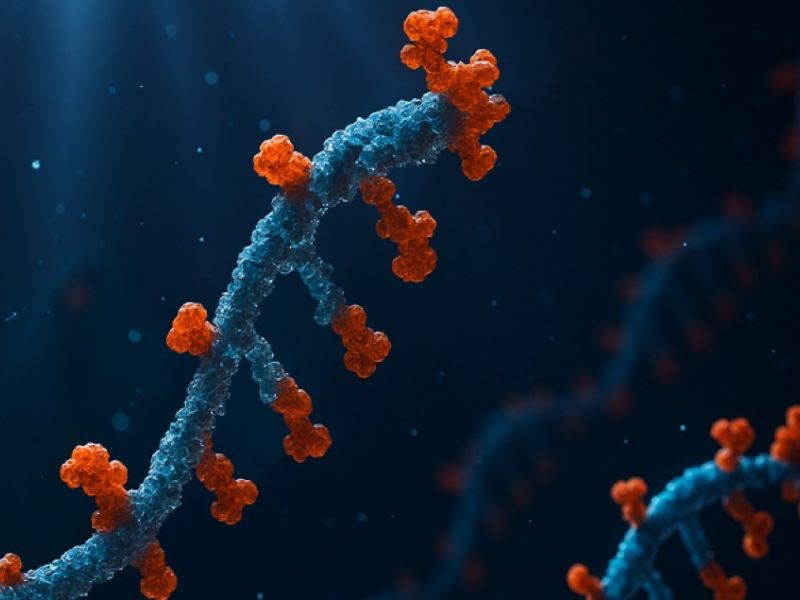

Australian scientists have developed a research platform called PROTEUS (PROTein Evolution Using Selection) that uses biological artificial intelligence to design and evolve molecules with new or enhanced functions directly within mammalian cells. According to the team, this technology represents a powerful new tool for creating more precise research instruments and gene therapies.
PROTEUS employs directed evolution, a lab technique that accelerates the natural process of evolution. While traditional evolution can take years or decades, PROTEUS can generate molecules with novel functions in just weeks. This approach has the potential to advance drug discovery and improve gene-editing technologies like CRISPR.
Creating Molecules Tailored for the Human Body
“This system allows us to create molecules finely tuned to work in the human body and develop drugs that would be extremely difficult or impossible to make with current methods,” said Professor Greg Neely, senior co-author and Director of the Functional Genomics Laboratory at the University of Sydney. He highlighted that, unlike conventional directed evolution, which primarily works in bacteria, PROTEUS operates in mammalian cells.
PROTEUS can tackle problems with unknown solutions, similar to how AI platforms respond to user input. For instance, it can explore millions of potential molecular sequences to find ones capable of effectively disabling a gene linked to disease. This dramatically shortens the time needed to identify effective solutions.
PROTEUS Advances Protein Engineering and Cancer Research
The team has already used PROTEUS to create improved proteins that respond more easily to drugs, as well as nanobodies that detect DNA damage—a key factor in cancer development. The system, however, is versatile and can enhance the function of a wide range of proteins and molecules.
The study was published in Nature Communications.
The original creation of directed evolution in bacteria was honored with the 2018 Nobel Prize in Chemistry.
“The development of directed evolution transformed biochemistry. Now, with PROTEUS, we can introduce a genetic problem into a mammalian cell—even one we don’t fully understand—and let the system work continuously, allowing us to observe how it tackles the challenge,” says lead researcher Christopher Denes from the Charles Perkins Centre and School of Life and Environmental Sciences.
Ensuring Stability Through Multiple Evolution Cycles
A major hurdle for Denes and his team was ensuring that mammalian cells could endure multiple cycles of evolution and mutation while remaining stable, without the system “cheating” by producing an easy but irrelevant solution.
They found the solution in chimeric virus-like particles, which combine the outer shell of one virus with the genetic material of another. This design prevented cheating and allowed the system to explore many possible solutions simultaneously. The best solutions became dominant, while ineffective ones were eliminated.
“PROTEUS is robust, stable, and independently validated. We encourage other labs to adopt this approach. Its use could accelerate the creation of new enzymes, molecular tools, and therapeutics,” says Denes.
“Our aim is to enhance gene-editing technologies and refine mRNA-based drugs for greater precision and potency,” adds Professor Greg Neely.
Read the original article on:greensavers.sapo