Author: Mauro Lucas

  • Feeling The future: New Wearable Device Mimics The Complexity of Human Touch

    Feeling The future: New Wearable Device Mimics The Complexity of Human Touch

    Credit: Pixabay

    Northwestern University engineers have developed a groundbreaking haptic technology that goes beyond simple vibrations to replicate complex touch sensations.

    While traditional haptic feedback relies on basic buzzing, human skin is equipped with sensors that detect pressure, stretching, and movement. The new compact, wireless device sits on the skin and applies force in multiple directions, creating sensations such as sliding, twisting, and stretching. This innovation, published in Science, offers a more nuanced and realistic sense of touch.

    Powered by a rechargeable battery and connected via Bluetooth, the device can integrate with virtual reality headsets, smartphones, and wearable electronics. It has potential applications in virtual experiences, assistive technology for visually impaired individuals, and remote healthcare.

    “Most haptic devices simply poke the skin,” explains lead researcher John A. Rogers. “We wanted to create a device capable of pushing, twisting, and sliding to replicate the full complexity of touch.”

    Advancing Haptics: Overcoming the Challenge of Skin Deformation with Full Freedom-of-Motion Actuators

    This innovation addresses a major challenge in haptics: replicating the intricate mechanics of skin deformation. Unlike current technologies that only deliver vibrations, the team’s full freedom-of-motion (FOM) actuator can apply force in all directions, engaging different mechanoreceptors in the skin.

    Measuring just a few millimeters, the actuator contains a small magnet and wire coils that generate forces strong enough to push, pull, or twist. When arranged in arrays, these actuators can simulate sensations like pinching, squeezing, and tapping.

    The device also includes an accelerometer to track its orientation and movement, enabling dynamic haptic feedback. This capability could enhance experiences like feeling textures while online shopping or navigating virtual spaces. Additionally, researchers successfully mapped musical characteristics into haptic sensations, allowing users to “feel” music through vibrations.

    By closing the gap between digital and physical interactions, this technology brings a more immersive, natural touch experience to virtual and augmented reality.


    Read Original Article: TechXplore

    Read More: Humans as Hardware: Harnessing Biological Tissue for Computing

  • Humans as Hardware: Harnessing Biological Tissue for Computing

    Humans as Hardware: Harnessing Biological Tissue for Computing

    Credit: Yo Kobayashi, 2025.

    Most computers rely on microchips, but what if the most powerful computational tool has been within us all along? As surprising as it may seem, a future where human tissue plays a direct role in computing could be closer than we think.

    In a study published in IEEE Access, Yo Kobayashi from the University of Osaka’s Graduate School of Engineering Science demonstrates that living tissue can process information and solve complex equations—just like a computer.

    This breakthrough builds on the concept of reservoir computing, where data enters a dynamic system, or “reservoir,” capable of encoding intricate patterns. A computational model then translates these patterns into meaningful outputs using a neural network.

    Human Tissue as a Computational Reservoir: A Groundbreaking First

    Common reservoirs include nonlinear dynamical systems like electrical circuits or tanks of fluid,” explains Kobayashi. “However, few studies have explored living organisms as reservoirs, and none until now have used in vivo human tissue.”

    To test this idea, Kobayashi had participants generate biomechanical data by bending their wrists at various angles while ultrasound images captured the resulting muscle deformations. These data points formed a biophysical reservoir capable of processing information.

    An ideal reservoir requires both complexity and memory,” says Kobayashi. “Since soft tissue naturally exhibits stress-strain nonlinearity and viscoelasticity, muscle tissue meets these criteria effortlessly.”

    Biophysical Reservoir Surpasses Traditional Models in Complex Equation Solving

    In benchmark tests, the biophysical reservoir outperformed standard linear regression models when solving complex nonlinear equations, demonstrating significantly higher accuracy.

    This innovation could have exciting applications, particularly in wearable technology. “In the future, our own tissue might serve as a built-in computational resource,” Kobayashi suggests. “A wearable device could offload calculations to muscle tissue, boosting performance.”

    With this proof of concept established, Kobayashi now aims to scale up the model for more advanced computations and explore other biomaterials for reservoir computing. If his research progresses, we may soon witness a shift from machine learning to organic learning, where biological systems redefine computation itself.


    Read Original Article: TechXplore

    Read More: AI’s Influence on Jobs: A Controversial Tech Debate

  • Spain Moves To Outlaw AI-generated Sexual Images.

    Spain Moves To Outlaw AI-generated Sexual Images.

    Credit: Pixabay

    Spain’s government introduced a draft bill on Tuesday to criminalize the use of artificial intelligence for generating sexually explicit images or videos of individuals without their consent. This initiative responds to growing global concerns about AI’s misuse, particularly in creating deepfake content.

    Deepfake technology, which produces realistic AI-generated images and videos, has been widely exploited for harmful purposes. According to a 2019 study by Dutch AI company Sensity, around 96% of deepfake videos online are non-consensual pornography, with women as the primary targets.

    Justice Minister Félix Bolaños stressed that sexually explicit or insulting deepfakes should be crimes against moral integrity. The measure is part of a broader bill to protect minors from digital risks and uphold privacy rights.

    Spain Confronts Rising Cases of AI-Generated Nude Images and Blackmail

    In recent years, Spain has grappled with several high-profile cases involving the distribution of AI-generated nude images of underage girls. In many of these instances, perpetrators not only created and shared these manipulated images but also attempted to blackmail their victims, demanding money in exchange for keeping the images private.

    Beyond targeting AI-generated explicit content, the bill also proposes stricter digital protections for minors. It would mandate smartphone and tablet manufacturers to include free parental control systems that activate by default. Additionally, online influencers would be required to implement age verification systems for their subscribers.


    Read Original Article: TechXplore

    Read More: ChatGPT Enhances its Image-Generation Capabilities

  • ‘Tiny Red Spots’ in the Early Universe Could Be Black Holes Pushing Their Limits

    ‘Tiny Red Spots’ in the Early Universe Could Be Black Holes Pushing Their Limits

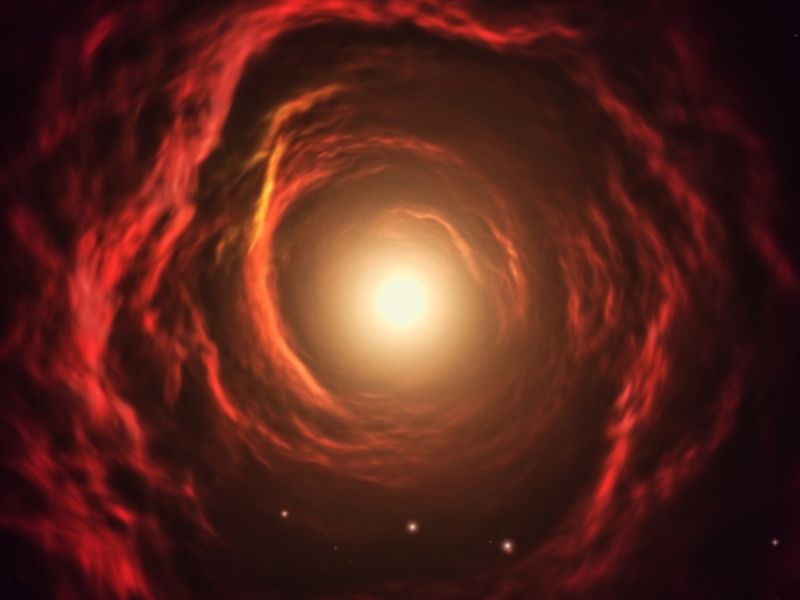
    Artist impression of a glowing ‘little red dot’ surrounded by dust. (Xuanyu Han/Getty Images)

    The James Webb Space Telescope has provided an unprecedented glimpse into the earliest stages of galaxy formation. Alongside these discoveries, it has also unveiled a few unexpected phenomena—among them, the appearance of small, highly redshifted objects known as “little red dots” (LRDs).

    While their exact nature remains uncertain, a new study offers a compelling explanation. One key observation is that their spectra are significantly broadened by motional Doppler effects, indicating that gas is orbiting at astonishing speeds—over 1,000 kilometers per second—around a central region. This suggests the presence of a supermassive black hole, a defining characteristic of active galactic nuclei (AGN).

    However, the AGN model presents some challenges. Unlike typical AGNs, LRDs exhibit an unusually flat infrared spectrum and emit very little in the X-ray and radio ranges. To investigate further, researchers analyzed high-resolution spectra from 12 LRDs observed by JWST and compared the data to supermassive black hole models.

    The models assumed a rapidly spinning accretion disk surrounded by a dense, ionized galactic cloud. This would absorb most X-ray and radio emissions, explaining their absence in the data.

    Images of little red dots seen in several deep-sky surveys of JWST. (NASA/ESA/CSA/STScI/Dale Kocevski (Colby College))

    Black Holes in LRDs May Be Growing at the Maximum Possible Rate

    If this shroud effectively blocks X-rays and radio waves, the black hole must be generating energy at an extraordinary rate to maintain the LRDs’ brightness in red and infrared wavelengths. Observations suggest that these black holes are accreting mass at nearly the Eddington Limit—the theoretical maximum at which a black hole can accumulate matter. Beyond this limit, the intense radiation would overpower gravitational forces, preventing further accretion.

    This paints a picture of LRDs as newly formed supermassive black holes in the early stages of rapid growth. Their estimated masses, ranging between 10,000 and 1,000,000 solar masses, are significantly smaller than fully developed supermassive black holes, further supporting this idea.

    Moreover, this model helps explain why LRDs are not observed at lower redshifts. As they accumulate matter at the Eddington Limit, they eventually clear away the ionized clouds surrounding them. Once this happens, they begin to resemble the more familiar active galactic nuclei seen throughout the cosmos.


    Read Original Article: Science Alert

    Read More: Researchers Challenge Their Own Findings by Generating Power From Earth’s Rotation

  • Researchers Challenge Their Own Findings by Generating Power From Earth’s Rotation

    Researchers Challenge Their Own Findings by Generating Power From Earth’s Rotation

    Credit: Pixabay

    Researchers harness tiny voltage from Earth’s rotation, revealing a potential new energy source.

    The foundation for this research dates back to 2016 when Princeton astrophysicist Christopher Chyba and JPL planetary scientist Kevin Hand initially argued that such energy generation was impossible. However, as they revisited their own conclusions, they began to question the assumptions underlying their proof. This shift in perspective led them, along with Spectral Sensor Solutions scientist Thomas Chyba, to explore whether specific conditions could enable power generation from Earth’s dynamics.

    To test their hypothesis, the researchers designed an experiment using a 29.9-centimeter manganese-zinc ferrite cylinder. This material was carefully selected because it encourages magnetic diffusion, allowing magnetic fields to spread more freely. The team placed the cylinder in a controlled, darkened lab to eliminate interference from light and positioned it precisely perpendicular to both Earth’s rotation and magnetic field.

    Precise Measurements Reveal 18 Microvolts, Strengthening Link to Earth’s Rotation

    The researchers used a custom-designed cylinder to harvest electricity. (Chyba et al., Physical Review Research, 2025)

    After carefully measuring and accounting for all variables, they detected a voltage of 18 microvolts. Notably, when they altered the cylinder’s angle or used a different material, the voltage disappeared. The correlation indicated a direct link to Earth’s rotation.

    “The device appeared to violate the conclusion that any conductor at rest with respect to Earth’s surface cannot generate power from its magnetic field,” said Christopher Chyba. To strengthen their findings, the team repeated the experiment in a residential building rather than a laboratory and observed the same response.

    While these results are promising, the generated electricity remains extremely small, and scaling up the process remains uncertain. Moving forward, independent researchers must replicate—or challenge—these findings to determine whether this method could become a practical energy source. Although many questions remain, this breakthrough demonstrates the potential for harnessing Earth’s natural forces in new and unexpected ways.


    Read Original Article: Science Alert

    Read More: For the First time, Scientists Observe Living Plant Cells Producing Cellulose and Constructing Cell Walls

  • Innovative Drug Delivery System Stores Doses as Crystals Beneath the Skin

    Innovative Drug Delivery System Stores Doses as Crystals Beneath the Skin

    Credit: Pixabay

    Many people fear injection needles, especially the large ones required for long-term medications. These drugs often need high doses delivered through thick needles because they contain polymers that form medication depots under the skin. The polymer content can range from 23% to 98% of the injection’s weight, making the process even more daunting.

    To make injections less intimidating, a team of researchers from Stanford University and MIT developed a new drug delivery method that reduces the need for bulky needles. Their approach, called Self-aggregating Long-acting Injectable Microcrystals (SLIM), transforms medications into tiny crystals that self-assemble into clusters.

    For their study, the team focused on levonorgestrel (LNG), a contraceptive with hydrophobic molecules capable of forming crystals. They suspended these crystals in benzyl benzoate, a solvent that mixes slowly with surrounding fluids once injected under the skin. This slow mixing allows the crystals to aggregate into a solid depot, which gradually releases the medication into the bloodstream.

    The SLIM approach involves injecting a drug in crystal form in a special solvent that enables those crystals to form a ‘depot’ under the skin when injected
    MIT / Nature Chemical Engineering

    Long-Lasting Drug Delivery with Minimal Polymer and Thinner Needles

    This method significantly reduces the polymer content needed—less than 1.6%—while still controlling the drug’s release rate. In tests on rats over 97 days, more than 85% of the medication remained intact in the depot, suggesting this approach could allow drug delivery over six months to two years using much thinner needles.

    Although this technique has so far been tested with a contraceptive, researchers believe it could be adapted for treatments like HIV and tuberculosis. Extending drug release over long periods is particularly beneficial for individuals in remote areas with limited access to healthcare.

    The team published their findings in Nature Chemical Engineering and plans to move forward with preclinical studies to evaluate its effectiveness in humans. If successful, this innovation could lead to fewer and smaller needles, making long-term drug administration far less intimidating.


    Read Original Article: New Atlas

    Read More: Next-generation weight-loss drugs are expected within a year.

  • Next-Generation Weight-Loss Drugs Are Expected Within a Year.

    Next-Generation Weight-Loss Drugs Are Expected Within a Year.

    Credit: Pixabay

    The next generation of GLP-1 receptor agonist drugs is on the horizon, with new weight-loss and diabetes treatments expected to hit shelves by early next year. These advancements follow the success of drugs like Ozempic and Wegovy, signaling a rapid evolution in obesity and diabetes care.

    Less than five years after the FDA approved Novo Nordisk’s semaglutide-based Wegovy for weight loss, the company is preparing to seek regulatory approval for CagriSema in early 2026. This once-weekly injection combines semaglutide with cagrilintide, a long-acting amylin analogue, offering the potential for improved glycemic control and greater weight-loss results. While it didn’t fully meet the ambitious targets set in early trials, its Phase III study still showed promising results—participants lost an average of 15.7% of their body weight over 68 weeks, compared to 3.1% in the placebo group.

    CagriSema is being developed for both diabetes and obesity treatment, but Novo Nordisk isn’t stopping there. The company recently struck a $2 billion deal with Chinese pharmaceutical firm United Biotechnology to license its novel weight-loss and diabetes drug, UBT251, for global markets. United Biotechnology will retain rights to market the drug in China, Hong Kong, Macau, and Taiwan while receiving additional royalties from international sales.

    UBT251: A Next-Gen “Triple-G” Drug Showing Promise in Obesity and Diabetes Treatment

    UBT251, a triple agonist—or “triple-G” drug—targets glucose-dependent insulinotropic polypeptide (GIP) and glucagon-like peptide-1 (GLP-1) receptors. Considered a next-generation obesity and diabetes treatment, it demonstrated significant potential in a small Phase II trial in China, where participants lost an average of 15.1% of their body weight in just 12 weeks. Novo Nordisk now aims to accelerate its global development through a Phase I/II trial.

    The urgency stems from intensifying competition with Eli Lilly, which recently completed Phase III trials for its own “triple-G” drug, retatrutide, for both obesity and diabetes. If retatrutide delivers the superior weight-loss results seen in early studies, Eli Lilly could gain a major advantage over Novo Nordisk in the battle for market dominance.

    Meanwhile, China has approved UBT251 for trials targeting type 2 diabetes, metabolic dysfunction-associated fatty liver disease, and chronic kidney disease.

    Novo Nordisk Expands Pipeline with UBT251 for Cardiometabolic Diseases

    “The addition of a candidate targeting glucagon, as well as GLP-1 and GIP, strengthens our clinical pipeline as we work to develop a broad range of differentiated treatments for highly prevalent diseases,” said Martin Holst Lange, Novo Nordisk’s executive vice president for development. “We look forward to expanding on United Biotechnology’s research and exploring UBT251’s potential across cardiometabolic conditions.”

    Under the deal, United Biotechnology will receive an upfront payment of $200 million, with potential milestone payments of up to $1.8 billion, plus tiered royalties.

    In the U.S., Novo Nordisk is also taking steps to address the rising use of compounded semaglutide. The company launched NovoCare, an online pharmacy offering uninsured Americans access to Wegovy for $499 per month, shipped directly to their homes—though certain conditions apply.


    Read Original Article: New Atlas

    Read More: Onion-skin Dye May Find Use In Greener UV-Protected Solar Cells

  • Biodiesel Wastewater Treatment: Harnessing Carbon and Recovering Valuable Compounds

    Biodiesel Wastewater Treatment: Harnessing Carbon and Recovering Valuable Compounds

    Manufacturing biodiesel, a cleaner-burning alternative to petroleum diesel, produces CO2 and wastewater containing pollutants. A University of Michigan research team troubleshoots an energy-efficient electrochemical method to capture CO2 and valuable chemicals while treating wastewater. Credit: ACS Publications

    Biodiesel offers a cleaner-burning alternative to petroleum diesel, but its production generates CO2 and hazardous wastewater, requiring additional steps for true sustainability. Researchers at the University of Michigan are refining a process that captures CO2 while treating biodiesel wastewater, simultaneously producing valuable co-products like fuels and green chemicals.

    Biodiesel production transforms fats—such as vegetable oils, animal fats, or recycled grease—into fuel through transesterification. In this reaction, methanol and a catalyst break fat molecules, creating glycerol and fatty acid esters. While fatty acid esters become biodiesel, glycerol enters the wastewater as a byproduct. If not properly treated, glycerol can deplete oxygen in water bodies, harming aquatic life.

    Early wastewater treatment methods focused on removing contaminants, but recent efforts aim to recover valuable materials, offsetting production costs. As biodiesel production expands, researchers see an opportunity to turn waste streams into resources.

    “By developing more stable electrocatalysts, we can harness renewable energy to recover value from waste,” said Joshua Jack, assistant professor of civil and environmental engineering at U-M and corresponding author of the study in Environmental Science & Technology.

    One promising method, electrochemical CO2 reduction (eCO2R), converts CO2 from biodiesel exhaust into value-added products using electricity. However, eCO2R typically requires high-purity water and costly metal catalysts to drive the oxygen evolution reaction (OER).

    To make the process more efficient and affordable, researchers are exploring electrochemical glycerol redox reaction (GOR) as an alternative. GOR uses glycerol’s ultra-low redox potential to reduce energy demand by 23% to 53%, depending on the catalyst. The catalyst type also determines which chemicals GOR produces. Nickel has emerged as a strong candidate due to its low cost, easy manufacturing, and ability to generate high-value compounds like formate, which sells for $146 per liter in the food industry.

    “Coupling GOR with CO2 electrolysis integrates sustainable wastewater treatment, CO2 capture, and green chemical production into a single process,” said Kyungho Kim, U-M postdoctoral research fellow and lead author of the study.

    While previous research focused on maximizing catalytic activity for GOR, long-term catalyst stability received less attention. To address this, the team tested a nickel catalyst over 24 hours of continuous operation.

    They developed a synthetic biodiesel wastewater containing glycerol, methanol, soap, and water. Using a flow cell with a nickel anode and platinum cathode, they applied an electric potential and observed catalyst performance. Over 24 hours, the nickel electrode’s efficiency dropped by 99.7%, primarily due to particle buildup blocking the surface.

    For real-world application, regular cleaning and maintenance will be essential to maintain nickel catalyst performance.

    “The analytical framework from this study provides a roadmap for evaluating catalyst stability, and the findings can improve catalyst design in various environmental processes,” Jack explained.

    This research marks an early step toward creating durable electrocatalysts capable of efficiently processing wastewater while capturing CO2.


    Read Original Article: TechXplore

    Read More: Geothermal Energy Could Supply Power for Almost All New Data Centers by 2030

  • Ancient Empire Brewed Psychedelic Beer to Build Alliances

    Ancient Empire Brewed Psychedelic Beer to Build Alliances

    Researchers speculate the leaders of the ancient Wari empire used beer spiked with a hallucinogenic drug to win over neighboring communities during large feasts
    J. OCHATOMA PARAVICINO/M. E. BIWAR ET. AL., ANTIQUITY (2021)

    A recent study in Antiquity reveals that an ancient South American civilization intentionally spiked a beer-like drink with psychoactive drugs to strengthen social bonds and expand its influence. This discovery provides some of the clearest archaeological evidence of ancient societies using hallucinogens for both recreation and social cohesion.

    The Wari civilization, which thrived in the Peruvian Andes between 500 and 1000 CE, serves as the focus of this research. Archaeological excavations at the Wari outpost of Quilcapampa uncovered evidence of large-scale brewing of chicha, a fermented drink common in the region. However, unlike other civilizations, the Wari infused their chicha with a hallucinogenic substance—an unusual practice that set them apart.

    Researchers identified traces of vilca seeds near chicha brewing sites. These seeds contain bufotenine, a known psychoactive compound traditionally inhaled or smoked. Yet, excavations revealed no smoking or snuffing tools, suggesting the Wari consumed vilca in liquid form instead. While historical accounts mention adding vilca to drinks, this study provides the first archaeological proof of its use in alcoholic beverages.

    More intriguingly, researchers propose that the Wari used this psychoactive chicha strategically. Unlike many ancient societies where hallucinogens were reserved for religious ceremonies or elite figures, the Wari appeared to incorporate them into large social gatherings. Mathew Biwer, a co-author of the study, noted in 2022 that this approach differed from traditional uses of hallucinogens, which were typically exclusive and ritualistic.

    Vilca-Infused Chicha: A Diplomatic Tool for Wari Expansion

    At Quilcapampa, vilca-infused chicha likely helped Wari elites forge alliances by offering an exclusive experience. Since vilca came from hundreds of miles away, guests couldn’t replicate it, creating a sense of indebtedness.

    “The Wari used vilca in chicha to impress guests who couldn’t recreate the experience,” Biwer told CNN. “This fostered social ties and reinforced Wari leaders’ power.”

    Researchers suggest Wari elites controlled vilca’s use to maintain status. While speculative, this theory highlights how the empire may have expanded influence through shared psychedelic experiences rather than force.

    Feasting as a Tool for Influence: How Wari Hosts Gained Power Through Reciprocity

    Biwer told Gizmodo in 2022 that Wari feasts carried social, economic, and political weight. Guests who received food and psychoactive drinks often felt obligated to reciprocate, creating long-term dependencies that strengthened the host’s influence.

    “This creates social obligations, translating into real power,” Biwer noted. “Feasts and surplus allow people to build relationships where some become indebted to others, generating influence.”

    Similar discoveries reveal ancient psychedelic use worldwide. In Egypt, a team led by Davide Tanasi uncovered a 200 BCE vase containing a fermented fruit drink mixed with Peganum harmala (Syrian Rue) and Nymphaea caerulea (Egyptian Blue Lotus). Syrian Rue enhances psychoactive effects, while Egyptian Blue Lotus was linked to rituals. Researchers believe this blend played a role in the Festival of Drunkenness, where participants consumed the brew, lost consciousness, and received visions from the god Hathor.

    These findings shed light on how ancient civilizations used psychoactive substances for social, religious, and political purposes, shaping history in unexpected ways.


    Read Original Article: New Atlas

    Read More: For the First time, Scientists Observe Living Plant Cells Producing Cellulose and Constructing Cell Walls

  • Study Maps Our Solar System’s Path Through a Gigantic Galactic Wave

    Study Maps Our Solar System’s Path Through a Gigantic Galactic Wave

    Credit: Pixabay

    Our Solar System moves through the Milky Way at about 200 km/s, following a complex orbit around the galaxy’s center. Along its journey, it has encountered different cosmic environments, some of which may have influenced Earth’s climate. New research suggests that around 14 million years ago, the Solar System passed through the Orion star-forming complex—a significant part of a larger structure known as the Radcliffe Wave. This wave, discovered in 2020, is an immense, wave-like formation of gas and dust stretching nearly 9,000 light-years across the Orion arm of the Milky Way.

    The Radcliffe Wave is home to several active star-forming regions, including the Orion molecular cloud complex and the Perseus and Taurus molecular clouds. Because of its density, this region likely compressed the Sun’s heliosphere—the protective bubble created by the solar wind—when the Solar System moved through it. As a result, more interstellar dust was able to enter the Solar System and potentially reach Earth, influencing climate patterns and leaving traces in geological records.

    A team of researchers, led by Efrem Maconi from the University of Vienna, published their findings in Astronomy and Astrophysics. Using data from the European Space Agency’s Gaia mission and spectroscopic observations, they reconstructed the movement of the Solar System and the Radcliffe Wave over millions of years. Their results indicate that the closest approach between the two occurred between 14.8 and 12.4 million years ago—precisely when Earth experienced the Middle Miocene Disruption (MMD). This period was marked by significant climatic shifts and widespread extinctions of both marine and terrestrial species.

    Tracing the Solar System’s Path: A Link Between the Radcliffe Wave and Earth’s Climate Shifts

    An overview of the Radcliffe wave and selected clusters in a heliocentric Galactic Cartesian frame. The Sun is placed at the center, and its position is marked with a golden-yellow. The red dots represent molecular clouds and tenuous gas bridge connections that constitute the Radcliffe wave. The blue points represent the 56 open clusters associated with the region of the Radcliffe wave that is relevant to this study. The size of the circles is proportional to the number of stars in the clusters. (Maconi et al. 2025)

    By analyzing the trajectories of 56 open star clusters associated with the Radcliffe Wave, the researchers confirmed that the Solar System and this dense interstellar region intersected from about 18.2 to 11.5 million years ago. This overlap suggests a possible connection between the influx of interstellar dust and Earth’s changing climate. João Alves, a professor of astrophysics at the University of Vienna and co-author of the study, explains that the study builds on previous research into the Radcliffe Wave and highlights how astronomical events may have had a direct impact on Earth’s past.

    One possible mechanism for this influence is the accumulation of interstellar dust in Earth’s atmosphere. The interstellar medium contains isotopes such as iron-60 (60Fe), a byproduct of supernova explosions, which can leave detectable signatures in geological records. While current technology may not yet be sensitive enough to confirm these traces, future advancements in detection methods could provide stronger evidence. Additionally, the increased presence of cosmic dust may have contributed to global cooling, a phenomenon previously proposed in a 2005 study suggesting that Earth encounters dense giant molecular clouds (GMCs) approximately every 100 million years.

    Solar System’s Passage Through Radcliffe Wave May Have Triggered Middle Miocene Climate Shift

    During the Middle Miocene, Earth was undergoing significant geological and climatic changes. The period is best known for the Middle Miocene Climatic Optimum (MMCO), a warm phase during which tropical ecosystems expanded. However, it was soon followed by the Middle Miocene Disruption, a period of cooling and extinction that closely aligns with the timing of the Solar System’s passage through the Radcliffe Wave. Researchers propose that interstellar dust could have played a role in this climatic shift by altering atmospheric composition or influencing cloud formation.

    The authors acknowledge that their findings rely on approximations due to the challenges of reconstructing the past structure and motion of interstellar gas clouds. However, their study offers compelling evidence that our Solar System’s journey through the Milky Way may have had tangible effects on Earth’s climate and evolutionary history.

    The well-known Orion Nebula (center), and the less well-known NGC 1977 (The Running Man Nebula) on the left. NGC 1977 was still forming when the Solar System passed through this region about 14 million years ago. (Chuck Ayoub/Wikimedia Commons/CC BY-SA 4.0)

    Alves Explains How Tracing the Solar System’s Path Reveals Interstellar Encounters’ Impact on Earth

    “This discovery builds upon our previous work identifying the Radcliffe Wave,” Alves notes. “By tracing our Solar System’s movement through the galaxy, we can begin to understand how these encounters with interstellar structures might have shaped Earth’s past environment.”

    Future research will explore the significance of this contribution in greater detail. The team plans to refine their models and investigate whether other periods of climate transition in Earth’s history might also correlate with the Solar System’s passage through dense interstellar regions. Advances in astrophysics, geology, and paleoclimatology could further uncover the intricate ways in which cosmic forces have influenced the evolution of our planet. Earth’s climate is affect by the internal process and the Milky Way.


    Read Original Article: Science Alert

    Read More: Breathtaking Lunar Sunset Images May Unravel a Long-Standing Mystery