Each year on March 14, math enthusiasts celebrate Pi Day, honoring one of the most famous irrational numbers. Represented by the Greek letter π and approximated as 3.14, pi highlights both the practicality and beauty of mathematics.
Pi defines the ratio of a circle’s circumference to its diameter, an unending, non-repeating decimal. Unlike other constants like e or the golden ratio, pi has gained widespread recognition, though some argue tau deserves more attention.
The 18th-century mathematician William Jones introduced the symbol π, likely short for “periphery.” Before that, fractions and descriptions attempted to capture its infinite nature. While Jones suspected pi’s exact value could never be fully expressed, Johann Lambert finally proved its irrationality in the 1760s.
For thousands of years, civilizations estimated pi’s value. Around 4,000 years ago, the Babylonians used 3.125, while an Egyptian text from 1650 BCE suggested 3.16049. Archimedes refined the calculation, estimating pi between 3 1/7 and 3 10/71 using polygons.
Why Pi Matters
(British Museum Department of Ancient Egypt and Sudan/PD)
As a fundamental mathematical constant, pi appears in countless equations, from geometry to physics. It describes natural phenomena like river meandering and atomic structures. Even in unrelated areas, pi surfaces in surprising ways—for example, the probability that two random numbers are relatively prime involves 6/π².
Beyond math, pi captivates people with its poetic nature. In 1988, physicist Larry Shaw noticed that March 14 (3/14) mirrored pi’s first digits, inspiring the first Pi Day celebration. Now, people worldwide mark the occasion by sharing math trivia, solving problems, and, of course, baking circular pies.
Scientists have managed to convert mouse skin cells directly into motor neurons, skipping the usual step of stem cells in between Depositphotos
MIT scientists have made a significant breakthrough in regenerative medicine by developing a highly efficient method to convert skin cells directly into brain cells, eliminating the need for an intermediate stem cell stage.
Traditionally, generating stem cells for medical treatments required harvesting them from embryonic tissue, raising ethical concerns. That changed in 2006 when Japanese researchers discovered how to reprogram mature cells into induced pluripotent stem cells (iPSCs), which can then transform into various cell types for treatment. However, this Nobel Prize-winning discovery has its challenges—many cells get stuck in transitional stages, reducing overall efficiency. While early methods had success rates below 0.1%, advancements have pushed that number closer to 100% in some cases.
Now, MIT researchers have found a way to bypass the stem cell stage entirely, directly converting one cell type into another with remarkable efficiency—over 1,000%. Essentially, each source cell produces 10 or more target cells, a dramatic improvement over previous techniques.
“Oftentimes, one of the challenges in reprogramming is that cells can get stuck in intermediate states,” explains Katie Galloway, senior author of two studies on the new technique. “By using direct conversion, we skip the iPSC stage and go straight from a somatic cell to a motor neuron.”
The original method relied on four genes encoding transcription factors delivered via viral vectors to transform skin cells into iPSCs. In this new approach, researchers tested six previously studied transcription factors, experimenting to find the minimal yet most effective combination. After extensive testing, they identified three key factors—NGN2, ISL1, and LHX3—that could complete the conversion.
Enhancing Efficiency: Optimized Gene Delivery for Superior Cell Reprogramming
Mouse motor neurons (green) grown directly from skin cells were able to integrate with others in the animal’s brain after transplantation MIT
By packaging all three factors into one viral vector and using a second to stimulate proliferation, they enhanced reprogramming efficiency.
“Hyperproliferative cells respond better to transcription factors, making the process more efficient,” Galloway explains.
The team converted mouse skin cells into motor neurons with over 1,000% efficiency. The new neurons showed electrical activity, integrated into mouse brains, and formed connections.
The researchers also adapted the technique for human cells, though current efficiency ranges from 10 to 30%. While lower than the mouse model, it’s a vast improvement over early iPSC methods, which had just a 0.1% success rate. The team aims to refine the process to boost human cell conversion rates further.
If successful, this approach could revolutionize treatments for neurodegenerative diseases like ALS by regenerating motor neurons. Beyond that, the method holds potential for converting cells into other specialized types, opening doors for a wide range of regenerative therapies.
This Thursday night, for the first time in nearly two-and-a-half years, the Moon will put on a stunning celestial display, glowing in a deep red hue.
What was once seen as a harbinger of doom is now a perfect reason to step outside and witness the wonders of nature. So grab a blanket and a warm drink, settle in, and enjoy the show as the Moon transforms for a few hours.
The term “blood moon” is an informal way to describe the Moon’s reddish appearance during a total lunar eclipse.
Less commonly, it can also refer to a sequence of four total lunar eclipses observed from the same location within two years. Since total eclipses occur only four to five times per decade in any given spot, witnessing four consecutive ones is a rare event.
Why Does the Moon Turn Red?
Diagram of a lunar eclipse (not to scale).
Like any solid object in the path of light, Earth blocks sunlight, casting a shadow into space. However, unlike Earth’s rocky surface, its atmosphere is thin enough to let some light pass through. As sunlight filters through the atmosphere, shorter blue wavelengths scatter, while longer red wavelengths bend around the planet, giving the Moon its eerie crimson glow.
This same scattering effect makes the sky appear blue during the day and causes sunrises and sunsets to glow in shades of orange and red.
Because of this refraction and scattering, Earth casts a cone-shaped shadow with a glowing, rust-colored fringe. The Moon only crosses this shadow a few times a year due to its small size, its proximity to Earth, and its slightly tilted orbit.
On rare occasions, a total lunar eclipse coincides with a supermoon and a blue moon, creating what NASA calls a Super Blue Blood Moon—a seemingly paradoxical but spectacular event.
During a total lunar eclipse, direct sunlight is completely blocked, leaving only the refracted red light to illuminate the Moon. The result is an eerie, blood-like glow across its surface—a stunning sight that serves as a reminder of the cosmic ballet constantly unfolding above us.
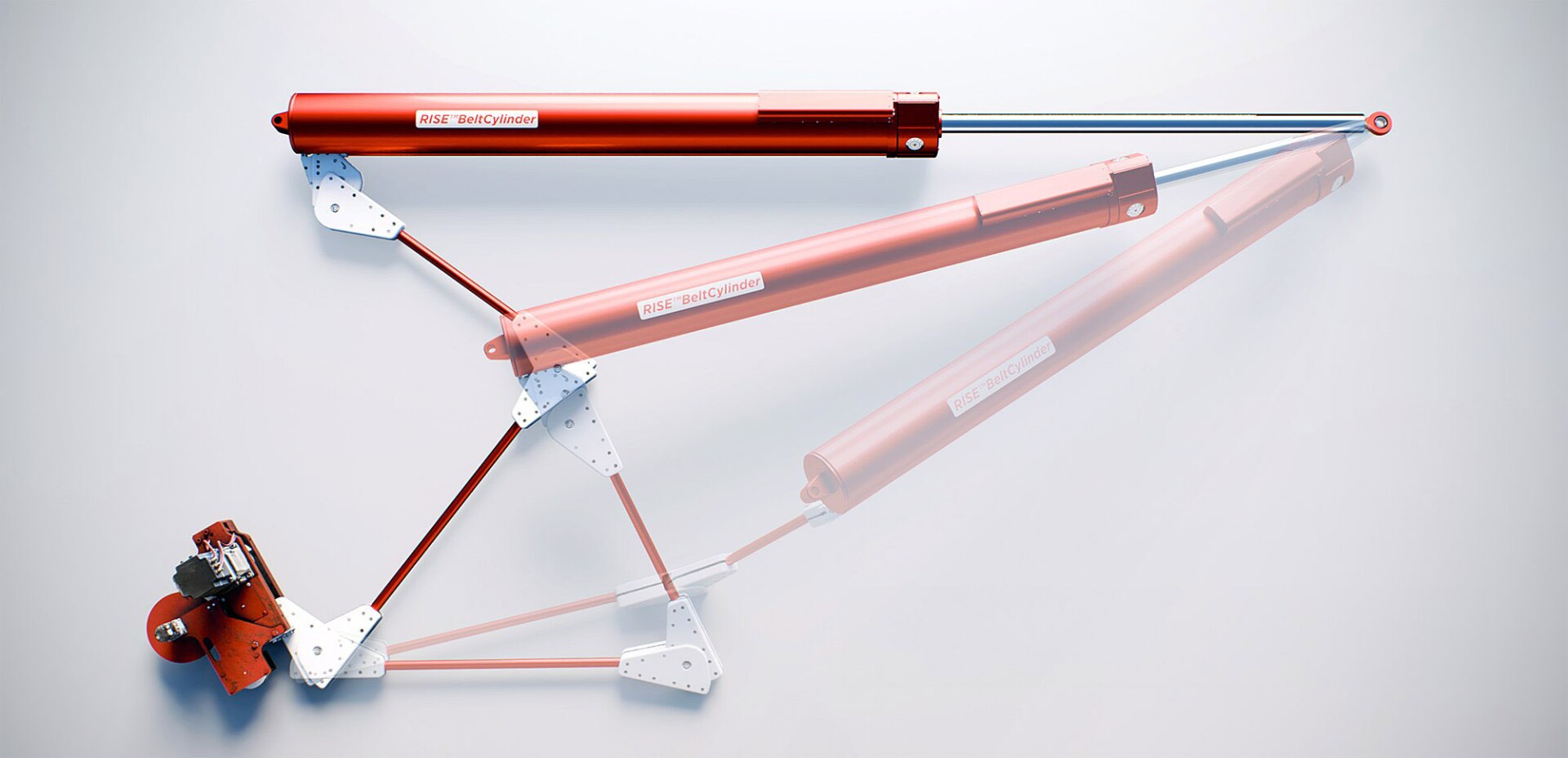
Rise Robitics Superjammer robotic arm is after that Guinness Book of World Records title
Rise Robotics is gearing up to claim a spot in the Guinness Book of World Records with the world’s strongest non-hydraulic robotic arm. For nearly a decade, this record has remained uncontested since the Fanuc M-2000iA/2300 lifted an impressive 5,070 lb (2,300 kg). Now, Rise aims to shatter that benchmark using a surprisingly traditional approach—belts and pulleys.
At first glance, this method may seem outdated, but Rise has reengineered it into a high-performance system that rivals modern high-pressure hydraulics. Dubbed “Beltdraulic” technology, the system eliminates hydraulic fluid entirely, relying instead on electric motors to wind and unwind belts within its custom-built stanchions, known as BeltCylinders.
Part of how the Beltdraulic system works with the belt redirectors and Beltcycliner
In a newly released video, Rise demonstrated the sheer power of its Superjammer robotic arm. The machine effortlessly hoisted 6,460 lb (2,930 kg) nearly 15 ft (4.6 m) into the air before smoothly articulating the load forward and backward. Surpassing the standing record by nearly 1,400 lb (635 kg), Superjammer is already proving itself a strong contender ahead of its official world record attempt. “This unprecedented feat highlights RISE Robotics’ commitment to redefining robotic actuation efficiency, durability, and power,” the company stated.
Beltdraulics: A Smarter, More Efficient Alternative to Hydraulics
The heart of the Beltdraulic system
Beyond raw strength, Beltdraulics offer additional advantages. As a fully electric and emissions-free system, it reduces power or fuel consumption by 65–90%. It’s also AI-ready, making it compatible with fully autonomous machines. Designed to last the lifetime of the equipment it powers, the Beltdraulic drive minimizes maintenance needs and eliminates common hydraulic issues like drift, leaks, and costly repairs. The system also enhances load control, reducing backlash and slop while providing smoother, more precise movements. Additionally, linkages replace traditional greased slides, further cutting maintenance costs. According to Rise, the Beltdraulic system operates three times faster than standard hydraulics.
For those eager to witness history in the making, Rise Robotics will attempt its official world record lift on March 20, 2025, at 4 PM in Union Square, Somerville, Massachusetts. While the location is more commonly associated with restaurants and nightlife than heavy machinery, spectators are sure to be in for an unforgettable demonstration.
Eye injuries that damage the cornea often lead to permanent blindness, with few treatment options available. However, a new clinical trial has successfully restored vision in patients by transplanting stem cells from their healthy eyes.
The cornea, the eye’s outermost layer, plays a crucial role in focusing light toward the retina. Because it constantly faces environmental hazards, it contains limbal epithelial stem cells that repair minor damage and maintain a smooth surface. But when severe injuries—such as thermal or chemical burns—occur, these resident stem cells become overwhelmed, leaving the cornea irreversibly damaged. In such cases, even a cornea transplant may fail to take hold.
Researchers at Massachusetts Eye and Ear explored a promising solution called cultivated autologous limbal epithelial cells (CALEC). This treatment involves extracting stem cells from a patient’s uninjured eye, expanding them in the lab over several weeks, and then transplanting them into the damaged eye.
Clinical Trial Monitors Stem Cell Treatment for Corneal Repair Over 18 Months
In a phase 1/2 trial, 14 patients underwent the procedure and were monitored for 18 months. Researchers primarily assessed success based on how well the treatment repaired the cornea’s surface, with a secondary focus on improvements in visual acuity.
By the three-month mark, seven patients (50%) had fully restored corneas. By 12 months, that number had risen to 11 (79%). Two additional patients experienced partial success, bringing the overall success rate to 92%.
Some patients required additional treatment—three participants needed a second stem cell transplant, and one of them achieved full success by the study’s end. Most participants regained some level of vision in their injured eye, with a few improving from legally blind to low vision.
Importantly, no serious side effects were reported in either the donor or recipient eyes. These promising results lay the groundwork for larger clinical trials with extended follow-ups before CALEC can move toward FDA approval.
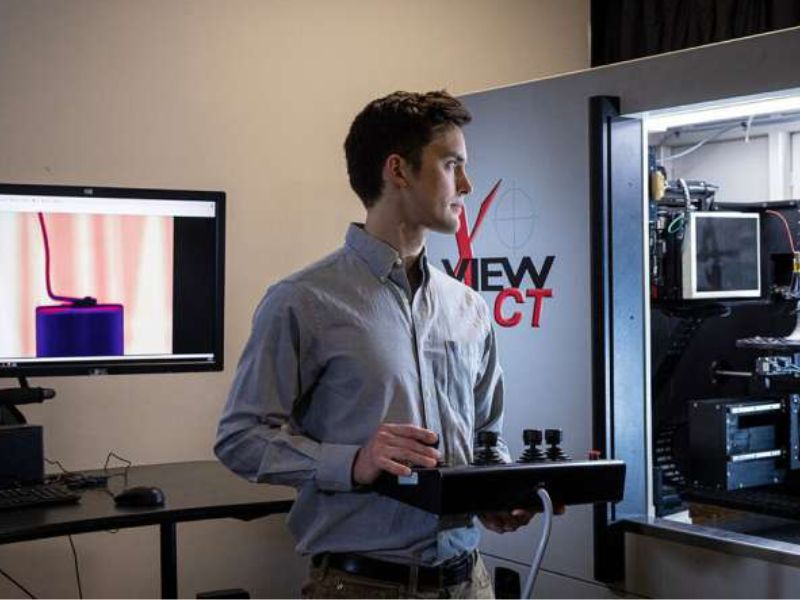
Brendan Croom, a senior materials scientist at Johns Hopkins Applied Physics Laboratory, is pictured in APL’s X-ray Computed Tomography Laboratory, where high-resolution imaging helps researchers analyze additively manufactured materials. Croom and his team are using artificial intelligence to optimize titanium alloy production, uncovering faster, more efficient manufacturing methods with potential applications in aerospace, shipbuilding, and beyond.
AI is transforming titanium alloy manufacturing, making it faster, stronger, and more precise. Traditionally, producing high-performance titanium components—used in spacecraft, submarines, and medical devices—was slow and resource-intensive. Even with advanced 3D printing, extensive testing was required to fine-tune manufacturing conditions.
A team from Johns Hopkins Applied Physics Laboratory (APL) and the Whiting School of Engineering is changing that by integrating AI-driven techniques. Their approach accelerates production while enhancing material strength, a breakthrough with implications for aerospace, defense, and medical industries.
“The nation urgently needs faster manufacturing to meet evolving challenges,” said Morgan Trexler, program manager for Extreme and Multifunctional Materials at APL. “We’re advancing laser-based additive manufacturing to develop mission-ready materials at speed.”
AI Unveils New Possibilities for Titanium 3D Printing in Additive Manufacturing
Published in Additive Manufacturing, the team’s findings focus on Ti-6Al-4V, a widely used titanium alloy prized for its strength and low weight. Using AI-driven models, researchers mapped out previously unexplored conditions for laser powder bed fusion, a 3D-printing method. Their results challenge long-held assumptions, revealing a broader processing window for creating dense, high-quality titanium with customizable properties.
“For years, we thought certain processing settings were ‘off-limits’ because they compromised quality,” said Brendan Croom, a senior materials scientist at APL. “AI allowed us to explore a much wider range, leading to faster printing while maintaining—or even improving—strength and flexibility.”
These advancements have major implications for industries relying on high-performance titanium. Stronger, lighter, and faster-to-produce components could revolutionize shipbuilding, aviation, and medical device manufacturing. The work also aligns with broader efforts to refine additive manufacturing for space and defense applications.
APL researchers developed machine learning models to predict the porosity, strength and ductility of additively manufactured Ti-6Al-4V as a function of processing conditions, identifying new ways to tailor the properties of Ti-6Al-4V. Credit: Johns Hopkins APL/Brendan Croom
At the Whiting School of Engineering, researchers like Somnath Ghosh are integrating AI-driven simulations to predict how 3D-printed materials will perform under extreme conditions. Ghosh co-leads a NASA Space Technology Research Institute focused on using advanced computational models to speed up material qualification and certification. This effort complements APL’s mission to accelerate titanium manufacturing.
A Major Leap Forward
APL has long worked to refine additive manufacturing. When Steve Storck, chief scientist for manufacturing technologies at APL, joined in 2015, he saw its limitations. “One of the biggest barriers for the Department of Defense was material availability,” he said. “Titanium was one of the few optimized for 3D printing, but we needed to expand the range and improve processing parameters.”
APL developed a rapid material optimization framework, leading to a 2020 patent. By 2021, the team published a study on how defects affect mechanical properties. That groundwork enabled their latest breakthrough: using machine learning to explore an unprecedented range of processing conditions—something impractical with traditional trial-and-error methods.
Their AI-driven approach revealed a high-density processing regime once dismissed due to concerns about material instability. By making targeted adjustments, they unlocked new ways to process Ti-6Al-4V, surpassing previous performance limits.
“We’re not just making small improvements,” Storck said. “We’re discovering entirely new processing methods that push performance beyond what was thought possible.”
AI Unlocks Hidden Patterns
Material properties depend on processing factors like laser power, scan speed, and track spacing. Traditionally, finding the right combination was a slow process of manual adjustments. Instead, the team used Bayesian optimization, a machine learning technique that predicts the best next experiment based on prior data.
By analyzing early test results and refining predictions with each iteration, AI quickly identified optimal processing conditions. This allowed researchers to virtually test thousands of configurations before selecting a few for physical trials. The results overturned long-standing beliefs about which laser settings produce the best material properties.
“This isn’t just about faster production,” Croom said. “It’s about balancing strength, flexibility, and efficiency. AI helps us explore processing regions we wouldn’t have considered.”
Storck emphasized that their approach customizes materials for specific needs rather than relying on one-size-fits-all solutions. “Whether it’s a submarine operating in the Arctic or a flight component enduring extreme conditions, we can now optimize materials for each unique challenge while maintaining peak performance.”
Expanding the machine learning model to predict even more complex behaviors is a key goal. While the team’s initial work focused on density, strength, and flexibility, they aim to model factors like fatigue resistance and corrosion.
“This research demonstrates AI’s power in data-driven manufacturing,” Croom said. “It used to take years to understand how new materials perform in real-world environments. Now, we can gain that knowledge in weeks and use it to manufacture superior alloys rapidly.”
The success of this AI-driven approach opens doors for broader applications. While the study focused on titanium, the same methods apply to other metals and manufacturing techniques, including alloys designed specifically for 3D printing.
The Future of Manufacturing
One promising area for future research is in situ monitoring—real-time tracking and adjustments during the manufacturing process. Storck envisions a future where metal 3D printing is as seamless as home 3D printing: “We see a paradigm shift where additive manufacturing systems self-adjust as they print, ensuring perfect quality without extensive post-processing.”
By harnessing AI and high-throughput testing, this breakthrough is setting the stage for the next generation of high-performance materials, with far-reaching benefits across industries.
Globular clusters, such as NGC 1866, contain very old Population II stars, the generation that followed Population III. (ESA/Hubble & NASA)
Long before stars illuminated the cosmos, the Universe existed in a vast sea of hydrogen and helium. Only when these gases clumped together under immense pressure did the first stars ignite, forging heavier elements in their fiery cores.
While scientists have long theorized about these early stars—known as Population III stars—no one has ever seen them. However, a new study could change that.
In a preprint submitted to The Astrophysical Journal and uploaded to arXiv, an international team led by Seiji Fujimoto from the University of Texas at Austin describes what may be a galaxy filled with these elusive objects. Named GLIMPSE-16403, this galaxy is not yet confirmed as a Population III host, but its discovery signals that we may be closer than ever to identifying the Universe’s first stars.
Unveiling the Cosmic Dawn
The Cosmic Dawn refers to the first billion years after the Big Bang, when stars and galaxies began forming and illuminating the cosmos. These early Population III stars played a crucial role in shaping the Universe, producing elements heavier than hydrogen and helium through fusion and explosive events.
So far, astronomers have only detected indirect traces of these first-generation stars, never the stars themselves. One challenge is their likely immense size—much larger than today’s stars. Since larger stars burn through their fuel quickly, these ancient giants likely vanished long ago, leaving only the elements they forged behind.
Understanding these early stars is key to unraveling how the Cosmic Dawn unfolded. The James Webb Space Telescope (JWST), the most powerful space telescope ever built, is our best tool for this search. Optimized for detecting faint infrared signals from the distant past, JWST is helping astronomers peer deeper into the early Universe than ever before.
Larger stars, like these blue-white ones in the Large Magellanic Cloud, burn significantly hotter and faster than smaller ones. (ESA/Hubble, NASA and D. A. Gouliermis)
A Breakthrough Candidate
Fujimoto’s team focused their search on galaxies emitting strong hydrogen and helium signals but lacking signs of heavier elements. Their analysis yielded two potential candidates, one of which—GLIMPSE-16403—met all the criteria for a Population III galaxy. Located about 825 million years after the Big Bang, it currently stands as the most promising lead in the search for the first stars.
Further studies will be needed to confirm the nature of the stars within GLIMPSE-16403. Obtaining a detailed spectrum will be challenging due to the immense distance, but this discovery marks a thrilling step forward.
“A century ago, our understanding of the cosmos expanded beyond the Milky Way with the discovery of other galaxies,” the researchers note. “As we reflect on the last hundred years of astronomical breakthroughs, it’s astonishing to think we may soon detect the very first stars that illuminated the Universe.”
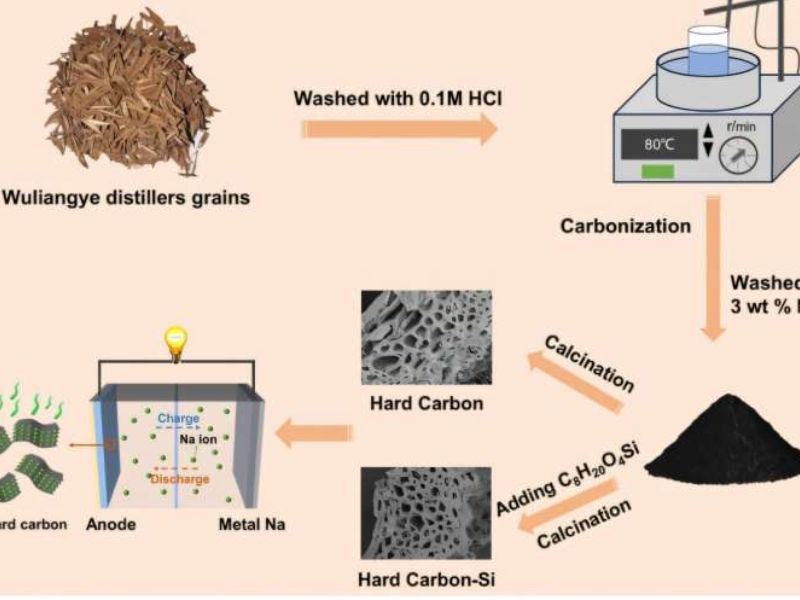
Synthesis process of hard carbon and the application of the battery. Credit: ACS Applied Materials & Interfaces (2025). DOI: 10.1021/acsami.4c17922
A research team from the University of Electronic Science and Technology of China, collaborating with baijiu manufacturer Wuliangye, has developed a carbon-based anode for sodium-ion batteries using baijiu sediment. Their study, published in ACS Applied Materials & Interfaces, details how they processed the sediment to enhance its suitability as an anode material.
Baijiu, a widely consumed alcoholic beverage in China, is traditionally made from wheat or rice and has a high alcohol content. The distillation process leaves behind sediment, which is typically repurposed as fertilizer or livestock feed. However, the researchers discovered that this byproduct contains valuable components for creating a carbon anode.
For years, lithium-ion batteries have dominated the market, powering everything from handheld devices to large-scale energy storage solutions and electric vehicles. Despite their widespread use, these batteries are expensive and pose fire hazards, prompting scientists to seek safer, more cost-effective alternatives. One promising candidate is the sodium-ion battery. However, to make it a viable replacement, researchers must improve its charge density and address the issue of micropore collapse in carbon anodes. This study focuses on solving the latter challenge.
From Waste to Power: Processing Baijiu Sediment into a High-Performance Carbon Anode
Transforming baijiu sediment into a functional carbon anode required multiple treatment steps. The researchers began by washing and drying the sediment before subjecting it to acid leaching and pre-carbonization. To eliminate silica, they soaked the material in sodium hydroxide at high temperatures and combined it with ethyl orthosilicate. After an ultrasound treatment and high-temperature baking, the final product—a silicon-doped hard carbon—was ready. The team named it HC-1100Si-1.
To evaluate performance, the researchers integrated their anode into a standard sodium-ion battery. The results showed a reversible capacity of 281.5 mAh/g at 1°C and a charge retention of 91.9% after 100 cycles. While these figures do not yet surpass current commercial battery standards, the team believes their anode could be useful in applications requiring frequent charging.
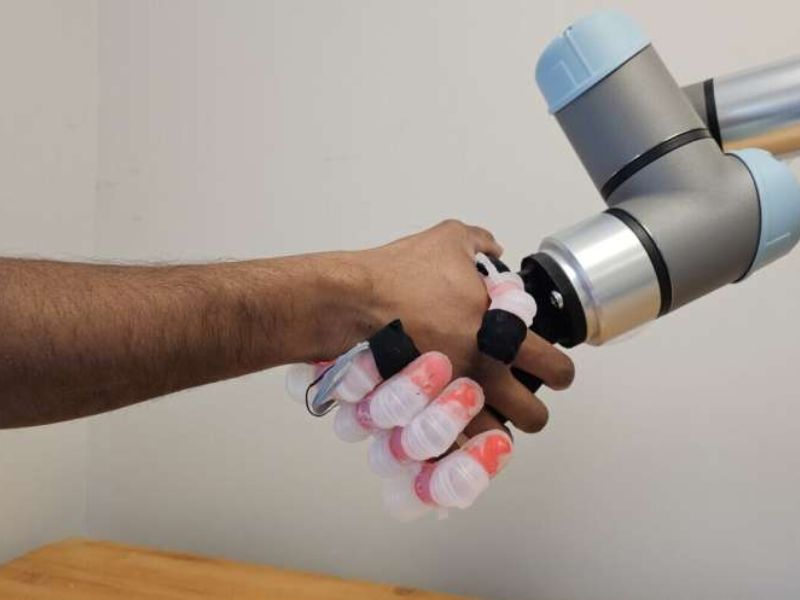
The new hybrid robotic hand blends soft and rigid parts with touch-sensitive technology, allowing for precise and flexible object handling. Credit: Sriramana Sankar / Johns Hopkins University
Johns Hopkins University engineers have created a groundbreaking prosthetic hand that can delicately grip plush toys, securely hold water bottles, and handle other everyday objects with human-like precision. By carefully adjusting its grasp, the hand prevents damage or mishandling, offering a practical solution for individuals with hand loss while also advancing robotic interaction with the environment.
Unlike traditional robotic hands, which tend to be either too rigid or too soft, this hybrid design balances flexibility and strength, enabling more natural movement and touch sensitivity. The research, published in Science Advances, introduces an innovative system that mimics the physical and sensory functions of a human hand.
“Our goal from the start was to create a prosthetic that closely replicates the human hand in both function and feel,” explained Sriramana Sankar, the biomedical engineer leading the project. “We want individuals with upper-limb loss to interact freely with their surroundings, safely hold their loved ones, and regain confidence in daily tasks.”
Developed by the same research team that introduced the world’s first electronic “skin” with a human-like sense of pain in 2018, the prosthetic incorporates a multi-finger system made of rubber-like polymers and a rigid 3D-printed internal skeleton. Inspired by the layers of human skin, it features three layers of tactile sensors, allowing it to detect different shapes and surface textures rather than just basic touch.
Each soft, air-filled finger joint responds to muscle signals from the forearm, while machine-learning algorithms process sensory feedback to create a lifelike sense of touch. “The system translates signals from the artificial touch receptors into nerve-like messages, delivering natural sensory feedback through electrical nerve stimulation,” Sankar added.
In laboratory tests, the prosthetic hand successfully identified and manipulated 15 different objects, ranging from soft stuffed animals and delicate dish sponges to sturdy pineapples and metal water bottles. It outperformed existing alternatives with a 99.69% success rate, dynamically adjusting its grip to prevent slipping or crushing fragile items. One of its most impressive feats was picking up a thin plastic cup filled with water using only three fingers—without denting or spilling it.
“The human hand isn’t entirely rigid or purely soft—it’s a hybrid system with bones, soft joints, and tissue working together,” Sankar said. “That’s exactly what we aimed to replicate. This is uncharted territory for robotics and prosthetics, which have not fully embraced hybrid technology before.”
Restoring Touch: The Three Key Components of Next-Generation Prosthetic Hands
To restore a sense of touch for amputees, prosthetic hands must integrate three critical components: sensors to detect environmental feedback, a system to convert that data into nerve-like signals, and a method to stimulate nerves so the user can perceive sensations. Nitish Thakor, a Johns Hopkins biomedical engineering professor who directed the research, emphasized how the bioinspired design accomplishes this by using muscle signals from the forearm to control grip strength and movement.
“Our system mimics how the human nervous system works,” Thakor explained. “If you’re holding a cup of coffee, your fingertips and palm sense when it starts slipping, sending signals to your brain. This prosthetic uses similar principles—its touch receptors produce nerve-like messages so the robotic hand ‘knows’ what it’s touching and reacts accordingly.”
While this breakthrough in hybrid robotics could transform both prosthetic technology and robotic applications, further refinements are still needed. Future enhancements may include stronger grip forces, additional sensors, and industrial-grade materials.
“This level of dexterity isn’t just critical for next-generation prosthetics,” Thakor noted. “Future robotic hands must handle both delicate objects like glass or fabric and heavier, more durable materials. By combining soft and rigid elements—just like human skin, tissue, and bones—this hybrid approach paves the way for more advanced, human-like robotics.”
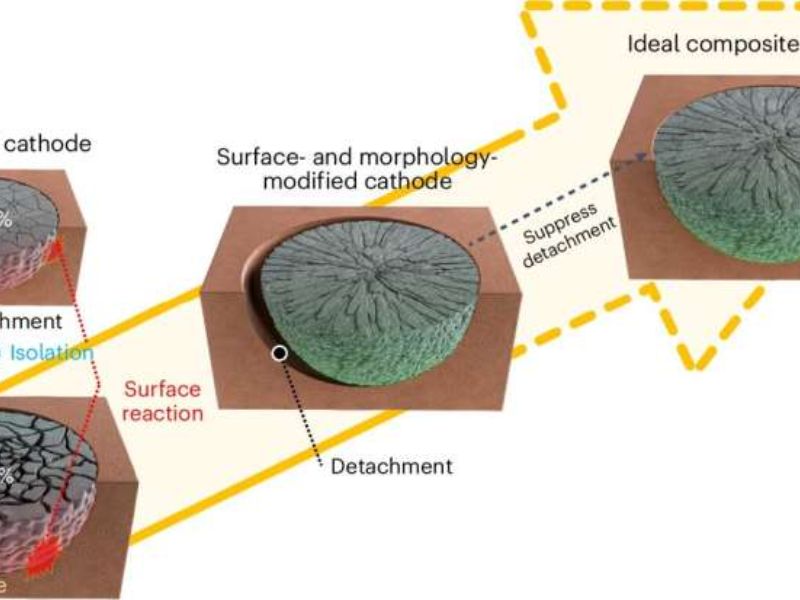
Schematic illustration of strategies to overcome each factor of capacity fading in ASSBs. Credit: Nature Energy (2025). DOI: 10.1038/s41560-025-01726-8
Energy researchers are continuously exploring new battery technologies to advance the electronics industry. Their goal is to develop batteries that charge faster, last longer, and offer extended overall lifespans. Among the most promising options are all-solid-state batteries (ASSBs), which could meet these demands.
Unlike conventional lithium-ion (Li-ion) batteries that use liquid electrolytes, ASSBs rely on solid electrolytes. This design enhances safety since solid electrolytes are less likely to catch fire and allows for higher energy densities, meaning they can store more energy.
A key component of these batteries is the cathode active material (CAM), responsible for storing and releasing lithium ions. Nickel (Ni)-rich layered materials have shown great potential as CAMs, but they also present challenges. Studies have revealed that Ni-rich cathodes contribute to capacity fading—reducing the battery’s ability to hold a charge over time. This decline results from chemical reactions at the CAM-electrolyte interface, along with structural changes like expansion, contraction, and particle disintegration.
To better understand how Ni content affects battery degradation, researchers at Hanyang University in South Korea conducted a study published in Nature Energy. Their work led to the development of improved Ni-rich cathodes designed to enhance the performance and lifespan of ASSBs.
“ASSBs with Ni-rich layered CAMs and sulfide solid electrolytes hold great potential as next-generation batteries due to their high energy density and safety,” wrote Nam-Yung Park, Han-Uk Lee, and their team. “However, severe capacity fading occurs due to surface degradation at the CAM-electrolyte interface and drastic lattice volume changes, leading to inner-particle isolation and CAM detachment from the electrolyte.”
Analyzing Degradation: Investigating Ni-Rich Cathodes with Varying Compositions
Crack formation behavior in S-Ni90 and SM-Ni90 CAMs at the charged state. Credit: Nature Energy (2025). DOI: 10.1038/s41560-025-01726-8
To identify and quantify the factors contributing to degradation, the researchers synthesized four types of Ni-rich cathodes with varying Ni content (80–95%). These included pristine Li[NixCoyAl1−x−y]O2 cathode materials, boron-coated CAMs, Nb-doped CAMs, and CAMs that were both boron-coated and Nb-doped. They then analyzed how each variation affected the degradation process.
Their findings revealed that in cathodes with 80% Ni, surface degradation at the CAM-electrolyte interface was the primary cause of capacity fading. However, when Ni content exceeded 85%, inner-particle isolation and CAM detachment from the electrolyte played a more significant role.
Using these insights, the team engineered new Ni-rich CAMs with modified surfaces and structures. These materials featured columnar designs that reduced particle detachment and inner-particle isolation. When tested in a pouch-type full cell with a C/Ag anode-less electrode, the improved cathodes retained 80.2% of their initial capacity after 300 cycles.
This study provides valuable insights into the challenges of ASSBs and offers a pathway toward more durable, high-performance batteries. These advancements could accelerate the widespread adoption of ASSBs, bringing next-generation battery technology closer to reality.
We use cookies on our website to give you the most relevant experience by remembering your preferences and repeat visits. By clicking “Accept All”, you consent to the use of ALL the cookies. However, you may visit "Cookie Settings" to provide a controlled consent.
This website uses cookies to improve your experience while you navigate through the website. Out of these, the cookies that are categorized as necessary are stored on your browser as they are essential for the working of basic functionalities of the website. We also use third-party cookies that help us analyze and understand how you use this website. These cookies will be stored in your browser only with your consent. You also have the option to opt-out of these cookies. But opting out of some of these cookies may affect your browsing experience.
Necessary cookies are absolutely essential for the website to function properly. These cookies ensure basic functionalities and security features of the website, anonymously.
Cookie
Duration
Description
cookielawinfo-checkbox-analytics
11 months
This cookie is set by GDPR Cookie Consent plugin. The cookie is used to store the user consent for the cookies in the category "Analytics".
cookielawinfo-checkbox-functional
11 months
The cookie is set by GDPR cookie consent to record the user consent for the cookies in the category "Functional".
cookielawinfo-checkbox-necessary
11 months
This cookie is set by GDPR Cookie Consent plugin. The cookies is used to store the user consent for the cookies in the category "Necessary".
cookielawinfo-checkbox-others
11 months
This cookie is set by GDPR Cookie Consent plugin. The cookie is used to store the user consent for the cookies in the category "Other.
cookielawinfo-checkbox-performance
11 months
This cookie is set by GDPR Cookie Consent plugin. The cookie is used to store the user consent for the cookies in the category "Performance".
viewed_cookie_policy
11 months
The cookie is set by the GDPR Cookie Consent plugin and is used to store whether or not user has consented to the use of cookies. It does not store any personal data.
Functional cookies help to perform certain functionalities like sharing the content of the website on social media platforms, collect feedbacks, and other third-party features.
Performance cookies are used to understand and analyze the key performance indexes of the website which helps in delivering a better user experience for the visitors.
Analytical cookies are used to understand how visitors interact with the website. These cookies help provide information on metrics the number of visitors, bounce rate, traffic source, etc.
Advertisement cookies are used to provide visitors with relevant ads and marketing campaigns. These cookies track visitors across websites and collect information to provide customized ads.