Author: Mauro Lucas

  • Versatile Solar Film Nears Market Readiness

    Versatile Solar Film Nears Market Readiness

    Power Roll’s solar film is inching closer to becoming cheap to produce, and more efficient at generating energy as well
    Power Roll / The University of Sheffield

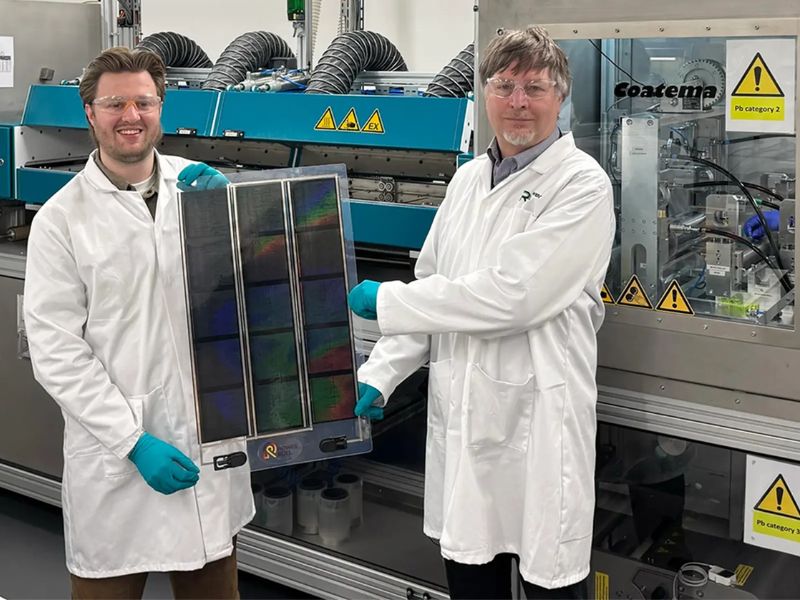
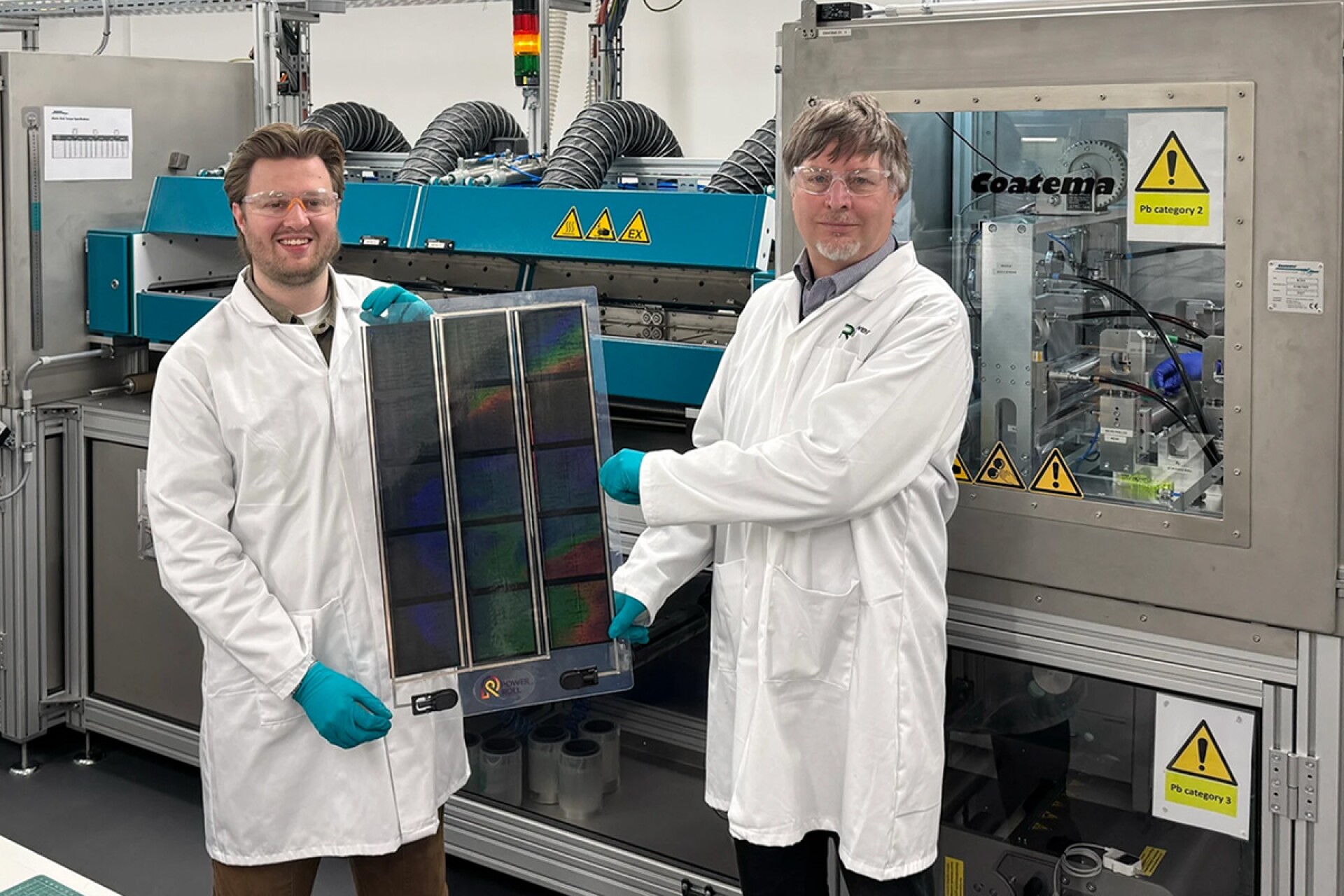
    Since 2012, UK-based Power Roll has been developing a cost-effective way to print solar film for clean energy generation. Now, the company has taken a major step toward large-scale production with a redesigned perovskite solar cell that lowers costs and improves scalability.

    Power Roll’s approach centers on embossing microgroove structures into a plastic substrate, similar to the holograms on credit cards. Each square meter contains 500,000 of these tiny grooves, which are then coated with conductive materials and photo-active ink. Encapsulation film adds stability and enhances durability, ensuring long-lasting performance.

    To manufacture this solar film efficiently, Power Roll uses roll-to-roll processing, a method where material continuously moves between rollers for coating or embossing. This technique keeps production inexpensive and highly scalable. Additionally, the company relies on abundant perovskite to absorb sunlight and convert it into electricity, avoiding the need for rare materials.

    Power Roll and University of Sheffield Innovate Back-Contact Solar Cell for Higher Efficiency and Lower Costs
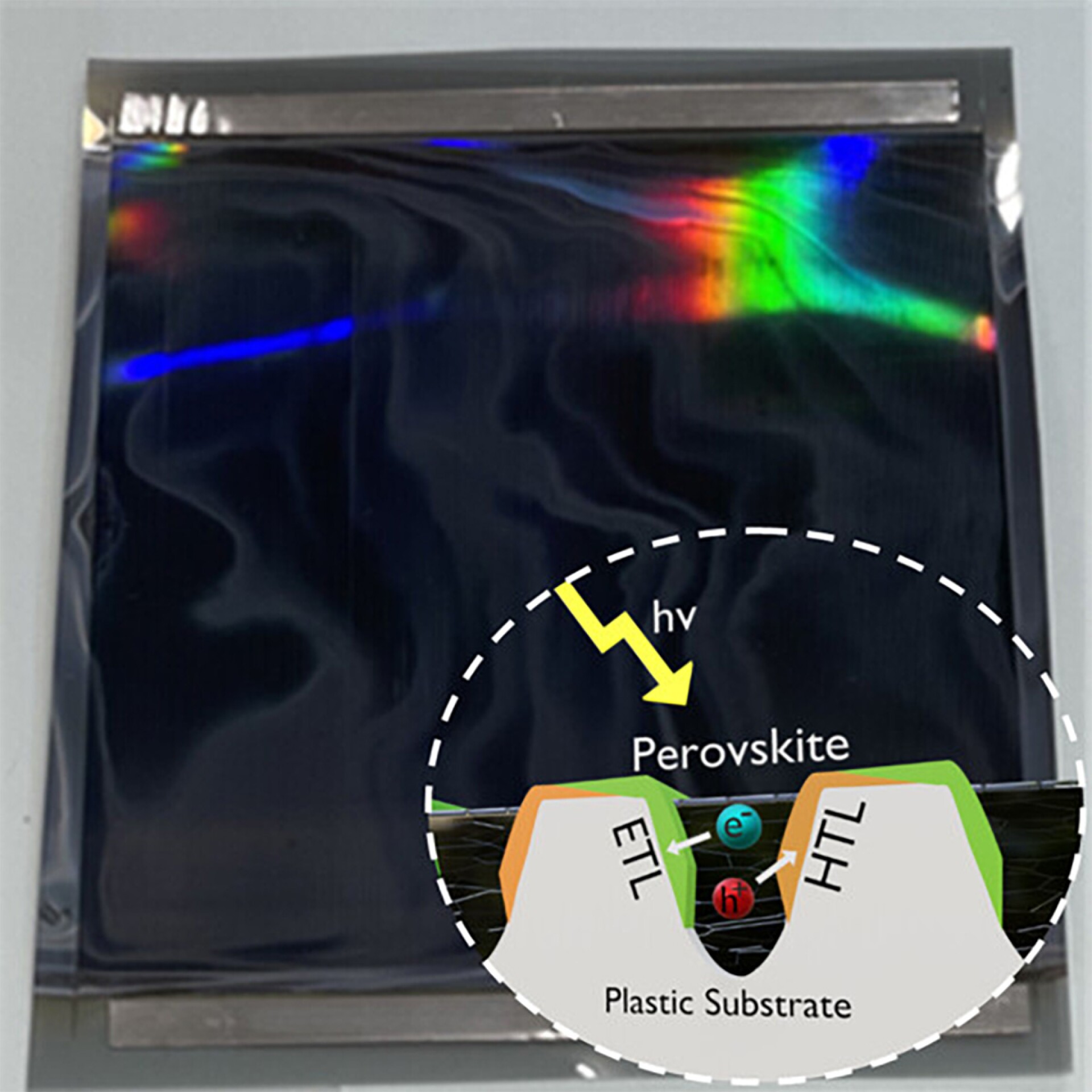
    A 4-square-inch sample of the film showing how energy-absorbing perovskite is coated on the plastic substrate
    ACS Applied Energy Materials

    Working alongside researchers at the University of Sheffield, Power Roll has developed a new microgroove structure with a back-contact format, placing all electrical contacts on the back instead of the front. This design boosts energy efficiency while simplifying and reducing production costs.

    Another key improvement is the increase in groove density, jumping from 16 grooves per cell to 362. This enhancement has significantly improved power conversion efficiency (PCE), reaching up to 12.8%. To ensure structural integrity, the team also used a Hard X-ray nanoprobe microscope to examine the solar cells, identifying defects such as empty spaces within the semiconductor material.

    By adopting this back-contact design, Power Roll eliminates the need for transparent conductive oxide (TCO) layers, which typically contain rare and expensive materials like indium. Removing TCOs not only lowers costs but also allows perovskite to absorb light directly, maximizing efficiency.

    Lightweight, Flexible Solar Film Expands Clean Energy Possibilities

    The biggest advantage of this solar film lies in its lightweight and flexible design. Unlike traditional solar panels, this film can be applied to a wide range of surfaces, including non-load-bearing rooftops, remote areas, and unused urban spaces. Its versatility opens the door for widespread adoption, potentially turning countless structures into clean energy sources.

    With this breakthrough, Power Roll is rapidly scaling up production. The company, in collaboration with Sheffield researchers, recently published its findings in Applied Energy Materials. The next phase of development will focus on using X-ray microscopy to refine performance and stability.

    Last October, Power Roll secured $5.4 million in funding to expand production at its manufacturing plant. Looking ahead, the company aims to produce enough solar film to generate 1 GW of electricity in the near future, marking a significant leap toward a cleaner energy future.


    Read Original Article: New Atlas

    Read More: Engineers develop a more efficient burner to cut methane emissions.

  • e-Taste sprays virtual food flavors directly into your mouth.

    e-Taste sprays virtual food flavors directly into your mouth.

    A new device called e-Taste could soon let you taste your video game food
    Depositphotos

    Virtual reality excels at engaging sight and sound, while developers continue making progress with touch. Even smell is beginning to play a role—for better or worse. That leaves one final sense: taste. Whether or not people truly want to experience flavors in virtual worlds, a new device is now tackling this uncharted territory.

    Taste is highly personal—not just because it involves putting something in your mouth, but also because it varies dramatically from person to person and even bite to bite. What starts as a delightful flavor in the first mouthful can become overwhelming by the end of a meal.

    Recreating the complex chemistry between food and the tongue digitally presents a major challenge. However, researchers at Ohio State University are taking a bold new approach with a device called e-Taste. Instead of relying on electrical or thermal stimulation—previous methods that attempted to trick the brain into tasting different flavors—this device pumps actual flavored chemicals directly into the mouth.

    e-Taste Device Breaks Down Flavors into Chemical Components for Realistic Tasting Experience

    Diagrams illustrating possible uses of the tech in a cooking game (F); a test setup of the e-Taste digital cup (G); A chart demonstrating how different tastes combine to create different foods (H); and how often people successfully identified the virtual flavors (I).
    Chen et al., Science Advances 2025

    The process begins by breaking down the five basic tastes into their respective chemical components. These include glucose for sweetness, salt for saltiness, citric acid for sourness, magnesium chloride for bitterness, and glutamate for umami. The e-Taste device houses these chemicals in separate capsules, releasing them in precise combinations and concentrations to mimic different foods. For instance, fruit juice might consist of two parts sweet and three parts sour, while roast chicken could blend two parts umami with one part salty.

    When a virtual meal is triggered, e-Taste mixes the appropriate formula and delivers a few drops directly onto the tongue. The researchers even demonstrated that flavors could be released remotely through an online connection—a breakthrough with both exciting and potentially unsettling implications.

    Early tests have yielded mixed results. Participants attempted to identify five different foods based solely on taste. While they successfully recognized virtual lemonade and cake, they struggled to distinguish between fried egg, fish soup, and coffee.

    Despite these challenges, the concept holds promise. The research team plans to expand e-Taste with additional chemical compounds for more realistic flavor experiences. One day, users might even be able to sample the umami-rich mushrooms that Mario has been munching on for decades.


    Read Original Article: New Atlas

    Read More: Why Your Smart Home Needs Big Data

  • Engineers develop a more efficient burner to cut methane emissions.

    Engineers develop a more efficient burner to cut methane emissions.

    Researchers at Southwest Research Institute and the University of Michigan developed and tested an advanced methane flare burner using additive manufacturing and machine learning. A new study found that the new design eliminated 98% of methane vented during oil production. Credit: Southwest Research Institute

    Researchers from Southwest Research Institute (SwRI) and the University of Michigan (U-M) have developed an advanced methane flare burner that eliminates 98% of methane vented during oil production. Designed by U-M engineers and tested at SwRI, the burner leverages additive manufacturing and machine learning to enhance efficiency. Their findings appear in the study “An Experimental Study of the Effects of Waste-Gas Composition and Crosswind on Non-assisted Flares Using a Novel Indoor Testing Approach,” published in Industrial & Chemical Engineering Research.

    During oil production, flare stacks typically burn off excess methane. However, strong crosswinds often reduce the effectiveness of conventional open-flame burners, allowing over 40% of methane to escape into the atmosphere. Over a 100-year period, methane has 28 times the global warming potential of carbon dioxide—and over a 20-year period, it is 84 times more potent. While flaring reduces overall emissions, ineffective burning diminishes its environmental benefits.

    To address this issue, SwRI and U-M engineers applied machine learning, computational fluid dynamics, and additive manufacturing to develop a burner with superior combustion stability and high methane destruction efficiency, even under challenging field conditions.

    “We tested the burner at SwRI’s indoor facility, where we controlled crosswinds and measured efficiency under various conditions,” explained SwRI Principal Engineer Alex Schluneker, a co-author of the study.

    Innovative Burner Design Enhances Efficiency in Crosswind Conditions

    Their tests revealed that even minimal crosswinds significantly lowered the performance of most burners. However, the new burner’s internal fins played a crucial role in maintaining efficiency. “The U-M team designed it to significantly improve performance,” Schluneker added.

    The burner features a complex nozzle base that splits methane flow in three directions, while an impeller directs the gas toward the flame. This design ensures proper oxygen-methane mixing and extends combustion time before crosswinds can interfere, which is essential for its efficiency.

    “A precise oxygen-to-methane ratio is critical for combustion,” said SwRI Senior Research Engineer Justin Long. “The burner must capture and incorporate enough surrounding air to mix with the methane without over-diluting it. U-M researchers conducted extensive computational fluid dynamics modeling to achieve an optimal air-methane balance, even in high-crosswind conditions.”

    Looking ahead, SwRI and U-M teams continue to refine burner designs, aiming to develop an even more efficient and cost-effective prototype by 2025.


    Read Original Article: TechXplore

    Read More: Why Your Smart Home Needs Big Data

  • Bitcoin price plummets amid market uncertainty.

    Bitcoin price plummets amid market uncertainty.

    Credit: Pixabay

    Bitcoin’s price plunged nearly 10 percent on Monday as escalating trade tensions and uncertainty over a proposed U.S. crypto reserve fund drove investors away from risk.

    Initially, Bitcoin and other digital assets surged after President Donald Trump floated the idea of creating a national cryptocurrency reserve. However, prices quickly tumbled as doubts emerged over whether the plan would materialize.

    “Investors are selling everything,” said Forexlive manager Adam Button. “There’s a de-risking unfolding among crypto investors.”

    By late Monday, Bitcoin had fallen 9.47 percent to $85,321.69, with the total market value of Bitcoin still exceeding a trillion dollars. Ether, the second-largest digital asset, dropped more than 15 percent, while major cryptocurrencies like XRP, Cardano, and Solana declined nearly 20 percent.

    Adding to the pressure, Trump confirmed 25 percent tariffs on all imports from Mexico and Canada, prompting both countries to vow retaliation. Button noted that these trade war concerns, coupled with fears of slowing U.S. economic growth in the first quarter, have further rattled the market.

    Trump’s Crypto Reserve Proposal Temporarily Boosts Market

    Earlier in the day, cryptocurrency prices climbed after Trump named five digital assets—Bitcoin, Ether, XRP, Cardano, and Solana—as potential additions to a national strategic reserve fund. The government would build this reserve using digital currencies already in its possession, mainly from court seizures or sanctioned individuals and companies.

    However, industry leaders expressed skepticism over the selection of currencies. Coinbase CEO Brian Armstrong suggested that restricting the reserve to Bitcoin “would probably be the best option.” He argued that Bitcoin’s simplicity and potential role as a successor to gold made it the strongest choice.

    After Trump promoted the idea of a cryptocurrency reserve, investors rushed to buy, only to later question whether it would actually happen, Button explained. Since such a reserve requires congressional approval, he remained doubtful about its prospects.2

    “It’s one thing to tweet about it,” Button said, “but you need to pass legislation to make this happen. And that’s still a long shot.”


    Read Original Article: TechXplore

    Read More: Trump Proposes Establishing a Crypto Strategic Reserve

  • Supernova explosions may have influenced Earth’s evolutionary history.

    Supernova explosions may have influenced Earth’s evolutionary history.

    An artist’s impression of a supernova exploding near the ancient Earth
    NASA/CXC/M. Weiss

    Astrophysicists have taken a forensic approach to a cosmic mystery, tracing radioactive elements on the seafloor back to potential supernova explosions. Their findings suggest a possible link between these cosmic events and evolutionary changes in viruses within an African lake.

    The key evidence is iron-60, a radioactive isotope found in significant amounts on the seafloor. Since iron-60 decays over time, any that originally formed with Earth would have long since disappeared. Therefore, its presence today points to a more recent source, likely supernova explosions that scattered it across the planet.

    To determine its age, researchers at UC Santa Cruz analyzed the iron-60 deposits and found two distinct spikes—one about 2.5 million years ago and another around 6.5 million years ago. Suspecting a cosmic origin, they mapped Earth’s position relative to nearby stellar events over the past few million years.

    Currently, the solar system sits inside the Local Bubble, a vast empty region thought to have been carved out by a series of supernovae 10 to 20 million years ago. In fact, Earth likely entered this bubble about 6 million years ago, passing through its outer boundary, where radiation would have been most intense. This, in turn, could explain the older iron-60 spike.

    Tracing the Source: Nearby Supernova Likely Responsible for Recent Iron-60 Spike

    The more recent and pronounced spike, in fact, appears to be the result of a nearby supernova. By reconstructing the past positions of stellar clusters, the team was able to identify two possible sources: the Tucana-Horologium cluster, which was about 228 light-years away at the time, and Upper Centaurus Lupus, located roughly 457 light-years away.

    Furthermore, simulations suggest that the explosion would have exposed Earth to elevated cosmic radiation for up to 100,000 years. Consequently, this influx of high-energy radiation could have caused DNA damage, potentially leading to higher cancer rates or, alternatively, mutations that drive evolutionary changes.

    Such radiation exposure can be harmful, possibly contributing to extinctions, as some researchers have proposed in the case of the Megalodon. However, mutations can also accelerate evolution, altering genetic material in ways that lead to the emergence of new traits.

    Researchers explored potential biological effects of radiation and discovered a study on viral diversification in Lake Tanganyika 2-3 million years ago. Lead author Caitlyn Nojiri noted the similar timing, though no direct connection can be confirmed. Future research will investigate how cosmic radiation has shaped evolution, offering insights into the search for life on other planets.


    Read Original Article: New Atlas

    Read More: Space-Time-Coding Metasurface Enhances 6G Wireless Networks

  • Physicists Develop Lab-Grown Diamond Tougher Than Natural Ones

    Physicists Develop Lab-Grown Diamond Tougher Than Natural Ones

    Credit: Pixabay

    Scientists have once again created a synthetic diamond even tougher than natural ones, using a novel approach to diamond formation.

    By subjecting graphite—a super-hard material in its own right—to extreme pressure and heating it to 1,800 K (1,527 °C or 2,780 °F), the researchers produced a diamond with a hexagonal lattice structure instead of the typical cubic one. This form, known as hexagonal diamond or lonsdaleite, was first identified over 50 years ago in meteorite impact sites. However, this study provides the strongest evidence yet that its unique internal structure enhances hardness.

    “Most natural and synthetic diamonds have a cubic lattice, while the rare hexagonal structure has remained largely unexplored due to the low purity and small size of previous samples,” the researchers explain. “Synthesizing hexagonal diamond remains challenging, and even its existence has been debated.”

    The newly created stone reaches a hardness of 155 gigapascals (GPa), significantly surpassing natural diamond, which maxes out around 110 GPa. It also exhibits impressive thermal stability, remaining intact up to at least 1,100 °C (2,012 °F), compared to 900 °C (1,652 °F) for nanodiamonds commonly used in industrial applications. While natural diamond can withstand higher temperatures, this is only possible in a vacuum.

    A close analysis revealed extra hardness and thermal stability. (Chen et al., Nature Materials, 2025)

    Scaling Up Hexagonal Diamond Synthesis: Unlocking New Pathways Through High-Pressure Techniques

    Beyond overcoming previous challenges in hexagonal diamond synthesis, the researchers identified potential ways to scale up the process. “We found that when graphite is compressed to much higher pressures than previously studied, hexagonal diamond forms more readily from post-graphite phases once heat is applied,” they report.

    Although large-scale production is still a long way off, the material’s exceptional hardness and thermal stability suggest promising applications in drilling, machinery, and data storage.

    This is not the first attempt to create hexagonal lattice diamonds in the lab. A 2016 study successfully synthesized them from amorphous carbon, a formless material. However, this latest method provides a new, proven pathway to producing ultra-hard diamonds, paving the way for future research and potential applications.

    “Our findings shed light on how graphite transforms into diamond under extreme conditions, opening new opportunities for fabricating and utilizing this extraordinary material,” the researchers conclude.


    Read Original Article: Science Alert

    Read More: Two innovative methods for shaping bread-derived carbon electrodes.

  • Space-Time-Coding Metasurface Enhances 6G Wireless Networks

    Space-Time-Coding Metasurface Enhances 6G Wireless Networks

    Left: A conceptual illustration of the system. Right: Experimental results demonstrating the system’s

    Programmable metasurfaces (PMs), also known as reconfigurable intelligent surfaces, not only reflect wireless signals but also dynamically control electromagnetic waves in real time. These smart surfaces are crucial for advancing sensing technologies and next-generation wireless communication systems.

    Researchers from Southeast University, the University of Sannio, and Université Paris-Saclay-CNRS demonstrated that a specific PM, called a space-time-coding metasurface, can simultaneously support both sensing and communication. Their study, published in Nature Communications, introduces two integrated sensing and communication (ISAC) schemes leveraging this technology.

    “As we enter the 6G era, networks must do more than just transmit data—they must interact with and adapt to their environment,” said senior author Tie Jun Cui. Motivated by this vision, the team developed a PM that enables high-speed communication while sensing its surroundings in real time.

    Space-Time-Coding Metasurface: A Programmable Solution for Dynamic Signal Control

    Experimental setup for measurements on a moving transmitting antenna. Credit: Adapted from Chen et al., Nature Communications 16, 1836 (2025), under CC BY-NC-ND 4.0.

    At the heart of their system is a space-time-coding metasurface, a programmable surface that actively manipulates reflected signals. Unlike conventional mirrors that simply bounce back light, this surface adjusts electromagnetic wave propagation using embedded diodes that switch on and off dynamically. Notably, it supports both the original signal frequency and additional harmonics, allowing precise control.

    This dual functionality enables stable connectivity while tracking movement, detecting objects, and responding to environmental changes. To test its capabilities, the researchers built a microwave-frequency prototype (10.3 GHz), which successfully demonstrated real-time sensing and communication.

    “Our prototype adapts to moving users, stabilizes connections, and accurately detects obstacles,” Cui explained. “This approach could simplify mobile networks, reduce costs, optimize spectrum use, and improve sustainability.”

    Their breakthrough paves the way for future smart environments, with applications in smart cities, home security, industrial robotics, and autonomous vehicles. Moving forward, the team aims to integrate artificial intelligence for real-time decision-making and enhance security to ensure reliable and protected operation. Ultimately, they envision intelligent spaces that seamlessly adapt to user needs, making homes and cities more connected, responsive, and efficient.


    Read Original Article: TechXplore

    Read More: How Tech Giants Handle Growth

  • Amazon’s Predictive Power: Knowing What You’ll Buy

    Amazon’s Predictive Power: Knowing What You’ll Buy

    Credit: Canvas

    The 360-Degree Customer View

    Amazon meticulously tracks user behavior, collecting data on what customers browse, purchase, review, and even how long they linger on a product page. This data is fed into sophisticated machine learning algorithms to create a comprehensive “360-degree view” of each customer. By continuously refining these profiles, Amazon can anticipate buying patterns with remarkable accuracy, sometimes even before a customer realizes they need an item.

    Collaborative Filtering 101

    Unlike streaming platforms like Netflix, which categorize content based on predefined tags, Amazon employs collaborative filtering to refine its recommendations. This technique identifies patterns by analyzing user behavior in aggregate. If thousands of customers who bought a laptop also purchased a specific backpack, Amazon suggests that backpack to new laptop buyers. This method fuels the “Customers also bought” and “Frequently bought together” sections, driving additional sales and enhancing user experience.

    The AI Behind the Recommendations

    Amazon’s recommendation engine isn’t just a simple matching system. It integrates multiple algorithms, including:

    • Item-based collaborative filtering: Compares items instead of users to make predictions.
    • Deep learning models: Analyze vast datasets to uncover hidden correlations.
    • Natural language processing (NLP): Understands customer reviews and search queries to refine suggestions.

    These AI-driven insights are what make Amazon’s suggestions feel eerily personal.

    From Retail to Empire

    Amazon’s predictive analytics extend far beyond e-commerce. The insights gathered power multiple facets of its business, including Amazon Web Services (AWS), Prime Video, and Alexa. For example, AWS leverages data-driven insights to optimize cloud computing services, while Prime Video uses viewing history to recommend content, increasing user retention.

    With over $90 billion in annual revenue from these services, Amazon has set the gold standard for predictive analytics in online shopping. This relentless focus on data and AI-driven decision-making continues to shape its dominance in the digital economy.

    Ethical Concerns and Data Privacy

    While Amazon’s recommendation engine is incredibly effective, it also raises concerns about data privacy and ethical AI usage. Critics argue that hyper-personalized advertising can lead to consumer manipulation, where users are nudged into buying things they might not otherwise purchase. Additionally, questions around data security and the potential misuse of personal information have prompted regulatory scrutiny (MIT Technology Review).

    The Future of Predictive Commerce

    Amazon is continuously refining its predictive capabilities. Future innovations may include:

    • AI-driven voice commerce: Alexa making highly personalized purchase suggestions.
    • Augmented reality (AR) shopping: Offering real-time recommendations based on visual inputs.
    • Proactive shipping: Amazon sending items before a user even orders them, based on predictive analysis.

    As technology advances, Amazon will likely push the boundaries of AI-driven retail, maintaining its position as a global leader in e-commerce and beyond.


    Read Also Inception Launches From Stealth with a Groundbreaking AI Model

  • Two innovative methods for shaping bread-derived carbon electrodes.

    Two innovative methods for shaping bread-derived carbon electrodes.

    Credit: David Bujdos

    A team of engineers from Saint Vincent College and the University of Pittsburgh has introduced two innovative methods for shaping bread-derived carbon electrodes. Their study, published in Royal Society Open Science, builds on previous work by David Bujdos, Zachary Kuzel, and Adam Wood, who sought to repurpose stale bread for sustainable electrode production.

    Four years ago, Wood developed a process to transform stale bread into carbon electrodes, leveraging its high carbon content. His goal was to create a more environmentally friendly alternative while addressing food waste, as bread is one of the most discarded food items globally.

    In this latest research, the team refined that technique to produce electrodes in specific shapes, making them more versatile for applications such as water desalination. The process involves heating whole-wheat bread from Pepperidge Farm to 800°C in an oxygen-free oven. However, the new approach introduces additional steps to control the final electrode shape.

    3D-Printed Molds Enable Precise Shaping of Bread-Derived Electrodes

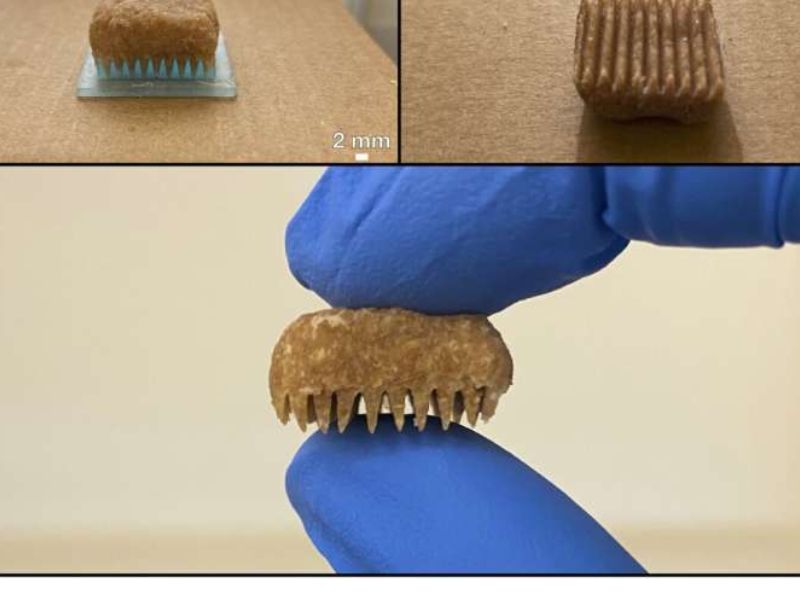
    The first method uses a 3D-printed mold to stamp bread into precise forms before heating. In their tests, the researchers shaped the electrodes into a zigzag pattern.

    The second technique blends bread with water to create a malleable paste, which is then molded and baked into the desired form. While the first method offers greater precision, the second produces more durable electrodes.

    Looking ahead, the team aims to further refine their process and scale production, ultimately developing a cost-effective, sustainable desalination system to provide fresh water to communities worldwide.


    Read Original Article: TechXplore

    Read More: Measurements of a ‘Double Magic’ Atom Uncover an Unexpected Discovery

  • Asymmetric ether solvents enhance Li-metal battery charging and stability.

    Asymmetric ether solvents enhance Li-metal battery charging and stability.

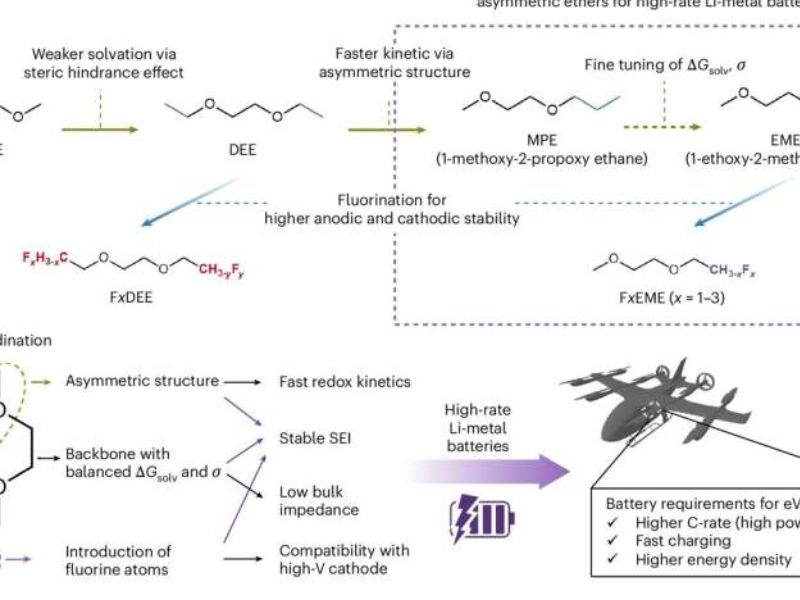
    Design of asymmetric solvent molecule for high-rate performance Li-met

    To drive future advancements in electronics, engineers must develop batteries that charge faster, store more energy, and last longer. Lithium-metal batteries (LMBs) stand out as a promising alternative to conventional lithium-ion (Li-ion) batteries, which currently dominate the market.

    LMBs feature a lithium metal anode, unlike Li-ion batteries that rely on graphite or silicon-based anodes. This design allows for significantly higher energy densities. However, LMBs face challenges such as slow redox kinetics and poor cycling reversibility, which hinder charging speed and long-term efficiency.

    Researchers at Stanford University are tackling these limitations by developing new electrolyte solvents. Their recent study, published in Nature Energy, introduces asymmetric ether-based solvents that enhance both the charging speed and stability of LMBs.

    “Our goal was to enable high-rate lithium-metal batteries by designing better solvent molecules,” said Rok Choi, the study’s first author. “Inspired by ethyl methyl carbonate (EMC), an asymmetric alkyl carbonate used in Li-ion batteries, we explored whether a similar asymmetric structure could improve ether solvents for LMBs.”

    Traditional ether-based solvents, commonly used in battery electrolytes, contain symmetric molecular structures, which slow lithium-ion exchange and negatively impact charging speed and stability. To address this, Choi and his team investigated asymmetric ether solvents, which have molecules with different side groups.

    Left: Schematics of symmetric solvent showing slow redox kinetic and unstable solvent-derived SE

    Optimizing Solvents for Faster Lithium-Ion Transfer

    “We designed solvents to minimize steric hindrance during Li+ desolvation,” Choi explained. “Symmetric solvents tend to block Li+ movement under an electric field, slowing charge transfer. In contrast, asymmetric solvents align in a way that enables faster Li+ reduction and desolvation.”

    By optimizing dipole orientation—the alignment of positive and negative charges—the researchers improved charge transfer, enhanced lithium-ion movement, and promoted the formation of a stable solid-electrolyte interphase (SEI). This, in turn, helped create a uniform Li-plating layer on the anode.

    “Our findings show that greater molecular asymmetry accelerates Li+ kinetics, leading to a more stable SEI and extended cycle life under high-rate conditions,” Choi said. “By optimizing both the ether backbone and fluorination degree, we developed F3EME as an ideal solvent, which demonstrated over 600 cycles in anode-free pouch cells—under test conditions simulating electric vertical take-off and landing (eVTOL) applications.”

    Initial tests confirmed that asymmetric ether solvents significantly improved LMB performance and stability. Moving forward, Choi and his team plan to expand their research by designing similar electrolytes for other Li-based batteries, including Li-ion batteries with silicon anodes and Li-sulfur (Li-S) batteries.

    “Building on this molecular design strategy, we aim to develop a broader range of solvents for various battery systems,” Choi added.


    Read Original Article: TechXplore

    Read More: Inception Launches From Stealth with a Groundbreaking AI Model