A new aviation milestone has been reached as a solar-electric, propeller-driven plane climbed higher than any of its kind before—though the feat still awaits official recognition. On August 12, 2025, a customized Elektra One soared to 31,237 feet (9,521 m) above Switzerland.
The Record-Breaking Mission
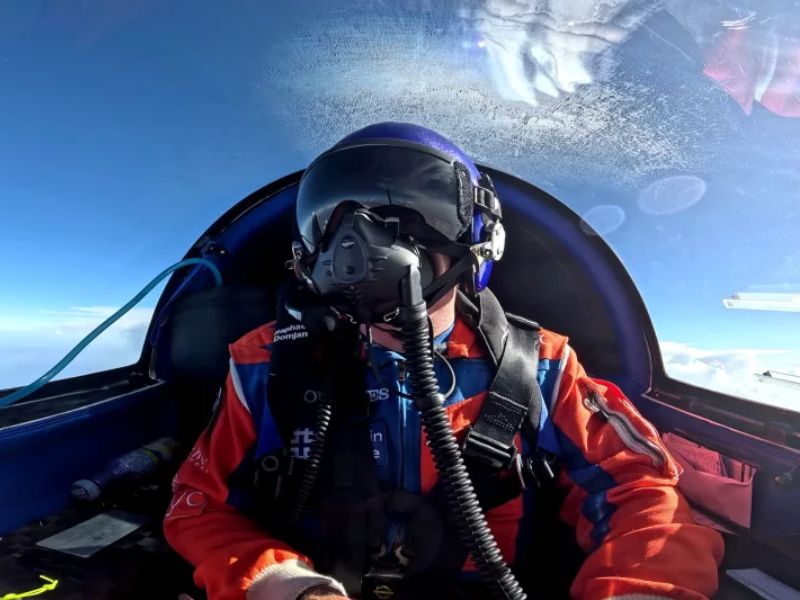
The aircraft, registered as HB-SXA, took off from Sion Airport with SolarStratos founder Raphaël Domjan at the controls. The mission lasted five hours and nine minutes, powered solely by solar energy, including a two-hour ascent and a three-hour descent across the Valais Alps.
Engineering and Design Features
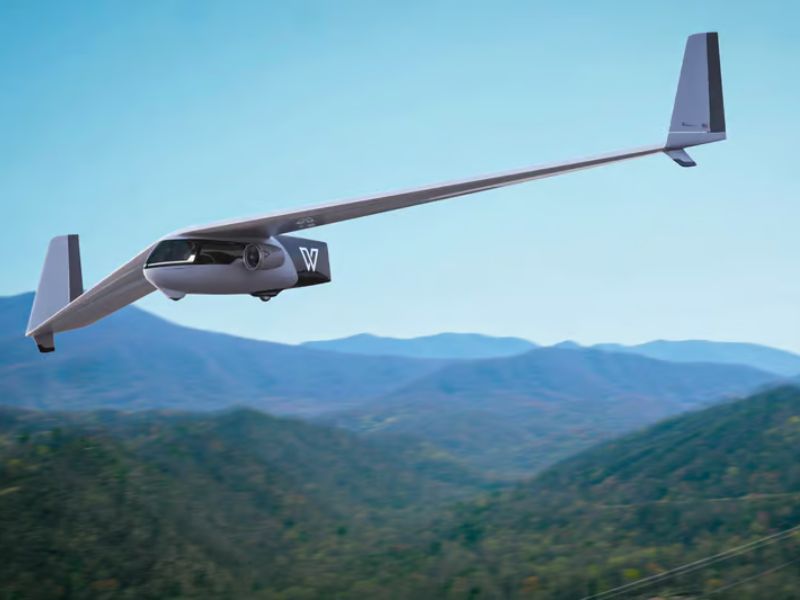
Weighing only 992 lb (450 kg), the HB-SXA features an 81.4 ft (24.8 m) wingspan lined with solar cells, which supply a 43-bhp electric motor said to run at 90% efficiency. A 20-kWh lithium-ion battery serves as backup, enabling up to 24 hours of flight.
View of the Swiss Alps from the solar/electric aircraft SolarsStratos
Although modest in power, the aircraft is essentially a motorized glider optimized to ride thermals and updrafts to maintain altitude. It forms part of the SolarStratos initiative, a Swiss program showcasing the potential of solar and electric propulsion for long-duration, high-altitude missions, with the ultimate goal of reaching the stratosphere at 82,000 ft (25,000 m).
Challenges of High-Altitude Flight
To achieve this, engineers designed the plane to be extremely lightweight, leaving the cockpit unpressurized. Domjan therefore flew in a custom pressure suit to withstand both the thin atmosphere and frigid conditions.
While SolarStratos reports surpassing the previous record of 30,298 ft (9,235 m) set by Solar Impulse 3 in July 2010, the achievement remains unofficial until validated by the Fédération Aéronautique Internationale (FAI).
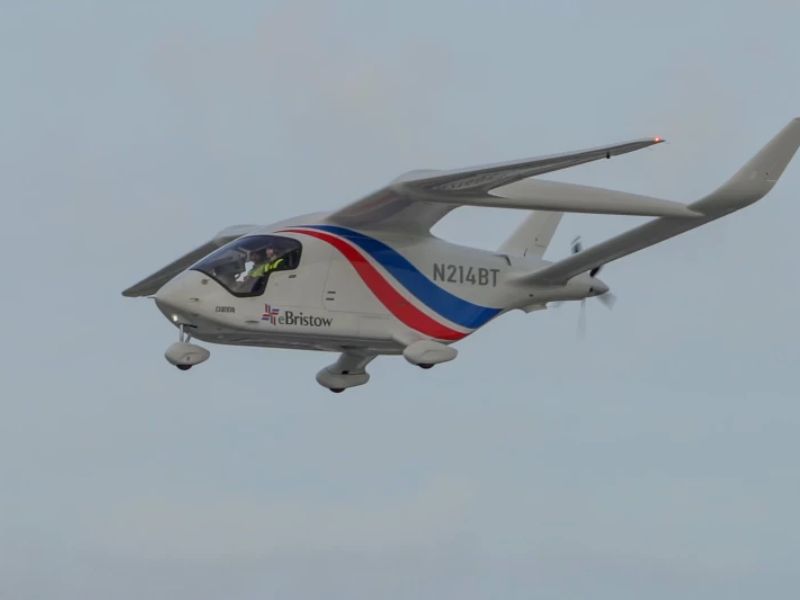
This ALIA CX300 electric conventional take-off and landing aircraft has kicked off Norway’s Test Arena for Zero & Low Emission Aviation after completing a weeks-long tour of major European countries BETA Technologies
BETA Technologies has officially handed over its ALIA CX300 electric conventional take-off and landing (CTOL) aircraft to its first customer. The short-range passenger plane will now be tested for potential zero-emission routes and operational use cases in the Nordic region.
Unlike the company’s A250 electric vertical take-off and landing (eVTOL) model, the ALIA CX300 requires a runway for take-off and landing. The aircraft carries five passengers plus a pilot and uses an electric motor to drive a single rear-mounted five-blade propeller.The aircraft’s battery system offers a range of over 300 nautical miles, with recharging sessions of about one hour between flights.
Proving Its Capabilities
Earlier this year, the ALIA CX300 completed its first passenger flight, traveling from Long Island to John F. Kennedy International Airport in a 45-minute journey. BETA Technologies has now delivered the first unit to Bristow Norway AS, part of the U.S.-based Bristow Group.
The handover at Stavanger Airport in Rogaland County concluded a 6,976-km (4,335-mile) demonstration tour through seven European countries, starting in Ireland and ending in Norway. This delivery also marks the launch of operations at Norway’s Test Arena for Zero & Low Emission Aviation.
The ALIA CX300 electric CTOL has been delivered to Stavanger Airport, and to BETA’s first customer, Bristow Norway BETA Technologies
At the launch event, a BETA-trained Bristow pilot conducted the first test flight after completing training at BETA’s Vermont headquarters. Over the next six months, Bristow pilots and maintenance teams will carry out further flights in collaboration with Avinor and the Civil Aviation Authority of Norway as part of a “regulatory sandbox” program.
Initial test routes will connect Stavanger and Bergen airports, with potential expansion to other regional routes later this year.
Industry Impact and Future Goals
Shawn Hall, BETA’s Chief Revenue Officer, said, “This marks a big moment for BETA. “Bristow has been with us from the very beginning, and Norway’s innovative mindset makes it the perfect setting to advance this technology. Delivering the ALIA to a customer is a major achievement, but it’s also just the starting point for what’s next in sustainable aviation.
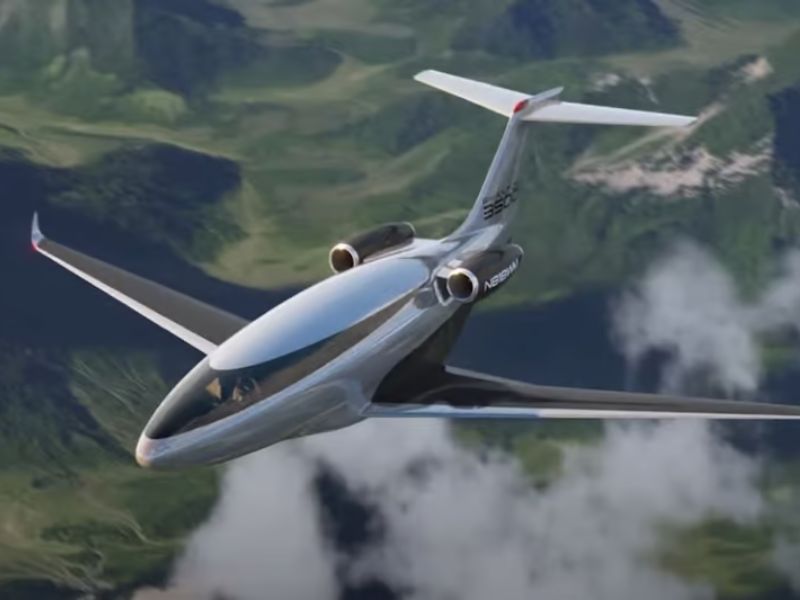
The Phantom 3500 swaps windows for efficency Otto Aviatio
Who needs windows when you can have an incredibly efficient transonic passenger flight? That seems to be the reasoning behind Otto Aviation’s Phantom 3500 jet, which ditches traditional windows in favor of optimized laminar flow, aiming to reduce weight and burn less fuel.
Engineers vs. Windows: A long-standing rivalry
Ask an aerospace engineer how they really feel about windows on aircraft, and the expression you’ll get will likely resemble Captain Ahab discussing Moby Dick. In short: engineers hate windows. And with good reason.
The ideal aircraft fuselage would be a smooth, uninterrupted cylinder. Installing windows compromises that structure, creating weak spots where stress can build up. They also add weight and interfere with the airflow over the aircraft’s surface, increasing drag.
Phantom 3500
Yet all of that is tolerated just to avoid locking passengers inside a cylinder without any external view, which could trigger panic or claustrophobia. Not exactly an engineer’s dream scenario.
Based on flight tests with Otto’s Celera 500L prototype and the use of Dassault Systèmes’ 3DEXPERIENCE platform, the Phantom 3500 aims to achieve a 35% improvement in fuel efficiency through sustained laminar flow. This type of airflow moves smoothly and in parallel over the wings, fuselage, and tail — like a deck of cards sliding effortlessly with minimal interaction between layers. The air barely touches the surface, resulting in nearly frictionless movement.
Transonic performance and its advantages
If the Phantom 3500 maintains this level of performance — especially within the transonic speed range between Mach 0.8 and 1.2 — it will reduce drag, increase fuel economy without sacrificing performance, extend its range, reach higher speeds, require lighter engines and structural components, and deliver a smoother ride.
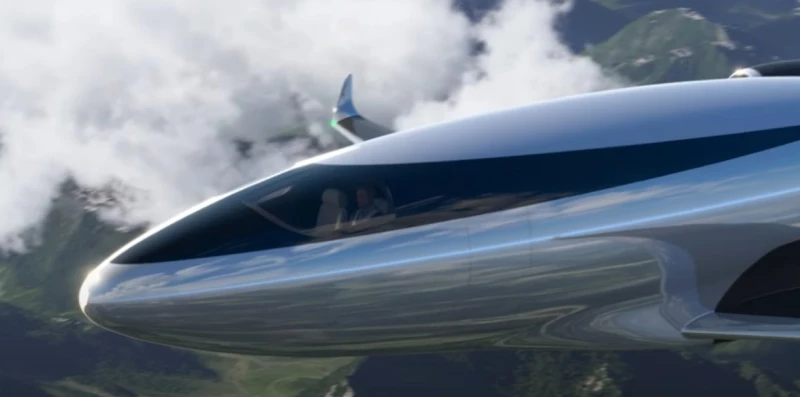
The cockpit has the only way to directly look out of the plane Otto Aviation
Using advanced carbon-fiber materials to craft continuous, polished surfaces, the Phantom 3500 takes efficiency to the next level. By removing the windows, the aircraft gets closer to the ideal aerodynamic shape for transonic laminar flow — a change sure to bring a smile to any aerospace engineer’s face.
Digital views: A new passenger experience
But what about the passengers? They’re not left in the dark. The 800 ft³ (about 22.65 m³) cabin offers an even better view than traditional windows. High-definition digital panels line the cabin walls and even the ceiling, creating an immersive and open experience that may well replace claustrophobia with a bit of agoraphobia.
The Phantom 3500 cabin Otto Aviation
The Phantom 3500 features two engines and will offer a range of 3,200 nautical miles (about 5,926 km), a cruising altitude of 51,000 feet (15,545 m), and operating costs up to 50% lower than those of comparable aircraft. It may achieve up to 50% fuel efficiency and cut emissions by as much as 80%. The aircraft’s short, wide wings allow it to operate from runways shorter than 3,500 feet (1,067 m). It’s also said to produce fewer contrails — a potential bonus for conspiracy theorists.
Expert commentary and open questions
Mark Moore, CEO of Whisper Aero, noted on LinkedIn that the Phantom 3500 shows major design shifts from the Celera prototype — including a lower aspect ratio wing for STOL, a move from rear propeller to isolated turbofans, and an apparent switch from composite to aluminum fuselage. He emphasized the importance of past laminar flow research and expressed interest in seeing the reasoning behind these changes.
Otto Aviation expects the Phantom 3500 to enter service by 2030.
Whisper’s air-moving technology, initially not meant for garden tools, led to a licensing deal with Stanley Black & Decker, which will use it in consumer products. This partnership provides steady revenue as Whisper shifts focus to quieter electric aircraft.
Whisper CEO Mark Moore: From NASA Engineer to eVTOL Innovator
Whisper CEO Mark Moore, a former NASA engineer, gained attention in 2010 with his Puffin eVTOL. As the eVTOL air taxi boom surged, he pivoted to selling ‘shovels’ instead of chasing costly FAA certification. Seeing the need for key infrastructure, he focused on providing tools for success. For air taxis to revolutionize commuting, they must be quieter, more efficient, and more sustainable than helicopters and planes.
Credit: New Atlas
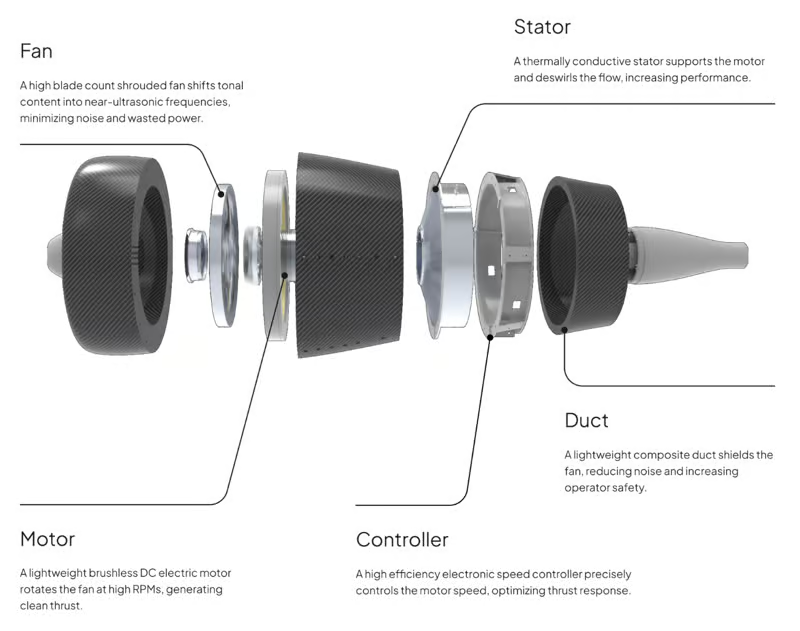
Whisper’s UltraQuiet WhisperDrive Redefining Noise and Efficiency in eVTOL Design
“Whisper’s UltraQuiet WhisperDrive powers through with its high-efficiency electric ducted fan, featuring a compact design, reinforced blades, and a streamlined shrouding ring that actively reduces drag and noise.” Housed in a lightweight, soundproof duct, it ensures optimal airflow and minimal noise, making it ideal for quiet applications. Its design moves more air with slower spinning, keeping the blade frequency above 16,000 Hz—inaudible to humans and dogs. The fan’s RPM remains low enough to prevent damage from centrifugal force.
Whisper’s eQ250 Powering the Aeriane Swift 3, A New Era for Electric Ultralights
The plan is to use two eQ250 units, Whisper’s largest model, on a Belgian-made Aeriane Swift 3. This electric, tailless ultralight with a 42-ft wingspan was originally designed as a hang glider.
The goal is to have a Whisper-quiet version of this aircraft flying by year’s end.
It will be a modest debut for the technology, with no plans yet for it to become a product. Whisper’s main goal is its 100-seat Jetliner, which offers clean, battery-powered flights up to 700 miles at one-third the energy cost of a conventional jet.
Commercial aviation moves slowly, with high costs at every stage. Here’s a version with active counterparts:
“Though a jetliner prototype is years away, this pioneering company is poised to play a key role in the clean aviation revolution, using groundbreaking technology that could reshape air travel.” We’ll closely monitor their progress and anticipate their impact on the industry.”
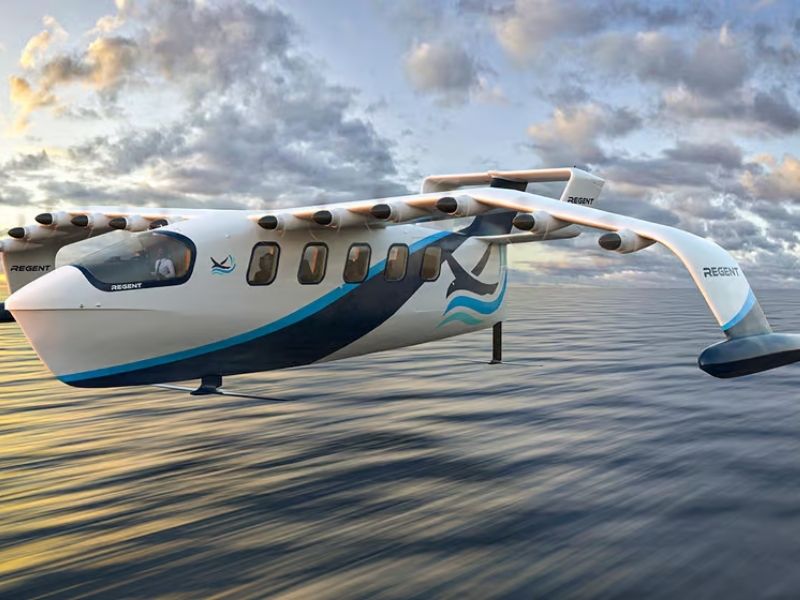
Regent says its 55-ft-long Viceroy seaglider is the largest electric flying machine on the planet REGENT Craft
A Rhode Island-based startup, Regent Craft, has successfully completed the first test of its full-size electric seaglider with passengers on board, validating the company’s idea for a new type of ocean-going vessel.
Utilizing the Wing-in-Ground Effect for Efficiency
The seaglider takes advantage of the wing-in-ground effect, which occurs when a winged vehicle experiences less aerodynamic drag when flying close to the surface, whether it’s land or water.
With multiple propellers mounted on a specially designed wing, the Regent Viceroy Seaglider promises to carry 12 passengers and two crew members (or 1,600 kg of cargo) for at least 300 km, cruising at a speed of 300 km/h, flying at very low altitudes between 9 and 18 meters above the water.
REGENT Begins Sea Trials of First Passenger-Carrying Seaglider
The company received approval from the US Coast Guard last September to test the full-size prototype of the Viceroy, and it has now succeeded in doing so. As the name suggests, the model is the same size as the upcoming production version, measuring 16.75 meters in length and 19.8 meters in wingspan. Regent highlights that the vessel can simply float on its hull, fly above the waves with its hydrofoils, or glide just above the water surface using the ground effect.
Significant Milestone After Years of Development
This test marks an important milestone after years of developing the seaglider, which began in 2020. It took two years to build and test a quarter-scale prototype, and the full-size model was launched after months of testing various onboard systems, including motors, batteries, and control software.
This is what the full-size 14-seater Viceroy prototype’s hull looked like when it was being put together REGENT Craft
With this, Regent is closer to fulfilling the promise made to its investors, who bet $90 million on developing high-speed electric coastal transportation. Regent Craft already secured over $9 billion in orders from around the world and believes its vessels will transport tourists between tropical islands, carry cargo, and assist in emergency response situations. It is also partnering with the US Marine Corps to explore maritime defense and logistics applications. Additionally, this collaboration aims to enhance the military’s capabilities in these areas, while further expanding the potential use of the seaglider. Moreover, by working with the Marine Corps, Regent Craft is positioning itself at the forefront of innovative defense solutions.
Expanding Manufacturing and Future Innovations
Additionally, Regent is building a large manufacturing facility in Rhode Island, which it plans to open next year. This means we are not far from seeing hybrid electric vessels—combining boats, planes, and hydrofoils—on the seas in a revolutionary and unprecedented way.
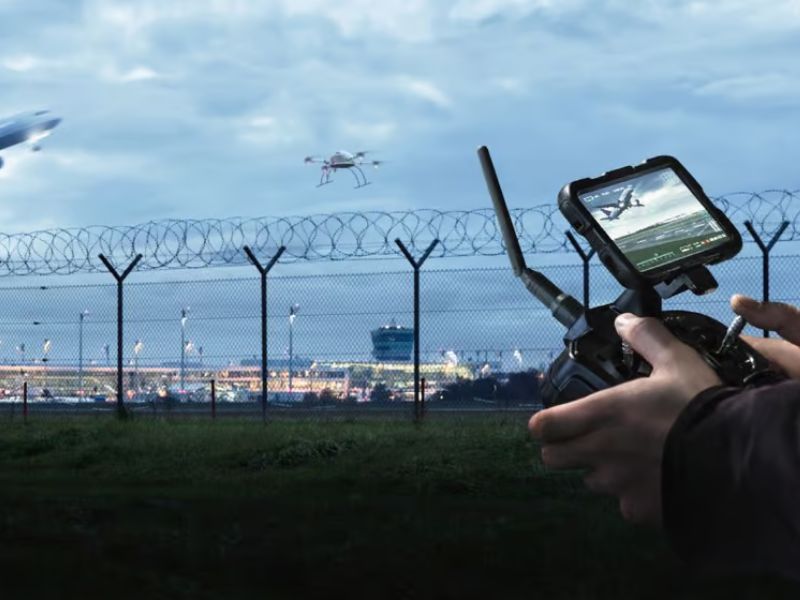
The Ardronis Wi-Fi can infiltrate drone electronics Rohde & Schwarz
Rohde & Schwarz has raised the bar in defending against the threat posed by commercial drones to both civil and military aviation with its innovative Ardronis Wi-Fi system. Unlike other countermeasures that simply neutralize drones, Ardronis infiltrates them and extracts data.
The Growing Threat of Drones in Civilian Airspace
While drones are often seen as a military concern, especially in conflicts like the one in Ukraine, the FAA reports over 100 monthly incidents in the US where drones are spotted in potentially hazardous areas. Whether due to ignorance, mischief, or malicious intent, these encounters must be taken seriously, as even small drones can cause significant damage if they enter a jet engine or collide with a helicopter.
As the demand for counter-drone technology grows, most systems focus on neutralizing drones through methods like shotguns, microwaves, lasers, nets, or even falcons. Other systems jam the control and navigation signals that drones rely on.
The Ardronis Wi Fi system Rohde & Schwarz
However, the Ardronis Wi-Fi system takes a different approach. Instead of destroying or jamming drones, it infiltrates their electronics to gather information. Many commercial drones rely on wireless LAN signals for navigation and control. Ardronis monitors these signals, allowing it to detect drones nearby and estimate their direction, even before they take off.
Enhanced Surveillance and Data Extraction Capabilities
In addition to this early detection, the system can intercept the drone’s video feed (depending on the model) and send it to the operator, essentially tapping into the drone’s Command and Control. The system can also decode the drone’s Remote ID, revealing critical details such as its location, speed, and altitude.
Beyond surveillance, Ardronis can sever the connection between a drone and its controller. Unlike other systems that disrupt all drones in an area, Ardronis can target and neutralize individual drones while leaving others unaffected.
The Future of Drone Detection and Mitigation
“Ardronis Wi-Fi is a game-changer in drone detection and mitigation,” said Anne Stephan, Vice President of Monitoring & Analytics at Rohde & Schwarz. “This system offers a robust, intuitive solution for detecting, locating, and neutralizing Wi-Fi-controlled drones, thanks to its advanced features and user-friendly design, making it an essential tool for organizations focused on security and surveillance.”
We use cookies on our website to give you the most relevant experience by remembering your preferences and repeat visits. By clicking “Accept All”, you consent to the use of ALL the cookies. However, you may visit "Cookie Settings" to provide a controlled consent.
This website uses cookies to improve your experience while you navigate through the website. Out of these, the cookies that are categorized as necessary are stored on your browser as they are essential for the working of basic functionalities of the website. We also use third-party cookies that help us analyze and understand how you use this website. These cookies will be stored in your browser only with your consent. You also have the option to opt-out of these cookies. But opting out of some of these cookies may affect your browsing experience.
Necessary cookies are absolutely essential for the website to function properly. These cookies ensure basic functionalities and security features of the website, anonymously.
Cookie
Duration
Description
cookielawinfo-checkbox-analytics
11 months
This cookie is set by GDPR Cookie Consent plugin. The cookie is used to store the user consent for the cookies in the category "Analytics".
cookielawinfo-checkbox-functional
11 months
The cookie is set by GDPR cookie consent to record the user consent for the cookies in the category "Functional".
cookielawinfo-checkbox-necessary
11 months
This cookie is set by GDPR Cookie Consent plugin. The cookies is used to store the user consent for the cookies in the category "Necessary".
cookielawinfo-checkbox-others
11 months
This cookie is set by GDPR Cookie Consent plugin. The cookie is used to store the user consent for the cookies in the category "Other.
cookielawinfo-checkbox-performance
11 months
This cookie is set by GDPR Cookie Consent plugin. The cookie is used to store the user consent for the cookies in the category "Performance".
viewed_cookie_policy
11 months
The cookie is set by the GDPR Cookie Consent plugin and is used to store whether or not user has consented to the use of cookies. It does not store any personal data.
Functional cookies help to perform certain functionalities like sharing the content of the website on social media platforms, collect feedbacks, and other third-party features.
Performance cookies are used to understand and analyze the key performance indexes of the website which helps in delivering a better user experience for the visitors.
Analytical cookies are used to understand how visitors interact with the website. These cookies help provide information on metrics the number of visitors, bounce rate, traffic source, etc.
Advertisement cookies are used to provide visitors with relevant ads and marketing campaigns. These cookies track visitors across websites and collect information to provide customized ads.