Category: Health

  • Small Adjustment in Airflow Lowers Indoor Infection Risk by Up to 90%

    Small Adjustment in Airflow Lowers Indoor Infection Risk by Up to 90%

    A newly designed airflow system could significantly limit the indoor transmission of airborne diseases.
    UBC Okanagan researchers are exploring a new way to create personalized ventilation systems that would remove airborne pathogens to help reduce the spread of respiratory diseases in enclosed spaces. Image Credits: UBCO

    A newly designed airflow system could significantly limit the indoor transmission of airborne diseases.

    During the winter months, as people spend more time indoors, the quality of indoor air becomes increasingly important. This concern is heightened during cold and flu season, when respiratory infections are more likely to spread in confined spaces.

    At the University of British Columbia’s Okanagan campus, researchers are investigating a new air-purification device aimed at eliminating airborne pathogens. This technology may provide an effective solution for reducing the transmission of respiratory illnesses indoors.

    Shortcomings of Conventional Ventilation Systems

    Study co-author Dr. Sunny Li, a professor in the School of Engineering, explains that the most common approach to limiting the spread of illness indoors is to enhance building ventilation systems to better manage airflow across large areas.

    Some systems aim to increase protection by delivering clean air directly to an individual from a fixed source, similar to the overhead vents on airplanes. However, Dr. Li points out several limitations to this method. People often have to stay in one place, or multiple users have to rely on the system at the same time.Constant airflow can also lead to discomfort, such as dry skin and irritated eyes.

    “Maintaining good indoor air quality is essential for reducing the spread of airborne diseases, especially in shared spaces,” says Dr. Li. “Canadians spend close to 90 percent of their time indoors, which makes indoor air quality a key consideration for overall health and well-being.”

    UBCO researchers Drs. Sunny Li, Mojtaba Zabihi and Joshua Brinkerhoff are working on an indoor ventilation system to make the shared space cleaner and prevent the spread of pathogens. Image Credits: UBCO

    The Importance of Personalized Indoor Air Quality Solutions

    Postdoctoral researcher Dr. Mojtaba Zabihi, the study’s lead author, explains that indoor environments vary greatly in their layouts and ventilation systems. These differences make it challenging to retrofit existing heating, ventilation, and air conditioning infrastructure, highlighting the need for personalized air-delivery solutions.

    “Our goal was to create a novel system that protects occupants from breathing in contaminated air while remaining comfortable to use over long periods,” he says.

    In collaboration with UBC’s Airborne Disease Transmission Research Cluster, the mechanical engineering team developed an induction-removal, or jet-sink, airflow method. This approach is designed to capture exhaled aerosols before they can disperse throughout an indoor space.

    How the Jet Sink Airflow System Operates

    Traditional personalized ventilation systems typically use high-speed air jets, which can be uncomfortable and often become less effective when users change position. The new design takes an alternative approach, directing airflow gently around the person while continuously drawing contaminated particles into a small, localized cleaning zone.

    “Our system is designed to balance comfort and precision,” says Dr. Zabihi. “It produces a focused airflow that captures and removes exhaled aerosols almost instantly, before they can spread.”

    To test the system, the research team conducted computer simulations that modeled breathing patterns, body heat, and airflow during a 30-minute consultation. The results were then compared with those of conventional personal ventilation systems.

    Significant Decreases in Infection Risk

    The findings, recently published in Building and Environment, revealed a substantial improvement. The new device lowered the infection risk to just 9.5 percent. By comparison, the risk was 47.6 percent with a conventional personal setup, 38 percent with an exhaust-based personal ventilation system, and as high as 91 percent with standard room ventilation.

    When placed correctly, the device prevented pathogen inhalation during the initial 15 minutes of exposure, with just 10 out of 540,000 particles reaching another person. Simulations also indicated that the system could eliminate up to 94 percent of airborne pathogens.

    “Conventional personalized ventilation systems struggle to adjust when people move or interact,” says study co-author Dr. Joshua Brinkerhoff. “This is an intelligent, adaptable solution for environments like clinics, classrooms, or offices where close contact is unavoidable.”

    Redefining the Future of Indoor Air Protection

    Dr. Brinkerhoff emphasizes that the study demonstrates how airflow engineering, in addition to filtration, can significantly enhance indoor air quality and safeguard occupants. The research team aims to adapt the design for larger spaces and conduct real-world testing of physical prototypes in clinical and public environments.

    As a member of Canada’s National Model Codes Committee on Indoor Environment, Dr. Zabihi hopes their work will influence future ventilation standards, making indoor spaces safer and healthier for all.


    Read the original article on: SciTechDaily

    Read more: Japan Launches Trials of Artificial Blood that Works with all Blood Types

  • Have Experts Solved Baldness, and How are Geneticists Stimulating New Hair Growth?

    Have Experts Solved Baldness, and How are Geneticists Stimulating New Hair Growth?

    Scientists at UCLA report that the carrier molecule PP045 can generate fully formed hair strands.
    Image Credits: Pixabay

    Scientists at UCLA report that the carrier molecule PP045 can generate fully formed hair strands.

    UCLA researchers have discovered a small molecule capable of reactivating dormant yet intact hair follicles. In early human tests, applying the carrier molecule PP405 to the scalp nightly for a week showed encouraging outcomes.

    “Nearly everyone faces hair loss at some stage, whether due to aging, chemotherapy, illness, or other stressors, and it can take a psychological toll,” says William Lowry, a professor of molecular, cellular, and developmental biology and a co-author of the study. He notes that “no single treatment like this will be effective for all individuals,” but adds that their early human testing in Orange County yielded very positive results, with larger trials involving more participants still to come.

    PP405 Reactivates Dormant Hair Follicles via Protein Inhibition

    Scientifically, PP405 works by being extracted and delivered to a protein within follicle stem cells that maintains their dormant state. By blocking this protein, the molecule prompts the stem cells to become active again. Researchers have been studying this molecule in the lab for nearly ten years.

    In early human testing carried out in 2023, researchers observed encouraging effects after participants applied PP405 to their scalps each night for a week.

    Although the UCLA team remains careful in interpreting the data, they described the findings as “statistically significant.” They stressed the treatment should grow full strands, not the fine, downy hair typical of other “miracle” products.

    UCLA Researchers Work to Reverse Widespread Pattern Baldness

    The UCLA researchers behind the breakthrough—William Lowry, professor of molecular, cellular, and developmental biology; Heather Christofk, professor of biological chemistry; and Michael Jung, distinguished professor of chemistry—are hopeful that the treatment could reverse pattern baldness, a condition affecting over half of men and a quarter of women by age 50.

    Lowry admits the team feared PP405 might destroy all hair follicles, but they were relieved to be wrong. The scientists co-founded Pelage Pharmaceuticals through UCLA’s Technology Transfer Group, which turns research into marketable products.

    “Getting FDA approval is always a lengthy process,” says Lowry, “but the results will make it worthwhile.”

    The Longstanding Battle Against Hair Loss

    The quest to treat baldness dates back to ancient times. Egyptians applied a mixture of dates, dog paw, and donkey hoof to their scalps; the Celts used remedies involving rats sealed in jars; and Native Americans turned to yucca juice as a solution.

    Hair loss can result from a variety of causes, such as aging, stress, hormonal changes, and genetic predisposition. Even with modern progress, effective solutions have helped fewer than one in three individuals, leaving many to resort to dubious treatments or costly surgical procedures.


    Read the original article on: O Globo

    Read more: A new Study Says Popular Fitness Apps may Reduce User Motivation

  • Researchers Warn that the Rise of Ultra-Processed Foods is Putting Public Health at Risk

    Researchers Warn that the Rise of Ultra-Processed Foods is Putting Public Health at Risk

    Credit: Pixabay

    Researchers warned on Wednesday that the worldwide increase in ultra-processed food consumption is becoming a serious health threat and urged governments to impose marketing limits and taxes on certain products made by major food companies.

    The international research team also responded to criticism of their UPF findings, saying that attempts to “create scientific doubt” mirror strategies once used by the tobacco industry.

    The debate over ultra-processed foods continues, but researchers in The Lancet warn the health risks are too serious to ignore.

    The debate over ultra-processed foods has been heated, with some experts arguing the term lacks precision and requires more study. But leading researchers writing in The Lancet said the health risks are too serious to delay action.

    In the first of three papers, they analyzed 104 studies and found that high consumption of UPFs is associated with greater risks of obesity, diabetes, heart disease, and early death.

    The second paper revealed that UPF intake is rising globally—already making up more than half of daily calories in the U.S., Australia, and the U.K.

    Concentration of Market Power Among Global Food Giants

    The third paper pointed to a small group of powerful corporations whose aggressive marketing and low-cost, industrial production methods have reshaped diets worldwide. According to the paper, just eight companies—Nestlé, PepsiCo, Unilever, Coca-Cola, Danone, Fomento Economico Mexicano, Mondelez, and Kraft Heinz—held 42% of the sector’s $1.5 trillion in assets in 2021.

    The researchers urged governments to adopt measures such as package warning labels, limits on marketing—especially to children—and taxes on select UPFs, with revenue used to make fresh foods more accessible to low-income families.

    The researchers said they appreciated “legitimate scientific critiques” of the Nova classification system, created by Brazilian epidemiologist Carlos Monteiro, who led the first study.

    They acknowledged that the Nova system—which groups foods into four levels of processing—has been criticized for overlooking specific harmful nutrients like fat, salt and sugar.

    A diet of fresh food such as fruit and vegetables is recommended over ultra-processed options.

    This has led to some foods typically seen as healthy—like plant-based meats, alternative milks, certain breads, and even some canned vegetables—being classified as ultra-processed.

    The researchers recognized that fat, salt, and sugar play significant roles in health outcomes and urged future studies to separate the effects of ultra-processing from these nutrients, using examples such as flavored versus plain yogurt.

    They also noted that most UPF studies to date are observational, meaning they cannot prove cause and effect.

    Possible Mechanisms Linking UPFs to Health Risks

    The exact ways UPFs contribute to numerous health issues are still uncertain, but the team presented several possibilities: these foods tend to be more calorie-dense than fresh options, may encourage overeating through combinations like fat and sugar, are easier to consume quickly due to their soft texture, and might include potentially harmful additives.

    Chris van Tulleken, co-author of the second paper and writer of Ultra-Processed People, argued that many critics of UPF research have ties to the food industry. “We’re seeing tobacco-style tactics—even during this call,” he said.

    Lead author Phillip Baker of the University of Sydney added that the UPF industry is trying to sow doubt by attacking both the scientists and their work.

    Hilda Mulrooney, a Kingston University nutritionist not involved in the research, said the team made a strong case. She noted that although the authors favor the Nova system they helped develop, more research is needed to understand exactly how UPFs cause harm.

    Still, she said the heavy burden of chronic disease on disadvantaged groups and the high costs of poor diets make action on UPFs long overdue.


    Read the original article on: Medical Express

    Read more: How Does Eating Too Many Ultra-Processed Foods Affect your Body?

  • Do Organ Transplants Offer Long-Lasting Youth? A Scientific Look

    Do Organ Transplants Offer Long-Lasting Youth? A Scientific Look

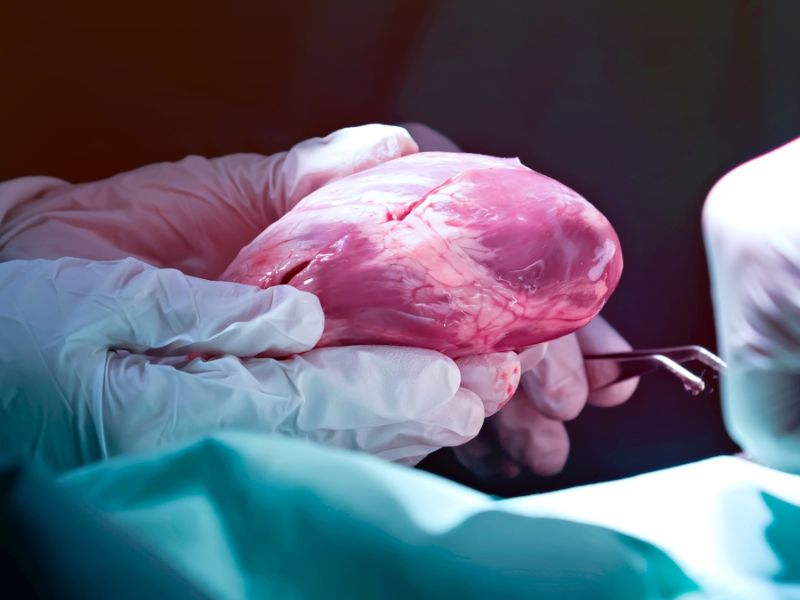
    During his visit to Beijing in September 2025, Russian President Vladimir Putin told Chinese leader Xi Jinping that undergoing multiple organ transplants could potentially make a person “younger” and extend life to 150 years—a claim widely regarded as science fiction.
    Image Credits: (Kriangkrai Thitimakorn/Getty Images)

    During his visit to Beijing in September 2025, Russian President Vladimir Putin told Chinese leader Xi Jinping that undergoing multiple organ transplants could potentially make a person “younger” and extend life to 150 years—a claim widely regarded as science fiction.

    Interestingly, this statement came just days after scientists discovered a molecular “switch” that can reduce one of the most common complications in liver transplants, improving the longevity of donated organs.

    Transplants and the Elusive Quest for Youth

    The discovery underscores both the potential and the limitations of transplant medicine. Advances in organ replacement save lives, but using transplants to slow aging remains pure fantasy.

    The idea of replacing body parts to regain youth is hardly new. In the early 1900s, wealthy men briefly embraced “monkey gland” transplants—grafts of monkey testicles—believing they could restore vitality.

    A hundred years later, tech entrepreneur and self-proclaimed biohacker Bryan Johnson has revived the pursuit of longevity through blood-based therapies. These include platelet-rich plasma injections to promote healing and transfusions of “young blood” to slow ageing.

    Mice, Misguided Hopes, and “Young Blood”

    The concept originates from parabiosis studies in mice, where the blood circulation of young and old animals was surgically connected. These experiments showed that older mice experienced temporary improvements in muscle strength, tissue repair, and cognitive performance. However, these findings have not been replicated in humans.

    Clinical trials involving plasma from young donors have failed to demonstrate significant anti-aging effects, and the practice has raised ethical concerns. In 2019, the US Food and Drug Administration issued a warning against commercial “young blood” transfusions, labeling them as “unproven and potentially harmful.” Nonetheless, the allure remains: the idea that youth could be extracted, packaged, and sold to those who can afford it.

    Transplants can Preserve Life, but they Cannot Start it over

    Today, authorized organ and tissue transplants are performed to save lives when a critical organ fails. Donor organs are meticulously matched to recipients according to tissue compatibility and undergo thorough screening for diseases, tumors, and viruses to maximize the likelihood of long-term survival. Despite this, the procedure still involves significant risks.

    Katie Mitchell, the UK’s longest-surviving heart-and-lung transplant recipient, demonstrates that long-term success depends on continuous care and resilience. The body’s immune system naturally identifies transplanted organs as foreign and, without strong immunosuppressive medication, would reject them within weeks.

    The Hidden Costs of Transplants: Immunity, Aging, and Chronic Risk

    These drugs protect the new organ but raise the risk of infections and some cancers. Over time, even a subdued immune response can trigger ongoing inflammation and tissue scarring, ultimately causing chronic rejection. Advanced medications cannot always stop this process, and lifelong treatment significantly impacts the patient’s overall health.

    Age further complicates recovery. Older patients’ weaker immunity, slower tissue repair, and higher inflammation make surgery recovery harder and increase rejection risk. Research shows survival rates fall sharply in older adults after repeat or multi-organ transplants due to aging tissues’ limited recovery.

    It’s evident that while transplants can prolong life, they cannot start it over. The physical strain of surgery and the demands of immunosuppressive therapy make “upgrading” the human body far from simple.

    The Shortage of Organs, Ethical Dilemmas, and the Illicit Organ Trade

    Transplantable organs are in short supply. Nearly every country has a lengthy waiting list for donor organs, as the demand greatly surpasses the available supply. This shortage drives a risky black market, where trafficked organs are taken from vulnerable people in poorer areas and sold illegally to wealthier recipients.

    The shortage of donor organs not only results in loss of life but also influences the ethical considerations surrounding medical innovation. To address this gap, researchers have investigated xenotransplantation—the transfer of animal organs, typically from pigs or baboons due to their anatomical resemblance, into humans. Although conceptually promising, these transplants often encounter extreme immune rejection, causing most organs to fail within a matter of days or weeks.

    Lab-Grown Organs: Promise, Limits, and Ethical Dilemmas

    Cloned or lab-grown organs represent an emerging avenue in medicine. Scientists can now grow small-scale organoids—simplified versions of human organs—but producing full-size, fully functional organs suitable for transplantation is still beyond current capabilities.

    This limited availability raises complex ethical questions. If a healthy, tissue-matched organ were accessible, who should receive it: a child or an elderly patient? Allocating a rare donor organ to someone whose organ is still functioning, even if less efficiently, would be difficult to justify.

    These ethical challenges are central to medical decision-making. Transplant medicine prioritizes patients who will gain the most life expectancy and quality of life. Using scarce organs for elective procedures aimed at slowing aging would violate this principle and could erode public confidence in the transplant system.

    Moreover, some organs cannot be replaced at all. The brain, which shapes consciousness and personal identity, is particularly vulnerable. It undergoes age-related changes such as memory loss, inflammation, and degenerative diseases, making it uniquely irreplaceable.

    Unlike the heart or kidneys, the brain cannot be replaced or restored. Even if future science allows us to regenerate or transplant every other organ, the brain’s intricacy and its central role in shaping identity make true immortality unattainable.

    The pursuit of eternal youth through organ replacement is not the next step in medicine. Instead, it reflects our resistance to accepting that aging is not a flaw to be corrected, but an essential aspect of the human experience.


    Read the original article on: Sciencealert

    Read more: New Study Reveals Why Birds Sing Most Actively at Dawn in Tropical Forests

  • We Now Understand How Sleep Helps Build Muscle

    We Now Understand How Sleep Helps Build Muscle

    Sleep is often viewed as a passive break from wakefulness, but new research reveals it's an active and essential biological function. A recent study has demonstrated that during sleep—particularly at night—the brain plays a key role in releasing growth hormone, which helps repair muscles, strengthen bones, and regulate metabolism. Scientists have now identified the brain circuits responsible for the nighttime surge of this hormone, revealing why insufficient sleep can negatively affect physical health.
    Scientists track how growth hormone reinforces our muscles and bones while we’re asleep
    Image Credits: Depositphotos

    Sleep is often viewed as a passive break from wakefulness, but new research reveals it’s an active and essential biological function. A recent study has demonstrated that during sleep—particularly at night—the brain plays a key role in releasing growth hormone, which helps repair muscles, strengthen bones, and regulate metabolism. Scientists have now identified the brain circuits responsible for the nighttime surge of this hormone, revealing why insufficient sleep can negatively affect physical health.

    Breakthrough Study Reveals How Deep Sleep Triggers Growth Hormone Release

    In a breakthrough animal study, researchers at the University of California, Berkeley, have, for the first time, uncovered the mechanism behind the rise of growth hormone during deep sleep. Although researchers have known that GH levels rise at night, they hadn’t identified the exact cause until now. The team discovered a unique feedback system that regulates hormone levels to support essential functions like muscle growth.

    Scientists have long known that sleep closely influences growth hormone release, but until now, they’ve primarily observed this by directly measuring hormone levels in blood samples taken during sleep,” explained Xinlu Ding, the study’s lead author and a postdoctoral researcher in UC Berkeley’s Department of Neuroscience. “What we’re doing differently is directly monitoring brain activity in mice to understand what’s happening. Our findings lay the groundwork for future research aimed at developing new treatments.”

    New Insights Reveal How Skipping Sleep Can Accelerate Aging and Undermine Muscle Health

    Using a combination of genetic techniques, calcium imaging, and optogenetics, the researchers mapped how the “gas pedal” (GHRH) and “brake” (somatostatin) hormones behave differently during REM and non-REM sleep. They found that during REM sleep, both somatostatin and GHRH activity increases, working together to elevate growth hormone levels. In contrast, during non-REM sleep, somatostatin activity drops while GHRH rises slightly—still resulting in a GH boost, but through a different balance of signals.

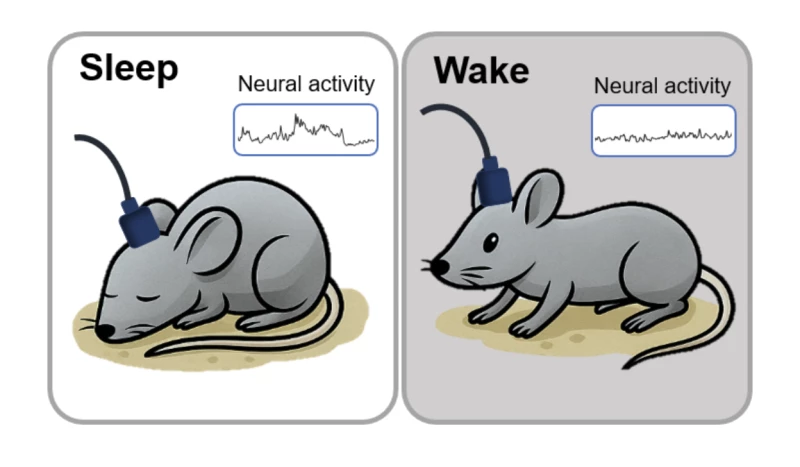
    Researchers recorded brain activity in sleeping and awake mice while stimulating neurons in the brain’s hypothalamus
    Yang Dan lab/UC Berkeley

    If this all seems a bit complex, you’re not alone. The researchers discovered that somatostatin (SST), typically known for suppressing growth hormone, also helps regulate its timing. During REM sleep, brief bursts of both SST and GHRH trigger sharp spikes in growth hormone release. In non-REM sleep, SST activity drops, allowing for a steadier flow of GH. This interplay actively regulates GH release, aligning it precisely with different sleep phases.

    Growth Hormone and the Brain’s Wakefulness Center Work in a Delicate Sleep-Wake Balance

    The study also uncovered a feedback loop between growth hormone and a brainstem region called the locus coeruleus, which helps regulate alertness. As GH accumulates during sleep, it subtly activates this brain hub to begin preparing the body to wake up. However, when the locus coeruleus becomes overly stimulated, it shifts gears and actively promotes drowsiness. This creates a delicate yin-yang dynamic, where sleep boosts GH production, and GH in turn helps regulate the cycle of sleep and wakefulness.

    In simple terms, the key takeaway is that the nighttime pulses of growth hormone (GH) released into the bloodstream play a crucial role in preparing the body’s tissues for repair and regeneration.

    “This points to a finely tuned relationship between sleep and growth hormone,” explained co-author Daniel Silverman, a postdoctoral researcher at UC Berkeley. “Not getting enough sleep reduces GH release, while excess GH can actually nudge the brain toward wakefulness. Sleep triggers GH production, and GH, in turn, helps regulate when we wake up. This balance is vital for physical growth, tissue repair, and maintaining a healthy metabolism.”

    Sleep Loss Disrupts the Body’s Prime Time for Repair, Growth, and Healthy Aging

    Missing sleep doesn’t just make you tired the next day—it causes you to skip a critical window when your body performs repair and recovery. This period, driven by growth hormone (GH), is essential for anyone looking to build muscle, maintain bone density with age, or manage weight and blood sugar. Since GH levels naturally decline as we get older, prioritizing good sleep may be one of the most effective ways to support healthier aging.

    “Growth hormone doesn’t just support muscle and bone development or fat reduction—it may also enhance brain function by boosting alertness upon waking,” added Ding.

    Although the researchers conducted the study in mice, humans share the same neural circuits, and their hormone release patterns closely mirror those findings. By uncovering how different sleep stages regulate growth hormone (GH), scientists can now target and fine-tune the rhythm vital for physical restoration.

    New Insights Reveal How Skipping Sleep Can Accelerate Aging and Undermine Muscle Health

    Past studies have already linked poor sleep to accelerated biological aging, and this new research adds further depth to our understanding of the complex processes happening between sleep and wakefulness. The key message: if you’re aiming to build or maintain muscle, missing sleep can negatively affect your body in both the short and long term.

    “By identifying the brain circuit responsible for GH release, we may eventually develop new hormone-based treatments to improve sleep quality or restore proper GH balance,” said Daniel Silverman, a postdoctoral fellow at UC Berkeley and study co-author. “There are emerging gene therapies that can target specific cell types, and this circuit may offer a new way to reduce overactivity in the locus coeruleus—something that hasn’t been explored before.”


    Read the original article: New Atlas

    Read more: Cravings Are Not a Reliable Indicator of Cancer, According to Experts