Category: Mathematics

  • Maximizing Your Chances: Playing Tim Hortons’ Roll up to Win is Most Advantageous in the Midnight Hours

    Maximizing Your Chances: Playing Tim Hortons’ Roll up to Win is Most Advantageous in the Midnight Hours

    Night boosts winning odds

    Night boosts winning odds. Tim Hortons’ Roll up the Rim contest, a fixture since 1985, remained unchanged for 25 years until 2020. The shift to digital due to the pandemic altered the game. Entries, acquired through purchases, transitioned to the loyalty app for later use, turning into “digital rolls” in the renamed contest, Roll up to Win.

    My recent breakthrough in optimizing winning chances, and making headlines nationwide, involved leveraging a simple tactic: playing during off-peak times. Despite its simplicity, achieving an 80% success rate in Tim Hortons’ annual contest demanded data, perseverance, and a substantial coffee intake to uncover the ideal strategy.

    Night boosts winning odds: Digital element changes the odds

    In 2020, I emphasized how “digital rolls” brought strategy into the game, with a major tip to boost your chances: play during low-traffic times.

    Identifying the least crowded playing times might seem straightforward — opt for the middle of the night when most Canadians are asleep. Yet, in a country spanning six time zones, pinpointing the ideal time is a complex calculation.

    Previously, I estimated 4:30 a.m. Eastern as the sweet spot, balancing not too late or too early. However, relying on estimation is still uncertain, and to determine the ultimate prime time for free coffee, data became crucial.

    This year, Tim Hortons provided precisely that.

    Getting data from the app

    When I logged into the app at the start of the competition on March 6, a prominent message caught my eye: “Over 308,619 prizes already given away!” It was an enticing call to join in — so many winners already! — and it held valuable information.

    After waiting for five minutes and refreshing the page, the message altered: “Over 309,949 prizes already given away!” Another 1,330 prizes had been claimed.

    I began periodically refreshing the page, noting down the time and the number of prizes distributed. My hypothesis was straightforward: the prizes awarded should correspond with the number of participants. I aimed to create a model of player behavior for Roll up to Win and determine the optimal time to participate.

    While gathering online data using software is a common practice in scientific research, automated processes are typically prohibited in contests like this one. Roll up to Win was no exception, so I manually collected the data.

    Throughout the day — and even during the night — I refreshed the page to track prize counts. However, as I had other commitments, there were gaps in my logs. In statistical terms, this meant having what’s called missing data.

    During these 48 hours, the count of awarded prizes consistently increased, although the rate of wins notably slowed down during nighttime hours. Additionally, the data showcases evident gaps. All times are in Eastern Standard Time.

    It’s typical to encounter missing data in practical analysis. Instances comprise surveys that are partially completed or unreturned, patients who fail to attend medical appointments, and incidents involving misplaced or corrupted data files.

    Night boosts winning odds: Statistical challenges

    This situation can pose statistical challenges depending on the nature and reasons behind the gaps in our records. For instance, a patient might miss a medical appointment due to illness, while another might miss it due to car trouble. These distinct scenarios offer varied insights, necessitating different approaches.

    My issue with missing data was relatively straightforward. I aimed to address the gaps that occurred when I wasn’t actively monitoring the contest, such as during sleep or travel.

    By examining the available data, I searched for trends. I noticed that the highest number of prizes was won between 9 a.m. and 1 p.m. Eastern time, with the lowest occurring around 3 a.m. This pattern repeated daily, and I used this information strategically.

    In bridging mathematical models to real-world scenarios, statisticians often rely on assumptions. I assumed that player behavior patterns would exhibit consistency from day to day. While this assumption was relatively strong—there was some indication of a slightly later start on Sunday mornings—it seemed a reasonable approach for my specific problem.

    Weighting the data

    I aggregated the data from each day and applied a method called weighting. Days with a higher number of logged observations were accorded greater significance or weight in my analyses. Employing statistical techniques, I connected the data points to outline the broader pattern of player behavior.

    Professor Michael Wallace, deeply engaged in tracking the Roll up to Win game data, has relied heavily on coffee.


    My data-led estimate pinpointed the best time to play at 3:16 a.m. Eastern, an hour earlier than my usual playtime, and the worst time at 11:46 a.m. Although statistical uncertainties exist, playing around these times maximizes winning chances.

    To confirm my findings, I conducted a test to verify if fewer wins at 3 a.m. were due to fewer available prizes rather than fewer players. Splitting 60 rolls, I played 30 around 3:16 a.m. and the rest before lunch, resulting in 23 wins early and five later, supporting my theory.

    Originally planning a local interest story on applying statistics, my involvement snowballed unexpectedly. It led to appearances on various radio stations and national TV shows like CTV’s Your Morning and CBC’s The National.

    In the interviews, an interesting concern emerged: if everyone starts playing at 3:16 a.m., won’t the strategy backfire?

    Indeed, this scenario taps into a concept from game theory: when everyone follows the same strategy, it can become counterproductive.

    However, I doubt everyone will wake up for a chance at free coffee, so the strategy might still hold. I plan to track the data until the contest’s end on April 9 to see if adjustments are needed. It might mean a few more late nights, but I’ve stocked up on caffeine for that!


    Read the original article on theconversation.

    Read more: Researcher Solves 60-Year-Old Game Theory Problem.

  • Life Expectancy for Men in the US is Six Years Lower than for Women

    Life Expectancy for Men in the US is Six Years Lower than for Women

    US men's life expectancy lags behind women by six years
    Credit: Nerwsnation

    New research from UC San Francisco and Harvard T.H. Chan School of Public Health highlights a widening gender gap in life expectancy in the United States. This trend, present for over a decade, grew notably due to factors like the COVID-19 pandemic and the opioid crisis.

    Published in JAMA Internal Medicine on November 13, 2023, the study found that American men now live 5.8 years less than women, the largest disparity since 1996, which stood at 4.8 years in 2010, marking the smallest gap in recent years.

    US men’s life expectancy lags behind women by six years: the pandemic

    The recent increase in the gap is primarily attributed to the pandemic, particularly affecting men from 2019 to 2021, followed by incidents of accidental injuries, poisonings (mainly drug overdoses), and suicides.

    Dr. Brandon Yan, the lead author of the paper and a UCSF resident physician, noted the lack of systematic analysis on the reasons for this widening gap post-2010 despite extensive research on the overall decline in life expectancy.

    Life expectancy in the U.S. dipped to 76.1 years in 2021, a decline from 78.8 in 2019 and 77 in 2020. This reduction in lifespan has been associated, in part, with “deaths of despair” – a term encompassing increased fatalities linked to economic hardship, depression, stress, and causes like suicide, substance abuse disorders, and alcoholic liver disease.

    Rates of death due to drug overdose and homicide have risen for both genders, yet there’s a noticeable shift wherein men make up an increasingly disproportionate segment of these fatalities,” noted Yan.

    Before the COVID-19 outbreak

    Analyzing data from the National Center for Health Statistics, Yan and a team of researchers nationwide pinpointed the key causes of mortality impacting life expectancy. They then assessed the impact of these causes on men and women to gauge their contribution to the gender gap.

    Before the COVID-19 outbreak, major contributors included unintentional injuries, diabetes, suicide, homicide, and heart disease.

    However, during the pandemic, men were notably more vulnerable to succumbing to the virus. Various factors, including diverse health behaviors and social circumstances like work-related exposure risks, reluctance to seek medical help, incarceration, and housing instability, accounted for this discrepancy. Chronic metabolic conditions, mental health issues, and gun violence also played roles.

    The findings underscore the need for specialized care tailored to men, especially in mental health, to counteract the widening life expectancy gap, according to Yan. “We’ve highlighted concerning patterns that need attention,” he remarked. “Future research should aim to steer public health strategies in reversing this downward trend in life expectancy.”

    Yan, alongside co-authors including Howard Koh, MD, MPH, professor at Harvard Chan School, emphasized the necessity for ongoing analysis post-2021 to monitor these trends post-pandemic. “As the pandemic ebbs, it’s crucial to closely monitor these patterns and make substantial investments in prevention and healthcare to prevent entrenched disparities,” Koh urged.


    Read the original article on sciencedaily.

    Source: Brandon W. Yan, Elizabeth Arias, Alan C. Geller, Donald R. Miller, Kenneth D. Kochanek, Howard K. Koh. Widening Gender Gap in Life Expectancy in the US, 2010-2021JAMA Internal Medicine, 2023; DOI: 10.1001/jamainternmed.2023.6041

    Read more: Life from the Thermodynamic Perspective: Unraveling Temporal Asymmetry

  • Dispelling the Mirage of Comprehension: MIT Reveals the Fallacy of AI’s Formal Specifications

    Dispelling the Mirage of Comprehension: MIT Reveals the Fallacy of AI’s Formal Specifications

    MIT Discredits AI’s Formal Specifications

    MIT Lincoln Laboratory discovered that while formal specifications provide mathematical accuracy, they don’t guarantee human comprehensibility. Participants faced challenges in confirming AI behaviors based on these specifications, exposing a gap between theoretical claims and practical interpretation. The study emphasizes the necessity for realistic evaluations of AI’s interpretability.

    Despite high hopes, formal specifications don’t seem to help autonomous systems communicate effectively with humans, according to recent research.

    As AI and autonomous systems gain prevalence in everyday life, novel approaches are being developed to verify their expected behavior. One such method, formal specifications, translates mathematical formulas into human-readable expressions, with claims that this technique aids in explaining AI decisions.

    However, MIT Lincoln Laboratory researched to assess the interpretability of formal specifications. Contrary to claims, their findings revealed that humans struggle to interpret these specifications. In a study involving participants assessing an AI agent’s plan in a virtual game using formal specifications, correctness was achieved less than half the time.

    Study: Humans struggle with formal specifications, touted as a way to make AI decisions understandable. Credit: Bryan Mastergeorge

    MIT Discredits AI’s Formal Specifications: machine behavior

    Hosea Siu, a researcher from the AI Technology Group at the laboratory, conveyed the implications of their findings, stating, “The results are disappointing for researchers asserting that formal methods provide interpretability to systems. While this might hold in certain confined and theoretical contexts, it falls short of practical system validation.” The group’s paper was recently accepted for presentation at the 2023 International Conference on Intelligent Robots and Systems.

    Interpretability is pivotal in fostering trust in machine behavior, ensuring users can discern the need for adjustments or trust the fairness of decisions made by robots or AI in real-world scenarios. It grants users—beyond developers—an understanding of a technology’s capabilities, yet achieving interpretability remains a longstanding challenge in AI and autonomy. The inherent opacity of the machine learning process often results in an inability to explain decision-making.

    Hosea Siu emphasizes that claims of interpretability in machine learning systems need the same scrutiny as claims of accuracy, highlighting the need for more transparency in justifying interpretability.

    Logical expression and mathematical proofs

    The researchers investigated whether formal specifications improved the interpretability of a system’s behavior, focusing on users’ ability to verify if the system aligned with user goals. Formal specifications, primarily used for logical expression and mathematical proofs within a system, have been repurposed to aid human comprehension, bridging the gap between a model’s logic and human understanding.

    Siu emphasizes the misconception between the precision of formal specifications and their interpretability to humans. The study revealed a lack of assessments regarding people’s actual understanding of these outputs.

    During the experiment, participants, both experts and non-experts in formal methods, were tasked with validating a simple set of behaviors in a robot playing a game of capture the Flag. The goal was to determine if the robot consistently adhered to specified rules, ensuring victory.

    The participants received the formal specifications in three formats: as a raw logical formula, translated into more natural language expressions, and presented as a decision tree—a format often perceived as human-interpretable in AI.

    MIT Discredits AI’s Formal Specifications: The study

    Surprisingly, the validation performance across all presentation types was notably poor, hovering around 45 percent accuracy, indicating a struggle regardless of the information format.

    The study uncovered that individuals trained in formal specifications only marginally outperformed novices. Curiously, experts exhibited more confidence in their responses, regardless of accuracy. Participants overly trusted the given specifications, overlooking rules that could lead to game losses, raising concerns about system validation by potentially ignoring failure modes.

    However, the researchers don’t advocate abandoning formal specifications as a means to elucidate system behaviors. Instead, they emphasize the necessity for improved design in presenting these specifications and their integration into human workflows.

    Siu acknowledges that individuals versed in formal methods aren’t specifically trained for the type of specifications examined in the experiment. Moreover, anticipating all potential outcomes from a set of rules is challenging. Yet, the rule sets provided to participants were relatively concise, akin to a brief paragraph of text—considerably shorter than those encountered in actual systems.

    The endeavor

    Team to explore interpretability claims within formal logic, sidestepping direct links to real-world robot validation.

    Siu and team aim to improve human-robot interactions, especially in military settings, as part of their larger project. The project aims to help operators train robots directly, similar to how humans teach each other. Such an approach could bolster operator confidence in the robots and the robots’ adaptability.

    The team believes their research will improve how autonomy is integrated into human decision-making.

    Siu emphasizes the necessity for human evaluations of various autonomous systems and AI concepts before making sweeping claims about their effectiveness in human contexts. This cautious approach advocates for scrutinizing these technologies’ utility in practical human applications.


    Read the original article on scitechdaily.

    Read more: Journal of Philosophical Logic.

  • Life from the Thermodynamic Perspective: Unraveling Temporal Asymmetry

    Life from the Thermodynamic Perspective: Unraveling Temporal Asymmetry

    Representation of the time-asymmetry in the heterogeneous network dynamics unveiled by the study. Credit: KyotoU/Robin Hoshino

    Life is perceived as a system perpetually defying equilibrium in thermodynamics, steadfastly opposing the relentless march toward chaos. This defiance embodies the essence of irreversibility, establishing an indelible connection between life and the ‘arrow of time,’ a concept introduced by the English physicist Arthur Eddington in 1927.

    Unlocking Temporal Asymmetry

    A groundbreaking effort by an international team, including researchers from Kyoto University, Hokkaido University, and the Basque Center for Applied Mathematics, has culminated in a significant breakthrough regarding temporal asymmetry. 

    This newfound knowledge promises to enhance our comprehension of the intricate behaviors within biological systems, machine learning, and AI tools.

    The Solution to Entropy Production

    Co-author Miguel Aguilera from the Basque Center for Applied Mathematics explains, “The study offers, for the first time, an exact mathematical solution of the temporal asymmetry—also known as entropy production—of nonequilibrium disordered Ising networks.”

    The Intricacies of Ising Networks

    The researchers focused on the Ising model, a prototype of large-scale complex networks. This model is a valuable tool for investigating recurrently connected neurons.

     When connections between neurons are symmetric in equilibrium, the Ising model manifests complex disordered states known as spin glasses. It’s worth noting that the mathematical solution of this equilibrium state earned Giorgio Parisi the prestigious 2021 Nobel Prize in Physics.

    Diving into Time Irreversibility

    Unlike the dynamic equilibrium in living systems, the Ising model’s spin crystals follow reversible dynamics. The researchers began understanding the time-irreversible Ising dynamics triggered by asymmetric connections between neurons.

    A Leap Forward for Artificial Neural Networks

    The exact solutions from this research now serve as benchmarks for developing approximate methods to learn artificial neural networks. This advancement can potentially revolutionize the field of machine learning and its various phases.

    Hideaki Shimazaki, from Kyoto University’s Graduate School of Informatics, emphasizes the significance of their findings: “The Ising model underpins recent advances in deep learning and generative artificial neural networks. So, understanding its behavior offers critical insights into biological and artificial intelligence.”

    A Collaborative Leap Forward

    Miguel Aguilera comments on their collaborative endeavor: “Our findings are the result of an exciting collaboration involving insights from physics, neuroscience, and mathematical modeling. The multidisciplinary approach has opened the door to novel ways to understand the organization of large-scale complex networks and perhaps decipher the thermodynamic arrow of time.”


    Read the original article on PHYS.

    Read more: Stability of Spherical Vortices Proven Through Mathematics.

  • Stability of Spherical Vortices Proven Through Mathematics

    Stability of Spherical Vortices Proven Through Mathematics

    In a groundbreaking development within the field of Mathematical Science, Professor Kyudong Choi, affiliated with the Department of Mathematical Sciences at UNIST, has delivered unequivocal proof regarding stable spherical vortices.

     This momentous discovery carries significant implications for weather anomaly prediction and the advancement of weather forecasting technologies.

    Understanding Spherical Vortices

    A vortex represents a rotating region within a fluid medium, such as air or water, characterized by intense rotation. Common examples include typhoons and tornadoes, often reported in the news. 

    Professor Choi’s mathematical proof establishes the stability of specific vortex structures that can manifest in real-world fluid flows.

    Building upon Euler’s Foundations

    This research builds upon the foundational Euler equation formulated by Leonhard Euler in 1757 to describe the flow of eddy currents. Notably, in 1894, British mathematician M. Hill mathematically demonstrated that a ball-shaped vortex could maintain its shape indefinitely while moving along its axis.

    The streamline of Hill’s spherical vortex in the moving frame.

    Confirming Hill’s Findings

    Professor Choi’s study confirms Hill’s assertion that the spherical vortex he identified maximizes kinetic energy under specific conditions. This confirmation is achieved by applying variational methods and incorporating functional analysis and partial differential equation theory from mathematical analysis. 

    Notably, this study extends previous investigations, primarily focused on two-dimensional fluid flows, to encompass the realm of three-dimensional fluid dynamics under axial symmetry conditions.

    Noteworthy Features

    One notable feature highlighted in Hill’s work is the solid upward airflow at the front of the spherical vortex, a characteristic frequently observed in natural phenomena such as typhoons and tornadoes. 

    Professor Choi’s findings are a starting point for further research, particularly in measuring the residual time associated with these ascending air currents.

    The streamline of Hill’s spherical vortex in the moving frame (Upstream in the front).

    Potential for Advancements in Weather Forecasting

    Professor Choi emphasized the international attention garnered by research on vortex stability and its long-term potential to drive advancements in contemporary weather forecasting technology.

    This research was made possible with support from the Korea Research Foundation under the Ministry of Science and ICT and UNIST. The study was published before its official release on July 24th via the online Communications on Pure and Applied Mathematics edition.


    Read the original article on UNIST.

    Read more: Mathematical Model of Animal Growth Reveals Life is Defined By Biology, Not Physics.

  • Math-themed Bedtime Stories May Boost Math Memory

    Math-themed Bedtime Stories May Boost Math Memory

    Jayne Spiller and Camilla Gilmore, from the Center for Mathematical Cognition at the University of Loughborough in the UK, explored how sleep and mathematical memory intersected and discovered that post-learning sleep enhances recall.
    Credit: Pixaobay

    Jayne Spiller and Camilla Gilmore, from the Center for Mathematical Cognition at the University of Loughborough in the UK, explored how sleep and mathematical memory intersected and discovered that post-learning sleep enhances recall.

    In their article titled “The Beneficial Influence of Sleep on the Recall of Multiplication Facts,” published in the journal Royal Society Open Science, Spiller and Gilmore, hailing from the Center for Mathematical Cognition at the University of Loughborough in the UK, delved into the relationship between sleep and memory for multiplication facts. They aimed to determine whether learning complex multiplication problems before sleep had advantages in recall compared to learning them during wakefulness, focusing on the impact of sleep on memory, specifically for multiplication tables.

    The Impact on Complex Multiplication

    Their study involved 77 adult participants aged 18 to 40 in the UK. These participants learned complex multiplication problems in two conditions: before sleep (referred to as sleep learning) and in the morning (referred to as wake learning). The study included online sessions where participants learned new complex multiplication problems or were tested on previously learned material. These learning sessions included both untimed and timed trials.

    The results indicated that participants exhibited better recall in the sleep learning condition as opposed to the wake learning condition, with a moderate effect size. This benefit persisted even among participants with varying learning abilities, although the effect size was smaller in this case. The study found that participants’ mathematical proficiency, as measured by their accuracy in simple multiplication problems, was associated with their learning scores but not with the degree of benefit from sleep-related recall.

    Implications for Math Education

    The research underscores the educational potential of harnessing the benefits of sleep for learning. The positive influence of sleep on the recall of complex multiplication problems could be particularly valuable for children learning multiplication tables and other math memorization skills. However, the acceptance and effectiveness of bedtime math lessons remain open questions.

    The authors suggested that sleep might confer additional benefits for recall compared to daytime learning due to the absence of competing external stimuli. This limitation in their study, namely the lack of other stimuli with similar encoding complexity for comparison, prevented a definitive demonstration of the specificity of sleep-related recall benefits.

    While asleep, the brain may consolidate new learning because it is not subjected to competing stimuli. In contrast, an awake brain is exposed to conversations, media consumption, reading, and other educational materials, which could compete for memory encoding. This competition in the waking brain might explain the memory differences observed in the study. However, finding alternatives to sleep for memory enhancement is challenging, given the practical limitations.


    Read the original article on: Phys Org

    Read more:Math Expert Shows Widespread Wordle Cheating for Wins

  • Math Expert Shows Widespread Wordle Cheating for Wins

    Math Expert Shows Widespread Wordle Cheating for Wins

    It appears that there is a five-letter term to describe the common practice among avid Wordle puzzle players as they strive to identify the target word within six attempts each day.
    Credit: Pixaobay

    It appears that there is a five-letter term to describe the common practice among avid Wordle puzzle players as they strive to identify the target word within six attempts each day.

    According to a mathematics expert, the word that describes what many avid Wordle puzzle players do daily as they attempt to find the target word within six tries is “cheat.”

    James P. Dilger, who is a professor emeritus at Stony Brook University specializing in the mechanisms of anesthetic action by day and a Wordle enthusiast by night, has raised questions about the published Wordle success rates, finding them suspicious.

    Wordle’s Origins and Gameplay

    Wordle was created by a software engineer, Josh Wardle, as a pastime during the early days of COVID restrictions. The game requires players to guess a target five-letter word in six attempts or fewer, with feedback given after each guess (green for correct letters in the correct position, yellow for correct letters in the wrong position, and black for incorrect letters).

    Initially, Wordle was played among friends and family but gained immense popularity, especially after The New York Times acquired it in January 2022. Presently, around 2 million people play Wordle daily, and it’s available in 50 languages worldwide.

    Dilger’s suspicions arose when he examined the game statistics published daily by The Times. He noticed an unusually high number of players guessing the word correctly on their first attempt and decided to investigate further.

    Using data covering four months of user guesses, Dilger analyzed the odds of randomly guessing the daily word, which came out to be around 0.043%, equivalent to approximately 860 players. However, the Times’ statistics consistently showed over 4,000 players making correct first guesses in each game.

    Players Defying Low Odds with First Guesses

    Dilger went on to emphasize that even if players excluded words already used in previous games, their odds of guessing the correct word would still be quite low, around 0.066%. Yet, this low-probability event occurred consistently every day, with some days seeing as many as 10,000 players making correct first guesses.

    He also noted that it was highly unlikely that players would correctly guess words like “nanny” and “igloo” on their first try. Players have a better chance when they guess words with non-repeating characters and as many vowels as possible, which “nanny” and “igloo” do not adhere to.

    Dilger concluded that these players who consistently make correct first guesses with low-probability words can be labeled as “cheaters.” However, he did not delve into the motivations behind their actions.

    Despite the presence of such cheaters, Dilger acknowledged that many players still enjoy the game. He didn’t provide an explanation for why some players choose to cheat but suggested that some may do it out of frustration and feel a sense of relief or joy when they succeed with a cheat.

    In summary, a mathematics expert, James P. Dilger, has brought attention to the prevalence of cheating among Wordle players, particularly those who consistently guess the correct word on their first attempt despite low odds. He found this phenomenon suspicious but did not offer a definitive explanation for why some players resort to cheating in Wordle.


    Read the original article on: Phys

    Read more: Math and Music Combo Boosts Test Scores, Reveals 50-Year Review

  • Researcher Solves 60-Year-Old Game Theory Problem

    Researcher Solves 60-Year-Old Game Theory Problem

    Researcher solves 60-year-old game theory problem
    Credit: scitechdaily.

    Researcher solves 60-year-old game theory problem. To comprehend how autonomous vehicles can navigate intricate road scenarios, researchers often employ game theory, a mathematical model depicting the strategic behavior of rational agents to achieve their objectives.

    Dejan Milutinovic, a professor of electrical and computer engineering at UC Santa Cruz, has focused on differential games, a complex subset of game theory that deals with moving players. One such game is the wall pursuit game, a simple model involving a faster pursuer aiming to catch a slower evader constrained to a wall path.

    Researcher solves 60-year-old game theory problem: IEEE Transactions on Automatic Control

    For nearly 60 years, a predicament persisted in this game, where a range of positions seemed to lack an optimal solution. However, Milutinovic and his team recently proved, in a paper published in IEEE Transactions on Automatic Control, that this dilemma isn’t valid. They introduced a novel analytical approach that demonstrates a deterministic solution always exists for the wall pursuit game. This finding could help resolve similar challenges in differential games and enhance reasoning about autonomous systems, like driverless vehicles.

    So, Game theory finds application in various fields, encompassing economics, politics, computer science, and engineering, to comprehensively understand behavior. The Nash equilibrium by mathematician John Nash signifies optimal strategies minimizing regret for all game players. This concept extends to the wall pursuit game, where rational players adopt their equilibrium strategy to avoid increased regret.

    The classical analysis for this game fails for a specific set of positions, known as a singular surface, leading to the acceptance of the dilemma. However, Milutinovic and colleagues devised a new approach, utilizing a mathematical concept that wasn’t available when the game was conceived. By integrating the viscosity solution of the Hamilton-Jacobi-Isaacs equation and a loss analysis for the singular surface, they determined that an optimal solution exists for all game circumstances, resolving the dilemma.

    Hamilton-Jacobi-Isaacs equation

    The viscosity solution concept in partial differential equations, emerging in the 1980s, offers a fresh perspective on solving equations like the Hamilton-Jacobi-Isaacs equation. This concept is particularly relevant for optimal control and game theory problems. It involves using calculus to find derivatives of functions, which is straightforward when derivatives are well-defined, but not in cases like the wall-pursuit game.

    For situations where there’s no well-defined derivative, players would typically randomly choose actions and accept the resulting losses. However, rational players seek to minimize losses. To address this issue, researchers carefully analyzed the viscosity solution around points with undefined derivatives. Subsequently, they introduced a rate of loss analysis, which in turn led to the emergence of well-defined optimal game strategies on these points.

    Crucially, this analysis resolves the singular surface dilemma while staying consistent with classical analysis in relevant states. This breakthrough has broader implications for game theory. Hence, Milutinovic and his team aim to apply this to other dilemmas and encourage the research community to follow suit.


    Read the original article on sciencedaily.

    Read more: Insights from Game Theory on Confronting Bullies

  • Decision-Makers Stay Humble in Predicting Business future

    Decision-Makers Stay Humble in Predicting Business future

    Decision-makers stay humble in predicting business future
    Credit: investbegin.com

    Decision-makers stay humble in predicting business future. In 2023, management teams face testing times as unexpected and extreme developments spill over from 2022. The volatility of energy prices, supply chains, interest rates, health uncertainties, and geopolitical tensions are challenging even the most confident decision-makers.

    McKinsey & Company acknowledges the complexity of the current world and advises caution rather than overconfidence. While predicting the future has always been difficult, leaders continue to be surprised by rare events, known as “black swans.” Despite this, there is still a tendency for leaders and experts to be overly optimistic in their predictions.

    Decision-makers stay humble in predicting business future: Rationality + Intuition = Black Swan Defense

    Researchers in decision theory have been developing a model that addresses a wide range of problems, from known and calculated probabilities to situations with unknown and uncomputable probabilities due to unique circumstances like global warming or pandemics.

    Their approach aims to avoid the black swan effect by combining mathematically-based theories, like the Bayesian approach, with less demanding models that allow decision-makers to admit their ignorance on specific issues. While decision theory can sharpen and test intuition, it cannot replace it entirely, and formal models can help avoid biases and errors when relying on intuition.

    The model should be flexible for decision-makers to test their intuition in novel and complex situations, using probabilities based on similar past cases and theories. It suggests decisions should consider past successes or failures, requiring intuition and insight, while the formal model helps avoid biases like the recency effect.

    A Case In Point

    In a hypothetical case, the directors of an airline company are seeking funding for new security technology. Three potential investors evaluate the proposal from different angles. Abe analyzes the technology’s efficacy, competition, clinical trial costs, insurance coverage, and potential profits. After a thorough investigation, he finds the investment relatively promising.

    In the case of seeking funding for new security technology in an airline company, Abe is relatively optimistic based on his analysis. However, Eleanor, with more experience, is doubtful due to past project failures. She considers both future scenarios and past cases, giving less weight to future possibilities.

    Tamar, an inexperienced investor, is also skeptical, highlighting the limitations of calculations in capturing all relevant possibilities. Eleanor’s more extensive database of past airline crashes makes her more cautious despite agreeing with Abe on the probability of success. Tamar’s cautious intuition is influenced by her limited information on past disasters and her cognitive style.

    Leaders, anticipate the unexpected and avoid arrogance in predictions

    The three investors, despite receiving identical proposals, have varying decision-making approaches. People may analyze the same situation differently, emphasizing either case-based or theory-based reasoning, leading to distinct conclusions.

    While abstract mathematical models are valuable for decision-making in some cases, they may not provide the right answer in complex and unique situations where assigning probabilities is challenging. In such cases, one should expect unexpected events, like black swans, even though their arrival time cannot be predicted. The focus should be on expecting the unexpected and maintaining humility in predictions.

    The authors advocate for a humbler view of theory, combining formal decision-making theories with social and psychological responses that reflect how people behave. This approach aims to bridge the gap between elegant mathematical models and the complexity of real-world reality.


    Read the original Article on forbes.

    Read more: Impressions Count and Impact the Decisions We Make Later.

  • Researcher Upends Basic Construction Rule

    Researcher Upends Basic Construction Rule

    Researcher upends basic construction rule
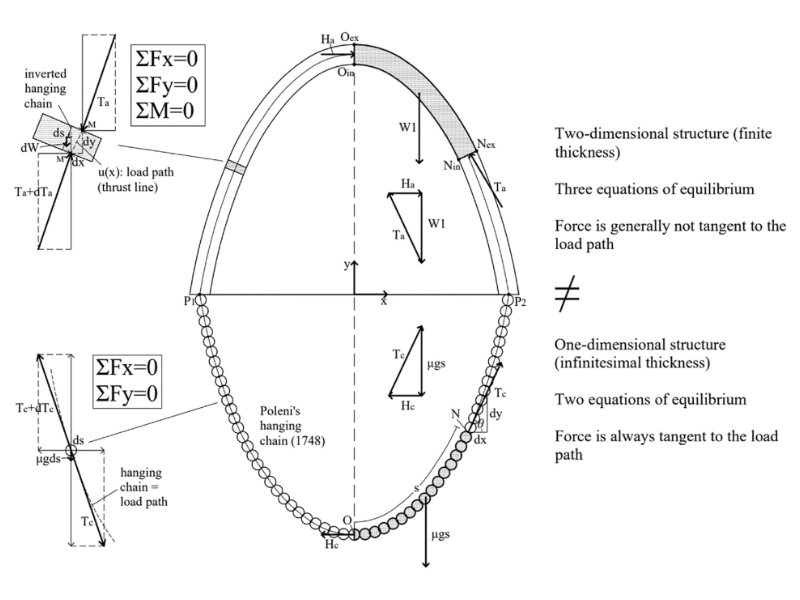
    Regardless of the similarities, the hanging chain and its inverted arch are two incompatible structural systems. architexturez.net

    Researcher upends basic construction rule. An Aston University researcher challenged a long-standing construction rule. For centuries, engineers have referred to a hanging chain as an analogy to explain the stability of masonry arches. According to Robert Hooke’s seventeenth-century theory, the shape of a hanging chain should mimic that of an upright rigid arch. Nevertheless, Aston University’s College of Engineering and Physical Sciences conducted research indicating that this belief is incorrect.

    Dr. Haris Alexakis utilized the transition from Newtonian to Lagrangian mechanics to demonstrate, with mathematical rigor, that the hanging chain and the arch are two mechanically incompatible systems.

    In his paper “Vector analysis and the stationary potential energy for assessing equilibrium of curved masonry structures,” he highlights that the two systems function within distinct spatial frameworks. Consequently, the equilibrium of the hanging chain relies solely on translational force, while the inverted arch requires both translational and rotational forces, leading to fundamentally different solutions.

    Dr. Alexakis’s analysis brought to light subtle inconsistencies in the interpretation and application of Hooke’s analogy throughout history, particularly in the design and safety assessment of arches. By doing so, he emphasized the practical limitations of relying solely on this analogy.

    Researcher upends basic construction rule: Curved structures

    The analogy between inverted hanging chains and the optimal shape of masonry arches has been deeply ingrained in structural analysis practices. Curved structures, such as arches, have been instrumental in enabling masons, engineers, and architects to support heavy loads and span large areas using low-tensile strength materials, contributing to the world’s architectural heritage.

    Despite its long-standing history, the quest for optimal curved structures and safety remains relevant. Today, interest grows in preserving history and adopting sustainable construction, reducing material use and carbon footprint with eco-friendly alternatives.

    Dr. Alexakis’s paper proposes a novel structural analysis approach published in Mathematics and Mechanics of Solids. This new method offers several advantages, including increased speed, greater flexibility, and the ability to handle more complex geometries. With this approach, analysts achieve rigorous solutions without considering individual block equilibrium or describing thrust force load paths geometrically.

    The implications of this research are significant. It introduces new opportunities to assess the safety of heritage structures and construct sustainable curved designs like vaults and shells. These structures offer appealing aesthetics and support net-zero construction and sustainability.


    Read the original article on sciencedaily.com

    Read more: Math and Music Combo Boosts Test Scores, Reveals 50-Year Review.