Category: Architecture

  • Smart Facade Controls Heat like a Plant and Insect

    Smart Facade Controls Heat like a Plant and Insect

    No one enjoys buildings that are too hot in summer or too cold in winter. That’s why the FlectoLine facade is designed with two bio-inspired mechanisms to automatically control the amount of solar heat entering through the windows.
    Image Credits: New Atlas

    No one enjoys buildings that are too hot in summer or too cold in winter. That’s why the FlectoLine facade is designed with two bio-inspired mechanisms to automatically control the amount of solar heat entering through the windows.

    Collaborative Development of FlectoLine System by German Universities

    This system is being developed through a collaboration between Germany’s universities of Stuttgart and Freiburg, as part of the global Flectuation research project.

    A prototype facade has been on a Freiburg greenhouse for two years, recently earning researchers a special prize at the first Bio-Inspired Innovations Baden-Württemberg Award.
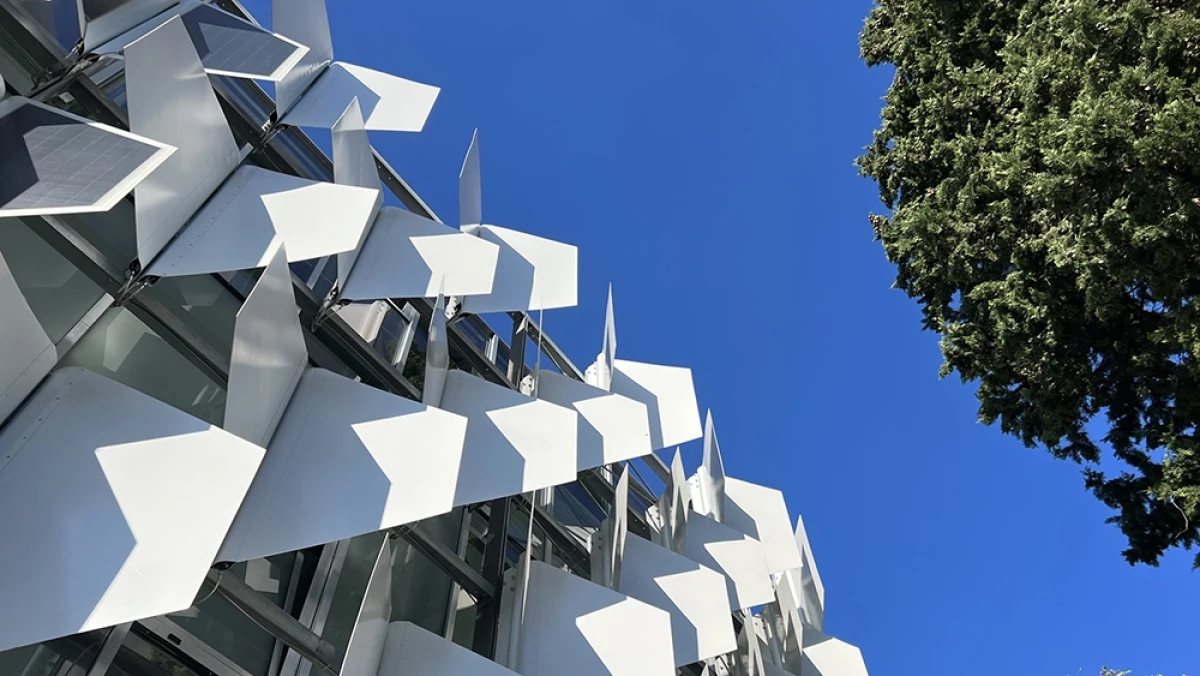
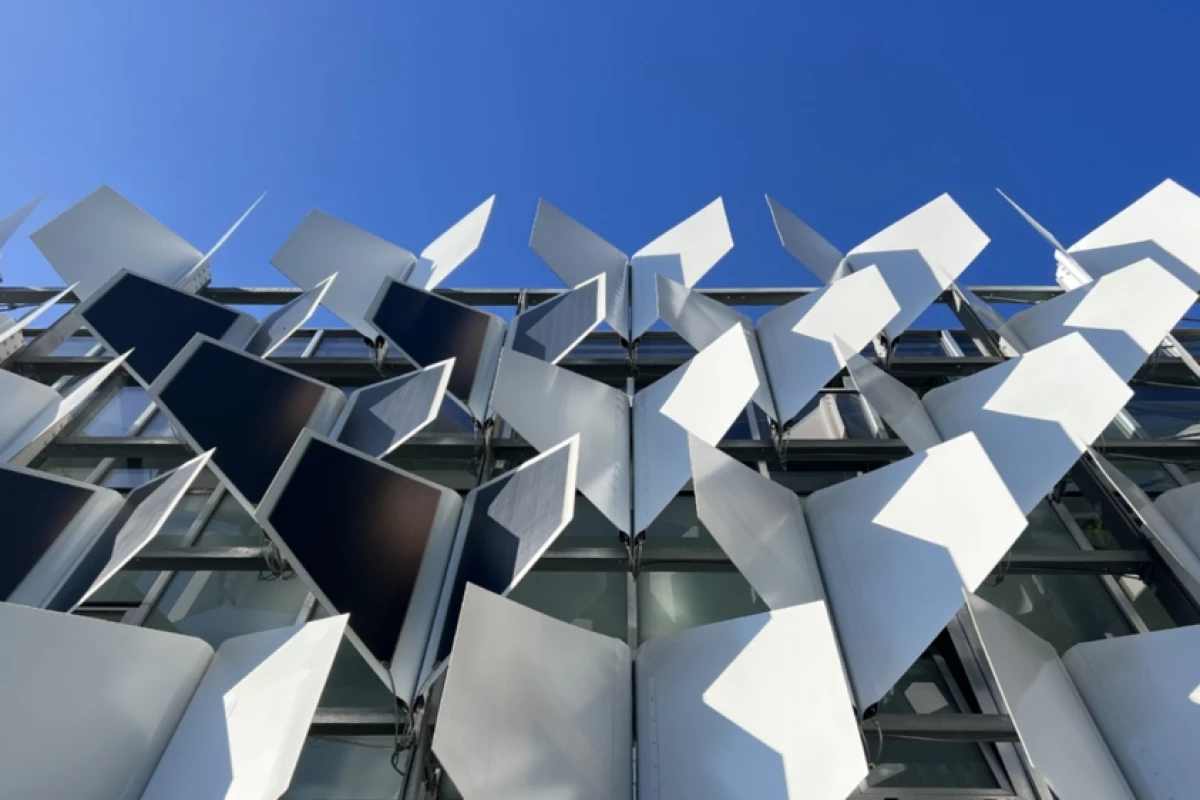
    Image Credits:The modules require a pressure of just 0.4 bar (5.8 psi) to fully actuate to a 90-degree angle
    University of Stuttgart / itke / ITFT

    Prototype Facade with Adjustable Fiber-Reinforced Shading Elements

    The prototype covers 83.5 square meters of the greenhouse’s exterior with multiple shading elements. Each element features two fiber-reinforced thermoplastic flaps that can either spread apart or fold together.

    While the design resembles Venus flytrap traps, the aquatic waterwheel plant (Aldrovanda vesiculosa) actually inspired it with its prey-catching structures.

    Veins in the striped bug’s wings inspired the pneumatic “hinge zone” at each flap’s base. Pumping air into this flexible hinge expands it, causing the stiffer flap to fold outward to one side.
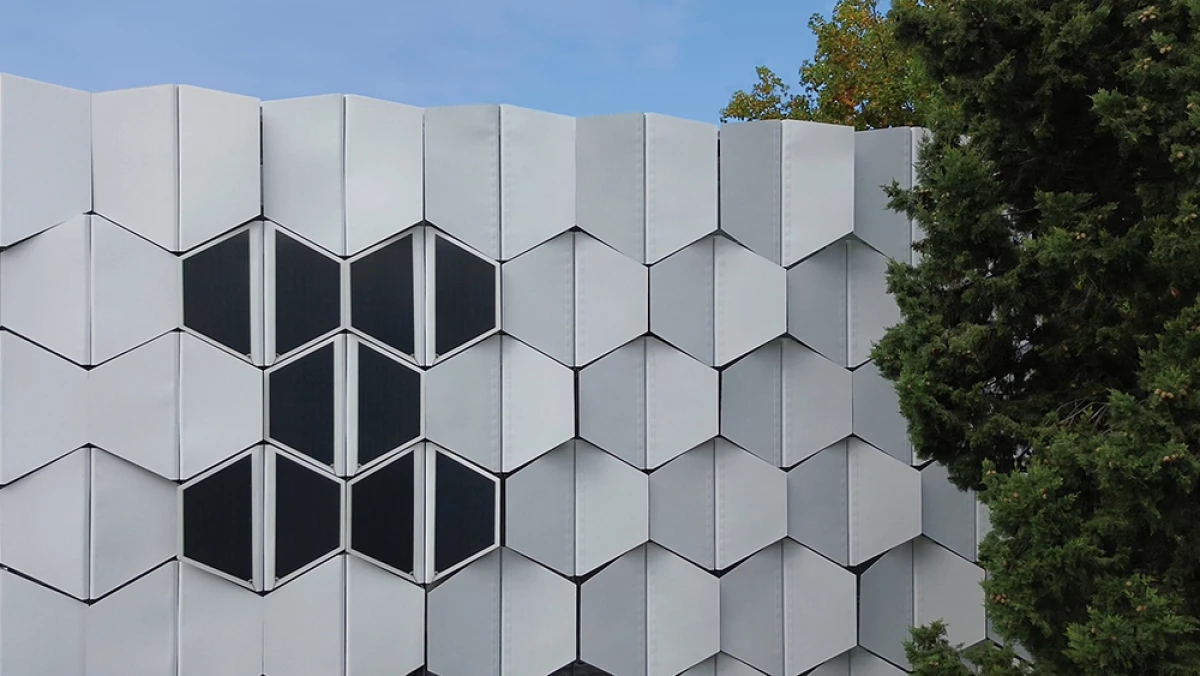
    Image Credits:The FlectoLine demonstrator all shut up for hot weather, with its photovoltaic cells clearly visible 
    University of Stuttgart / itke / ITFT

    Flaps Fold Out to Block Sunlight and Cool the Building

    When the flaps fold outward, they block sunlight, cooling the building and cutting air conditioning needs.

    In colder conditions, the flaps fold inward to meet in the center by stopping airflow to their hinge zones. This allows more sunlight to pass through, warming the interior and lessening the building’s heating requirements.
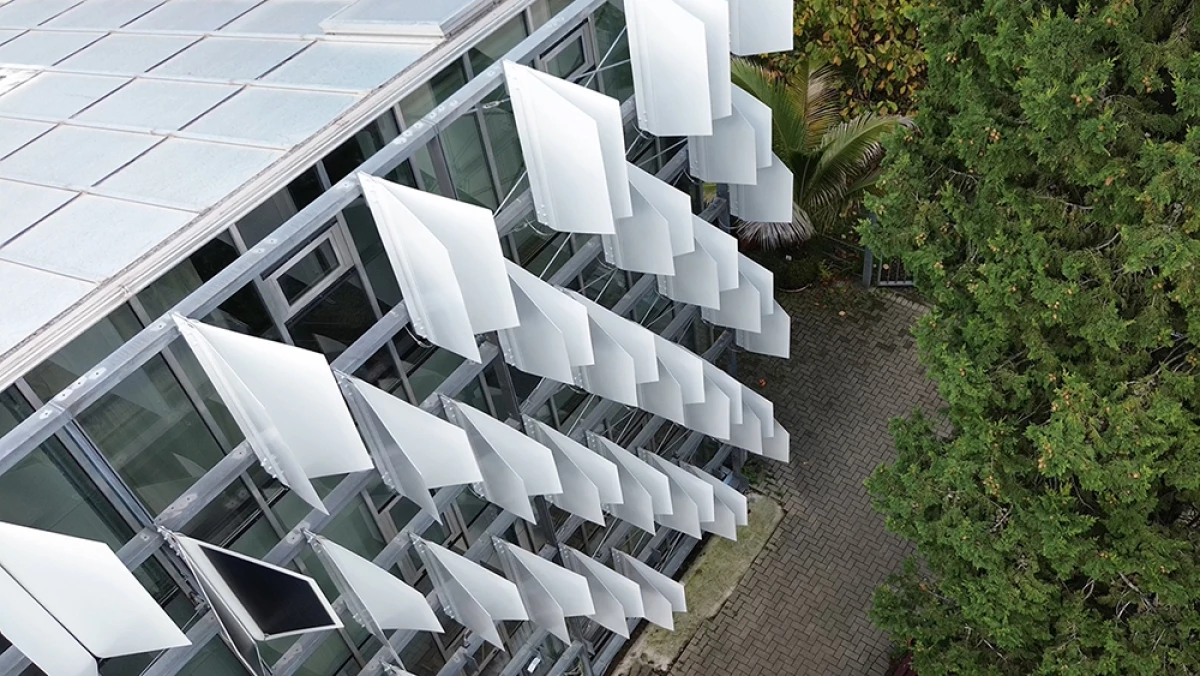
    Image Credits:In cooler weather, the flaps fold together to open up the facade
    University of Stuttgart / itke / ITFT

    The facade automatically adjusts to conditions but lets users control it manually when needed. Photovoltaic cells on its exterior power the prototype.

    Given the challenges of climate change, architecture must evolve,” says Edith A. Gonzalez, a research associate at the University of Stuttgart. “With FlectoLine, we’ve shown the significant potential of adaptive facades in addressing these issues.


    Read the original article: New Atlas

    Read more: Palmetto Enables Developers to Advance U.S. Electrification with AI-Driven Building Models
  • Sky-High Soccer Field Crowns Groundbreaking Skyscraper

    Sky-High Soccer Field Crowns Groundbreaking Skyscraper

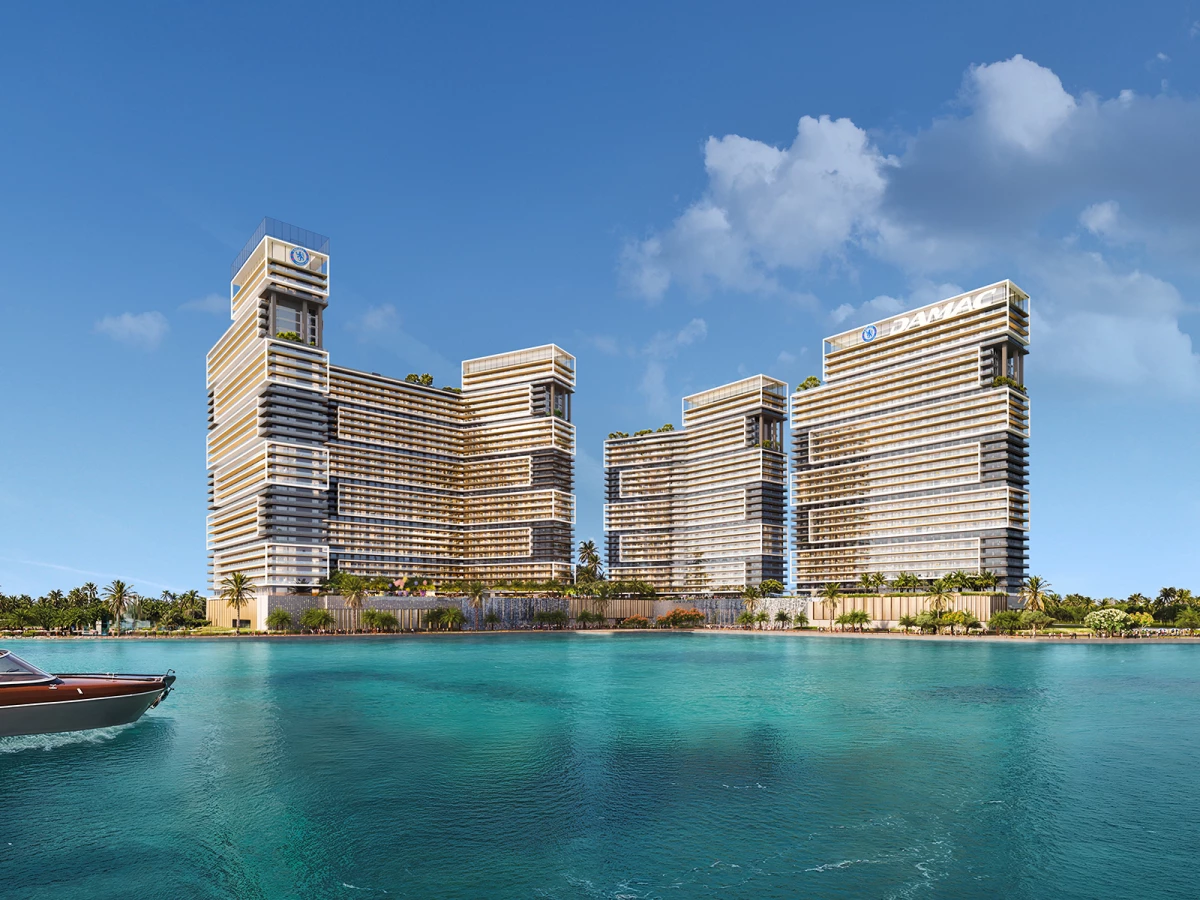
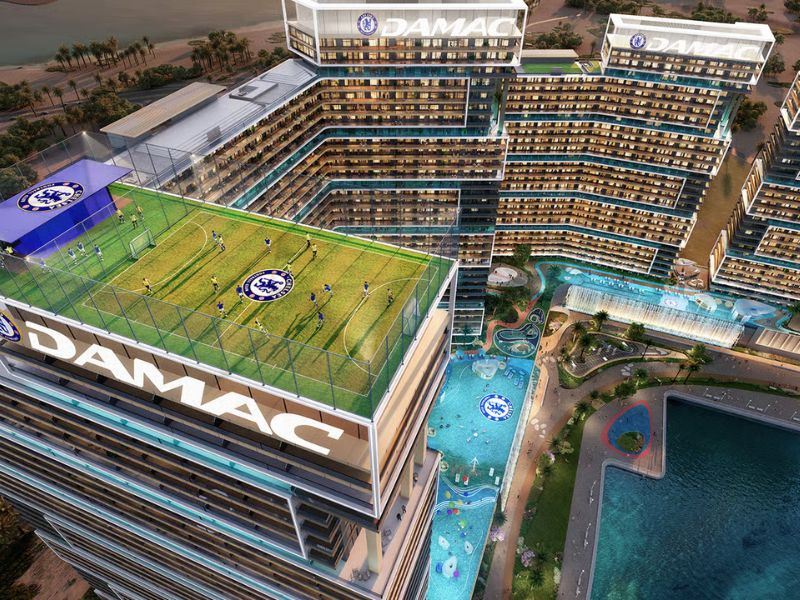
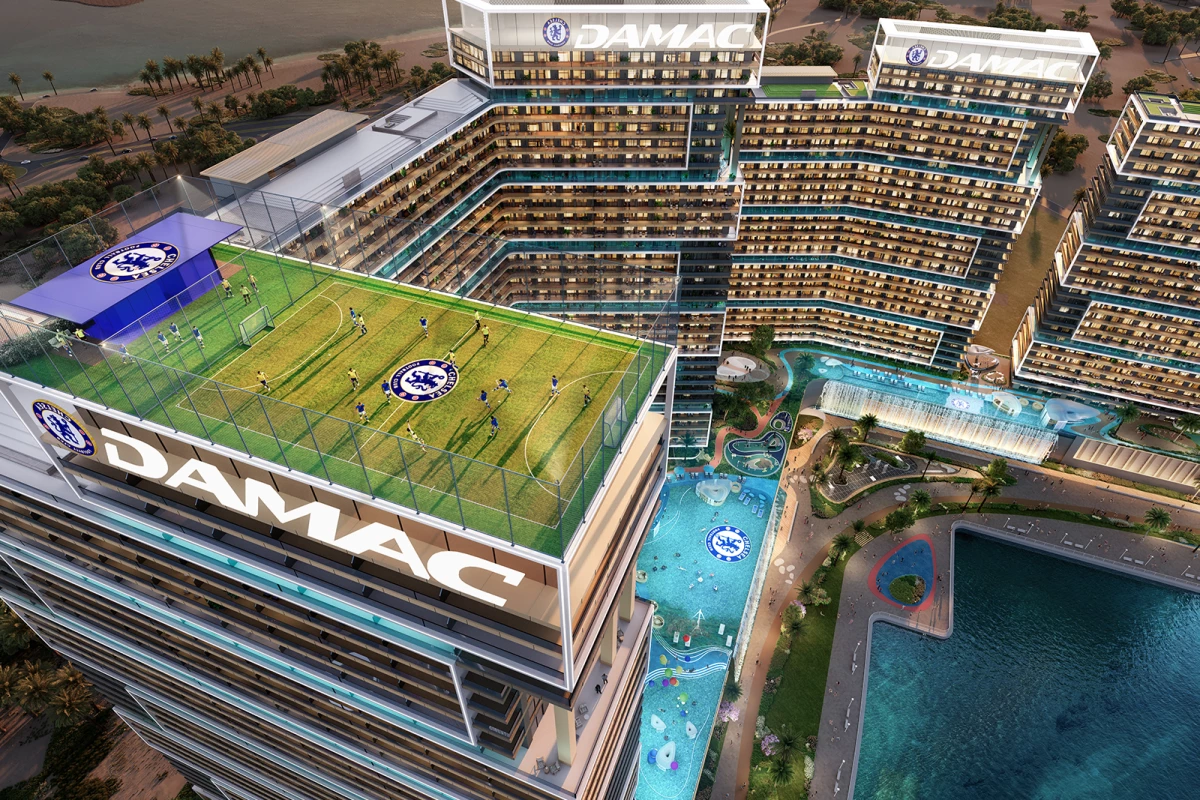
    The Chelsea Residences in Dubai stands out not just for its sleek architectural design, but for an unexpected feature—a rooftop soccer field. In fact, this first-of-its-kind addition blends luxury high-rise living with recreational sports in a way rarely seen in skyscraper design. Developed by LUX HABITAT and inspired by Chelsea Football Club, the tower merges residential elegance with a nod to the sport, offering residents a unique amenity: a full-sized pitch atop the building.
    Chelsea Residences is a luxurious Dubai residential skyscraper project that will be topped by a soccer pitch
    Damac Properties

    The Chelsea Residences in Dubai stands out not just for its sleek architectural design, but for an unexpected feature—a rooftop soccer field. In fact, this first-of-its-kind addition blends luxury high-rise living with recreational sports in a way rarely seen in skyscraper design. Developed by LUX HABITAT and inspired by Chelsea Football Club, the tower merges residential elegance with a nod to the sport, offering residents a unique amenity: a full-sized pitch atop the building.

    Blending Sport and Sophistication, Chelsea Residences Targets Elite Buyers Looking for a Unique Edge in Dubai’s Luxury Market

    The project combines bold design choices with lifestyle innovation, aiming to appeal to both sports fans and high-end buyers seeking something different in Dubai’s competitive luxury real estate market.

    The development will feature 1,400 apartments ranging from one to three bedrooms, each with floor-to-ceiling windows offering sea views. According to the developers, the interiors draw inspiration from the refined charm of London and the dynamic energy of Dubai, resulting in a sleek, upscale aesthetic.

    Chelsea Residences to Feature Cryotherapy, Infinity Pool, Sports Bar, and More

    However, as expected, the project is filled with premium amenities. Damac’s press release highlights that Chelsea Residences provides “carefully curated health and fitness experiences rarely found in residential complexes.” These include a cryotherapy center, forest relaxation pods, a Kneipp therapy path, and a starlit wellness center. Additional offerings include an infinity pool, aerial yoga studio, a Chelsea-themed sports bar, and a “powerhouse lounge“—a resort-style entertainment space featuring live football broadcasts, boxing, darts, and more. Dining will emphasize wellness and immersive experiences.

    Chelsea Residences’ skyscrapers will reach a height of 130 m (426 ft)
    Damac Properties

    Chelsea F.C. Branding Takes Center Stage, with Exclusive Resident Events Featuring Club Legends

    Chelsea F.C. branding is prominently integrated into the development, and residents will also be invited to exclusive events featuring Chelsea F.C. “legends” — likely referring to former players and managers.

    To conclude, It’s a daring concept, clearly aimed at a niche market: affluent die-hard fans of a specific English football club seeking a luxurious lifestyle in Dubai. If that appeals to you, prices for apartments start at AED 2.17 million (approximately £445,000 or US$600,000).


    Read the original article on: New Atlas

    Read more: Innovative Office Brings a Decade-Long Architectural Vision to Life

  • Spanish Winery Uses Hempcrete Blocks To Preserve Ancient Grapes

    Spanish Winery Uses Hempcrete Blocks To Preserve Ancient Grapes

    Bodegas Dominio d’Echauz blends tradition and innovation in rural Spain
    Fran Silvestre Arquitectos

    In the peaceful countryside of Zayas de Báscones, Spain, a subtle new architectural project is beginning to take shape. Designed by the firm Fran Silvestre Arquitectos, the Bodegas Dominio d’Echauz winery is envisioned to be more than just a wine production facility — it will function as a living archive, a laboratory, and a sanctuary focused on preserving and studying endangered grape varieties.

    Integration with the Landscape and Agricultural Heritage

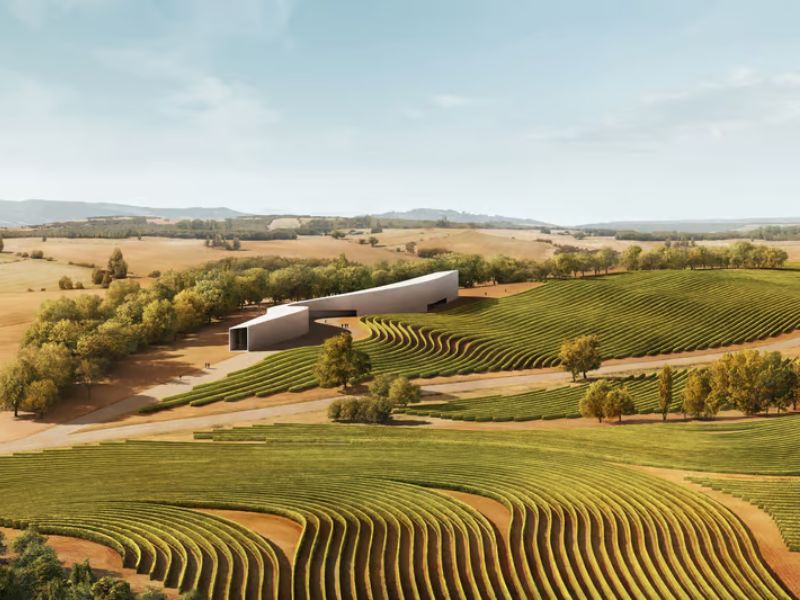
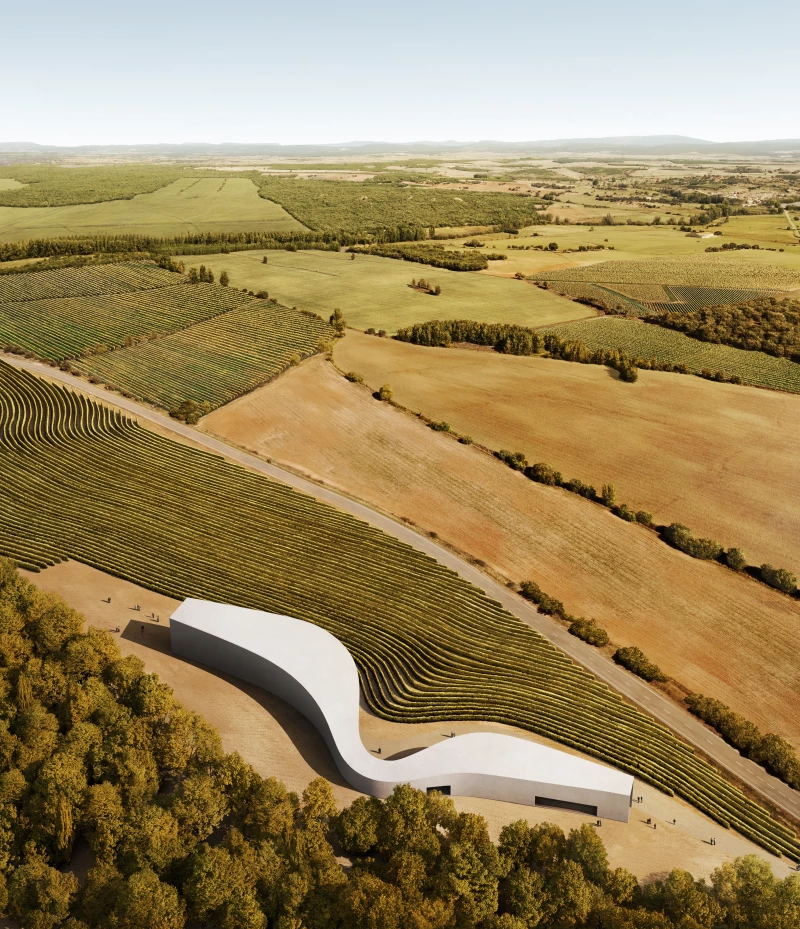
    Unlike many wineries that favor large-scale operations, this project takes a more restrained approach. Its planned curved white form will follow the layout of the surrounding vineyards, appearing as if it naturally emerged from the landscape. Behind this understated design lies an innovative proposal that bridges sustainable architecture with agricultural heritage conservation.

    The building is being constructed primarily using hempcrete blocks, a biocomposite made from hemp fibers, lime, and water. These blocks will form two continuous curved walls that offer structural strength while creating a gentle, flowing aesthetic. A single-sloped metal roof will cover the building, which will be entirely coated in Diathonite, an insulating cork-based mortar applied to the floors, walls, and ceilings.

    Curved hempcrete walls of Bodegas Dominio d’Echauz rise gently from the Castilian earth
    Fran Silvestre Arquitectos

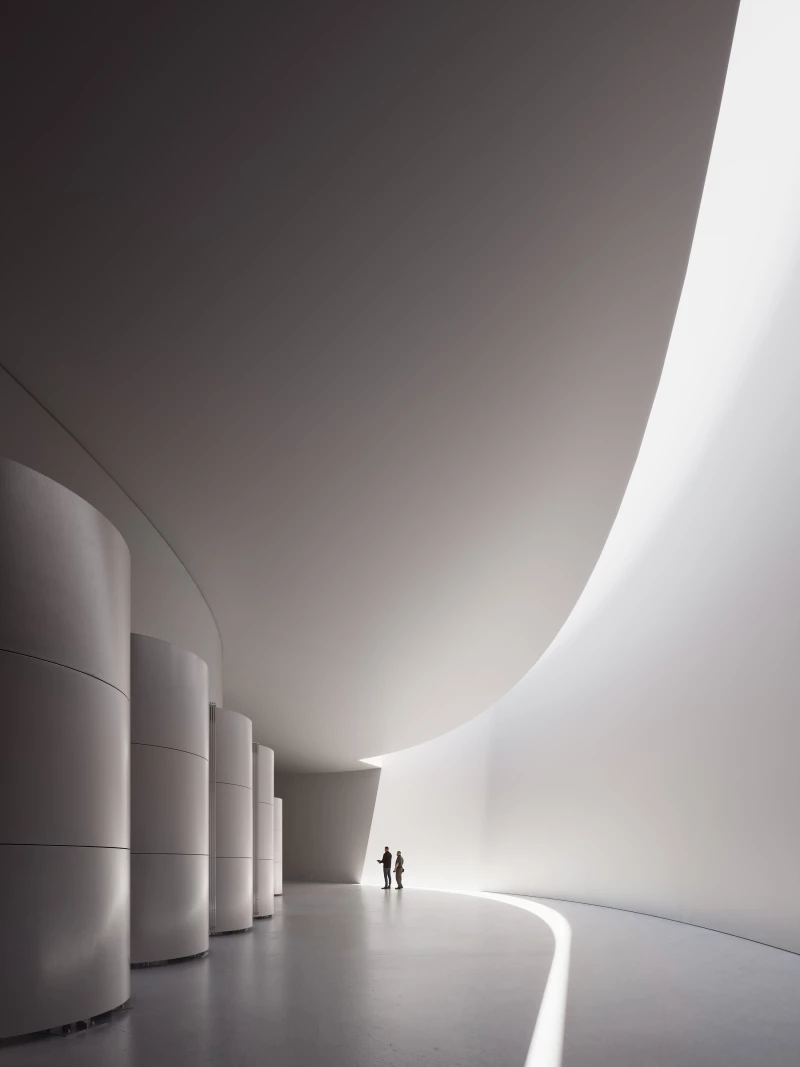
    Together, these materials will provide a cohesive look and excellent thermal performance — a crucial factor for wine aging, potentially reducing or eliminating the need for mechanical climate control systems.

    Minimalist Aesthetic and Climate Functionality

    The minimalist white palette and use of natural materials align with Fran Silvestre’s broader architectural philosophy. But in this case, the choices are not just aesthetic: the white cork coating will reflect sunlight to help regulate the building’s temperature during Castile’s intense summers, while the low profile of the structure will allow it to blend into the landscape.

    Inside, the winery will follow a clear and functional path: grapes will enter at one end, pass through fermentation tanks, and mature in oak barrels before bottling. The design expands in key areas to include spaces for wine tasting, social gatherings, research, and storage.

    Bodegas Dominio d’Echauz: where ancient materials meet the future of winemaking
    Fran Silvestre Arquitectos

    This layout emphasizes the building’s deeper purpose: it’s not a wine factory, but a space for micro-vinification, where each small batch is a study in preservation and potential.

    Partnership for Protecting Rare Varieties

    Vitis Navarra, an organization dedicated to protecting nearly forgotten grape varieties, is partnering on the development of the project. The goal isn’t to produce large volumes of wine, but to create a genetic repository — a critical resource for the future of viticulture in the face of climate change and shifting consumer preferences.

    The winery will name its first collection Basajaun, honoring a forest spirit from Basque mythology known for guarding nature’s secrets. The team chose the name as a symbolic reflection of the winery’s mission to quietly protect often-overlooked genetic, cultural, and architectural ecosystems.

    Once completed, the project will stand as a rare intersection of sustainable construction and agricultural conservation. More than a winery, it will be a living archive, rooted in tradition and designed to grow toward the future.


    Read the original article on: New Atlas

    Read more: Autonomous Coal Miners Begin Operations in Mongolia

  • Saudi Arabia Launches New Island Giga-Project

    Saudi Arabia Launches New Island Giga-Project

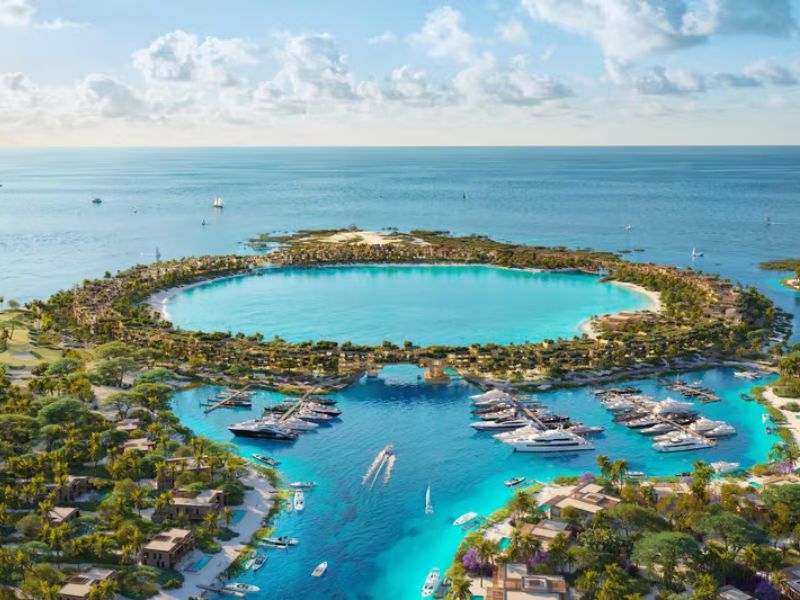
    Laheq is a luxurious island resort that will be centered around a large ring-shaped structure hosting hotels and homes
    Red Sea Global

    Saudi Arabia has introduced another ambitious addition to its vast Red Sea development—a luxury destination called Laheq. Part of the country’s broader push to shift from an oil-dependent economy to a global tourism hotspot, Laheq will feature a striking ring-shaped centerpiece built on a lush island in the Red Sea.

    Designed as a “Forever Garden” by Foster + Partners

    The concept, developed by renowned British architecture firm Foster + Partners—also rumored to be behind the proposed mile-high tower in Saudi Arabia—envisions Laheq as a “Forever Garden,” emphasizing its vibrant, green environment. Set on a namesake island in a cluster of 90 islands off the western coast, Laheq covers 400 hectares (around 988 acres).

    Laheq is located near what Saudi authorities call the world’s fourth-largest barrier reef and will offer diving and other water-based activities
    Red Sea Global

    At the heart of the project is “The Ring,” an 800-meter-wide (approximately 2,600 feet) circular structure rising from the sea, designed to host high-end residences and hotels.Buyers will purchase some units as private homes, while developers will offer others as short-term luxury rentals.

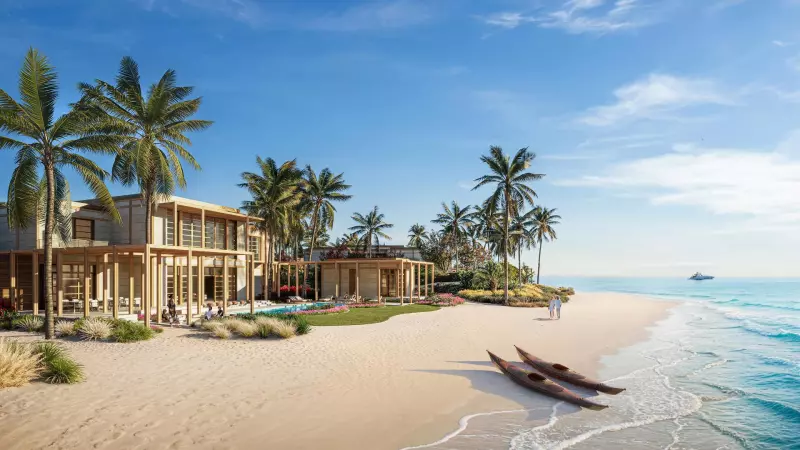
    The rest of the island will feature additional upscale housing—some constructed using sustainable timber—alongside a bustling market, shops, entertainment zones, a golf course, and a 115-slip marina. Wellness facilities and aquatic activities, like diving, are also a major draw. Visitors will have access to one of the planet’s largest coral reefs and over 2,000 fish species unique to the region.

    Green Goals: Completion by 2028 and 100% Renewable Energy

    Scheduled for completion by 2028, Laheq joins Desert Rock and other developments under the Red Sea giga-project umbrella. The developer, Red Sea Global, has pledged to power the entire project with 100% renewable energy by 2030, while also committing to marine ecosystem conservation and coastal restoration efforts.

    Beyond Laheq, Saudi Arabia’s construction boom continues with major undertakings such as Neom’s “The Line”, Qiddiya, the Mukaab, JEC Tower, and more—each part of a broader strategy to reshape the kingdom’s future.


    Read the original article on: New Atlas

    Read more: Bacteria vs. Plants: How Microbes Outsmart Plant Immune Systems Using Hidden Chemistry

  • Innovative Office Brings a Decade-Long Architectural Vision to Life

    Innovative Office Brings a Decade-Long Architectural Vision to Life

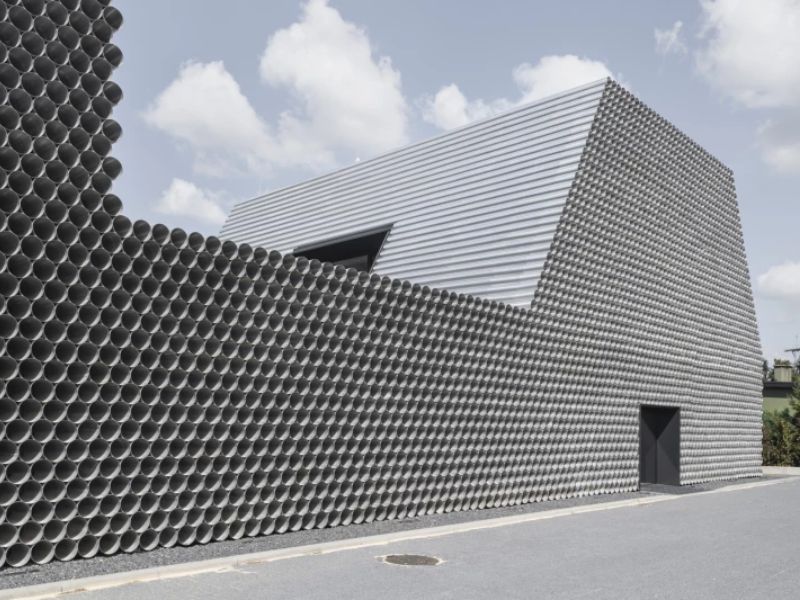
    The Gambit Office, by KWK Promes, took 11 years to realize and provides an eye-catching office for a pipe distribution company
    Juliusz Sokołowski

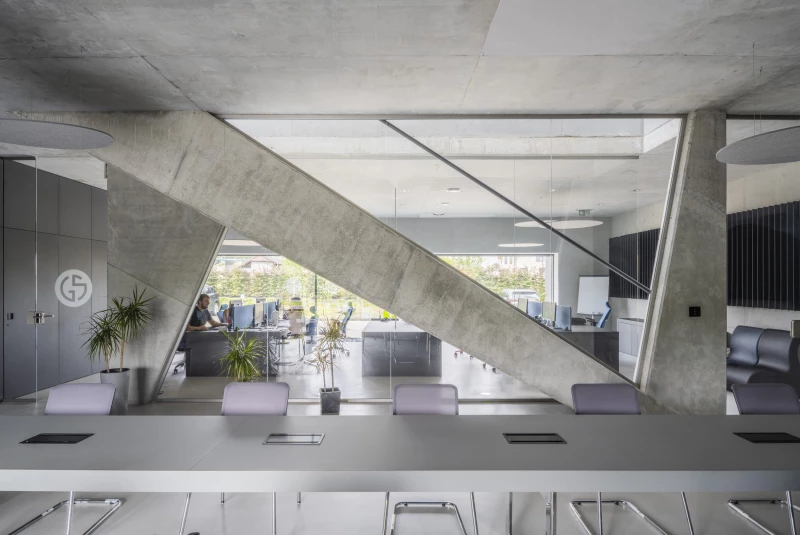
    In architecture, the principle of form follows function is foundational—but few buildings embody this concept as boldly as the Gambit Office, created by KWK Promes. Designed for a company specializing in pipe distribution, the building gives the striking impression that it’s constructed almost entirely from metal pipes.

    A Vision Born from Budget and Identity

    Situated in Gliwice, Poland, this unconventional structure is a standout example of memetic architecture. The idea emerged when KWK Promes was tasked with designing a cost-effective office for the Gambit company. Naturally, the team considered using the company’s own product—pipes—as a key exterior element, taking advantage of their affordability.

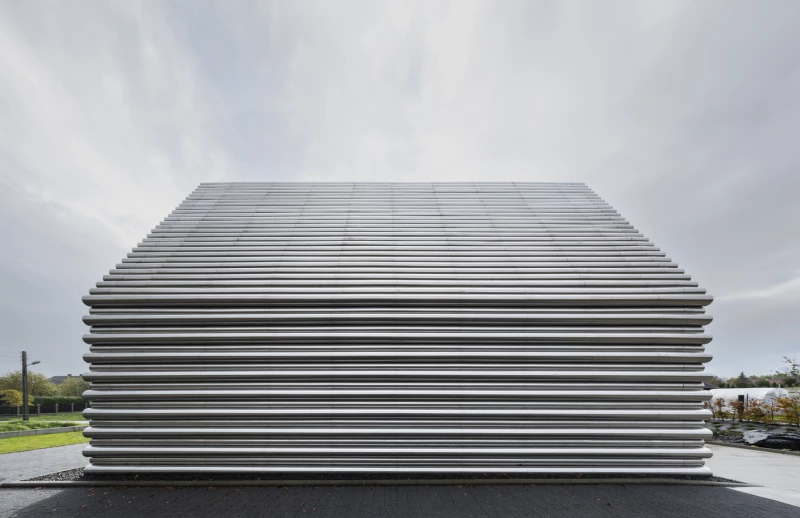
    The Gambit Office’s unusual exterior will weather over time
    Juliusz Sokołowski

    Initially, the plan was to use actual pipes for the facade. However, due to their unsuitability for outdoor exposure and failure to meet fire regulations, the concept had to evolve. The architects carefully shaped raw aluminum sheets to resemble pipes and applied them over the building’s concrete frame.The entire project—from conception to completion—spanned 11 years.

    We opted for raw aluminum sheeting, a more budget-friendly option that had proven reliable in our past projects like the OUTrial House, Unikato, and Konieczny’s Ark.We opted for raw aluminum sheeting, a more budget-friendly option that had proven reliable in our past projects like the OUTrial House, Unikato, and Konieczny’s Ark.”

    Designing for Nature and Environment

    To address acoustic concerns, the architects sealed the pipe-shaped panels at the building’s edges to prevent them from whistling in the wind. They left the remaining faux pipes open, allowing birds and insects to nest inside. Over time, the aluminum will naturally develop a low-maintenance patina that resembles concrete. Local zoning laws influenced the structure’s overall shape, which also echoes the steep rooftops of nearby residential buildings.

    Inside, the Gambit Office offers 943 square meters (approximately 10,000 square feet) of usable space. A two-story section with angled walls houses the main office functions, while a lower adjoining area serves as a workshop. There’s also an unheated warehouse dedicated to pipe storage.The designers highlighted the raw concrete framework and filled the space with natural light using large windows and multiple skylights.

    The Gambit Office’s interior design makes use of a lot of concrete
    Juliusz Sokołowski

    KWK Promes já é conhecida por criar projetos fora do comum, incluindo obras anteriores como a Quadrant House e a Open House.


    Read the original article on: New Atlas

    Read more: North America Is Sinking Into the Earth’s Mantle – Scitke

  • Sleek Miami Skyscraper Harnesses Solar Energy

    Sleek Miami Skyscraper Harnesses Solar Energy

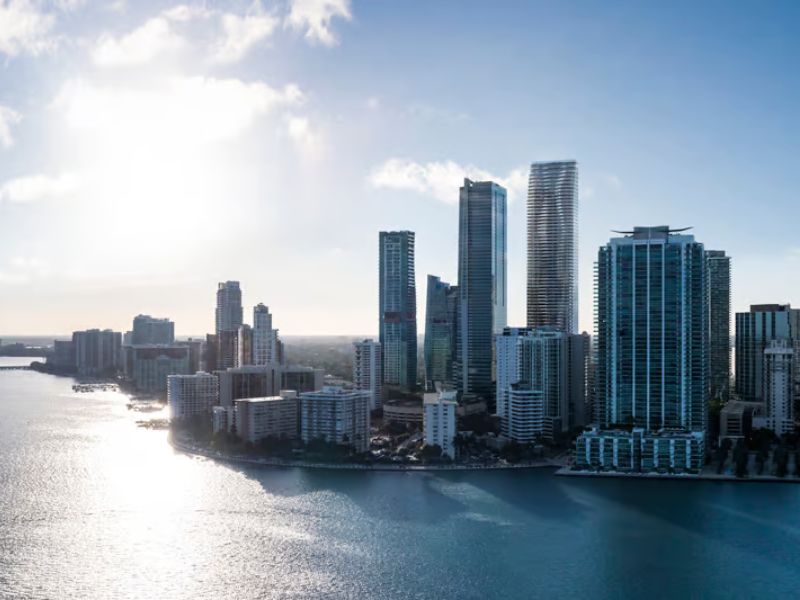
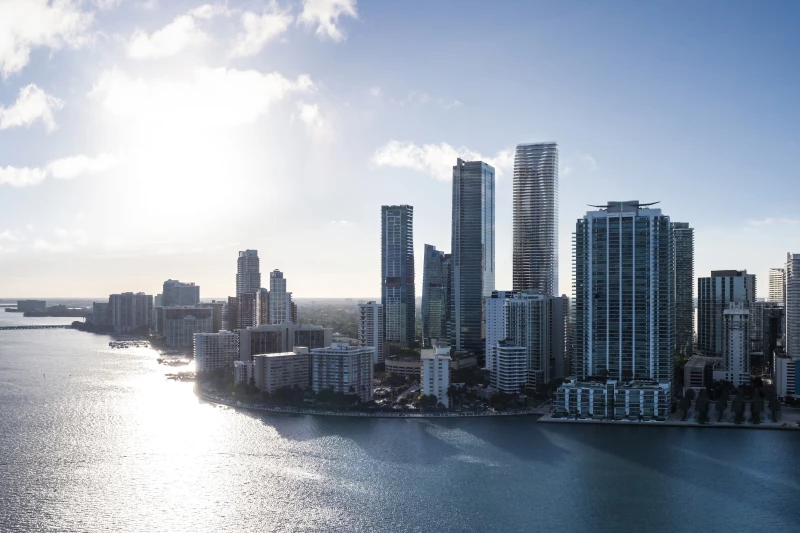
    Construction is underway on a striking new skyscraper in Miami, Florida. This residential tower will feature a sculpted exterior and solar-panel-integrated windows to reduce reliance on the grid.
    The Residences at 1428 Brickell skyscraper – the tallest of the buildings in this image – is currently under construction on the coast in Miami
    The Boundary for Ytech

    Construction is underway on a striking new skyscraper in Miami, Florida. This residential tower will feature a sculpted exterior and solar-panel-integrated windows to reduce reliance on the grid.

    Named the Residences at 1428 Brickell, the project brings together ACPV Architects for the interior, local firm Arquitectonica for the exterior, and developer Ytech. Located on the upscale Brickell Avenue, the 70-story skyscraper boasts a distinctive design inspired by the wind rather than the nearby sea. Its sturdy base will also incorporate lush greenery.

    While constructing a massive glass tower in Miami isn’t truly sustainable, the building will incorporate a significant number of solar panels within the glazing of its west-facing facade to help lower its reliance on the grid.

    Skyscraper’s ‘Solar Backbone’ to Generate 170 Megawatts Annually

    Since the solar cells are integrated into the glass, the effective lifespan of the panels can match that of the windows,” ACPV Architects stated in a press release. The tower will feature 500 photovoltaic-integrated windows along its west side, forming a “Solar Backbone” with nearly 20,000 square feet (about 1,850 sq m) of energy-generating glass. This system is designed to produce up to 170 megawatts (170,000 kilowatts) of clean energy annually.

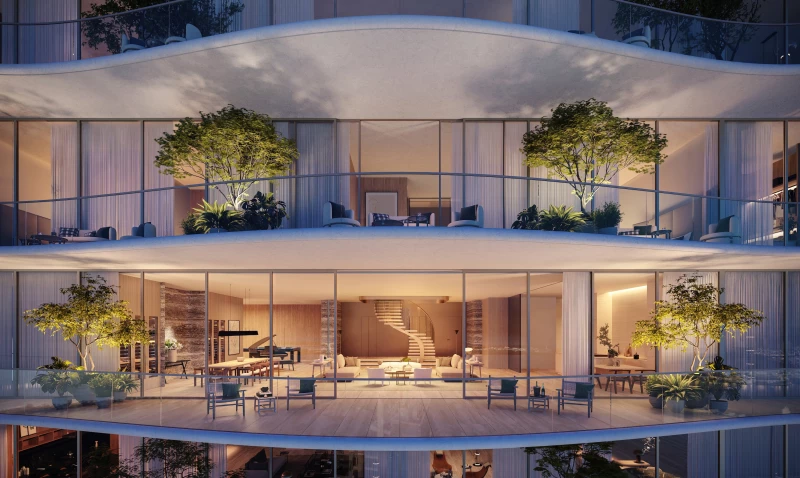
    The Residences at 1428 Brickell’s apartments will be spacious and luxurious
    The Boundary for Ytech

    Luxury Residences Priced Up to $60M Offer High-End Features

    The skyscraper’s interior will feature 189 luxury residences, each with a private foyer, spacious terraces, and summer kitchens. High ceilings, Italian-designed kitchens, and premium finishes and appliances will add to the upscale feel. While exact pricing hasn’t been confirmed, Florida YIMBY reports that two-to-four-bedroom units will range from $3 million to $7 million, with the penthouse commanding an impressive $60 million.

    Residents will also enjoy a range of high-end amenities, including a rooftop pool, multiple lounges, office spaces, a cinema, a gym, and more.

    To conclude, there is no confirmed completion date for the Residences at 1428 Brickell. The project is part of Miami’s growing collection of high-rise developments, which includes the nearby Mercedes-Benz and Dolce & Gabbana towers—despite ongoing concerns about rising sea levels.


    Read the original article on: New Atlas

    Read more: Dubai Unveils a Stunning Futuristic Tower Featuring Three Waterfalls

  • Dubai Unveils a Stunning Futuristic Tower Featuring Three Waterfalls

    Dubai Unveils a Stunning Futuristic Tower Featuring Three Waterfalls

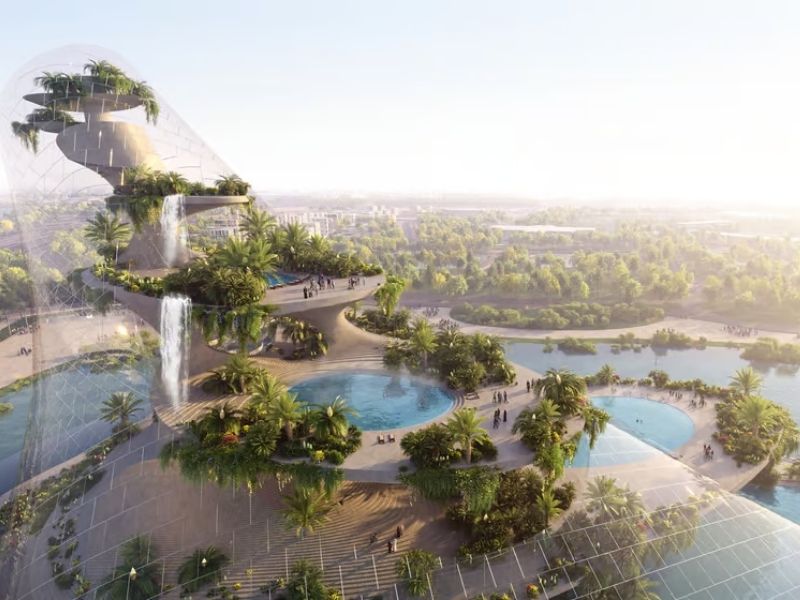
    Therme Dubai will be centered around a tower that hosts three waterfalls
    Diller Scofidio + Renfro

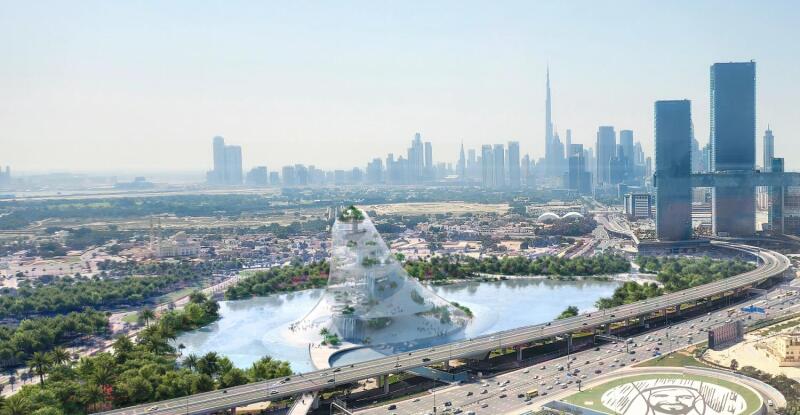
    Dubai unveiled an ambitious plan for what will become the world’s tallest resort.Named Therme Dubai, the resort will feature an impressive 100-meter (328-foot) structure with waterfalls, swimming pools, and the largest indoor botanical gardens in the world.

    Architectural Design by Diller Scofidio + Renfro

    The renowned US architectural firm Diller Scofidio + Renfro has designed Therme Dubai, which will be located near the iconic One Za’abeel skyscraper, offering stunning views of the Burj Khalifa in the distance.

    The tower, which will be the focal point of the resort, will feature three 18-meter (60-foot) waterfalls. Visitors will likely access the top via an elevator or stairs, and the structure will enclose itself in a glazed shell to maintain a comfortable temperature year-round, contributing to its futuristic design.

    In addition to the waterfalls, Therme Dubai will offer a play area, waterslides, and entertainment spaces. Wellness will be a major component of the resort, with mineral pools, steam rooms, and natural treatments available alongside the swimming pools.

    Construction on Therme Dubai is expected to be completed in 2028
    Diller Scofidio + Renfro

    The Largest Indoor Botanical Garden and Sustainable Features

    In addition, Therme Dubai will house the largest indoor botanical garden in the world, which will showcase over 200 plant species from across the globe. Furthermore, this garden will add to the resort’s unique offerings, enhancing the overall experience for visitors.Anexa

    The resort aims to be energy-efficient, with sustainable engineering principles integrated into its design.For instance, it will recycle 90% of the water used in its thermal pools and, in addition, meet 80% of its fresh air and cooling needs with clean energy sources. Moreover, the project will also serve as a cultural hub, showcasing immersive art from various cities worldwide. This combination of sustainability and culture will further enhance the appeal of Therme Dubai.

    They will begin construction of Therme Dubai next year, with the completion set for 2028. This project is part of a broader initiative to enhance the quality of life for Dubai’s residents by 2033, including transforming the city into a more walkable urban space.


    Read the original article on: New Atlas

    Read more: A Breathtaking Opera House Covered by a Skirt-Like Solar Panel Roof

  • A Breathtaking Opera House Covered by a Skirt-Like Solar Panel Roof

    A Breathtaking Opera House Covered by a Skirt-Like Solar Panel Roof

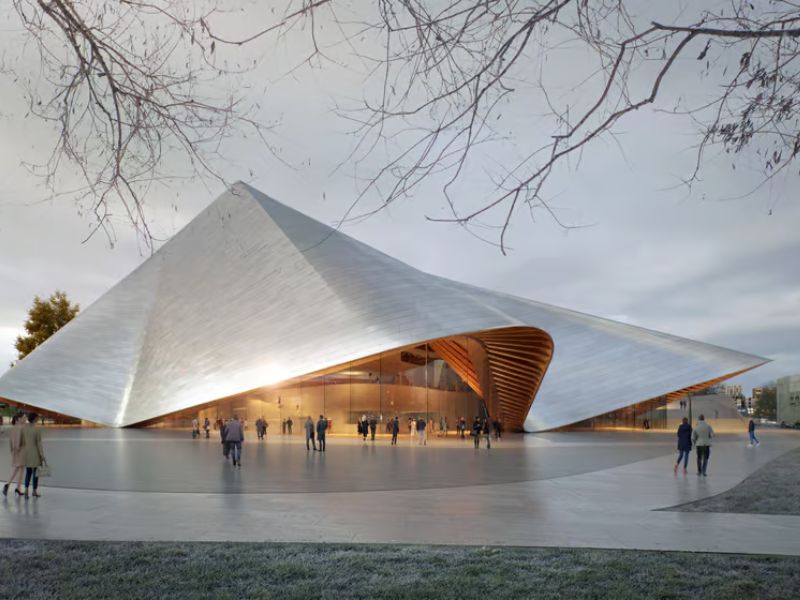
    The renowned Bjarke Ingels Group (BIG) has unveiled one of its most striking designs in recent years—a new opera house set for Kosovo. The visually stunning building will feature a sweeping roof inspired by a traditional local skirt, incorporating integrated solar panels.
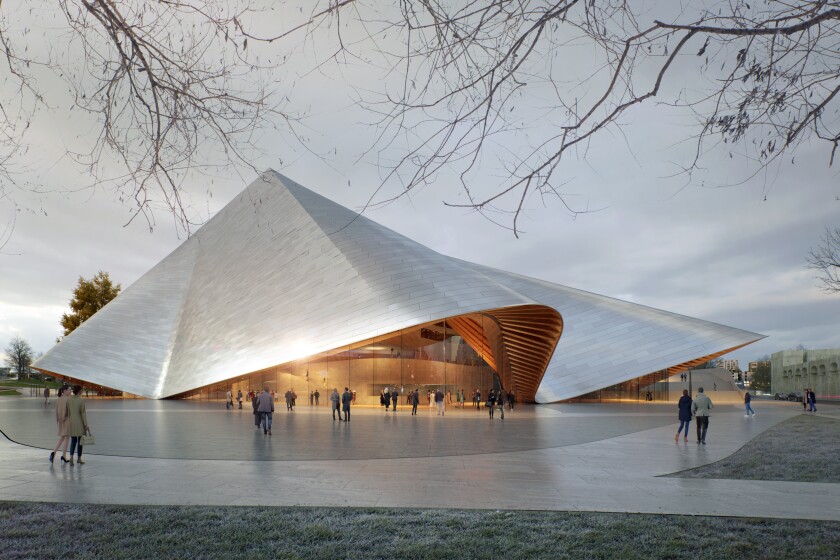
    The Opera and Ballet Theatre of Kosovo will be defined by a plunging roof which references a traditional local skirt
    Bloom

    The renowned Bjarke Ingels Group (BIG) has unveiled one of its most striking designs in recent years—a new opera house set for Kosovo. However, the visually stunning building will feature a sweeping roof inspired by a traditional local skirt, incorporating integrated solar panels.

    In fact, commissioned by Kosovo’s government for the capital city of Pristina, the Opera and Ballet Theatre of Kosovo is being developed in partnership with local firm ALB-Architect. The project will cover an area of 42,395 sq m (456,403 sq ft).

    Sustainable Design with Traditional Inspiration

    The building will feature expansive wraparound glazing and a prominent use of timber. As previously mentioned, the curving roofline draws inspiration from the Xhubleta, a bell-shaped traditional folk skirt from Kosovo.

    It will also include photovoltaic tiles to help minimize the building’s reliance on the power grid.

    We are deeply honored to be entrusted with designing the new home for the performing arts in a country known for its profound cultural contributions,” says Bjarke Ingels, founder of BIG.

    Design Inspired by Artistic Efficiency and Kosovo’s Heritage

    Our design for the Opera and Ballet Theatre of Kosovo is conceived as an efficient space for creating artistic performances. The core structure is enveloped in a continuous canopy, forming an inviting public space that opens in all directions. The undulating roof mirrors the Xhubleta, Kosovo’s traditional national dress, creating a flowing, welcoming gesture.”

    The Opera and Ballet Theatre of Kosovo will make stunning use of timber
    Imigo

    Spacious and Versatile Interior with Natural Light and Greenery

    However, the interior will feature a 1,200-seat concert hall, a 1,000-seat theater hall, a 300-seat recital hall, a theater room, and an education and conference center. Moreover, a spacious lobby will be bathed in natural light from a central skylight, and the building will be surrounded by greenery and pathways.

    The Opera and Ballet Theatre of Kosovo marks BIG’s second opera house project, following the unique bow tie-shaped National Theatre of Albania. The firm, which is in high demand, also recently unveiled its new headquarters in Denmark.

    The completion date for the project has not yet been announced.


    Read the original article on: New Atlas

    Read more: As its Megacities Expand, Saudi Arabia Invests Heavily in AI

  • China Completes Record-Breaking Underwater Shield Tunnel

    China Completes Record-Breaking Underwater Shield Tunnel

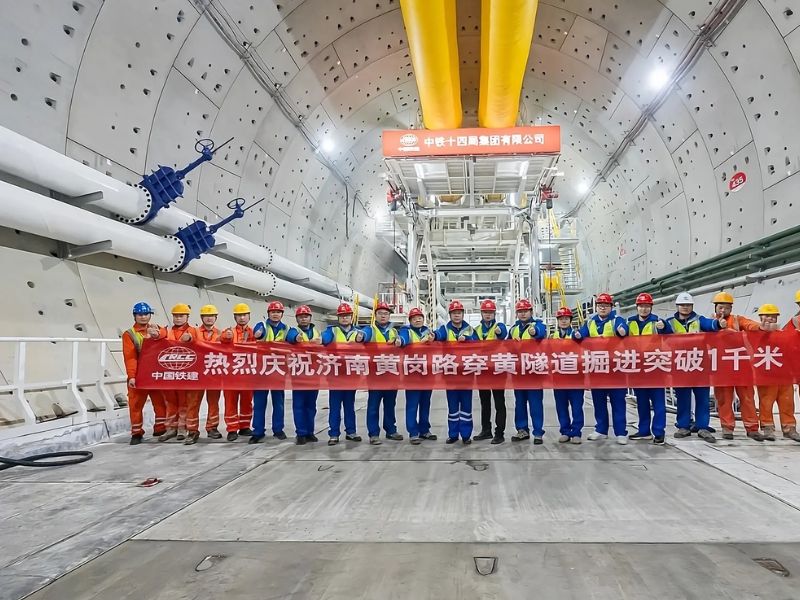
    Workers of the China 14th Bureau Group celebrate the completion of the world’s largest-diameter underwater shield tunnel
    China 14th Bureau Group

    Jinan, the capital of Shandong Province in East China and home to 9.4 million people, has made global headlines. Crews there have successfully completed the construction of the world’s largest-diameter underwater shield tunnel.

    The China Railway 14th Bureau Group is using the world’s largest tunnel boring machine to excavate a 3.6-mile (5,755 m) tunnel. While the main section is still under construction, the 2-mile (3,290 m) underwater shield segment is complete.

    At 55.8 feet (17 meters) in diameter, it’s the largest tunnel of its kind, compared to the Channel Tunnel’s 25-foot (7.6 meters) public rail tunnels.

    The Jinan Huanggang tunnel will have six lanes in a double-decker design and a 60 km/h (37 mph) speed limit. This vital north-south passage will cross China’s Yellow River, boosting connectivity between Jinan and an economically transformative region.

    Jinan Tunnel Sets Speed Record with 110-Day Completion of Underwater Shielding Section

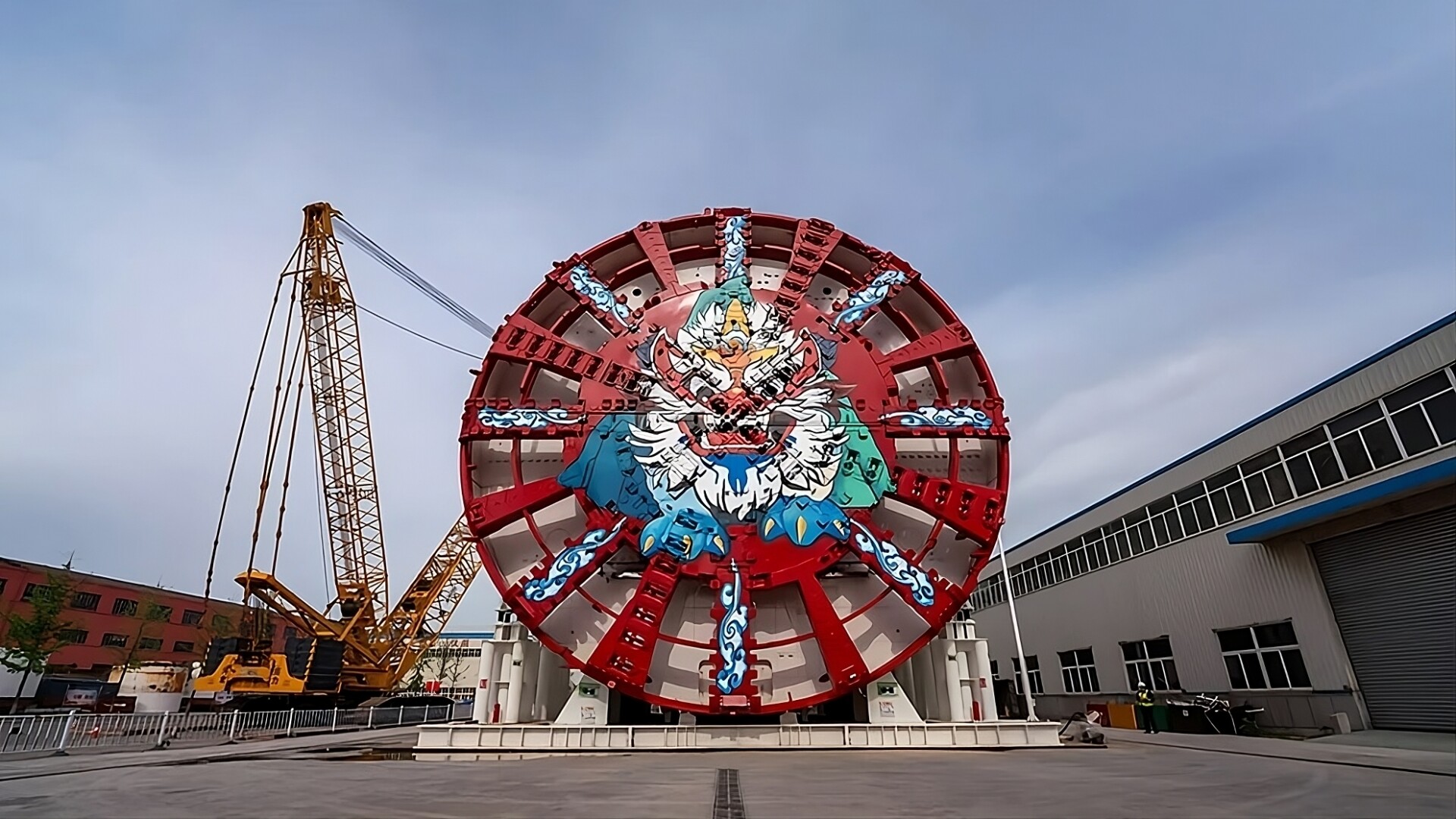
    The massive 17.5-meter diameter excavation face of the Shanhe boring machine
    Herrenknecht

    In addition to its world-record size, the 14th Bureau Group also set a record for the speed of construction. Crews began tunneling on September 1, 2024, and completed the underwater shielding section in just 110 days. The Shanhe shield machine achieved a daily advancement rate of 52.5 to 59 feet (16 to 18 meters), setting a new record for 17-meter-class shield construction.

    The tunnel boring machine, a Herrenknecht “Shanhe” Shield Machine, has a 57.4-foot (17.5-meter) excavation diameter—about five stories tall. Powered by a 7,510 hp (5,600 kW) motor, it delivers an astounding 25,827,209 lb-ft (35,017 kNm) of torque. Designed to withstand up to 7.5 bar of pressure, it can also manage 15 bar in the excavation chamber with the help of a specialized air cushion that maintains stability.

    The TBM’s cutting wheel is equipped with a flushing system to prevent clogging, and a telescopic camera system monitors the cutting bits and tunnel face. This setup reduces the need for time-consuming and dangerous hyperbaric interventions.

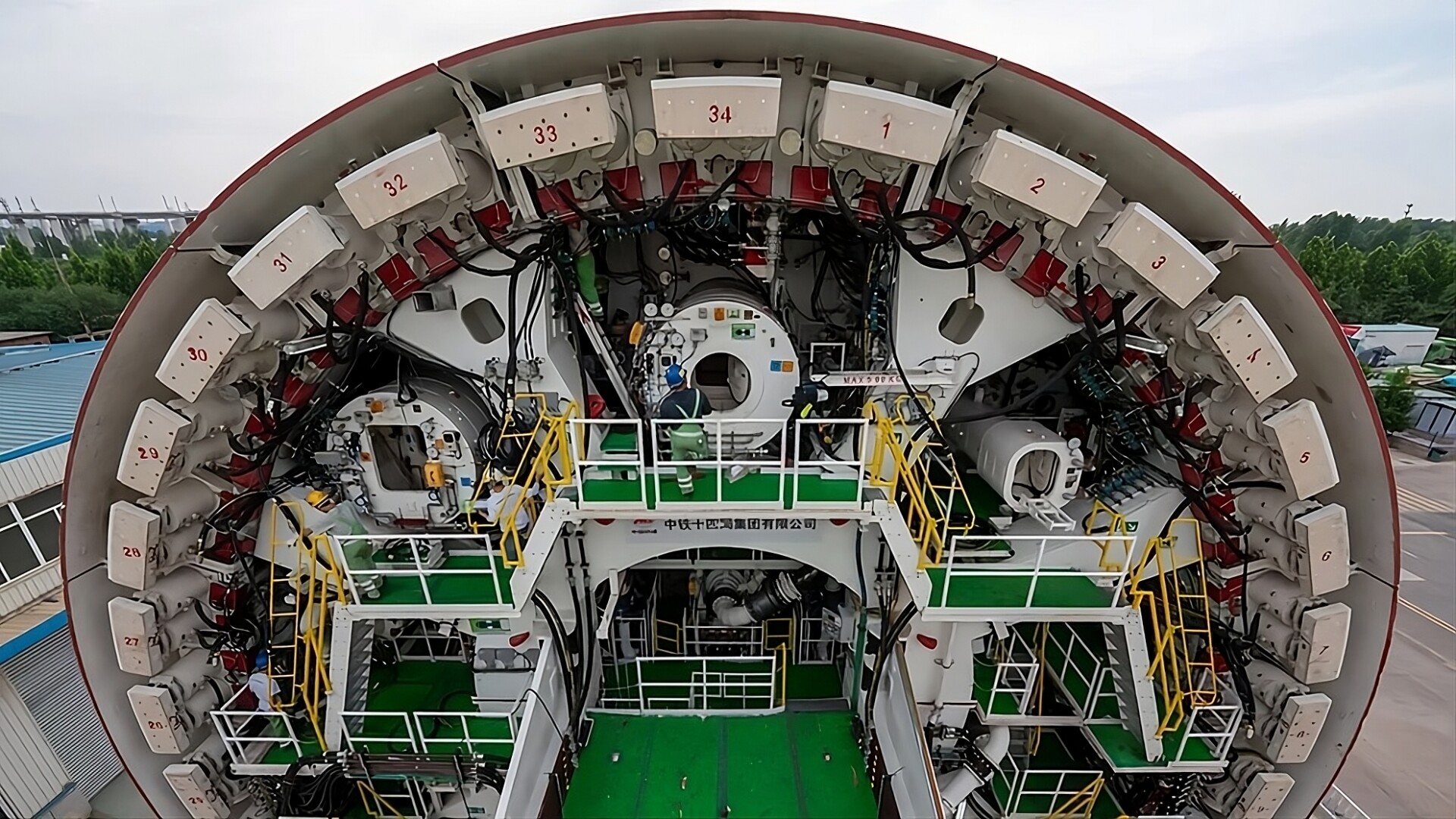
    The multi-story back side of the colossal Herrenknecht machine, where workers clamber about making sure operations run smoothly
    Herrenknecht

    The Jinan Huanggang Road Yellow River Crossing Tunnel is expected to be completed in late 2025.


    Read Original Article: New Atlas

    Read More: The Magnetic North Pole Has Shifted to a New Location

  • Construction Speeds up on Saudi Arabia’s Line Megacity as New Details Emerge

    Construction Speeds up on Saudi Arabia’s Line Megacity as New Details Emerge

    Saudi Arabia’s ambitious mirrored megacity, the Line, continues to take shape as new project details emerge. Officials recently updated progress and introduced the lead architects shaping this desert marvel.
    The Line is currently under construction in Saudi Arabia and it will host an air-conditioned city of around 300,000 people once its first phase is complete
    Neom

    Saudi Arabia’s ambitious mirrored megacity, the Line, continues to take shape as new project details emerge. Officials recently updated progress and introduced the lead architects shaping this desert marvel.

    Ultimately planned to stretch 170 km (105 miles), the Line’s initial phase spans 2.4 km (1.5 miles) with a towering height of 500 m (1,640 ft) and width of 200 m (656 ft). This first section will house an air-conditioned urban space for around 300,000 residents.

    Global Firms Collaborate for Resilient and Sustainable Urban Development

    US-based Gensler, known for the Shanghai Tower, is managing city planning, transport hubs, and public spaces, while Austria’s Delugan Meissl Associated Architects will handle urban design, microclimate, and sustainability.

    UK-based Mott MacDonald oversees infrastructure, building vital systems like sewage, water, and energy to withstand desert conditions, with support from AI and extensive monitoring.

    Innovative Partnerships and Ambitious Progress in Neom’s Development

    However, Denis Hickey, Chief Development Officer, noted that the project’s unique partnerships showcase innovative approaches to city design, aligning with Neom’s forward-looking vision. Currently, the project consumes a fifth of global steel production, with 120 foundation piles added weekly. Phase One is set for 2030 completion, though further timelines remain unannounced.

    Alongside the Line, other Neom projects, such as Treyam, Epicon, and the luxury island Sindalah, continue to develop across Saudi Arabia.

    Work on the Line’s foundation piles is progressing, with over 1,000 out of over 30,000 piles placed so far
    Neom

    Read Original Article: New Atlas

    Read More: Scitke