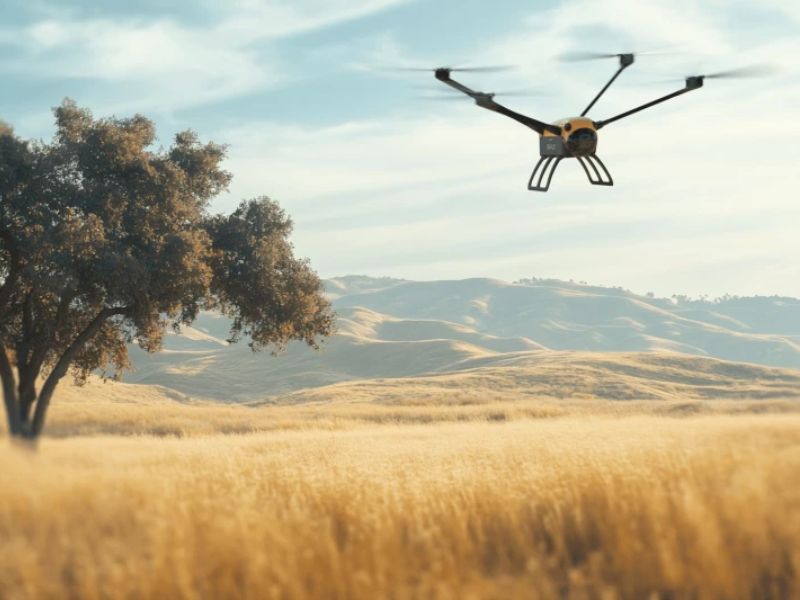
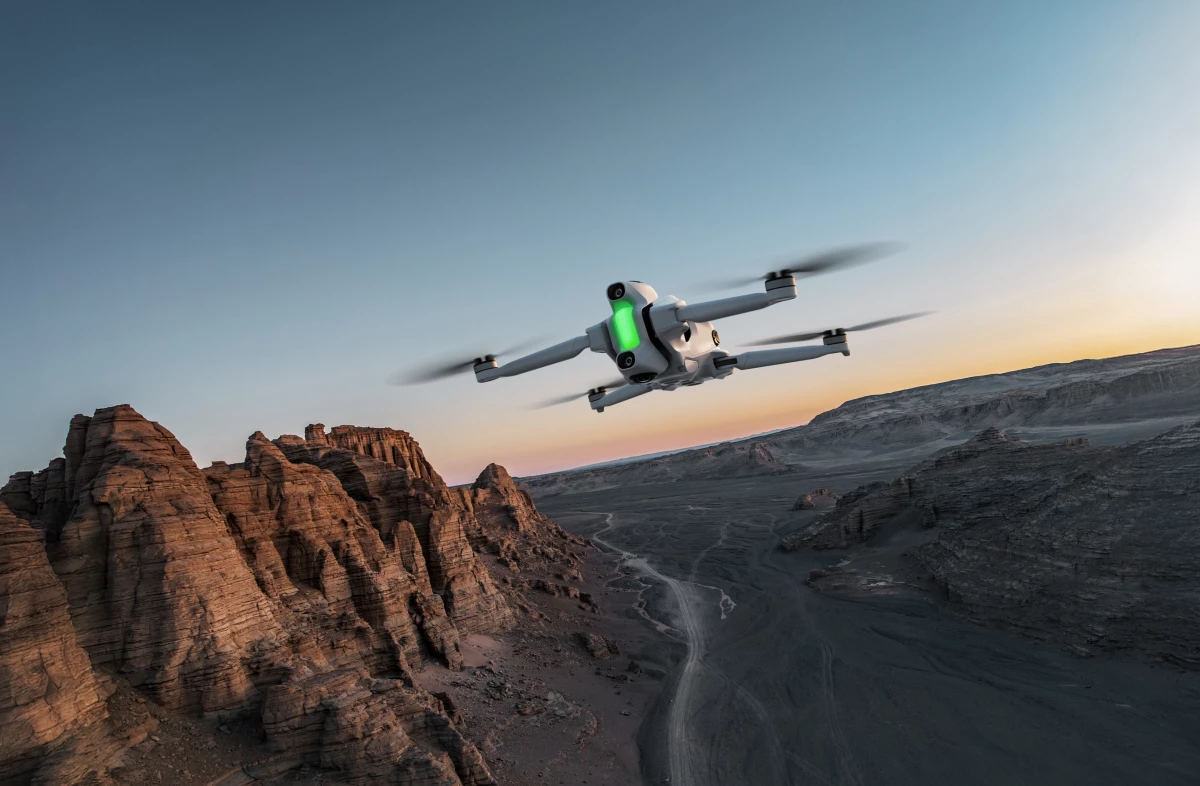
he Q12 drone could be used for delivery, agricultural, or firefighting purposes SiFly
SiFly, a drone company that only launched publicly in May, has quickly risen to prominence in 2025. Its latest milestone came fittingly on Orville Wright’s birthday, when its Q12 drone secured a place in the Guinness World Records.
Novo recorde mundial de voo
On July 26, 2025, at Amaral Ranches in California, the Q12 flew for 3 hours, 11 minutes, and 53 seconds—setting a new benchmark for the longest electric-powered drone flight in the 5–20 kg category. The flight surpassed the previous record by roughly an hour, according to the company.
Detalhes da tentativa de recorde
During the attempt, the Q12 flew autonomously in a 600-meter-wide (1,969-foot-wide) orbit at an altitude of about 50 meters (164 feet) and a speed of 50 km/h (31 mph), Flying magazine reported. The record attempt was validated by eight witnesses, including NASA aerospace engineer Chris Silva and Apple engineer Paul Baker.
BVLOS, Unlocked: SiFly’s 3:11:54 Guinness World Record Flight
“This record represents more than just endurance—it marks a turning point for drone technology,” said Brian Hinman, SiFly’s Founder & CEO. “We believe it will spark innovation that will transform drones from specialized gadgets into indispensable tools.”
Perspectivas futuras com novas regras da FAA
SiFly has already gained attention for advancing drone performance. The Q12 offers up to four times longer flight duration, ten times greater range, ten times quieter operation, and five times the payload of comparable electric drones, all while remaining cost-competitive with Chinese models. Engineers achieved these results by choosing larger-diameter rotors and using EV-grade lithium-ion 21700 batteries.
The outcome is a drone that delivers helicopter-like capabilities but at a fraction of the cost.
SiFly believes these extended flight times will be crucial under upcoming FAA rules that could soon allow routine Beyond Visual Line-of-Sight (BVLOS) operations. If approved, the new framework would eliminate the need for special exemptions, paving the way for long-distance drone applications like cargo transport and agricultural monitoring to become standard practice.
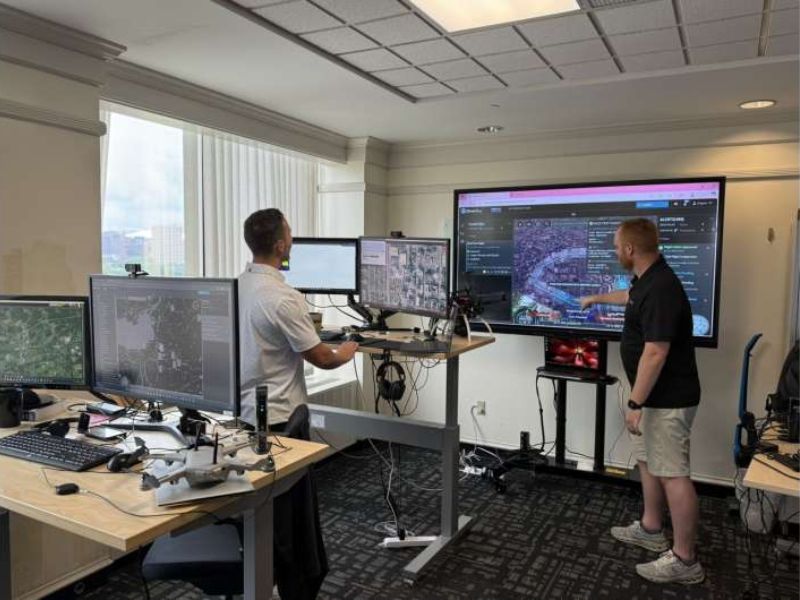
ResilienX employees Angelo Niforatos, left, and Ryan Pleskach, right, overview the NASA safety tools integrated into the company’s commercial system, July 11, 2025, at the ResilienX Headquarters in Syracuse, New York. Image Credits: ResilienX
As advanced air mobility aircraft become more common in U.S. airspace, the country will need improved preflight planning to address potential risks in advance—and NASA is creating the tools to support this effort.
Effective preflight planning is essential for maintaining safety in the increasingly complex and high-risk airspace of the future. Having a single platform that provides timely, predictive, and current risk assessments helps drone and air taxi operators quickly identify potential hazards in their flight plans.
Demonstrating NASA’s Risk-Assessment Tools in Commercial Aviation
NASA is creating tools to deliver these capabilities and, in June, teamed up with aviation safety firm ResilienX Inc. to demonstrate how commercial operators can integrate them into their operations.
During tests at ResilienX’s Syracuse, New York facility, researchers leveraged NASA services that enabled flight operators to submit flight plans before takeoff, receive risk assessment results, and decide whether to continue with the planned flight or modify it and reassess risks. This streamlined process helps minimize safety risks for both passengers and people on the ground.
The three NASA-developed services evaluate the specific risks that highly automated aircraft pose when operating at low altitudes in urban areas.
The collaboration was conducted through a Phase III NASA Small Business Innovation Research (SBIR) contract, building on earlier efforts to evaluate weather-related risks. This work is already enabling the direct integration of safety technologies into ResilienX’s platform. Additionally, the partnership aims to offer indirect advantages to ResilienX’s partners and clients—such as the U.S. Air Force and regional operators—contributing to the enhancement of overall safety in future airspace operations.
Recently, immersive action cam maker Insta360 has been nurturing a new camera-drone venture called Antigravity. The company has now revealed its first model – a foldable aerial explorer capable of capturing stunning 8K 360-degree footage.
“We didn’t set out to make just another drone,” said BC Nie, Antigravity’s Head of Marketing. “With the A1, we aimed to reinvent the flying experience – making it safe, intuitive, expressive, and infinitely creative for everyone.”
Intuitive Controls with Three Flight Modes
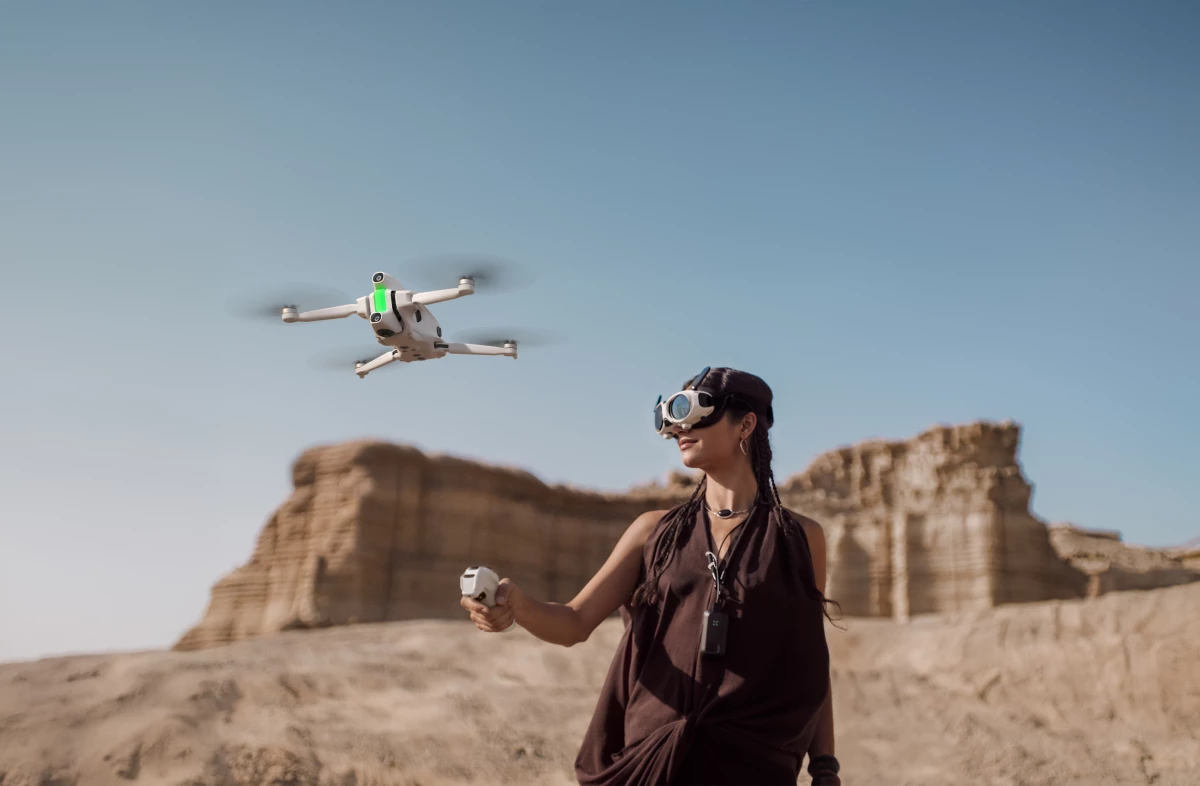
The press release offers limited specifics, but the A1 pairs with wireless Vision goggles and a handheld controller. The pistol-grip remote offers intuitive point-and-fly control with buttons, rockers, switches, a knurled wheel, and three modes: C (cinematic), N (normal), and S (sport).
Image Credits:The Antigravity A1 setup includes the 249-g 360-degree cameradrone, a point-to-fly grip controller and a pair of FPV goggles with funky front viewing screen Antigravity/Insta360
Vision goggles provide an immersive 360° view, with FreeMotion tech and head tracking enabling intuitive, gesture-based flight control.
In practice, this means you can glance left, right, up, or down as the drone soars, creating the sensation of actually riding aboard the mini aircraft.
Goggles with Shared View and External Power
The goggles have a left-eye display for onlookers, with the right eye blocked. Funky antennas protrude from each side, and the headset is powered by an external battery worn on a lanyard.
Image Credits:The Antigravity A1 “redefines what drones can do by combining an immersive flying experience with intuitive controls” Antigravity/Insta360
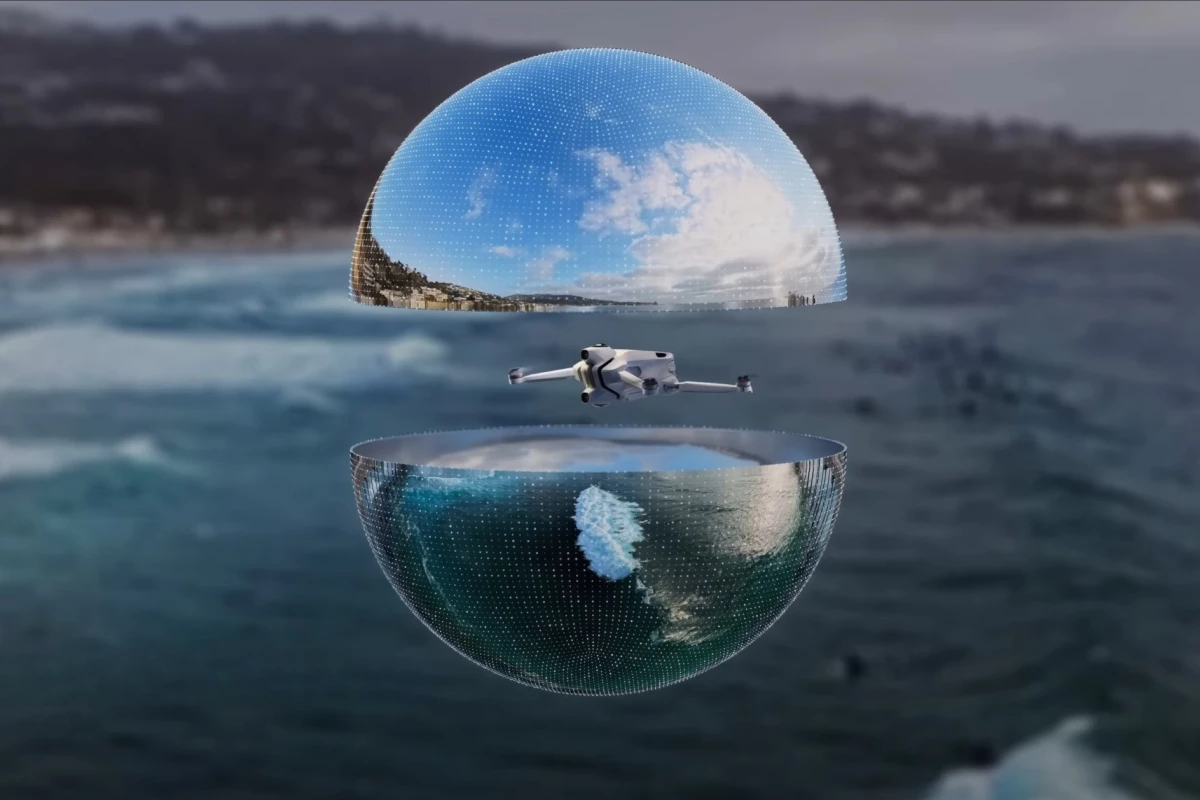
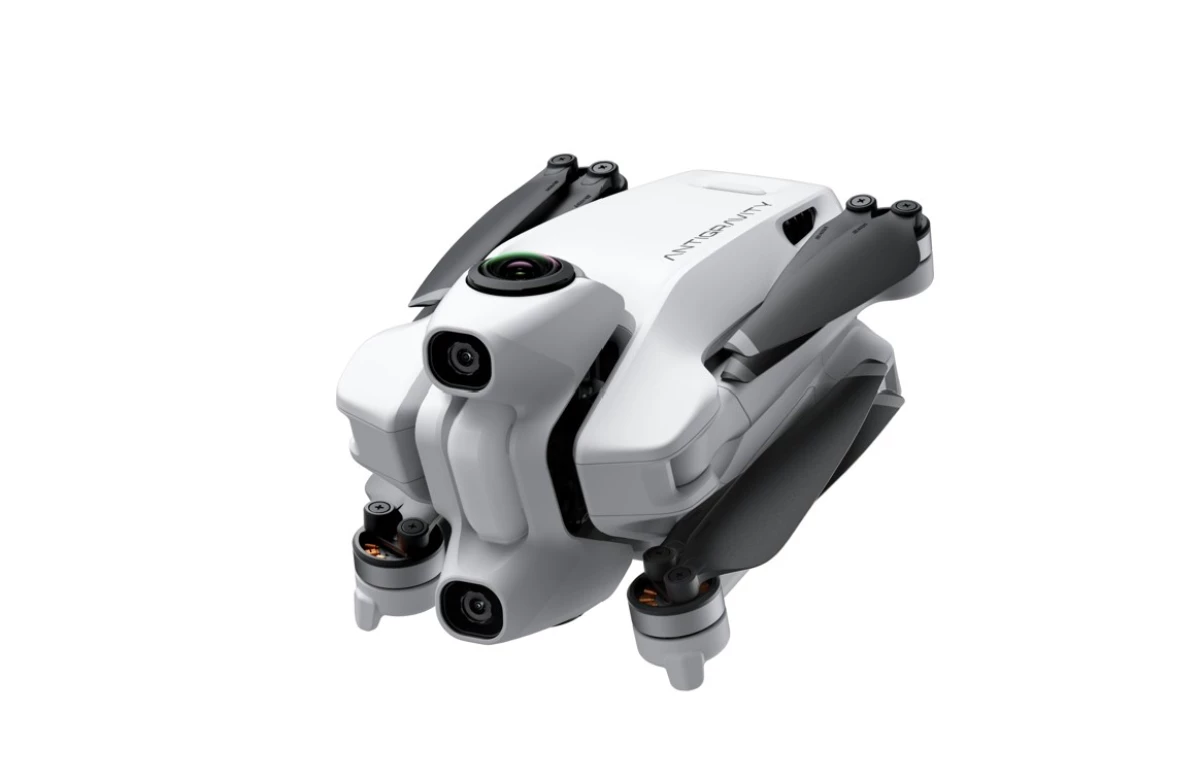
The A1’s dual-lens camera system—akin to Insta360’s X Series action cams—enables live streaming and 360-degree capture, with one fisheye lens mounted on top of the fuselage and another underneath.Two additional front-facing lenses remain undisclosed in purpose.
Immersive 8K Capture with Invisible Drone View
Antigravity promises seamless 360° coverage with the drone removed from view, enabling multi-angle playback and creative post-production options.
It also supports exporting multiple viewpoints from a single recording without quality loss, as well as advanced effects such as dynamic camera moves, Tiny Planet shots, and horizon flips.
Image Credits:The Antigravity folds down for transport in the supplied carry case Antigravity/Insta360
Lightweight Build, Safety Features, and Launch Timeline
Beyond its 249-g weight and safety features, A1 details remain scarce. Full specifications will be released closer to launch, with Antigravity confirming availability by January next year at the latest. Pricing is still under wraps.
During final testing, creators and experts can join to shape future products, with selected participants getting a pre-production A1 and a share of a US$20,000 prize.
A preview of what’s in store can be seen in the video below.
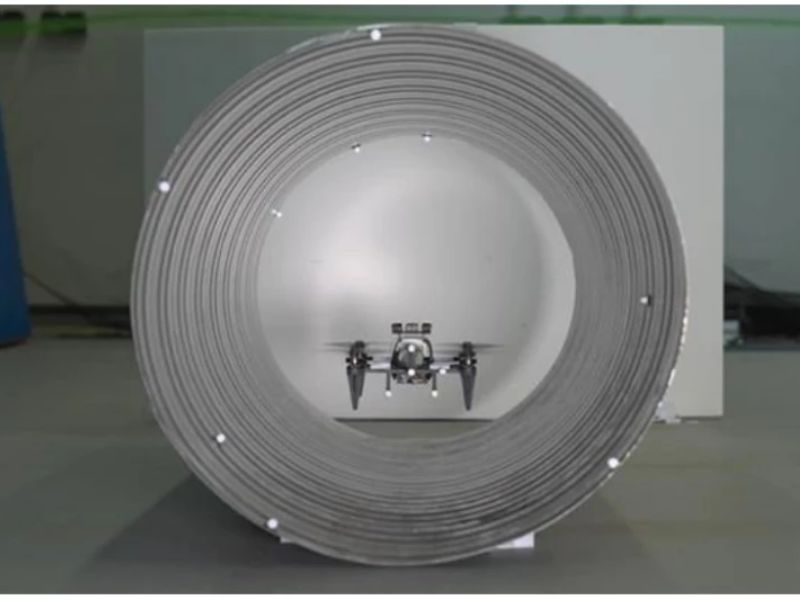
Quadcopter flying inside the drone test section Inria / G. Destombes
Researchers from Inria, CNRS, the University of Lorraine, and Aix-Marseille University are developing ways to help drones maneuver through ventilation shafts with the finesse of an action hero—minus the bruises. Their goal: teach quadcopters to traverse narrow ducts without crashing into the walls like a pinball.
From Hollywood to HVAC Challenges
Anyone who’s watched Die Hard knows that crawling through air vents is no walk in the park, but whether you’re evading terrorists or inspecting HVAC systems, the challenge remains the same. For drones used in reconnaissance or emergency response, navigating confined, uniform-looking, dimly lit ducts poses serious technical hurdles.
One major issue is airflow. These enclosed spaces create turbulent currents, and when a drone’s own rotors stir the air further, the result can be a chaotic flight path and plenty of unwanted collisions.
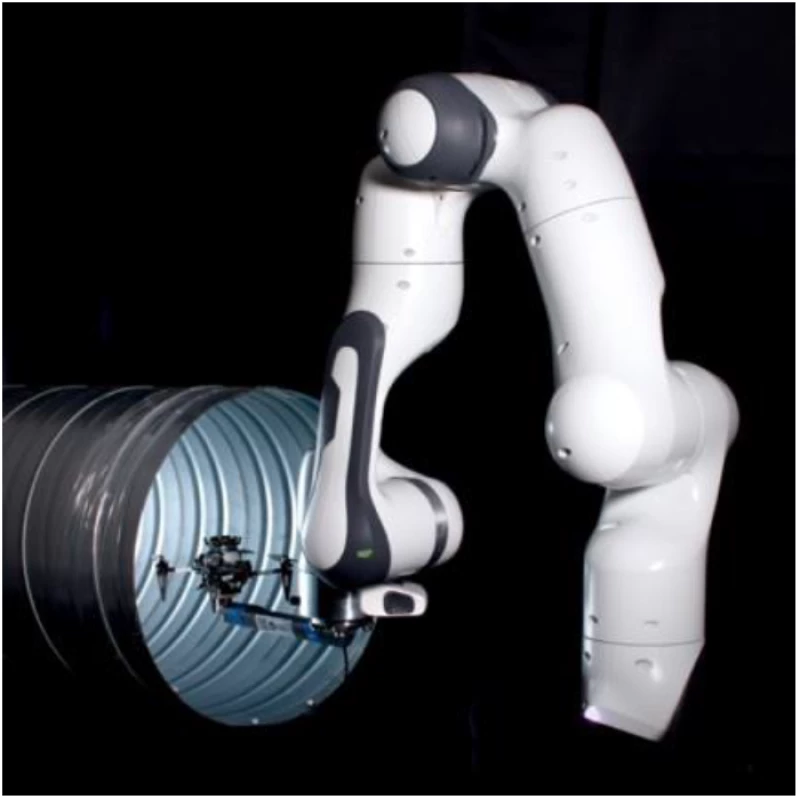
The robot arm used to map airflow in the duct Inria / G. Destombes
To counter this, Jean-Baptiste Mouret and his team at Inria conducted detailed airflow studies inside a scaled-down, circular duct with a 14-inch (35 cm) diameter. Using a robotic arm equipped with force and torque sensors, they recorded airflow data at hundreds of points to generate a map of stable and unstable zones—identifying where drones are likely to encounter turbulence versus calmer air pockets.
AI and Lasers in the Darkness
They also experimented with AI and laser-based systems to help drones orient themselves in near-total darkness with almost no visual cues. This enhanced sensory input allowed the drones to fly more steadily and avoid crashing into duct walls.
Looking ahead, the researchers plan to build a working prototype equipped with cameras, thermal imaging, or gas sensors to carry out real-world inspection tasks in tight, hazardous spaces.
All that’s missing now is a dramatic one-liner—then these drones would really be channeling their inner McClane.
Joby Aviation is known for electric air taxis but has also pursued a parallel path through a long-term U.S. military partnership. Department of Defense. That partnership may now be bearing fruit.
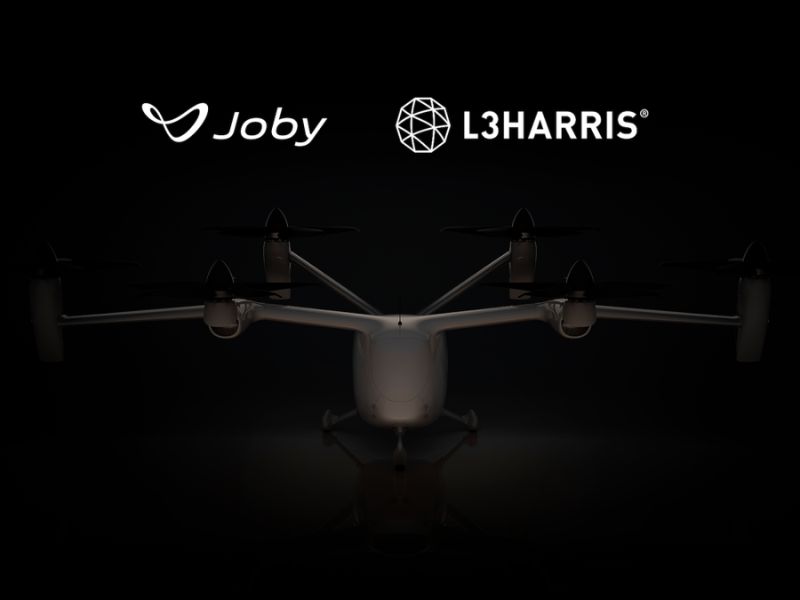
Joby announced a deal with L3Harris to explore developing a gas-turbine hybrid VTOL aircraft with autonomous capabilities for military use.
Adapting the S4 Platform for Extended Range and Military Use
Joby will base the hybrid VTOL on its existing S4 platform. The company later converted the all-electric S4 into a hydrogen-electric hybrid, which flew 521 miles—more than double the range of its battery-powered version.
The L3Harris partnership could lead to a DoD contract, pending flight tests and demonstrations. Joby plans to begin flight testing in the fall, with demonstrations anticipated in 2026.
Joby has dedicated years to developing its all-electric vertical takeoff and landing (VTOL) aircraft and pursuing Type 1 certification from the Federal Aviation Administration, with plans to use the aircraft for short-distance passenger transport in urban settings.
Joby’s Strategic Partnership with the Department of Defense
Joby has spent nearly a decade working with the DoD, helping it understand key requirements for successful military collaboration, said executive chairman Paul Sciarra.
“Range proved to be one of the most critical factors,” Sciarra said. “We realized we had to adapt accordingly.”
Sciarra emphasized the need to demonstrate the “missionization” of Joby’s aircraft—showing how the platform integrates sensors, autonomous systems, communications, and payloads to meet specific DoD requirements.
“We had two options: either develop all of this capability in-house or team up with a strong partner who already has extensive expertise and proven technologies in these areas,” he explained.
That’s where L3Harris enters the picture.
Hybrid VTOL to Support Diverse Low-Altitude Military Missions
L3Harris’ Jon Rambeau said the hybrid VTOL will enable long-range crewed and uncrewed missions. Sciarra added it could support low-altitude operations like contested logistics, electronic warfare, and C-UAS.
Antigravity isn’t content with simply releasing another drone into an already crowded sky. instead, it’s creating an entirely new category” Antigravity
Leading action camera innovator Insta360 is elevating its immersive video expertise into the skies with the introduction of a new brand: Antigravity. Billed as the world’s first 360-degree drone, the debut device is expected to launch next month as a compact, user-friendly aerial platform built for immersive storytelling.
A Drone Designed to Inspire Emotion and Creativity
“Today, most drones are just tools. With Antigravity, we’re aiming higher,” said BC Nie, Head of Marketing at Antigravity—a startup founded by drone enthusiasts and engineers, nurtured within Insta360. “Rather than chasing specs, we’ve redefined what a drone can do. The outcome is a flying experience designed to evoke emotion and unlock creativity, freedom, and discovery for everyone.”
While technical details remain limited, it’s confirmed that the first Antigravity model will weigh under 249 grams (8.8 oz), allowing users to fly it recreationally without needing to register it. The camera system promises true immersive capture with 8K video resolution, and Antigravity hints at several design innovations that will let users experience and document the world in entirely new ways.
“At the heart of Antigravity’s design philosophy is the concept of 360 immersive flight. The brand aims to own this space completely, and replace the technical complexity inherent in both drone flying and 360-degree videography with expressive, story-first experiences that are easy to master yet exceptionally powerful.” Antigravity
The platform is geared toward accessibility, with simple 360-degree video capture made possible for users at all levels—from beginners to seasoned pros. This likely means a suite of onboard sensors, automated flight modes, and obstacle detection systems, plus live video transmission to a remote control or companion app.
A Drone for Curious Minds, Not Just Professionals
The company stated in a release that it builds Antigravity drones for explorers and creators. For travelers, families, and idea-driven people who lack the time to master complex flying skills or professional content creation.The team designed it for people who’ve always wanted a drone but felt intimidated by the cost or complexity.
Antigravity does not design the first drone—or other planned models—for hardware modders. It will include intelligent safety features, such as payload detection, to reduce the risk of misuse or unauthorized alterations.
To build a community around the brand, Antigravity will also launch a digital hub where users can exchange feedback, offer ideas, and help shape future products. This co-creation platform will reward users whose contributions lead to new features or drone models. We will review and consider every idea. We will credit and reward those that inspire new developments.
Looking Ahead to Launch Day and Market Impact
For now, details remain sparse. Will this new aerial contender go head-to-head with DJI and other industry giants? Possibly—but Antigravity seems more focused on redefining the drone experience rather than engaging in direct competition. Expect full specs and a closer look at Antigravity’s first 360 drone as launch day approaches.
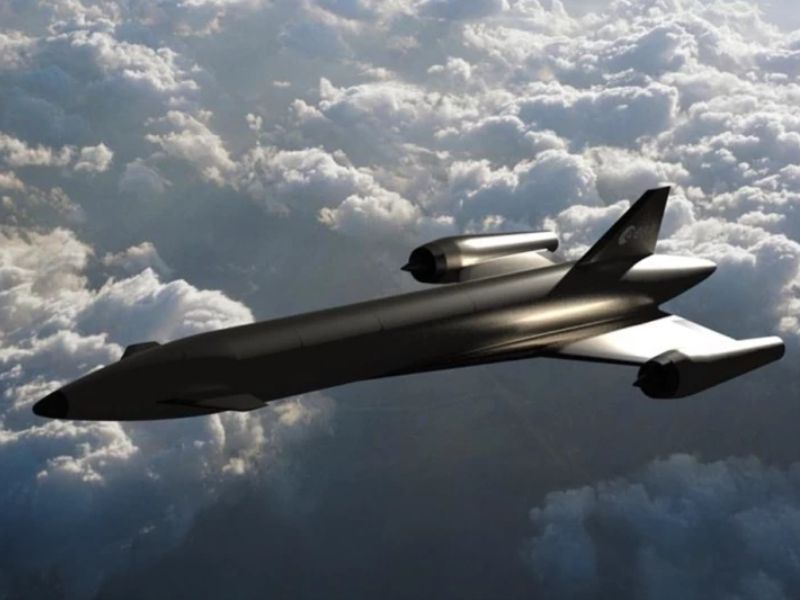
Artist’s concept of the Invictus spaceplane (background extended using Photoshop generative fill) Frazer-Nash
Demonstrating that promising technology never truly disappears, the Synergetic Air-Breathing Rocket Engine (SABRE) by Reaction Engines is back in the spotlight as part of Invictus, a newly announced Mach 5+ spaceplane initiative led by a British consortium.
Some innovations persist through sheer determination—and this is one of those stories.
HOTOL: A Bold Vision Ahead of Its Time
Back in 1982, British Aerospace and Rolls-Royce joined forces to develop the HOTOL (Horizontal Take-Off and Landing) spaceplane. Designed as a single-stage-to-orbit vehicle, HOTOL was envisioned to lift off and land on traditional runways while using air-breathing propulsion for most of its flight—drastically reducing onboard oxygen needs and overall weight.
The concept quickly gained traction, even earning a place in London’s Science Museum and receiving substantial backing from the British government. However, in 1987, officials deemed the project too ambitious and pulled financial support.
Undeterred, engineers Alan Bond, John Scott-Scott, and Richard Varvill launched Reaction Engines Limited in 1989 to continue pursuing the HOTOL vision, focusing on its most revolutionary elements.
Reaction Engines prioritized developing the SABRE engine while also funding side ventures to attract investors. With government contracts from both the UK and the US, and significant investment from BAE Systems, the company remained active until 2024—when financial difficulties led to its dissolution.
Now, a new team including Frazer-Nash, Spirit AeroSystems, Cranfield University, and several SMEs has revived the concept under the Invictus program. Their goal: to deliver a reusable Mach 5 spaceplane by 2031 that operates at the edge of space, potentially laying the groundwork for a full orbital launch vehicle in the future.
The key to this capability lies in a hybrid engine system—capable of transitioning between air-breathing and rocket propulsion. At takeoff, Invictus would operate like a jet, burning hydrogen fuel with atmospheric oxygen, thus saving the mass typically needed for onboard oxidizers. As it ascends, the system switches to rocket mode, consuming stored liquid oxygen, but far less than traditional spacecraft.
SABRE’s Pre-Cooler: Tackling Extreme Heat
Central to this is SABRE’s innovative pre-cooler. At hypersonic speeds, incoming air becomes extremely hot—hot enough to melt conventional engine materials. To solve this, hydrogen fuel flows through a heat exchanger to cool liquid helium, which is then channeled through fine tubing at the engine’s intake. This system chills incoming air from over 1,000 °C (1,832 °F) to near room temperature in under 0.05 seconds, allowing it to mix safely with hydrogen and ignite.
With this tech, Invictus is expected to exceed Mach 5. Should it replicate the full potential of SABRE—as projected in the earlier Skylon spaceplane concept—it may even surpass Mach 25 in rocket mode, fast enough to achieve low Earth orbit.
Currently, the Invictus team is refining a complete design for the reusable craft and its integrated systems, supported by €7 million (US$8.1 million) from the European Space Agency (ESA). ESA sees Invictus as a step beyond the capabilities of the Ariane 6 rocket, and a strategic asset for Europe’s future space access. The UK Space Agency is also backing the effort as part of Britain’s growing ambitions in hypersonics and spaceflight.
Military and Civilian Applications Alike
Because of its dual-use nature, the Invictus team is developing the project with both civilian and military applications in mind—spanning propulsion, smart materials, AI, and autonomy technologies across sectors.
Hypersonic flight represents more than just the next step in aerospace—it marks the dawn of a new era in mobility, defense, and space exploration,” said Dr. Tommaso Ghidini, Head of the Mechanical Department at ESA. “Through Invictus, Europe is positioning itself at the forefront of innovation that will transform how we traverse the Earth and venture into orbit. Mastering reusable, air-breathing propulsion paves the way for aircraft that launch like planes and reach orbit like rockets—reshaping transportation on every level. This is the convergence of dual-use innovation and strategic independence.
Uber is pouring hundreds of millions into EV maker Lucid and self-driving tech startup Nuro to launch a premium robotaxi service.
As part of the deal, Uber will invest $300 million in Lucid and buy at least 20,000 Gravity SUVs over six years. Uber and its partners will operate vehicles equipped with Nuro’s self-driving tech, launching service in a major U.S. city next year.
Production of the custom Lucid Gravity models is set to begin in late 2026. Uber is also investing a larger, undisclosed sum—described as a “multi-hundred-million dollar” figure—into Nuro.
The partnership took about a year to finalize, Nuro co-founder and president Dave Ferguson told TechCrunch.
Uber Took a Deep Dive Before Choosing Nuro as Robotaxi Partner
“That likely speaks to the depth of the deal,” he said, noting that Uber was serious about making a major investment in a robotaxi program and evaluated nearly every autonomous vehicle company before deciding.
“We were excited to ultimately be the partner they selected,” Ferguson added.
Ferguson noted that engineers at Lucid and Nuro have already made headway on the project, including testing a prototype autonomous vehicle on a closed track at Nuro’s proving grounds in Las Vegas.
He said Lucid’s Gravity SUVs are ideal since they have the hardware redundancies required for Level 3 automation.
Lucid’s Built-In Redundancies Smooth the Path to Level 4 Autonomy
The final product, however, will be a Level 4 vehicle, capable of fully autonomous driving under certain conditions without any human input. Ferguson added that the built-in redundancies made it “almost a delight” to integrate Nuro’s self-driving technology into the Gravity SUVs.
In the past two years, Uber has partnered with AV tech firms to explore various real-world self-driving applications. The company now works with more than 18 partners worldwide across ride-hailing, delivery, and freight. This year, Uber announced partnerships with May Mobility, Volkswagen, and Chinese AV firms Momenta, WeRide, and Baidu.
Uber’s most prominent U.S. partnership is with Waymo, currently operating “Waymo on Uber” services in Austin and Atlanta.
This latest deal highlights the scale of Uber’s financial commitment to gaining a strong foothold—and potentially a leadership role—in the rapidly evolving autonomous vehicle industry.
The deal validates Nuro, which has raised over $2 billion since 2016. Originally, Nuro focused on building a fleet of low-speed delivery robots using its autonomous driving technology. After burning cash and facing funding challenges, the company laid off staff in 2022 and 2023.
Last year, Nuro shifted to licensing its autonomous tech, dropping its delivery bots to focus on automakers and mobility providers. This move, the company said, extended its financial runway from 1.5 to 3.5 years.
Still, Nuro needed a major licensing deal to prove the strategy was working. According to Ferguson, the Uber partnership—and others reportedly in development—shows that the pivot is beginning to pay off.
Even Tesla’s energy storage unit—once a rare bright spot—is now feeling the pressure of the company’s broader struggles.
For the second quarter in a row, installations of its Powerwall and Megapack systems have declined. Tesla reported 9.6 gigawatt-hours of energy storage deployed in Q2, down from 10.4 GWh in Q1.
The division reached its highest point in late 2024, with 11 GWh installed in just three months. That year, Tesla delivered a total of 31.4 GWh in energy storage products.
After Years of Steady Growth, Tesla’s Energy Division Faces a Potential Slowdown in 2025
Until recently, this sector had shown steady growth, with combined revenue from storage and solar jumping from $2 billion in 2020 to $10.1 billion in 2024. But with a rocky start to 2025, that growth streak may be nearing its end.
In contrast, the overall energy storage market has been on the rise. According to analysts at Wood Mackenzie, new installations reached a record high in Q1—the latest period with available data—marking a 57% increase compared to the same time last year.
Growth in Energy Storage Faces Threats from Tariffs and Legislative Rollbacks Targeting Clean Energy Incentives
However, this momentum may not last. The industry now faces headwinds from upcoming tariffs on Chinese imports and the potential fallout from a Trump-supported reconciliation bill being negotiated in Congress. Republican lawmakers are pushing to dismantle major components of the Inflation Reduction Act.
While the bill may preserve tax credits for battery storage projects, new restrictions targeting parts or materials sourced from foreign entities of concern (FEOC) could make those incentives difficult to access. That’s a major hurdle, as most battery minerals are currently refined or processed in China.
Mercedes’ AMG division has revealed a concept EV that’s essentially a street-legal rocket. Powered by three axial-flux motors, it delivers 1,340 horsepower (985.5 kW) and reaches a top speed of 220 mph (354 km/h).
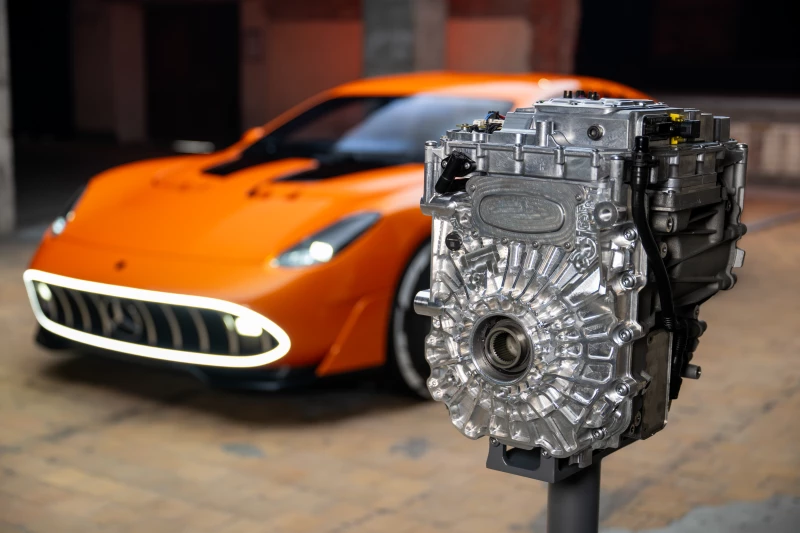
The new axial-flux motors are smaller, lighter, and more efficient. With a disc-shaped stator spinning parallel to the shaft, they’re 67% lighter, offering 3× the power density and 2× the torque of traditional motors.
Next-Gen NCMA Battery Boosts Power and Efficiency
The axial-flux motors are driven by a newly designed battery featuring oil-cooled, tall cylindrical cells using NCMA chemistry. This lithium-ion battery incorporates a nickel cobalt manganese aluminum oxide cathode, enhancing the standard NCM formula with added aluminum.The result: more capacity, higher energy and power output, with less cobalt and improved stability.
Image Credits:An innovative EDU for the motors and transmission was designed to maximize space and weight savings Mercedes-Benz
The Concept GT XX’s 800+ volt battery pack houses more than 3,000 NCMA cells, enabling ultra-fast charging at up to 850 kW. While Mercedes hasn’t disclosed the total capacity of the pack, it did confirm an energy density of 300 Wh/kg.
The motors sit in electric drive units (EDUs) with a planetary transmission and silicon carbide inverter. The rear unit has two motors making 860 hp, while the front holds one motor with a spur-gear setup.
Adaptive Aero Enhances Performance and Efficiency
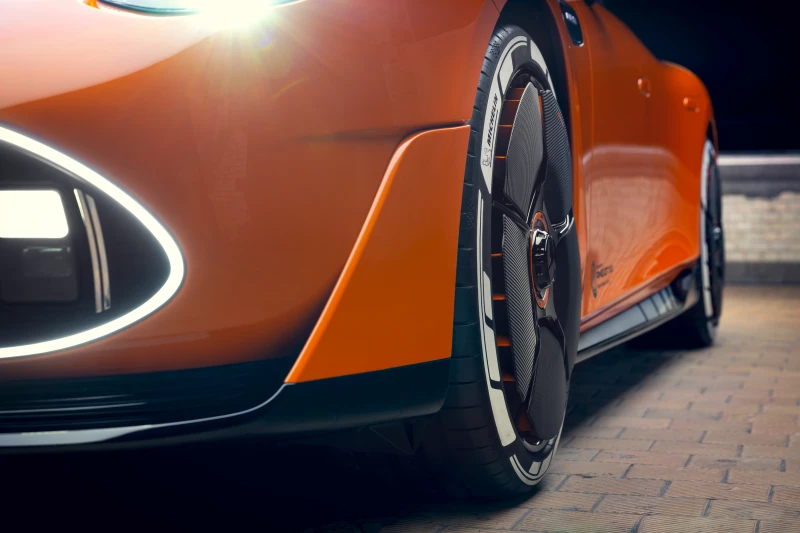
Aerodynamics play a major role in the Concept GT XX’s performance, with a remarkably low drag coefficient of just 0.198. A streamlined body and actively adjusting aero wheels make this possible. These wheels use “cloaking” blades that adjust to either cool the brakes or enhance aerodynamics, depending on driving conditions.
The overall design is compact, aggressive, and steeped in nostalgia, with the front grille and hood strongly reminiscent of the classic 300 SLR.
The Concept GT XX features V8 sounds from headlight speakers, a yoke steering wheel, carbon fiber accents, and orange lighting. A programmable center tail light adds to its sleek, game-inspired interior.
Image Credits:The fins on the AMG Concept GT XX’s wheels can suck in or push out to allow cooling air for the brakes Mercedes-Benz
Mercedes has confirmed that this concept is road-ready and headed for production. Futuristic features may be trimmed for production, but the drivetrain and aero systems actively demonstrate real-world readiness—pending durability tests.
We use cookies on our website to give you the most relevant experience by remembering your preferences and repeat visits. By clicking “Accept All”, you consent to the use of ALL the cookies. However, you may visit "Cookie Settings" to provide a controlled consent.
This website uses cookies to improve your experience while you navigate through the website. Out of these, the cookies that are categorized as necessary are stored on your browser as they are essential for the working of basic functionalities of the website. We also use third-party cookies that help us analyze and understand how you use this website. These cookies will be stored in your browser only with your consent. You also have the option to opt-out of these cookies. But opting out of some of these cookies may affect your browsing experience.
Necessary cookies are absolutely essential for the website to function properly. These cookies ensure basic functionalities and security features of the website, anonymously.
Cookie
Duration
Description
cookielawinfo-checkbox-analytics
11 months
This cookie is set by GDPR Cookie Consent plugin. The cookie is used to store the user consent for the cookies in the category "Analytics".
cookielawinfo-checkbox-functional
11 months
The cookie is set by GDPR cookie consent to record the user consent for the cookies in the category "Functional".
cookielawinfo-checkbox-necessary
11 months
This cookie is set by GDPR Cookie Consent plugin. The cookies is used to store the user consent for the cookies in the category "Necessary".
cookielawinfo-checkbox-others
11 months
This cookie is set by GDPR Cookie Consent plugin. The cookie is used to store the user consent for the cookies in the category "Other.
cookielawinfo-checkbox-performance
11 months
This cookie is set by GDPR Cookie Consent plugin. The cookie is used to store the user consent for the cookies in the category "Performance".
viewed_cookie_policy
11 months
The cookie is set by the GDPR Cookie Consent plugin and is used to store whether or not user has consented to the use of cookies. It does not store any personal data.
Functional cookies help to perform certain functionalities like sharing the content of the website on social media platforms, collect feedbacks, and other third-party features.
Performance cookies are used to understand and analyze the key performance indexes of the website which helps in delivering a better user experience for the visitors.
Analytical cookies are used to understand how visitors interact with the website. These cookies help provide information on metrics the number of visitors, bounce rate, traffic source, etc.
Advertisement cookies are used to provide visitors with relevant ads and marketing campaigns. These cookies track visitors across websites and collect information to provide customized ads.