
Dan Dennis on Unsplash
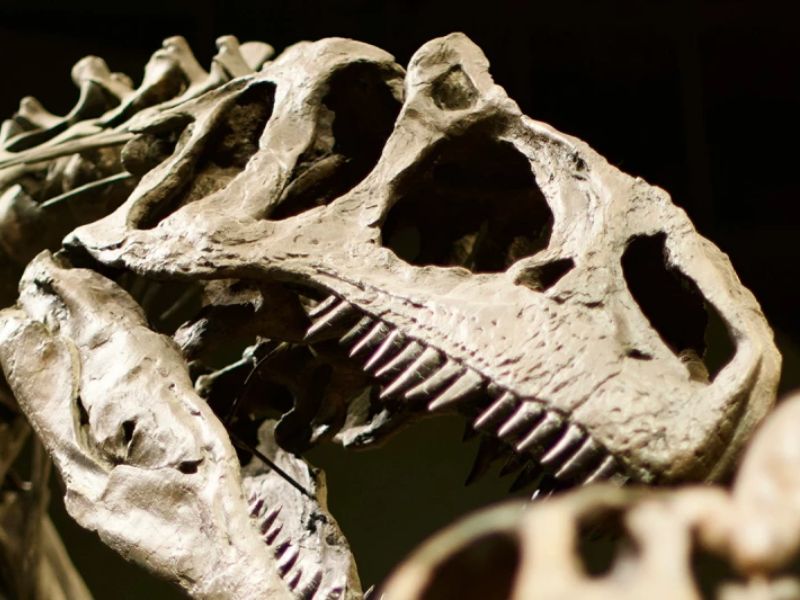
Fossilized dinosaur teeth offer more than just clues about diet and lineage—they also serve as unexpected archives of ancient atmospheric conditions. New research shows that if humans had existed alongside dinosaurs, breathing might have been quite difficult due to significantly elevated levels of carbon dioxide in the air.
A Global Effort to Decode Ancient Enamel
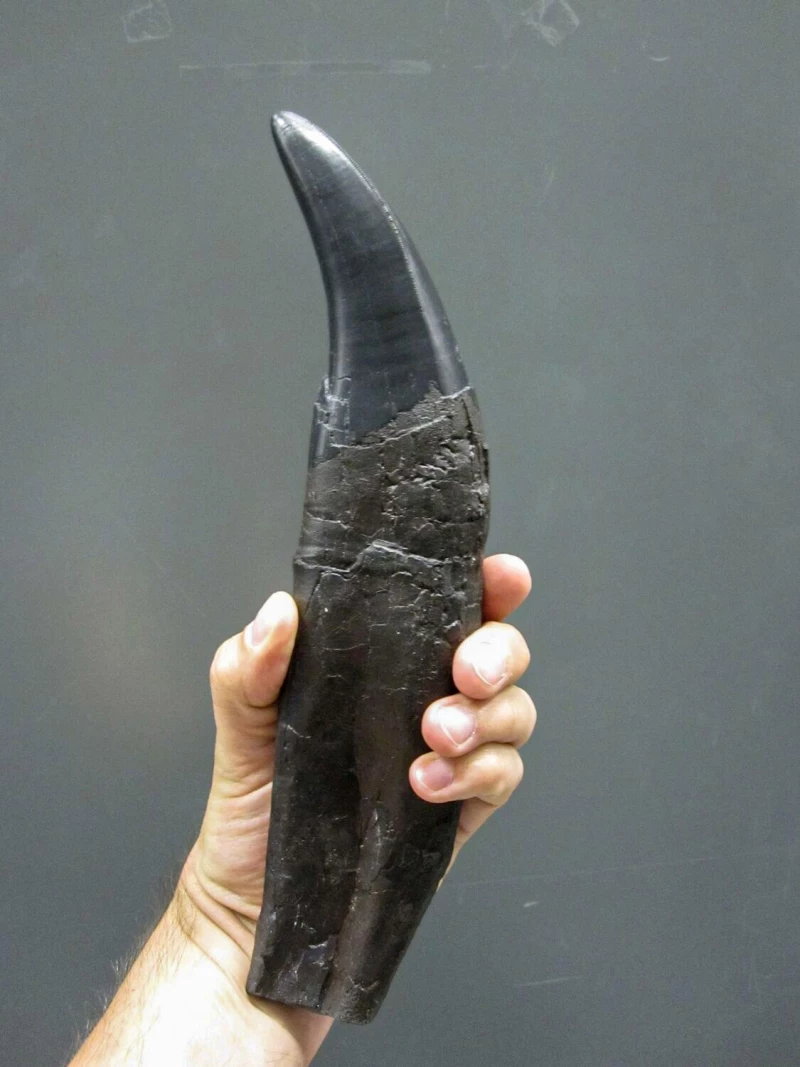
This insight comes from a study led by geochemists and geologists at the University of Göttingen in Germany. The team analyzed enamel powder from dinosaur teeth discovered across North America, Europe, and Africa. These teeth, some dating back as far as 150 million years, preserved isotopic signatures of the oxygen the dinosaurs once inhaled.
While it may seem odd to study tooth enamel for air quality data, its durability makes it ideal for preserving traces of the atmospheric gases absorbed into body water through biomineralization. This quality allowed scientists to reconstruct the air composition of ancient Earth with remarkable detail.
Thomas Tütken
Their findings were startling. During the late Cretaceous, atmospheric CO₂ levels hit about 750 parts per million, and in the late Jurassic, they soared to approximately 1,200 parts per million. That’s nearly four times higher than preindustrial levels—and well above the current average of 430 ppm.
Volcanic Clues and Enhanced Plant Productivity
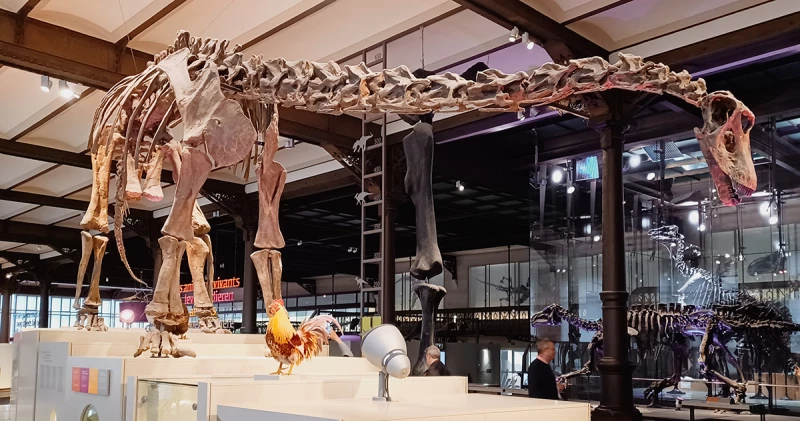
In the teeth of two dinosaurs—a Tyrannosaurus rex and a sauropod named Kaatedocus siberi—the researchers also detected unusual oxygen isotope patterns, pointing to a sudden surge in CO₂, potentially triggered by volcanic activity. Additionally, they found that global photosynthetic activity during the Mesozoic era was over twice what we observe on Earth today.
DaveLevy / Wikimedia Commons
These discoveries pave the way for new approaches to studying Earth’s ancient climate systems. “Our method allows us to use fossil tooth enamel to analyze the atmosphere and plant productivity in early Earth history,” explained Dr. Dingsu Feng, lead author of the paper published in PNAS. “This is essential for understanding long-term climate evolution.”
According to ScienceAlert, the team now plans to apply their technique to teeth from around 252 million years ago, during the so-called “Great Dying”—a mass extinction that wiped out nearly all life on Earth. The hope is that this could reveal more about the causes and aftermath of one of the planet’s most catastrophic events.
Read the original article on: New Atlas
Read more: Sick Dinosaur May Have Had the Earliest Known Cough