
Frontier backed by Stripe, Google, and Meta announced Tuesday it will pay startup Arbor Energy $41 million to remove 116,000 tons of CO₂ by 2030.
The funding will support Arbor’s first commercial power plant in southern Louisiana, where it will burn waste biomass to power a data center while capturing and storing the resulting emissions underground.
“We’re effectively selling two products,” said Arbor CEO Brad Hartwig. “Carbon-free, base-load energy and net carbon removals.”
How BiCRS Captures and Stores Carbon Efficiently
The dual benefit comes from the underlying technology known as BiCRS—biomass carbon removal and storage.
“One of BiCRS’s key advantages is that the capture happens naturally—plants absorb CO₂, so we just need to extract and store it,” said Hannah Bebbington, Frontier’s head of deployment, in an interview with TechCrunch.
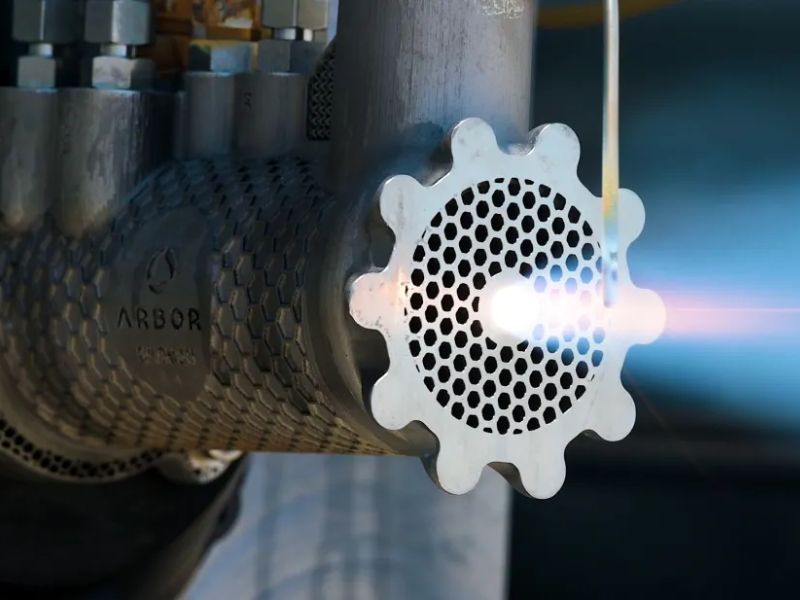
While burning biomass is an ancient practice, Arbor has added a futuristic twist. CEO Brad Hartwig, a former SpaceX engineer, applied rocket turbomachinery to design the power plant, expected to generate 5–10 megawatts. Hartwig said the company is working to boost that output over time.
At the plant, waste biomass is converted into syngas. Initially planning to use a commercial gasifier, Arbor found existing models inadequate and decided to build its own. The custom gasifier uses supercritical CO₂—sourced from the plant itself—to help break down the biomass and release hydrogen and carbon monoxide.
Using CO₂ to Regulate High-Temperature Reactions
The syngas and CO₂ are directed into a combustion chamber, where the syngas is burned with pure oxygen, producing heat, water vapor, and additional CO₂. Hartwig explained that the added CO₂ helps regulate temperatures to prevent damage to the chamber’s metal components.
The resulting hot gases power a turbomachine to generate electricity. Most of the CO₂ is then captured and sent through a pipeline for permanent underground storage, while some is recycled back into the gasifier.
Hartwig has fittingly called the system a “vegetarian rocket engine.”
The setup captures 99% of the CO₂ produced during combustion—far more than traditional methods—and because it uses biomass, it actively removes carbon from the atmosphere.
Assessing Viability and Sustainability
According to Bebbington, Frontier estimates that one to five gigatons of waste biomass are available globally each year. However, not all biomass is equally viable—some must be hauled long distances, while other types are better left to naturally decompose and enrich soil.
When evaluating carbon removal projects, “we’re careful to factor in sustainability,” Bebbington said. “We require that each ton of carbon removed clearly adheres to sustainable biomass principles.”
Even if only one gigaton of biomass qualifies, there’s still major potential for BiCRS—and its relative, BECCS (bioenergy with carbon capture and storage)—to play a significant role in meeting future energy demands.
Under its agreement with Frontier, Arbor will use only biomass, ensuring the plant delivers net carbon removals. Frontier had previously backed Arbor through a pre-purchase agreement.
Although Arbor’s system can technically burn any hydrocarbon fuel, including natural gas, Hartwig said it’s designed to be fuel-flexible.
“We want BECCS to power data centers, support industrial electrification, and strengthen the grid,” Hartwig added. “But for any new fossil-based systems, we want them to be zero-emission too—let’s capture all of those emissions.”
Read the original article on: TechCrunch
Read more: Honda Is Preparing To Equip Its Beginner-Friendly 250cc Bikes With The New E-Clutch System