
By nature, scientists can’t predict what they’ll uncover while studying the interstellar object 3I/ATLAS — only the third ever detected from beyond our solar system.
Yet, the surprises keep piling up. First spotted racing toward the Sun in early July, 3I/ATLAS has captivated researchers. Science Alert reports that four major observatories — Hubble, SPHEREx, TESS, and James Webb — have all studied this unusual visitor.
Most experts agree the object is a comet, an icy body that vents gas when heated by the Sun. But the data shows 3I/ATLAS is unlike anything seen before and will remain a fascination for years.
The Most Carbon-Heavy Comet Ever Observed
Notably, SPHEREx and James Webb detected an unusually carbon-rich coma around the comet’s core. Scientists have recorded the highest carbon dioxide-to-water ratio ever observed in a comet.
TESS had spotted the object months before its July discovery, when archived data showed it already bright and active six astronomical units from the Sun—well beyond Jupiter, where most comets remain quiet.
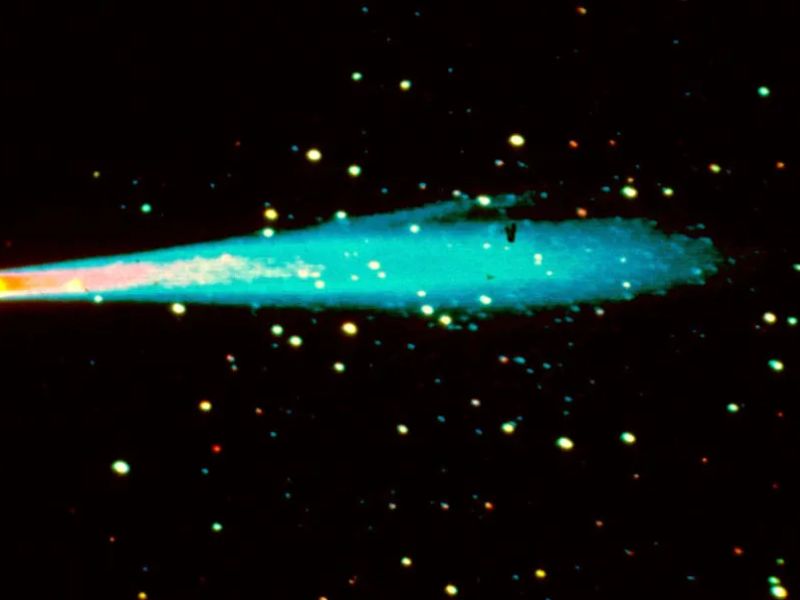
NASA’s Hubble telescope saw a “teardrop-shaped dust cocoon” around the comet’s icy core, but no distinct tail. Harvard astronomer Avi Loeb even speculated that an extraterrestrial civilization might have sent the object.
Radiation, Ice, and the Puzzle of 3I/ATLAS
As for its origins, they remain uncertain. A recent preprint suggests 3I/ATLAS may hold radiation-exposed ices or have formed near the CO₂ ice line in its original protoplanetary disk.
For now, patience is required. The findings — and any new data before 3I/ATLAS leaves the solar system — still need full analysis and review.
Before it departs, the object will make relatively close approaches to Jupiter, Mars, and Venus. Avi Loeb has even suggested that NASA’s Mars Reconnaissance Orbiter take a closer look, as 3I/ATLAS will pass within two million miles of the Red Planet.
About five months later, NASA’s Juno spacecraft could also encounter the visitor as it nears Jupiter, potentially offering fresh clues to its mysterious nature.
Read the original article on: Futurism
Read more: The World’s Largest Neutrino Detector Begins Operations Deep Underground