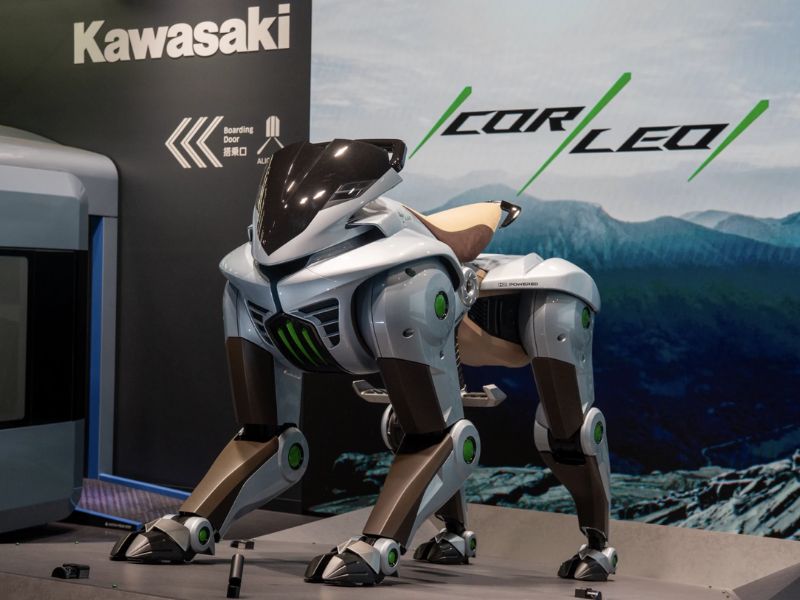
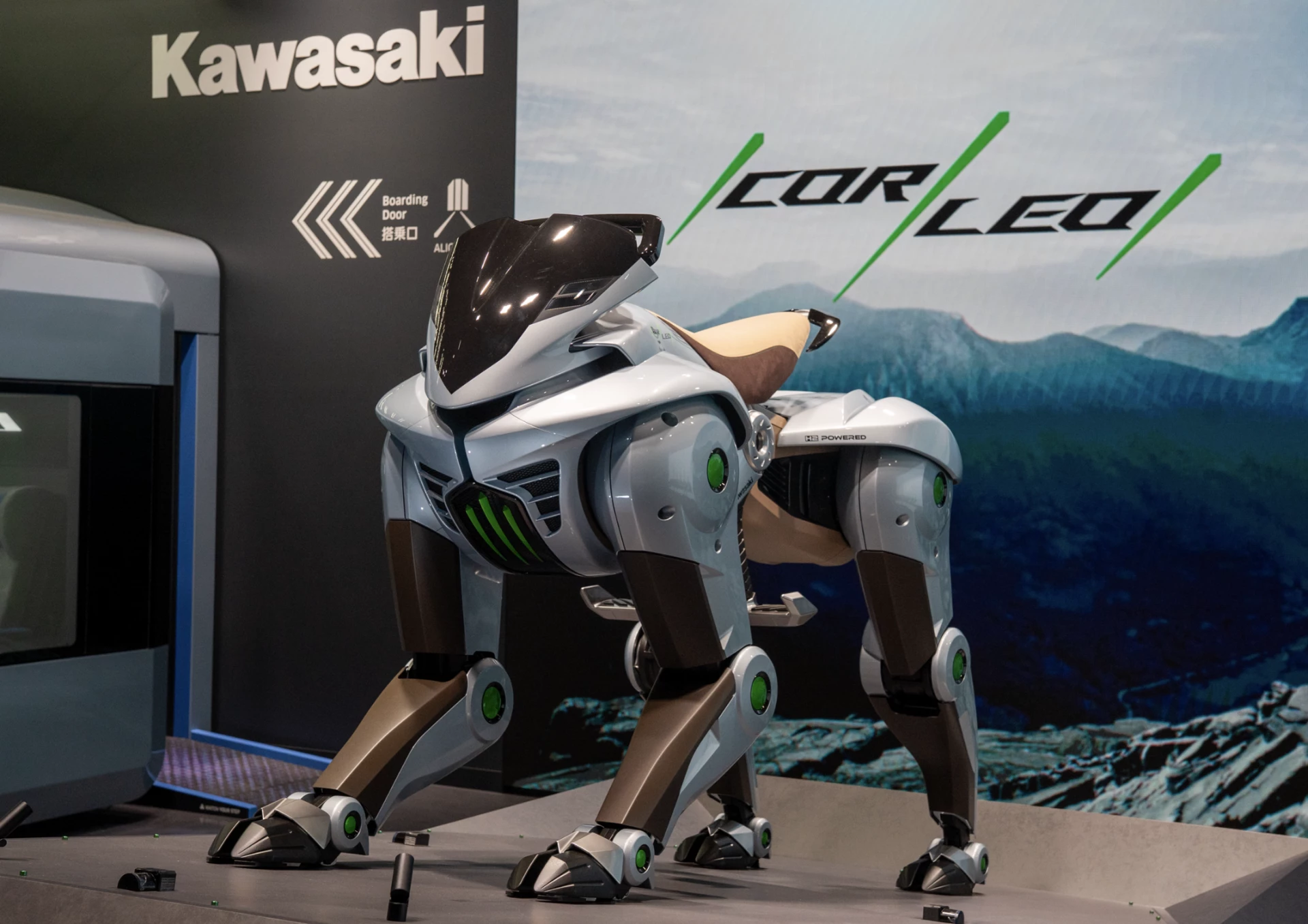
Expo 2025, Osaka-Kansai, Kawasaki
Kawasaki is now moving its once-far-off 2050 vision—the hydrogen-powered, four-hooved, all-terrain robotic horse called Corleo—into production and plans to debut the first model in just four years, decades ahead of the original schedule.
Kawasaki
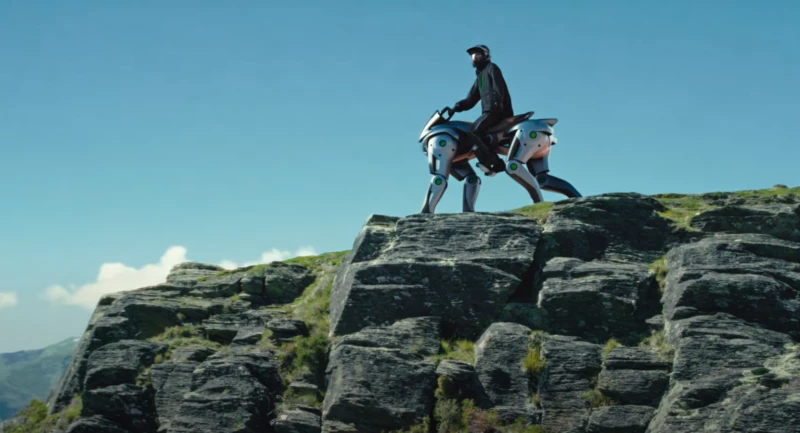
We first covered this mountain-scaling machine in April last year, when it existed only as a concept accompanied by some rough CGI footage. Now, however, Kawasaki appears to be taking its futuristic mechanical quadruped seriously, having formed a dedicated unit—the Safe Adventure Business Development Team—and setting its sights on making the robo-horse available for visitors to ride at Expo 2030 in Riyadh, Saudi Arabia. After that, the company plans to offer the mobility vehicles for consumer purchase by 2035.
Kawasaki Unveils Virtual Corleo Riding Experience
In a related move, Kawasaki Heavy Industries has also revealed plans for a virtual way to experience Corleo. The company will release a riding simulator next year, letting users digitally experience what it’s like to ride the robot.
“Kawasaki will also develop a riding simulator that enables a riding experience of the four-legged mobility vehicle,” the company said. The team aims to complete the simulator by 2027 and plans to roll out the full system—including motion data, 3D models, and movement data gathered during Corleo’s development—to the gaming and e-sports industries.
Turning back to the physical Corleo, Kawasaki is positioning it as a safe, mountain-capable mobility vehicle that combines motorcycle engineering with robotics to deliver balance and agility. The robot moves its rear legs independently and absorbs impacts, while the rider controls steering by shifting their body weight—just like riding a horse, but without reins. Reports also indicate the vehicle will feature sophisticated AI systems to handle varied and demanding environments, from rocky inclines to water crossings.
Kawasaki
Corleo’s Hydrogen-Powered Engine and Ambitious Launch Timeline
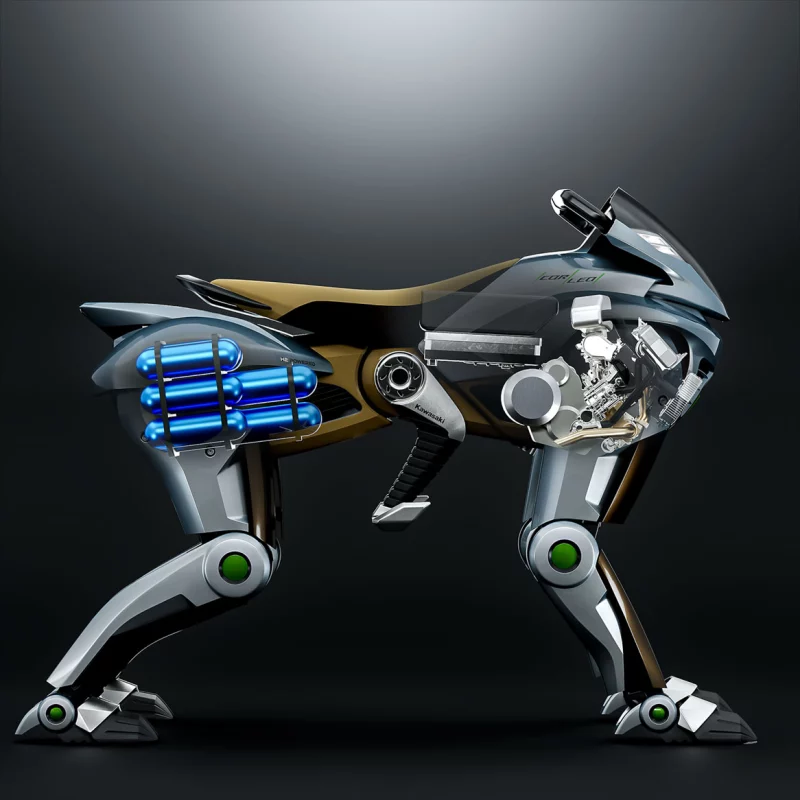
As reported earlier, Corleo will run on a 150cc hydrogen engine that generates electricity to drive its legs, drawing fuel from hydrogen canisters mounted at the rear to operate quietly and with low emissions. The robotic horse will also feature a GPS display that maps routes for riders and helps them maintain a stable center of gravity.
Although the launch is still some years away, the timeline is far more ambitious than the original 2050 target announced when Corleo debuted at Japan’s World Expo 2025 in Osaka. Details on production numbers and pricing remain unknown, but recent progress has elevated the project from a curiosity to a serious contender worth watching.
Read the original article on: New Atlas
Read more: Boston Dynamics’ Upcoming Humanoid Robot Will be Powered by Google DeepMind Technology