
J. Adam Fenster/Rochester University
When most people think of solar energy, the spotlight usually falls on solar cells and panels. Yet there’s another way to harvest power from the Sun: a device called a STEG. Scientists have now found a method to make it up to 15 times more efficient.
STEG, short for solar thermoelectric generator, operates through the Seebeck effect. This principle produces electricity when two conductors maintain a temperature difference. Essentially, one side of the STEG stays hot, the other stays cool, and semiconductors between them channel the resulting flow of current. Since they are solid-state devices with no moving components, STEGs can run off solar heat—or any other thermal source that maintains a strong temperature gradient.
The Challenge of Efficiency
Despite their potential, STEGs have long been held back by poor efficiency. Historically, they’ve managed to convert less than one percent of sunlight into power. Compared to perovskite/silicon solar cells, which now top 30% efficiency, STEGs have looked far from competitive as a mainstream clean energy option.
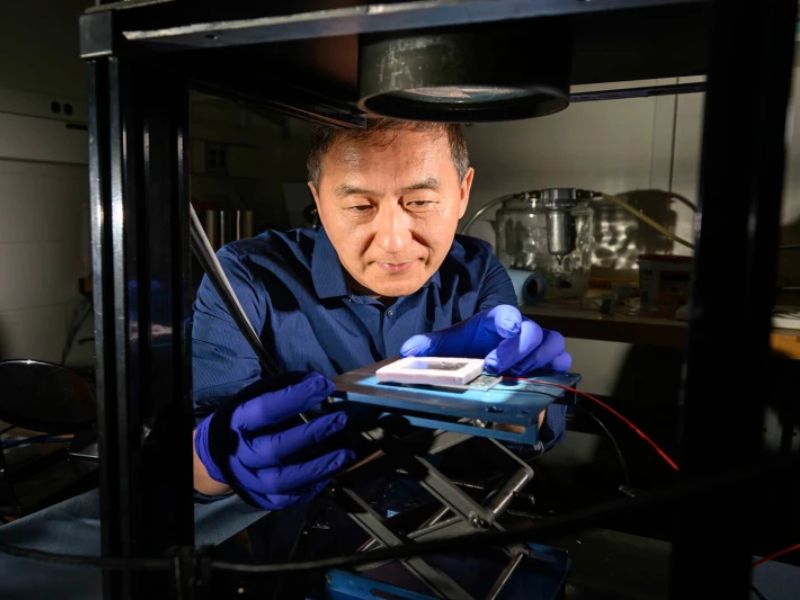
That outlook may be shifting, thanks to new work from researchers at the University of Rochester. By rethinking the materials used on each side of the device, they pushed efficiency up to 15%. Unlike past studies, which mostly focused on tweaking semiconductors, this team took a different path. “Instead of modifying the semiconductors, we targeted the hot and cold ends of the generator,” explains Chunlei Guo, co-author of the study published in Light: Science and Applications. “On the hot side, we optimized absorption and heat retention, while on the cold side we enhanced cooling. Together, those changes delivered a dramatic leap in efficiency.”
J. Adam Fenster/University of Rochester
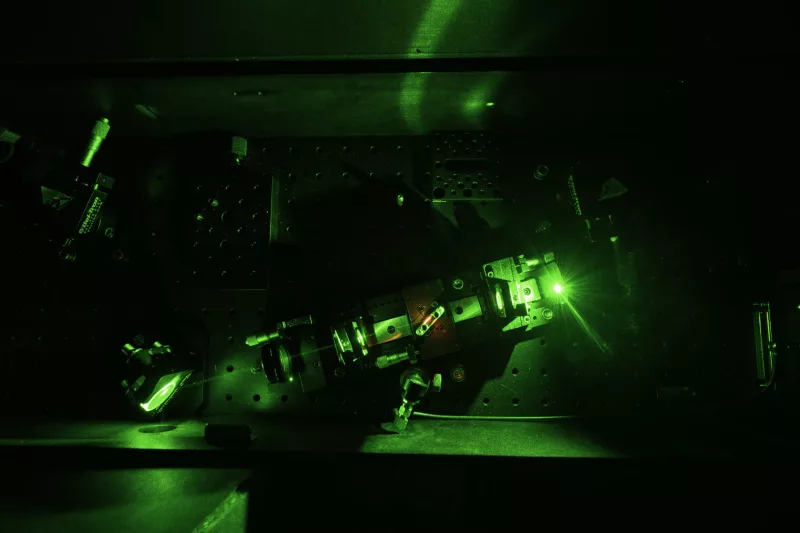
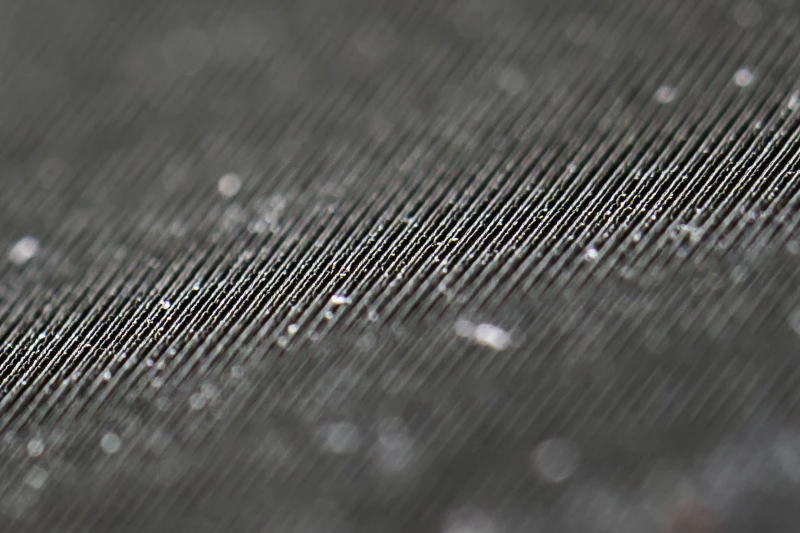
To accomplish this, the researchers used a special black metal developed in Guo’s lab in 2020. Starting with tungsten, they bombarded it with femtosecond laser pulses—ultra-brief bursts of light that etched the surface. This treatment turned the metal jet-black, dramatically boosting its ability to absorb and store heat from sunlight. They then added a plastic cover that acted like a miniature greenhouse, trapping even more heat.
Cooling Innovation with Aluminum
On the cold side, they applied the same laser technique to aluminum, creating a heat sink that shed warmth at twice the rate of untreated aluminum.
J. Adam Fenster/University of Rochester
Although STEGs are not yet ready to deliver power on a large scale, the breakthrough has already powered LED lights in demonstrations. The researchers believe such devices could soon be applied in smaller-scale contexts—supporting the Internet of Things, powering wearable electronics, or providing electricity for homes in remote areas.
Read the original article on: New Atlas
Read more: This laser Technology can Read text from a mile Away