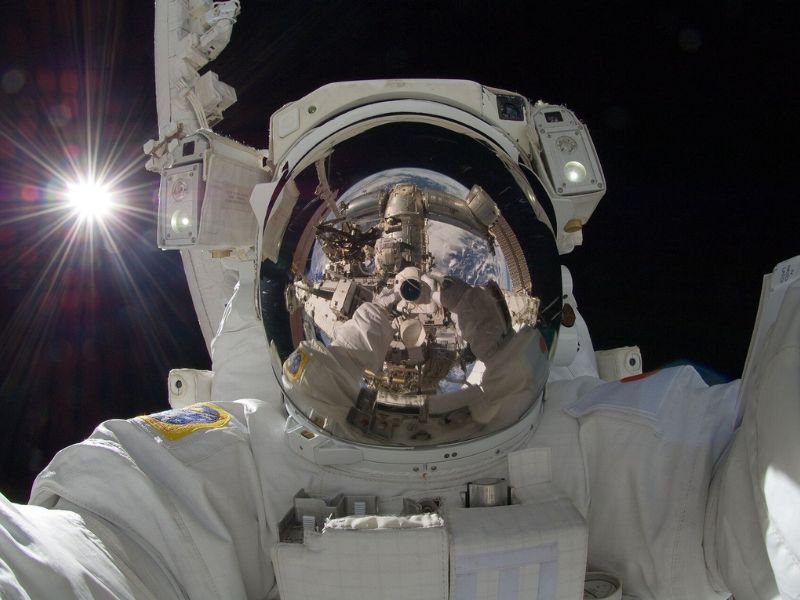

Spaceflight places significant physical strain on astronauts, leading to muscle loss, bone thinning, and fluid shifts. A new study in PNAS shows that microgravity also causes the brain to change shape.
On Earth, gravity helps hold the brain in position, while surrounding cerebrospinal fluid cushions it. Scientists have long known that without gravity the brain shifts upward, but this new research reveals that it is also stretched and compressed in multiple regions.
Brains in Motion
A team led by Rachel Seidler at the University of Florida came to this finding by analyzing MRI scans of 26 astronauts taken before and after their stays on the International Space Station. The researchers compared these images with scans from 24 volunteers who took part in a head-down tilt bed rest study, spending 60 days lying at a six-degree angle to simulate the headward shift of fluids and organs seen in weightlessness.
The researchers observed clear differences between astronauts’ brains and those of the volunteers. Although both groups showed brain shifts, the movement was greater in astronauts, increasing with longer time spent in space. In astronauts on year-long missions, the supplementary motor cortex—responsible for movement control—shifted upward by roughly 2.5 millimeters.
The brain did not move evenly. As it shifted, some regions became compressed at the top and back, while others were stretched. These changes affected balance and coordination, with astronauts who showed the greatest brain movement having the most difficulty standing steadily after returning to Earth.
Improving Mission Safety
Understanding these changes is crucial for the future of space travel, the researchers emphasize. They write, “We show extensive shifts in brain position within the skull after spaceflight and in a simulated environment. These results are essential for grasping how spaceflight affects the human brain and behavior.”
Although the brain largely returns to its normal position after several months on Earth, more research is needed to ensure safer conditions for long-duration missions, like those to Mars.
“The impact of these brain shifts and deformations on health and performance requires further investigation to support safer human space exploration.”
Read the original article on: Phys.Org
Read more: Rainbow Around Nearby Dead Star Puzzles Scientists