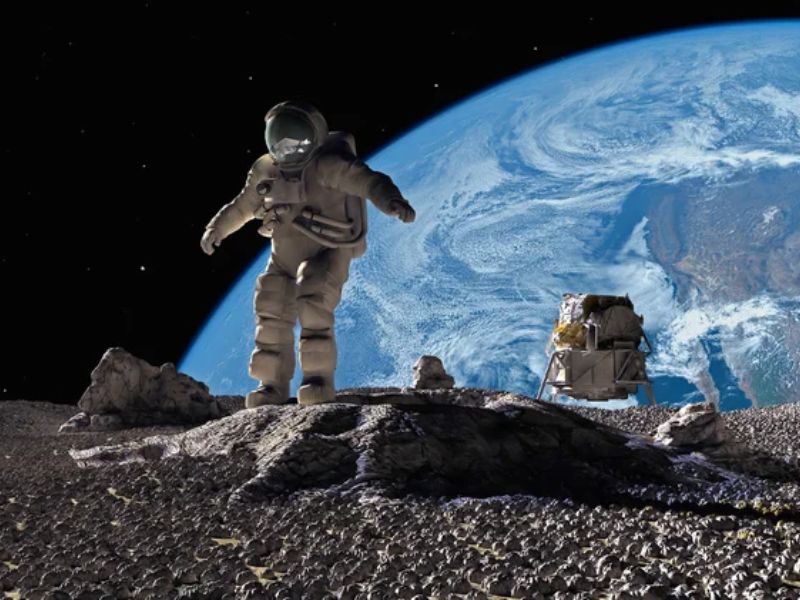

Future Moon settlers will face a long list of hazards – from the airless environment and intense cosmic radiation to corrosive lunar dust, meteoroid impacts, and extreme temperature swings between day and night. Now, scientists warn that moonquakes should be added to that list of dangers.
While science fiction often imagines Moon bases under attack from alien ships or enduring dramatic meteor storms, researchers led by Smithsonian Senior Scientist Emeritus Thomas R. Watters at the University of Maryland say seismic activity could be a far more realistic concern for future lunar commanders.
Evidence from Apollo 17’s Last Lunar Visit
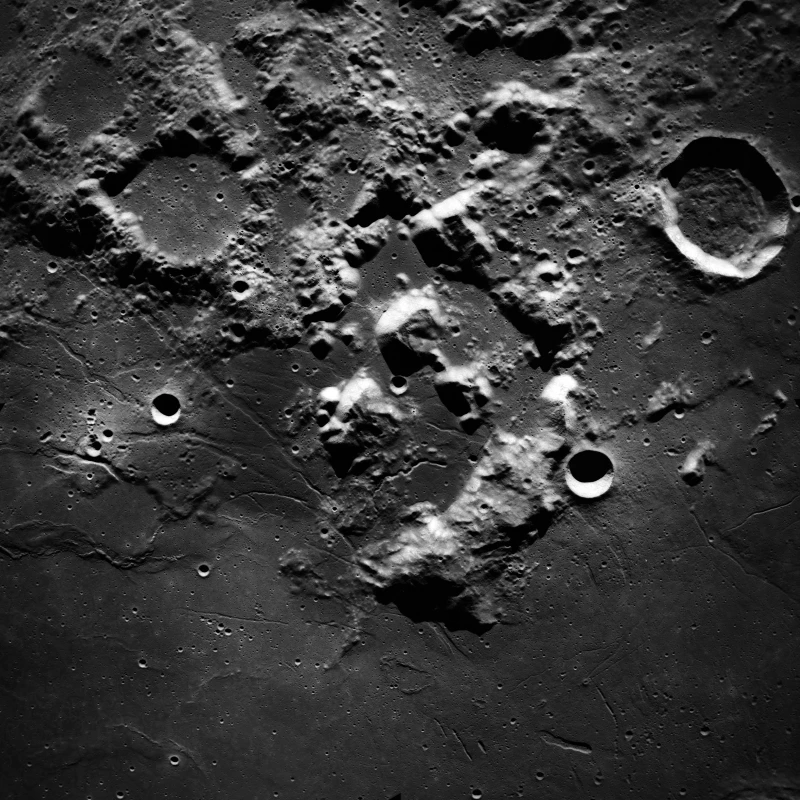
The warning stems from an analysis of data collected during Apollo 17, the final U.S. Moon landing in December 1972. Astronauts Eugene Cernan and Harrison Schmitt explored the Taurus-Littrow valley, on the southeastern edge of Mare Serenitatis, chosen for its complex geology and scientific potential.
NASA
Although all six Apollo missions left behind seismic instruments, they were primitive by modern standards and were shut down in 1977 when their nuclear power sources failed. This left scientists with a limited understanding of the Moon’s seismic behavior.
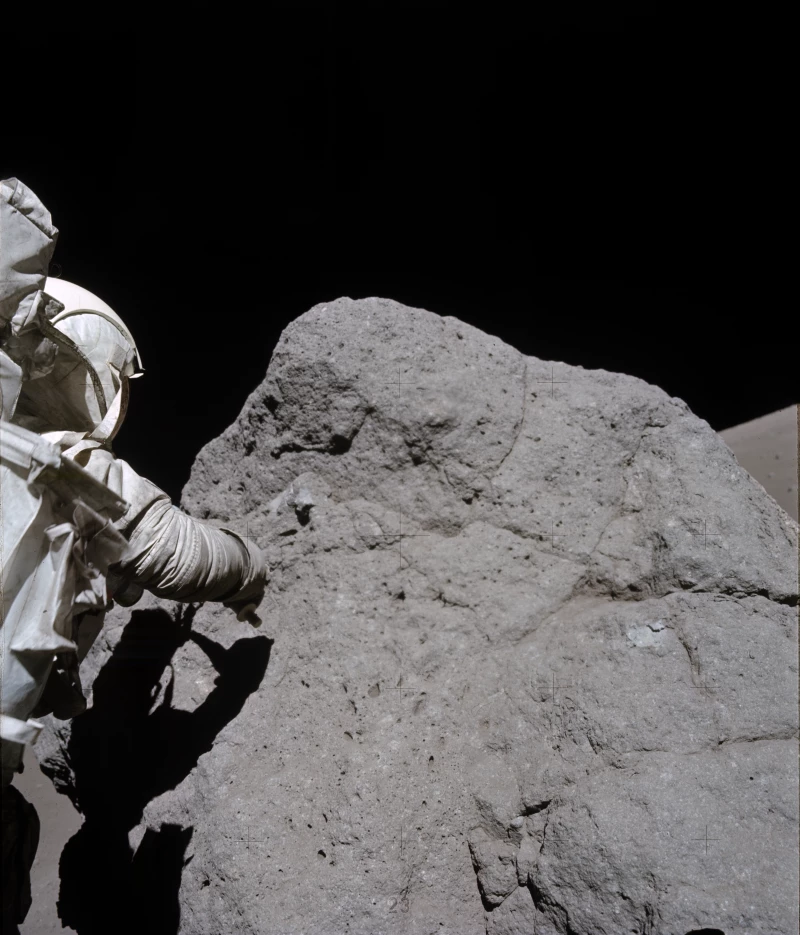
To learn more, Watters’ team studied rock and soil samples linked to past boulder falls and landslides in the Taurus-Littrow area. Their conclusion: these movements were triggered by seismic shaking, not by meteoroid impacts, which are too infrequent to account for such activity.
These moonquakes, occurring over the past 90 million years, registered around magnitude 3.0 on the Richter Scale. While mild by Earth standards, shallow lunar quakes could have a much greater effect due to the Moon’s different geology and lack of atmosphere.
NASA
A Low-Probability but Long-Term Threat
Although the daily odds of a moonquake striking a given location are roughly 20 million to one, the risk becomes more significant for long-term bases—dropping to about 5,500 to one over a single year. Over decades, the risk compounds further. The design of future lunar landers, often tall and top-heavy, could also make them vulnerable to toppling if the ground shakes—a problem already seen in some robotic missions.
The researchers acknowledge that their conclusions are drawn from limited data, but they expect upcoming Artemis missions—with high-resolution lunar orbiter imagery and modern seismic stations—to greatly improve knowledge of the Moon’s geological hazards.
“Our goal is to ensure Moon exploration is safe and investments are wisely placed,” said Nicholas Schmerr, Associate Professor of Geology at the University of Maryland. “The takeaway is clear: don’t build directly on an active fault or scarp. The farther you are from those features, the lower the risk.”
Read the original article on: new Atlas
Read more: Breakthrough Cryocooler Paves the Way for Crewed Missions to Mars