
MIT researchers found that wedge-shaped vortex generators can reduce ship drag by up to 7.5%, lowering fuel use and emissions, as presented at the 2025 SNAME Maritime Convention.
The study highlights a promising path to decarbonize shipping and meet the IMO’s 2030 target of a 40% reduction in carbon intensity, requiring hull, engine, and propeller redesign, new fuels, and improved operations.
MIT Team Optimizes Vortex-Generator Design with CFD and AI
MIT researchers, with collaborators from the Center for Bits and Atoms, used CFD and AI-guided experiments to optimize vortex-generator geometry.
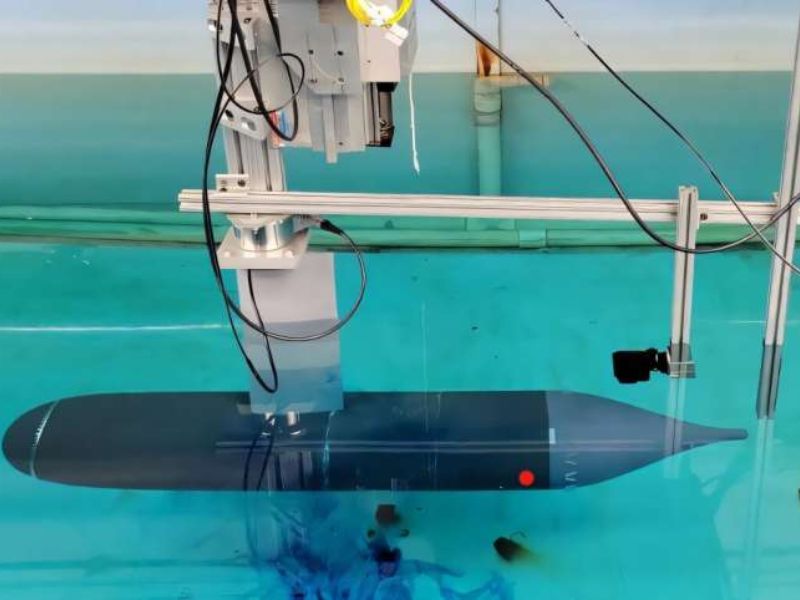
They began by mapping key parameter trends through extensive CFD simulations, then verified their findings with rapid-prototyped hull models. Scale models included a plain axisymmetric hull, one fitted with delta-wing vortex generators, and one with wedge-shaped generators. Their tests confirmed that the wedge configuration delivered the significant drag reduction observed.
Using flow-visualization techniques, the team observed that the vortex generators cut drag by postponing turbulent flow separation. This extends hull water flow, shrinks the wake, and improves propeller and rudder efficiency.
First Experimental Proof That Vortex Generators Reduce Ship Fuel Use
Michael Triantafyllou: “We show for the first time that wedge-shaped vortex generators can reduce a ship’s fuel use.”
Although vortex generators have been used for decades on aircraft wings to preserve lift and prevent stalling, this research is the first to show their effectiveness in reducing drag on commercial ships.
Because the wedge-style generators are modular, they can be incorporated into many different hull designs, including tankers and bulk carriers. They can also complement—or in some cases replace—current systems such as pre-swirl stators, enhancing overall propulsion performance.
As an illustrative example, the researchers estimate that fitting these devices to a 300-meter Newcastlemax bulk carrier traveling at 14.5 knots on a trans-Pacific route could substantially cut emissions and save roughly $750,000 in fuel annually.
Read the original article on: Techxplore
Read more: Three Days Without a Smartphone alters Dopamine and Serotonin Levels