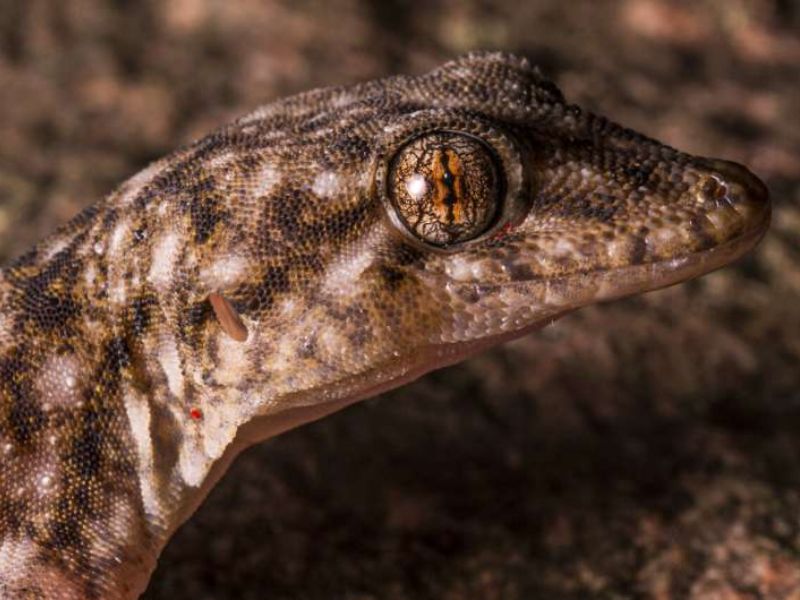

Researchers have identified a new gecko species, Paragehyra tsaranoro, in Madagascar’s Tsaranoro Valley. This microendemic reptile lives exclusively in three small forest patches within the region. Due to ongoing deforestation, the species faces significant threats, emphasizing the urgent need for conservation. Community-managed reserves play a crucial role in protecting vulnerable species like P. tsaranoro. The researchers detailed their findings in the journal ZooKeys.
An international team of herpetologists has identified a new gecko species that had gone unnoticed among the granite boulders on the western slopes of the Andringitra Massif in southeastern Madagascar.
Lead author Francesco Belluardo says they named Paragehyra tsaranoro after the valley where they first found it. The species is unique to Madagascar and microendemic, inhabiting a very limited area.

Isolated Forest Fragments Reveal Vulnerable Gecko Habitat Amid Ongoing Deforestation
Paragehyra tsaranoro has so far been found in just three small forest fragments, all within a 15-kilometer radius. These isolated patches are remnants of a once-continuous forest, now fragmented by deforestation a major threat to Madagascar’s biodiversity.
“The results highlight the need to study small forest fragments, which are vital for documenting the full diversity of Malagasy reptiles and amphibians,” the researchers note.
Due to its extremely limited distribution and the continued loss of habitat, the authors propose classifying this gecko as Critically Endangered on the IUCN Red List. As with many of Madagascar’s endemic species, deforestation poses a serious risk to its survival through habitat destruction and fragmentation.
Researchers Urge Stronger Community Support to Safeguard Endangered Gecko
The research team which includes Angelica Crottini, Javier Lobón-Rovira, Gonçalo M. Rosa, Franco Andreone, Malalatiana Rasoazanany, Costanza Piccoli, and Ivo Oliveira Alves emphasizes the need for greater support for local communities in efforts to conserve the species.
Notably, most of P. tsaranoro’s known habitat falls outside of Madagascar’s official protected areas. The only existing conservation initiatives are community-managed reserves, established to promote sustainable livelihoods while safeguarding local biodiversity.

“Building on earlier studies in the area, it’s becoming clear that this landscape harbors many hidden biodiversity treasures, including other microendemic reptiles unique to this region,” says Belluardo. “The community-managed reserves serve as vital sanctuaries for local wildlife.”
“Interestingly, many of these small forest patches are referred to as Forêts sacrées, or sacred forests, by the local Betsileo people, as they contain boulders used as ancestral tombs. Efforts to preserve this cultural heritage have also contributed to protecting native species—highlighting how conserving biodiversity often aligns with maintaining cultural traditions.”
Read the original article on: Phys.Org
Read more: Study Finds Male Cricket Songs Boost Female Cricket Social InteractiImaons