


OpenAI
OpenAI, the company behind ChatGPT—which sparked widespread excitement, concern, and curiosity after its 2023 debut—has introduced its first hardware product: the Codex Micro, a US$230 mini keyboard designed to improve the workflow of developers using Codex, its AI-powered coding assistant.
Developed in partnership with keyboard manufacturer Work Louder, the Codex Micro is available through OpenAI’s Supply Co. store. It is a compact 13-key programmable macro pad designed to sit beside a standard keyboard. OpenAI describes it as a “command center for agentic work,” built to help users manage multiple AI coding agents simultaneously.
Agent Keys Simplify Multi-Agent Coding
The device includes six translucent Agent Keys, each of which can be assigned to a separate Codex conversation. Pressing one opens the linked chat, while RGB lighting shows the AI agent’s status: idle, processing, waiting, completed, or error. This enables users to monitor several coding sessions at a glance without switching between chat windows.
The six Command Keys handle tasks like starting chats, approving requests, sending prompts, and push-to-talk. They can be customized with Codex functions, while voice input relies on the computer’s microphone.
OpenAI
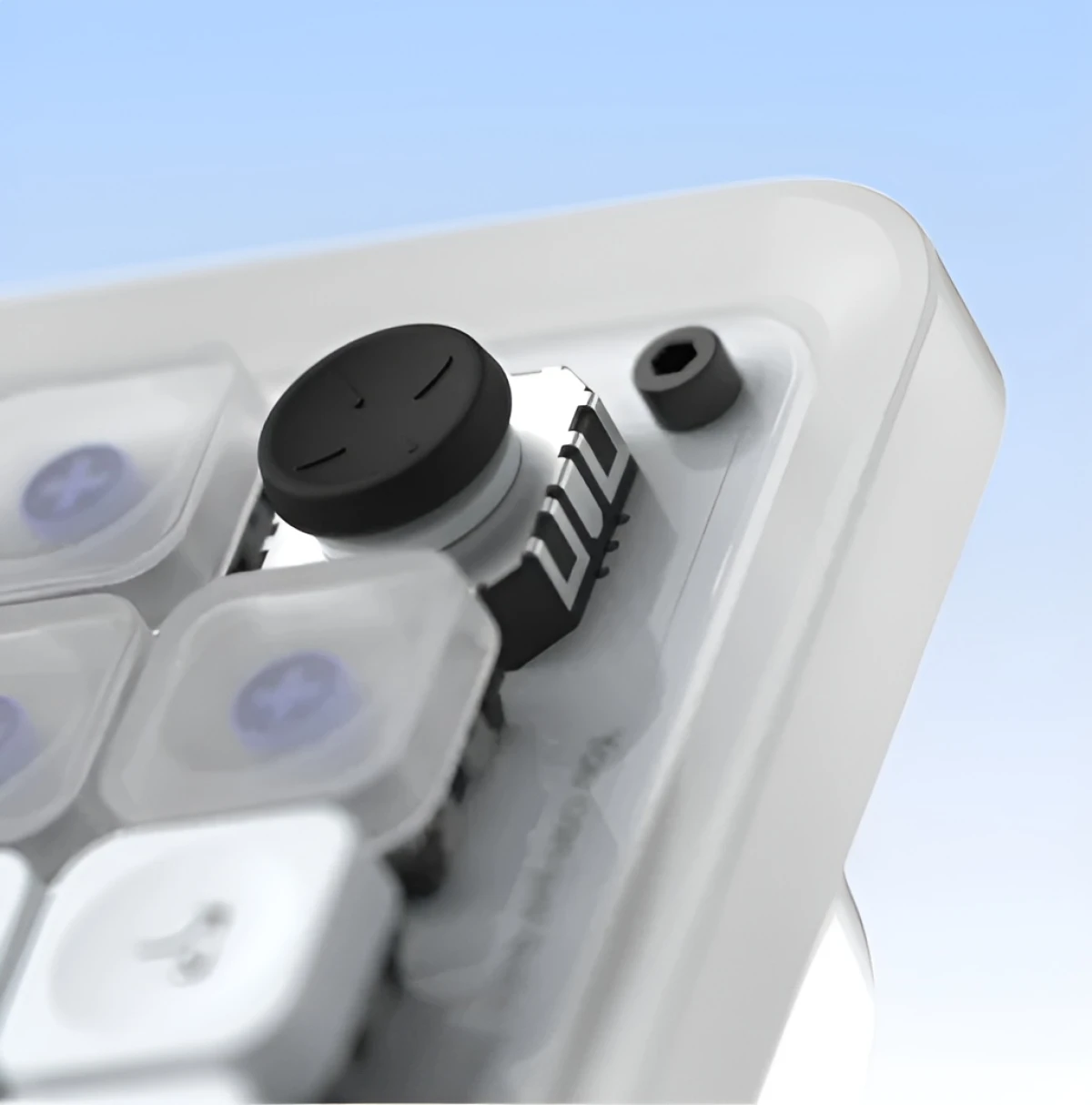
The Codex Micro includes a joystick for launching Codex Skills and automating tasks like debugging and code reviews, plus a rotary dial to adjust AI reasoning levels. These controls simplify workflows and help developers manage multiple AI agents efficiently.
Connectivity and Premium Hardware Design
The device supports both Bluetooth and USB-C connectivity and is compatible with macOS and Windows systems. It combines CNC-machined aluminum, polycarbonate, and durable keycaps, with clicky or silent switch options.
Although marketed as OpenAI’s first hardware product, the Codex Micro is based on Work Louder’s existing Creator Micro 2. It keeps the same 13 keys, encoder, joystick, and touch sensor, with controls remapped for Codex.

OpenAI had teased a mysterious screenless device with former Apple designer Jony Ive, widely expected to be its first hardware product. However, that project appears to have faced setbacks. Before the Codex Micro launch, Apple sued OpenAI, accusing it of using trade secrets and recruiting former employees for confidential information.
Even so, the Codex Micro could be a suitable first hardware release for OpenAI, given Codex’s growing importance within the company’s strategy. In June, OpenAI announced that Codex had reached more than 5 million weekly active users, marking a sixfold increase since February. The device also attracted strong demand, selling out within 24 hours of its launch.

Read the original article on: newatlas
Read more:Humanoid robots in China assembled over 3,000 tablets during a 10-hour shift


