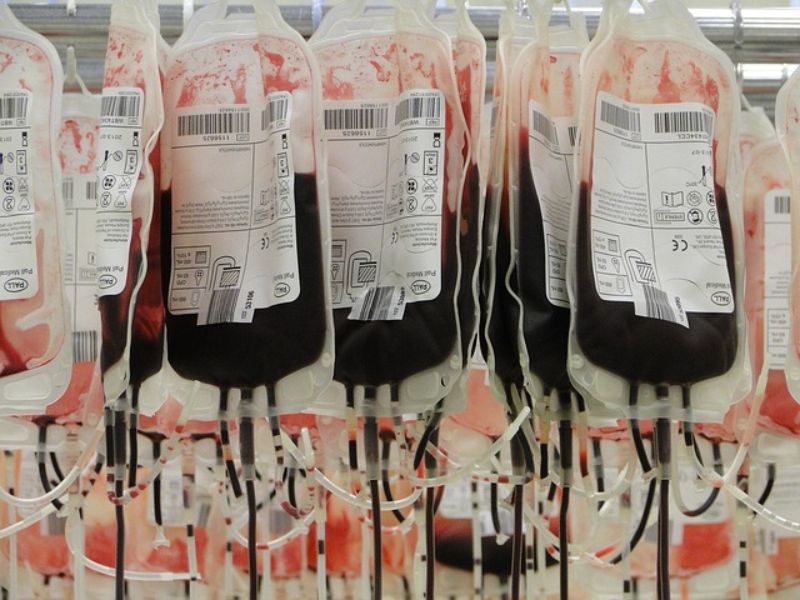

France’s national blood agency has confirmed that a woman from Guadeloupe, a French Caribbean island, carries the newly identified blood type ‘Gwada negative’—the only known case in the world.
The French Blood Establishment (EFS) revealed on Friday that this discovery comes 15 years after scientists first received her blood sample during standard pre-surgery testing.
“We’ve just identified the 48th blood group system globally!” the EFS announced in a LinkedIn statement.
The International Society of Blood Transfusion (ISBT) officially acknowledged the discovery in early June in Milan, the agency stated. Until then, the scientific body had recognized 47 distinct blood group systems.


Rare Antibody Found in 2011, But Probe Delayed by Limited Resources
Thierry Peyrard, a medical biologist at the EFS who contributed to the discovery, told AFP that an “extremely unusual” antibody was first detected in the patient back in 2011.
At the time, limited resources prevented further investigation, he explained.
It wasn’t until 2019, using advanced high-throughput DNA sequencing, that researchers were able to identify a genetic mutation behind the anomaly, Peyrard said.
Doctors first spotted the unknown antibody during routine pre-surgery blood tests on a 54-year-old woman living in Paris, he added.
Peyrard noted that researchers have found no other case like hers anywhere in the world. “She’s the only person in existence who is blood-compatible with herself.”
He explained that both of her parents carried the same mutated gene and passed the rare blood type on to her.
A Name Chosen for Roots and Global Appeal
The scientific community has embraced the name ‘Gwada negative,’ Peyrard said, noting that researchers chose it to reflect the patient’s origins and because it ‘sounds good in all languages.
While the ABO blood group system was first identified in the early 20th century, advances in DNA sequencing have significantly sped up the discovery of new blood groups in recent years.
Peyrard and his team now hope to identify others who share this rare blood group.
“Identifying new blood types allows us to provide better care for patients with rare blood profiles,” the French Blood Establishment (EFS) noted.
Read the original article on: Sciencealert
Read more: Blood Clotting Discovery Heralds A “New Era In Vascular Biology”