Mitsubishi Heavy Industries
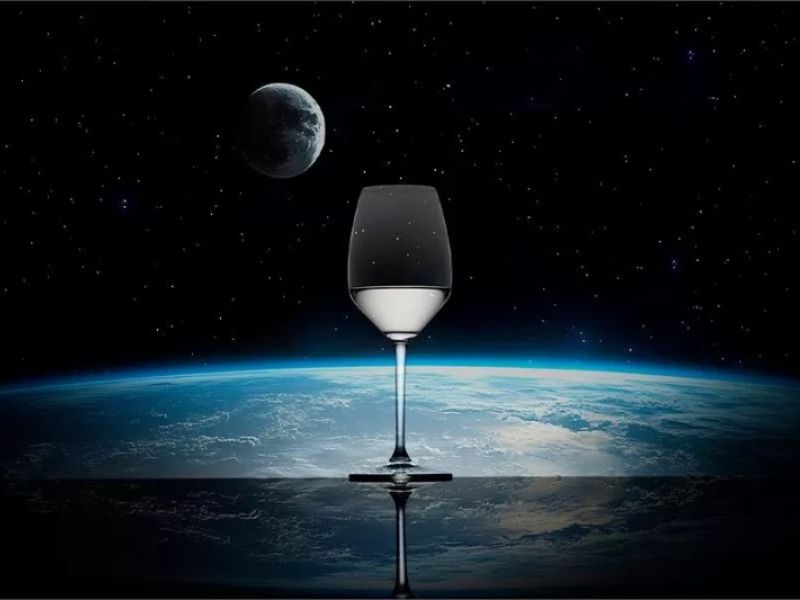
They’re not serving sushi on the Moon—at least not yet—but when that day comes, Mitsubishi Heavy Industries and DASSAI want sake to be part of the menu. To move toward that goal, the two companies are launching a rice fermentation experiment aboard the International Space Station (ISS).
One long-running joke of the Space Race was how unappetizing astronaut meals were during their journeys to the Moon. No matter how heroic the mission, it was hard to stay enthusiastic while eating dehydrated applesauce, gelatin-coated chicken sandwich cubes, rehydrated shrimp cocktail, and Tang.
The Ongoing Challenge of Eating Well in Orbit
While such fare might suffice for a two-week lunar mission, it could easily spark discontent on longer trips—a lesson that pushed NASA and other space agencies to upgrade space cuisine. Even so, food aboard the ISS still resembles a series of boxed lunches paired with lukewarm coffee rather than futuristic fine dining.
As plans advance for permanent lunar bases and crewed missions to Mars, the role of food becomes far more critical. Beyond maintaining morale, astronauts will need meals made from ingredients that can be grown locally—on the Moon itself.
JAXA
Naturally, astronauts can’t live on bread alone—they’ll want something to drink as well. To that end, Mitsubishi, DASSAI, and the Aichi Industrial Technology Institute aim to bring Japan’s national beverage, sake, into space to make life beyond Earth a little more enjoyable. However, transporting sake to a lunar base would be prohibitively expensive, so the logical next step is to learn how to brew it 400,000 kilometers away on the Moon.
Brewing Japan’s Signature Sake Under Lunar Conditions
Enter the DASSAI MOON Project, an initiative designed to explore whether it’s possible to brew sake under lunar conditions using rice shipped from Earth and water extracted from lunar ice. It sounds simple, but sake brewing is an intricate process that depends heavily on fluid dynamics—which behave quite differently under the Moon’s low gravity.
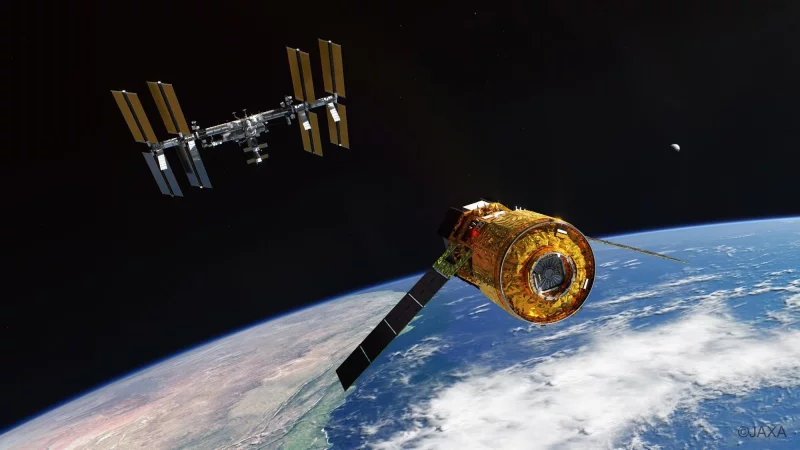
To study this, DASSAI MOON will launch on October 21 aboard JAXA’s first HTV-X cargo resupply vehicle to the International Space Station. The experiment’s setup—an automated closed system with a fermentation chamber and a centrifuge to mimic lunar gravity—will be installed in the Cell Biology Experiment Facility-Light (CBEF-L) inside Japan’s Kibō module.
A Delicate Dance of Fermentation
Without diving too deeply into the science, sake production is particularly complex. Although technically classified as a beer, it uses a process called parallel multiple fermentation, where starches convert into sugars and sugars into alcohol simultaneously through the work of specialized fungus and yeast.
The experiment will run for about two weeks, producing around 520 grams (18.3 ounces) of fermented mash, which will then be frozen and sent back to Earth. Once home, part of the mash will be refined into a limited 100-milliliter (3.5-ounce) bottle of DASSAI MOON – Made in Space sake, to be sold for ¥110 million (about US$720,000), with proceeds supporting Japan’s space research. The rest of the mash will be used for scientific study.
The only question now is whether this will inspire a new kind of space race—one to brew lunar versions of IPAs, lagers, and stouts. Hopefully, though, they’ll skip the overly hopped, fruit-filled varieties that defy all good brewing sense.
Read the original article on: New Atlas
Read more: Moonquakes Could Pose Serious Risks to Future Lunar Bases