


David Baillot/UC San Diego Jacobs School of Engineering
Smart rings are becoming increasingly common, offering a wide range of features. Some can record spoken notes and send them to a smartphone for transcription, while others allow users to ask AI-powered questions and receive responses through earbuds. There are also smart rings designed to help athletes monitor their performance and improve their training.
Beyond sleep tracking and customizable health apps, smart rings are increasingly being developed for medical monitoring. Some devices can assess sleep quality, while others allow users to choose health apps based on the biomarkers they want to track. Even smart earrings are being developed to monitor blood flow.

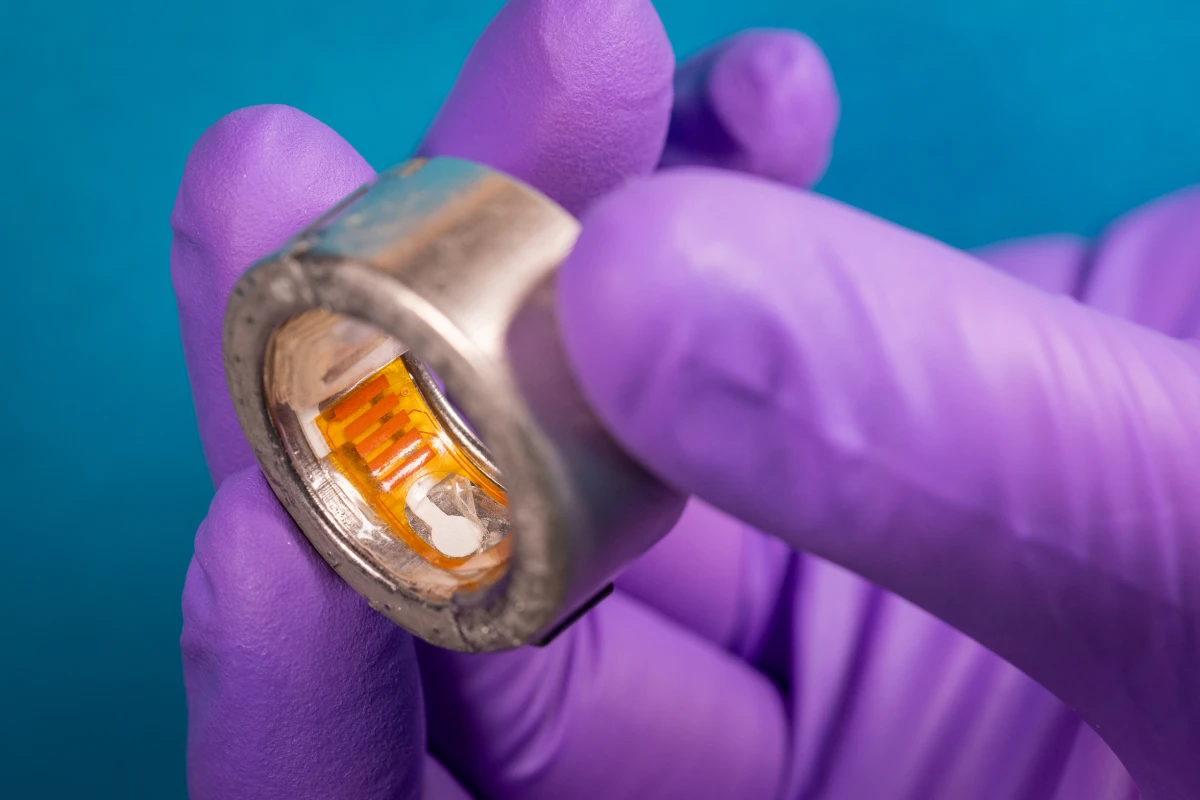
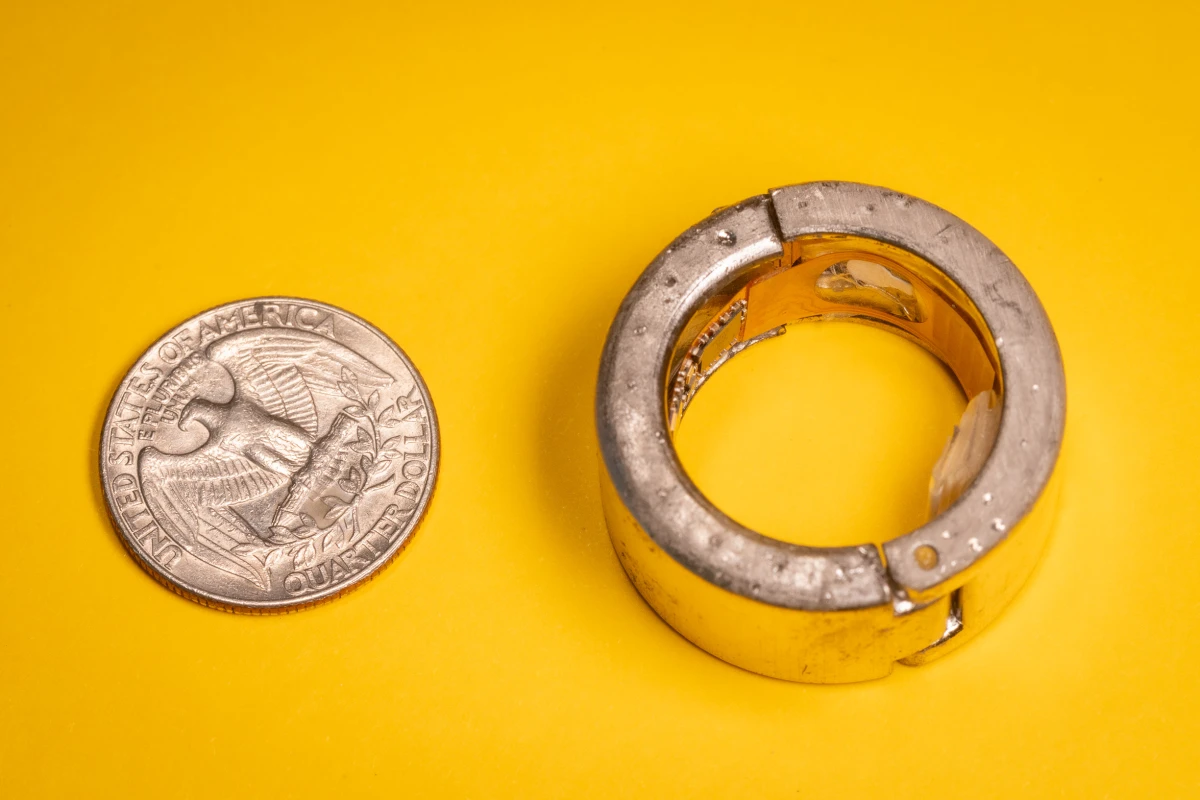
Now, engineers at the University of California, San Diego, have created a new smart ring that uses osmosis to continuously monitor several biomarkers. The device can detect alcohol, glucose, ketones, lactate, vitamin C (ascorbic acid), and uric acid, while transmitting the collected data to a smartphone app.
Smart Ring Brings Real-Time Biochemical Monitoring to Wearables
In a study published in Nature Communications, co-first authors Tamoghna Saha, Shichao Ding, and Siyu Qin, from Professor Joseph Wang’s laboratory, describe the device as a compact, fully integrated smart ring capable of simultaneously tracking multiple chemical biomarkers in real time. The researchers say the technology represents a biochemical counterpart to existing smart rings.
David Baillot/UC San Diego Jacobs School of Engineering
Saha’s team says the new device goes beyond existing commercial smart rings, which primarily track biophysical signals. By continuously monitoring biochemical changes, the technology could contribute to the development of next-generation, personalized, and miniaturized healthcare devices.
“Current commercial smart rings mainly collect biophysical data,” explains postdoctoral researcher Saha. “However, they do not provide molecular-level information from biochemical markers, which could offer a deeper understanding of a person’s health.”

Using Saha’s painless osmotic hydrogel method to collect perspiration, the smart ring can gather sweat samples without requiring users to exercise until they start sweating. This means people could benefit from continuous health monitoring without having to run, cycle, or engage in strenuous physical activity to produce enough sweat.
Smart Ring Enables Continuous, Effortless Health Monitoring
This feature could especially benefit people with sedentary lifestyles, those who have difficulty sweating or moving, and anyone who wants to sleep while the device monitors them. As Wang explains, a ring capable of capturing molecular information in real time could help people make better-informed decisions about their health, diet, and lifestyle. For instance, continuously tracking glucose and ketone levels at the same time could help people with diabetes manage insulin dosing more effectively.
David Baillot/UC San Diego Jacobs School of Engineering
In testing, the UC San Diego smart ring showed promising performance when compared with continuous glucose monitors (CGMs) commonly used by people with type 1 diabetes, as well as commercial devices that measure ketone levels in the blood. Combining the functions of two separate monitoring devices into a single, ring-sized wearable could significantly improve both convenience and discretion.
Personalized Calibration Improves Long-Term Biomarker Tracking
The device also offers additional practical benefits, including up to 12 hours of continuous monitoring. Users can calibrate the device to their individual biomedical characteristics, and the calibration remains stable for around two months. This personalized approach could improve the accuracy of health assessments and provide more reliable insights into changes in biomarker levels.
Researchers should not overlook the importance of discreet medical monitoring. Researchers recognize that the stigma surrounding the need for medical assistance can cause some patients to avoid or delay seeking care, potentially putting their health at risk.

Read the original article on: newatlas
Read more:Human-Aware Robots Reduce Back Strain During Team Lifting


