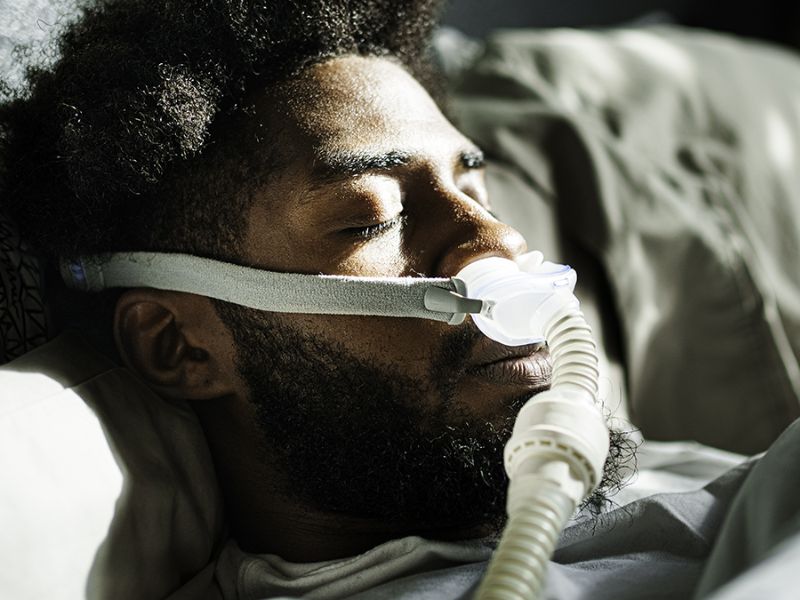

Obstructive sleep apnea is a sleep-related breathing condition in which the airway collapses or becomes blocked, posing serious health risks. A promising new treatment, however, could significantly improve outcomes for the millions of people affected globally.
According to a study conducted by researchers at Flinders University in Australia, the new technique builds on hypoglossal nerve stimulation (HNS), an existing therapy that targets the nerve responsible for tongue movement. By delivering electrical stimulation, HNS helps keep the tongue from obstructing the airway during sleep.
Smaller HNS Electrode Shows Promising Results
Currently, HNS involves surgical implantation of a fairly large device, making the procedure invasive, lengthy, and unsuitable for some patients. To address these limitations, the researchers tested a smaller, more manageable electrode designed to be easier to place and maintain.
Bottom line: it delivered. In brief trials, the new HNS electrode opened the airway in 13 of 14 participants (93% success). In some cases, it worked even when breathing had fully ceased. Early results suggest this represents a major improvement over existing HNS technology.
“It’s a 90-minute procedure carried out under ultrasound guidance and causes minimal discomfort,” says otolaryngologist Simon Carney of Flinders University.
“Crucially, we were able to open the airways of patients who had previously been considered poor candidates for HNS.”
Although the technique still requires further refinement and testing before broader use, it ultimately points to an HNS option that could be implanted through a brief, clinic-based procedure rather than more invasive hospital surgery, along with its added risks.

Expanding Access and Personalizing HNS Treatment
This would make the treatment available to a broader group of people with obstructive sleep apnea (OSA). Patients who qualify could be treated sooner and would likely recover faster than they would after surgery.
At present, HNS works well for many patients but not in every case. The researchers say the less invasive approach could be better tailored and easier to adjust for each patient.
HNS isn’t the first-line treatment for OSA; that distinction goes to Continuous Positive Airway Pressure (CPAP). CPAP generally produces better overall results than HNS, but it requires wearing a mask over the mouth while sleeping to keep the airway open.
Although effective, the setup can be cumbersome, and only about half of patients are able to tolerate CPAP long-term. That’s where HNS—and the newly improved version tested by the researchers—comes in.
“This method could shorten recovery time and lower costs, while increasing success rates for people who can’t tolerate standard treatments,” says physiologist and lead author Amal Osman of Flinders University.
Future Directions: Optimization, Integration, and Wider Trials
The team says their next goal is to refine this approach for safe, practical long-term use and to integrate it with wearable technologies. They also see potential in targeting other nerves and muscles to further enhance airflow.
It’s important to note that the study was conducted in a sleep lab with a relatively small group of OSA patients. While the early results are very promising, the method will need to be tested in larger groups and more real-world settings.
There’s clearly a strong demand for additional OSA treatments. The condition can significantly interfere with sleep—which is vital for both physical and mental health—and has been linked to higher risks of cardiovascular disease and dementia.
Better treatments could have a big impact, whether by lowering the risk of cognitive decline in people with OSA or simply helping them feel less fatigued during the day. This new approach to HNS is showing promising early results in that regard.
“Our aim is to provide patients with more options and improved results,” says Danny Eckert of Flinders University.
“This study demonstrates that, with the right innovations and tools, sleep apnea treatments can become more accessible, comfortable, tailored to individuals, and effective.”
Read the original article on: Scienealert
Leave a Reply