Tag: 3D

  • Researchers Create a 3D Embryo Model that Makes Blood Cells

    Researchers Create a 3D Embryo Model that Makes Blood Cells

    Image Credits:observador

    A group of UK scientists has developed a 3D embryo model that reproduces certain aspects of early human development, including blood cell formation, EFE reported Monday.

    Our model recreates the process of human fetal blood development—the blood that circulates in a baby during pregnancy—within the lab,” explained a cell biologist from the Gurdon Institute at the University of Cambridge.

    Hematoids Offer New Insights Into Early Blood Development

    The hematoids, a 3D model, show “great potential” for advancing the understanding of how blood develops in the early stages of human growth.

    According to University of Cambridge researchers, these new structures can also mimic diseases such as leukemia and generate long-lasting blood stem cells suitable for transplants. Stem cells are unique in their ability to divide without limit.

    Published in Cell Reports, the model—designed to resemble a human embryo—recreates the cellular transformations that take place in early development, when organs and the blood system first begin to form.

    From Germ Layers to Blood Formation

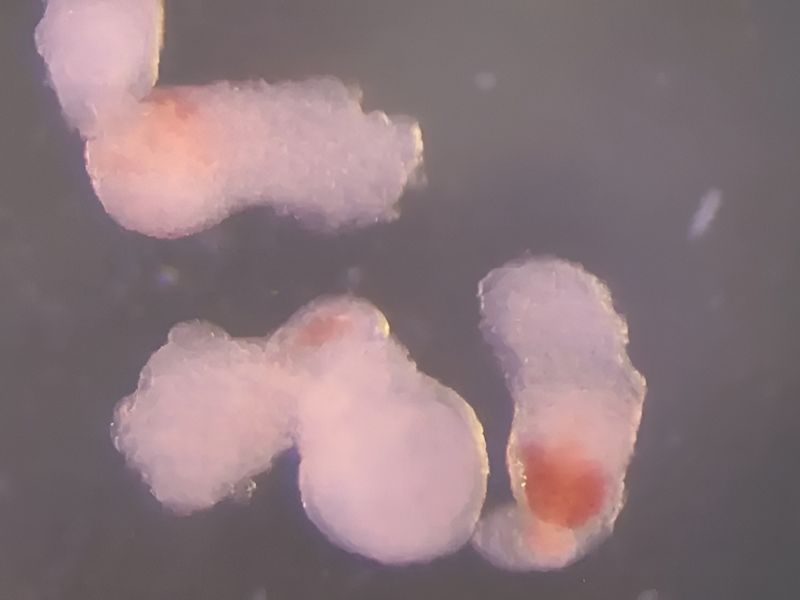
    By the second day, the hematoids had organized into the three germ layers—ectoderm, mesoderm, and endoderm—fundamental for embryonic development. These layers “are key to forming all organs and tissues, including blood,” EFE reported. By day eight, cardiac cells appeared, marking the beginning of heart formation in a human embryo. On day 13, the researchers observed red blood spots in the hematoids, closely resembling the developmental stages of human embryos, according to the University of Cambridge.

    The team also devised a method showing that hematoid-derived blood stem cells can mature into various blood cell types, including immune cells such as T cells, which defend the body against infections and abnormalities.

    The university emphasized, however, that hematoids are still in the early research phase and differ significantly from real human embryos. They lack several embryonic tissues, the yolk sac that nourishes the embryo, and the placenta. Importantly, the researchers confirmed that these 3D structures cannot develop into actual embryos.


    Read the original article on: Observador Pt

    Read more: Rare Calico Lobster Creates a Buzz
  • World’s First Interactive 3D Holographic Display

    World’s First Interactive 3D Holographic Display

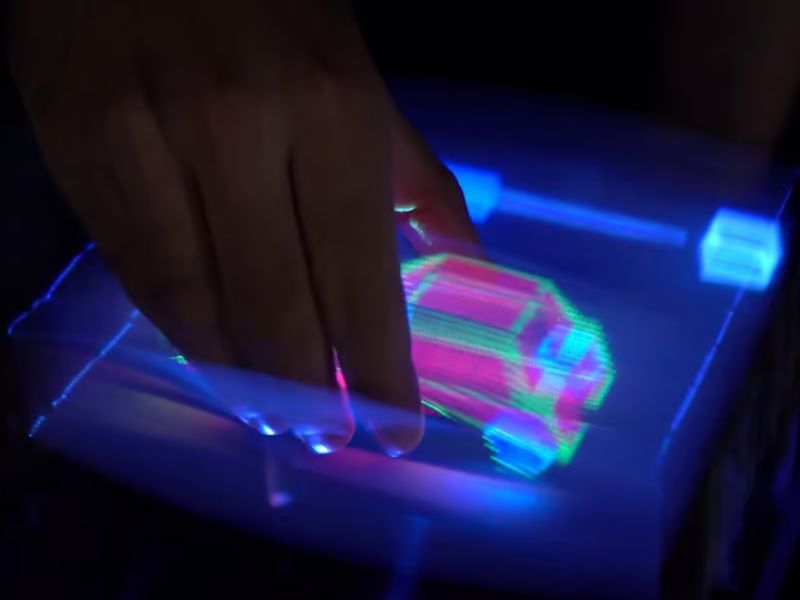
    A user is able to “grab” the car hologram and manipulate it
    Public University of Navarra

    Remember that scene in Iron Man 2 where Tony Stark manipulates virtual 3D elements with his hands—moving, pinching, swiping, and tossing holograms through the air? That felt futuristic in 2010. But what about 2025?

    While we’re not quite at Stark-level tech just yet, a team of Spanish engineers has made a big leap in that direction by creating the world’s first 3D hologram that you can actually touch and interact with.

    The Challenge of Interacting with Traditional Holograms

    Typically, holograms are created using swept volumetric displays, where images are projected at different heights almost 3,000 times per second onto a fast-moving surface called a diffuser. This creates a 3D image visible to the naked eye, no glasses or headsets required. The problem is, if you try to interact with one, you could injure yourself or damage the device.

    Paper | FlexiVol: Reach-Through Volumetric Display with Elastic Diffusers

    To overcome this, Dr. Elodie Bouzbib of the Public University of Navarra and her team came up with a clever solution: elastic diffuser strips.

    It sounds simple, but the team tested a variety of materials—everything from projector screen fabric to silicone—looking for the perfect combination of elasticity, durability, and optical quality. They eventually settled on something similar to regular elastic bands (though they didn’t disclose the exact type), and named the system FlexiVol.

    Interacting with Holograms Using Familiar Gestures

    With FlexiVol, users can control and manipulate holographic objects using gestures similar to those used on a touchscreen—swipe, tap, rotate, pinch, and more.

    A user safely interacting with the FlexiVol volumetric display machine
    Public University of Navarra

    Traditionally, interacting with a hologram or 3D space required a complex 3D mouse—accurate, yes, but far from user-friendly.

    To prove FlexiVol’s effectiveness, the researchers conducted three tests with 18 participants, comparing the system to a 3D mouse in tasks like selecting objects, tracing shapes, and docking (placing one object inside another).

    Participants were much faster at selecting with their fingers than with the 3D mouse. Tracing took about the same time for both methods, but FlexiVol produced significantly more accurate paths. In the docking task, FlexiVol clearly outperformed the mouse thanks to its intuitive “grab and place” interaction.

    Next Steps: Improving FlexiVol with Advanced Technologies

    Despite the small test group, the results were promising: 94% of users felt more confident in their completion times, and 67% believed they were more accurate using FlexiVol over the 3D mouse. Participants described the experience as more natural, more precise, and less frustrating.

    Dr. Bouzbib says she plans to improve the system further with technologies like focused ultrasound or conductive threads to simulate haptic feedback—although many already find the tactile sensation of the elastic bands quite convincing.

    FlexiVol -a Volumetric Display with an Elastic Diffuser to Enable Reach-Through Interaction (15 min)

    Read the original article on: New Atlas

    Read more: 3D Printing Can Currently Fabricate Customized Sensors For Robots, Pacemakers, And More