Tag: 3D-Print

  • Can Glass Replace Bone? Chinese Scientists 3D-Print Bone-like Bioglass

    Can Glass Replace Bone? Chinese Scientists 3D-Print Bone-like Bioglass

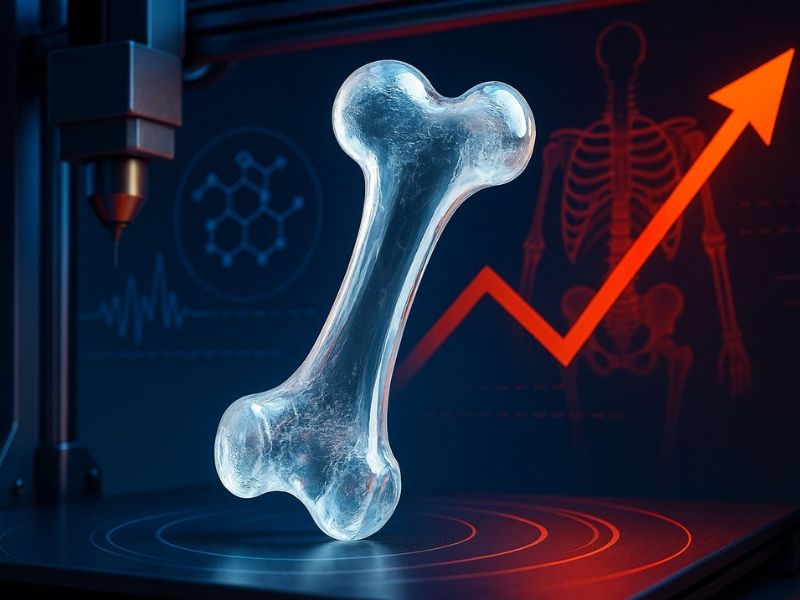
    Chinese researchers have developed 3D-printed bioglass that matches bone strength, supports cell survival for weeks, and could transform customized dental implants.
    Image Credits:Cientistas chineses criam biovidro em 3D que imita a força dos ossos, sustenta células por oito semanas e promete revolucionar implantes dentários.

    Chinese researchers have developed 3D-printed bioglass that matches bone strength, supports cell survival for weeks, and could transform customized dental implants.

    Glass is rarely thought of as a replacement for human bone, but Chinese scientists suggest it may be possible. They have created a bioactive, 3D-printable glass that replicates bone strength. Tests showed it supports cell growth longer than conventional glass and performs nearly as well as materials currently used in dental implants.

    How Glass Mirrors Bone

    Glass and bone have a key trait in common: they withstand compression more effectively than tension. This shared property has inspired new and ambitious research.

    Silica, the primary component of glass, becomes easily shapeable when molten, allowing implants to be formed to precisely match damaged skeletal areas.

    However, a major challenge remained: conventional glass 3D-printing methods rely on toxic plastic additives and temperatures exceeding 2,000°F, making them impractical for medical applications where safety and affordability are critical.

    The team led by Jianru Xiao, Tao Chen, and Huanan Wang pursued a safer approach by blending silica particles with calcium and phosphate ions—both known to encourage bone cell growth.

    Printing Without Toxic Additives

    The resulting mixture formed a printable gel that solidified at 690°C, eliminating the need for toxic additives used in traditional methods.

    To evaluate its performance, the researchers tested three materials: the new bioglass, standard silica glass, and a commercial dental bone substitute, using them to repair skull defects in rabbits.

    Although the commercial material triggered quicker early growth, the bioglass proved more durable. After eight weeks, many bone cells remained firmly bonded to the bioglass framework, while ordinary glass showed little to no cell attachment.

    The breakthrough extended beyond medicine to the manufacturing process itself. The researchers emphasized the technical advantages of their approach.

    Challenges of Conventional 3D Printing

    Traditional ceramic and glass 3D printing relies on organic binders and extremely high temperatures, driving up costs, reducing bioactivity, and posing potential toxic hazards.

    In contrast, the team used inorganic colloidal gels composed of silica nanospheres that bind through electrostatic attraction. This method enabled the creation of strong, additive-free structures, completed using relatively low heat via low-temperature sintering.

    The results were notable: the material achieved a compression modulus of about 2.3 MPa—enough to support bone. It also retained self-healing properties, improving print stability and precision.

    Promoting Real Bone Growth

    After sintering at 600°C, the printed structures remained stable, bioactive, and capable of promoting new bone growth in real-world tests.

    The researchers claim their approach opens the door to personalized, cost-effective, and high-performance implants.

    The ‘green’ inorganic 3D printing method allowed affordable production of bioglass bone substitutes while maintaining bioactivity, enhancing bone formation and integration in vivo,” the authors explained.

    They also noted that the technique could be applied beyond medicine, including in energy and machinery industries.

    The complete study appeared in the journal ACS Nano.


    Read the original article on:Clickpetroleoegas

    Read more:Astronauts Splash down on Earth after a Space Station Medical Evacuation
  • Italy is Developing Technology that Uses Plant Cells to 3D-Print Food

    Italy is Developing Technology that Uses Plant Cells to 3D-Print Food

    Italy is emerging as a leader in technological innovation through the development of 3D-printed food. At ENEA’s research laboratory in Oricola, scientists are converting plant cells and food waste into so-called “edible inks,” which are then used to produce nutrient-rich cereal bars, confectionery, and small honey spheres.
    Image Credits: Unsplash

    Italy is emerging as a leader in technological innovation through the development of 3D-printed food. At ENEA’s research laboratory in Oricola, scientists are converting plant cells and food waste into so-called “edible inks,” which are then used to produce nutrient-rich cereal bars, confectionery, and small honey spheres.

    Main features of the technology:

    • Sustainability: The method removes the need for farmland and significantly cuts down on resource waste.
    • Preservation: The printing process retains the key nutrients found in the original ingredients.
    • Applications: The technology is designed for use in extreme environments, including disaster relief areas, war zones, and space exploration.
    • Customization: It enables the production of tailored diets for individuals with specific nutritional needs or restrictions.

    Cell-Based Cultivation in Controlled Environments

    The approach centers on cultivating cells in carefully controlled conditions. Silvia Massa, head of ENEA’s Agriculture 4.0 laboratory, explains that the aim is not to grow an entire plant, but to extract and multiply its cells within a gel that mimics soil. “The focus is not on cultivating the plant itself, but its cells,” she notes.

    Beyond improving production efficiency, the technology also opens the door to precision nutrition. By modifying the composition of the “ink,” specific amounts of proteins and vitamins can be tailored to meet individual dietary requirements.

    Acceptance of this innovation is also on the rise. Research carried out by the Italian laboratory found that about 60% of participants would be open to eating food created through 3D printing technology.


    Read the original article on: Revistaplaneta

    Read more:Scientists Develop the Inaugural Model of Artificial Brain Tissue

  • The Largest 3D-Printed Structure Ever Built Sets a New Benchmark

    The Largest 3D-Printed Structure Ever Built Sets a New Benchmark

    The 3D Printed Schools Project is currently under construction in Qatar
    COBOD

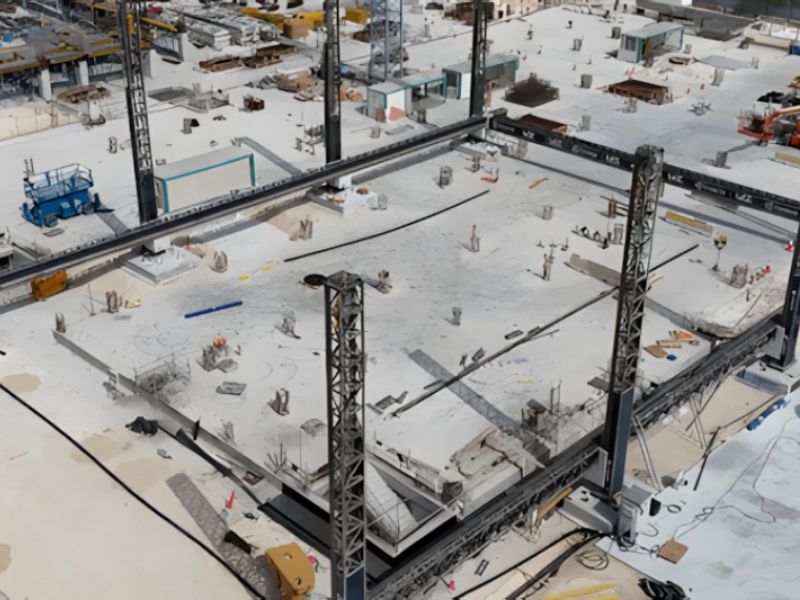
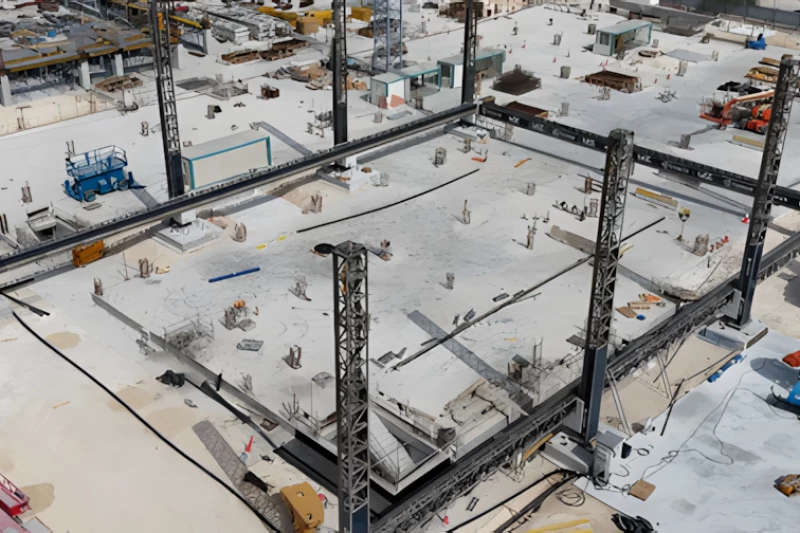
    Qatar currently hosts the world’s largest 3D-printed construction project, where crews are printing two schools—each one setting new records for 3D-printed buildings.

    Massive 3D Printers Deployed for Groundbreaking School Construction in Qatar

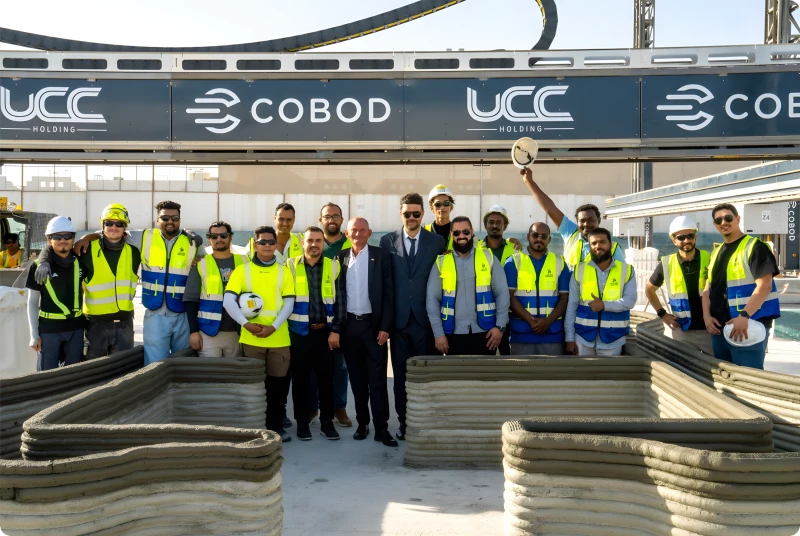
    UCC Holding is leading the 3D-Printed Schools Project in collaboration with Qatar’s Public Works Authority. To support the project, UCC enlisted top 3D firm COBOD to provide two custom BODXL printers, each measuring 50×30×15 meters. Builders are constructing 14 schools in total, using 3D-printing technology for two of them.

    As with other 3D-printed structures, robotic systems will create the two schools by extruding a cement-like material layer by layer, following a digital design. After completing the printing, human workers will install roofs, doors, windows, and other essential features to turn the shells into fully functioning schools.

    “The project includes 14 public schools, two of which are 3D-printed, each spanning 20,000 square meters,” says UCC Holding. That’s 40 times larger than any 3D-printed building constructed to date. The two-story schools, set on 100-by-100-meter plots, mark a groundbreaking step in future-focused education for Qatar and the region.

    The 3D Printed Schools Project is expected to be completed by the end of 2025
    COBOD

    Verifying the Scale Proves Challenging, but These Stand as the Largest 3D-Printed Buildings Yet

    The decentralized nature of 3D printing makes it hard to verify claims that these schools are 40 times larger than any prior project. However, there’s no doubt that the scale is massive—they’re certainly the largest we’ve encountered so far.

    Unfortunately, a press representative mentioned that renderings of the school designs aren’t available yet. The architecture is inspired by Qatar’s desert, featuring curved walls that echo sand dunes.


    Read the original article on: New Atlas

    Read more: Can Robots Really Build Space Infrastructure?