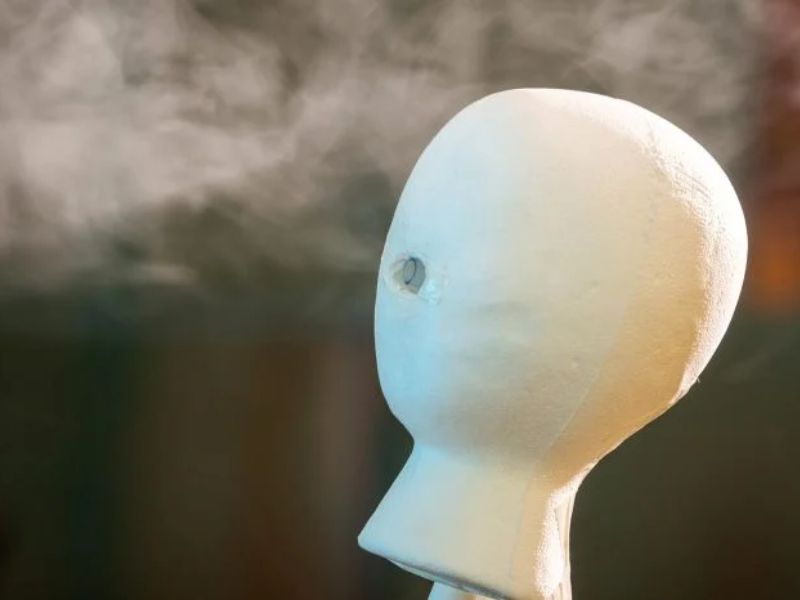

A newly designed airflow system could significantly limit the indoor transmission of airborne diseases.
During the winter months, as people spend more time indoors, the quality of indoor air becomes increasingly important. This concern is heightened during cold and flu season, when respiratory infections are more likely to spread in confined spaces.
At the University of British Columbia’s Okanagan campus, researchers are investigating a new air-purification device aimed at eliminating airborne pathogens. This technology may provide an effective solution for reducing the transmission of respiratory illnesses indoors.
Shortcomings of Conventional Ventilation Systems
Study co-author Dr. Sunny Li, a professor in the School of Engineering, explains that the most common approach to limiting the spread of illness indoors is to enhance building ventilation systems to better manage airflow across large areas.
Some systems aim to increase protection by delivering clean air directly to an individual from a fixed source, similar to the overhead vents on airplanes. However, Dr. Li points out several limitations to this method. People often have to stay in one place, or multiple users have to rely on the system at the same time.Constant airflow can also lead to discomfort, such as dry skin and irritated eyes.
“Maintaining good indoor air quality is essential for reducing the spread of airborne diseases, especially in shared spaces,” says Dr. Li. “Canadians spend close to 90 percent of their time indoors, which makes indoor air quality a key consideration for overall health and well-being.”

The Importance of Personalized Indoor Air Quality Solutions
Postdoctoral researcher Dr. Mojtaba Zabihi, the study’s lead author, explains that indoor environments vary greatly in their layouts and ventilation systems. These differences make it challenging to retrofit existing heating, ventilation, and air conditioning infrastructure, highlighting the need for personalized air-delivery solutions.
“Our goal was to create a novel system that protects occupants from breathing in contaminated air while remaining comfortable to use over long periods,” he says.
In collaboration with UBC’s Airborne Disease Transmission Research Cluster, the mechanical engineering team developed an induction-removal, or jet-sink, airflow method. This approach is designed to capture exhaled aerosols before they can disperse throughout an indoor space.
How the Jet Sink Airflow System Operates
Traditional personalized ventilation systems typically use high-speed air jets, which can be uncomfortable and often become less effective when users change position. The new design takes an alternative approach, directing airflow gently around the person while continuously drawing contaminated particles into a small, localized cleaning zone.
“Our system is designed to balance comfort and precision,” says Dr. Zabihi. “It produces a focused airflow that captures and removes exhaled aerosols almost instantly, before they can spread.”
To test the system, the research team conducted computer simulations that modeled breathing patterns, body heat, and airflow during a 30-minute consultation. The results were then compared with those of conventional personal ventilation systems.
Significant Decreases in Infection Risk
The findings, recently published in Building and Environment, revealed a substantial improvement. The new device lowered the infection risk to just 9.5 percent. By comparison, the risk was 47.6 percent with a conventional personal setup, 38 percent with an exhaust-based personal ventilation system, and as high as 91 percent with standard room ventilation.
When placed correctly, the device prevented pathogen inhalation during the initial 15 minutes of exposure, with just 10 out of 540,000 particles reaching another person. Simulations also indicated that the system could eliminate up to 94 percent of airborne pathogens.
“Conventional personalized ventilation systems struggle to adjust when people move or interact,” says study co-author Dr. Joshua Brinkerhoff. “This is an intelligent, adaptable solution for environments like clinics, classrooms, or offices where close contact is unavoidable.”
Redefining the Future of Indoor Air Protection
Dr. Brinkerhoff emphasizes that the study demonstrates how airflow engineering, in addition to filtration, can significantly enhance indoor air quality and safeguard occupants. The research team aims to adapt the design for larger spaces and conduct real-world testing of physical prototypes in clinical and public environments.
As a member of Canada’s National Model Codes Committee on Indoor Environment, Dr. Zabihi hopes their work will influence future ventilation standards, making indoor spaces safer and healthier for all.
Read the original article on: SciTechDaily
Read more: Japan Launches Trials of Artificial Blood that Works with all Blood Types