
Tag: Anti-aging

  • Natural Compound Replicates Exercise’s Anti-Aging effects – Without the Need for a Workout

    Natural Compound Replicates Exercise’s Anti-Aging effects – Without the Need for a Workout

    A research team led by the Institute of Zoology at the Chinese Academy of Sciences has discovered that the naturally occurring metabolite betaine functions as a "molecular stand-in" for physical exercise. When given at levels found in highly active individuals, it can slow down—or possibly even reverse—aging in kidney, vascular, and immune cells.
    Scientists are a step closer to bottling the anti-aging benefits of exercise
    Depositphotos

    A research team led by the Institute of Zoology at the Chinese Academy of Sciences has discovered that the naturally occurring metabolite betaine functions as a “molecular stand-in” for physical exercise. When given at levels found in highly active individuals, it can slow down—or possibly even reverse—aging in kidney, vascular, and immune cells.

    Although we haven’t yet found a perfect substitute for the broad health benefits of exercise, researchers continue to explore alternatives. Recent advances—such as GLP-1 receptor agonist drugs—highlight how quickly we’re learning to harness the body’s natural processes to our advantage.

    In a six-year study, scientists tracked the complex molecular responses in 13 healthy young men who performed both high-intensity workouts and longer-duration endurance exercises. Surprisingly, their findings pointed to the kidneys playing a central role in protecting cells from the effects of aging.

    It’s important to note that the study only involved male participants—a limitation the researchers openly acknowledge.

    Still, the team found that endurance athletes had significantly lower levels of inflammation and cellular aging markers compared to control subjects. In contrast, high-intensity, short-duration exercise tended to cause more cellular stress, including increased cortisol and oxidative damage.

    Endurance Exercise Lowers Aging-Linked Protein and Boosts Kidney-Derived Betaine for Cellular Health

    Among endurance athletes, researchers observed that sustained activity reduced levels of the transcription factor ETS1, a DNA-binding protein involved in regulating key cellular functions like immune response and ribosome production—both closely linked to cellular aging. Interestingly, they also detected a rise in kidney-produced betaine, even though the kidneys weren’t a focus of the study. Further analysis showed that older individuals who exercised regularly had higher betaine levels in their blood, which correlated with improved muscle strength, metabolism, and mitochondrial function.

    This led the researchers to wonder: Could betaine be more than just a byproduct of exercise—might it actively contribute to its health benefits?

    The researchers tested betaine by giving oral doses to aged mice—chosen for their similarity to human aging—and saw marked improvements in muscle strength, endurance, mitochondrial function, and reduced inflammation, even without physical activity.

    In short, betaine mimicked the full-body benefits of endurance exercise.

    “This helps resolve the exercise paradox,” said Professor LIU Guanghui. “While short-term exercise causes stress and inflammation, long-term activity reduces them through kidney-produced betaine.”

    Found in foods like beets, spinach, and whole grains, betaine supports cell protection, muscle function, and longevity. In the study, older mice showed anti-aging benefits similar to those of trained athletes.

    Though broader studies are needed, researchers believe betaine could offer a safe supplement for those unable to exercise. As they note, this kidney-derived metabolite holds promise for developing an “exercise pill” to promote healthy aging.


    Read the original article on: New Atlas

    Read more: Scientists Discover Hidden Loading Dock Structure Within Human Cells
  • Anti-Aging Cocktail Increases Mouse Lifespan by About 30%

    Anti-Aging Cocktail Increases Mouse Lifespan by About 30%

    Credit: Depositphotos

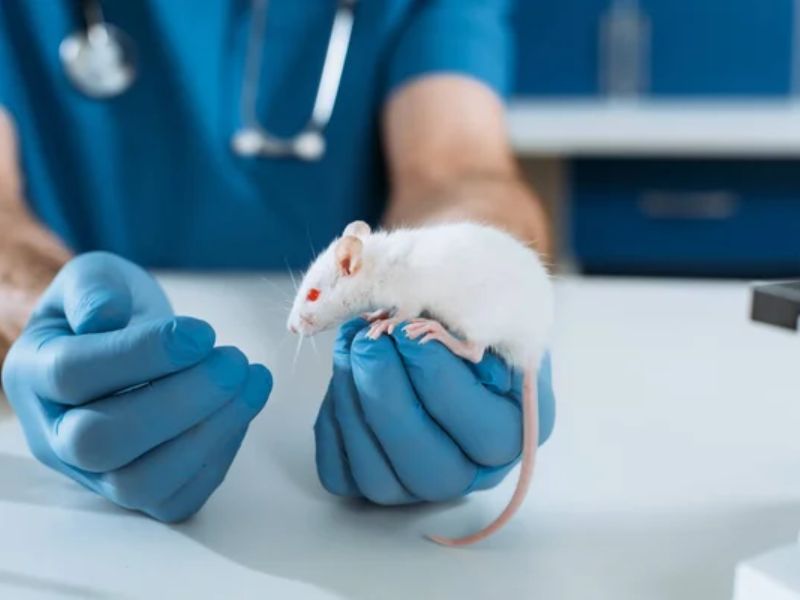
    European researchers tested a drug combination with anti-aging potential in mice and found that it increased the animals’ lifespan by approximately 30%. In addition to living longer, the mice also remained healthier for more time, showing reduced chronic inflammation and a delayed onset of cancer.

    A Drug Duo With a History in Cancer Treatment

    The cocktail includes two well-known substances: rapamycin and trametinib, both currently used to treat different types of cancer. Rapamycin is also used to prevent transplant rejection and had already shown potential for extending lifespan in animal studies. Trametinib, meanwhile, had proven effective at increasing the lifespan of fruit flies, but its effects in larger animals were still unknown.

    In the new study, led by scientists from the Max Planck Institute in Germany, researchers investigated the impact of each drug individually and in combination on the longevity of mice.

    Rapamycin alone extended the animals’ lifespan by 17% to 18%. Trametinib also produced positive results, increasing longevity by 7% to 16%. However, when the two were combined, the mice experienced a significant increase in lifespan — between 26% and 35%.

    The combination of rapamycin and trametinib could work to extend lifespan. (K. Link/Max Planck Institute for Biology of Ageing)

    Importantly, the additional lifespan wasn’t marked by greater frailty or illness. The combination treatment delayed the appearance of liver and spleen tumors and reduced age-related inflammation in organs such as the brain, kidneys, spleen, and muscles. The treated mice were also more physically active at older ages, had lower body weight, and experienced a slower decline in heart function.

    Human Potential Lies More in Quality of Life

    Although these results are promising, it doesn’t mean we’ll be taking anti-aging pills and living to 130 anytime soon. The greatest potential may lie in improving the quality of life during old age.

    “We don’t expect to see a similar extension of human lifespan as we found in mice,” says geneticist Linda Partridge, co-author of the study. “But we hope that the drugs we’re studying can help people stay healthier and disease-free longer into old age.”

    To conduct the research, scientists administered regular doses of rapamycin, trametinib, or both to hundreds of mice starting at six months of age, monitoring them for the rest of their lives. While both drugs showed benefits on their own, the combination produced the best results.

    Median lifespan increased by 34.9% in female mice and 27.4% in males. Maximum lifespan increased by 32.4% in females and 26.1% in males.

    The Combination’s Effect Goes Beyond Just a Higher Dose

    The researchers explain that the positive effects weren’t simply due to a higher overall dose. Although both drugs act on the same cellular signaling pathway — known as the Ras/Insulin/TOR network — they target different parts of the process. The researchers observed certain gene expression changes only when they administered both drugs together.

    Encouragingly, the researchers did not observe any additional side effects from the combination beyond those already known for each drug individually.

    Researchers may soon begin human trials of the drug combination, since health authorities in the United States and European Union have already approved both medications for human use. Previous studies have already suggested potential anti-aging effects — for instance, one recent study showed that rapamycin extended fertility in perimenopausal women by up to five years.


    Read the original article on: Science Alert

    Read more: Mouse Model with Human Immune System

  • Salmon Sperm Facials: Unpacking The Science Of the Latest Anti-Aging Trend

    Salmon Sperm Facials: Unpacking The Science Of the Latest Anti-Aging Trend

    Salmon sperm injections have reportedly become a popular new option in anti-aging and rejuvenating facial treatments. After getting past the initial shock over the unusual ingredient, the key question arises: Is there any scientific evidence supporting this celebrity-endorsed trend?
    Image Credits: Pixabay

    Salmon sperm injections have reportedly become a popular new option in anti-aging and rejuvenating facial treatments. After getting past the initial shock over the unusual ingredient, the key question arises: Is there any scientific evidence supporting this celebrity-endorsed trend?

    Salmon sperm facials attracted significant attention in August 2023 when actress Jennifer Aniston revealed in The Wall Street Journal interview that she had tried the treatment—though she admitted she couldn’t confirm any effects. Over a year later, she confirmed it again on Jimmy Kimmel Live, following Kim Kardashian’s public endorsement of the facial, which seemingly helped propel the trend into the spotlight.

    But first, what exactly is a salmon sperm facial? You’ll be glad to hear it doesn’t involve spreading fish ejaculate on your face. However, if you’re afraid of needles, it might be less comforting to learn that the treatment involves microinjections of polynucleotides (PNs) into the skin. PNs are DNA or RNA fragments, and in this case, they’re derived from salmon sperm cells. Unlike some beauty claims, the regenerative effects attributed to PNs have scientific support.

    Scientific Evidence Supporting PDRN Therapy and Its Skin Benefits

    In 2022, the Chinese Journal of Plastic and Reconstructive Surgery published a review of preclinical and clinical studies on polydeoxyribonucleotide (PDRN), a type of PN mainly extracted from salmon sperm. The research highlighted several benefits of PDRN therapy, including reducing fine lines and wrinkles, boosting skin elasticity and firmness through collagen production, repairing damage from chronic inflammation or sun exposure, reducing scars, improving skin hydration, and enhancing overall skin quality.

    In 2024, the Journal of Dermatological Treatment published a study evaluating Rejuran, the brand name for salmon sperm facials—and its effectiveness in treating burns and scars. The researchers observed significant improvements, including reduced scar visibility. The study featured eight case reports in which patients with various types of scars from trauma, burns, and surgery received Rejuran treatment, demonstrating its versatility in scar healing.

    Research indicates that PDRN works by activating the adenosine A2A receptor, which blocks oxidative stress-related signaling, suppresses pro-inflammatory chemicals, and encourages the release of anti-inflammatory agents. Additionally, this receptor activation promotes collagen production, a key protein for skin structure and tissue repair. It also enhances skin healing by stimulating new blood vessel growth from existing ones.

    Unlike Botox, which works by blocking the neurotransmitter acetylcholine to freeze muscles and reduce wrinkles, salmon sperm injections act at the cellular level through the effects of polynucleotides described above.


    Read the original article on: New Atlas

    Read more: Study Finds Pressure in the Womb May Shape Facial Features

  • Anti-Aging Enthusiast Bryan Johnson Plans to Launch Foodome Sequencing

    Anti-Aging Enthusiast Bryan Johnson Plans to Launch Foodome Sequencing

    Image Credits: SXSW 2025

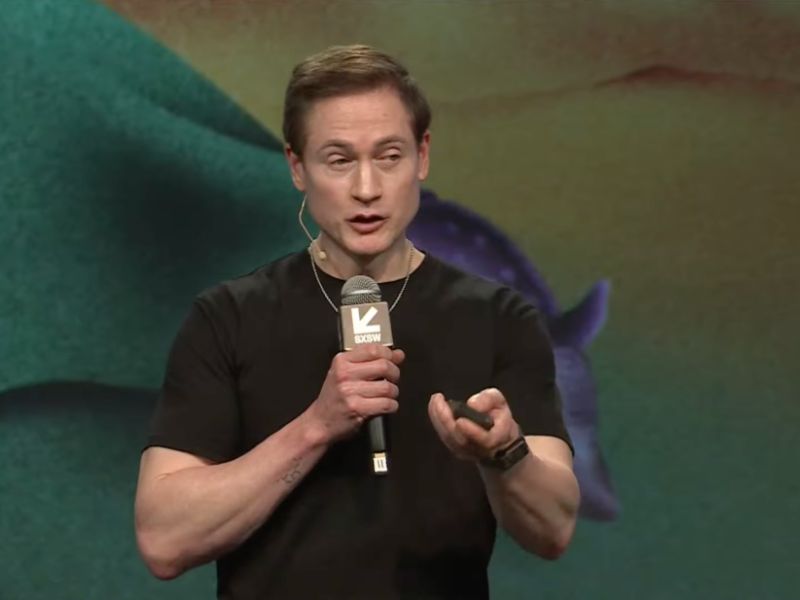
    Just as genome sequencing maps an organism’s genetic makeup, Bryan Johnson—the investor and founder of the Don’t Die movement—wants to launch “foodome” sequencing.

    We’re going to sequence the U.S. ‘foodome,’ meaning we’ll test 20% of the foods that make up 80% of the American diet—essentially the everyday staples,” Johnson said Thursday at SXSW in Austin.

    Johnson, the former CEO of brain-monitoring device company Kernel, founder of OS Fund, and former CEO of e-commerce firm Braintree, is now fully dedicated to extending his lifespan and spreading that message to others.

    Blood Transfusions and Shock Therapy in His Quest for Health

    His approach has included extreme measures, such as receiving blood transfusions from his 17-year-old son and undergoing shock therapy to improve nighttime erections, which he claims are linked to overall health.

    While some of his longevity advice is predictable—better sleep, social connections, regular exercise, and a healthy diet—he argues that truly eating healthy is more challenging than it seems.

    I want to be real with you. Buying clean food is incredibly difficult,” he said, pointing out that even organic grocery store products may contain toxins from processing methods.

    His goal is to test as many foods as possible and create a public database where people can fund testing of specific foods and brands for contaminants like heavy metals and microplastics. He hopes this initiative will push brands toward safer food practices.

    Breathwork, Balance, and a Crowd Eager to Engage

    However, Johnson’s idea received enthusiastic applause from the packed SXSW audience, who eagerly joined him in breathing exercises, movement prompts, and a longevity experiment that involved balancing on one foot with eyes closed. (I managed 30 seconds—no big deal.)

    Despite his growing following, Johnson has also faced online criticism for his unconventional belief that AI advancements could make this generation the first that doesn’t have to die.

    We are giving birth to super intelligence. It’s the most significant development happening in the world right now,” Johnson said, emphasizing that no current ideology fully addresses AI’s impact and that human survival is no longer guaranteed in this new era.

    He argued that humanity should shift its priorities away from profit at any cost and toward a singular goal: “Don’t Die.”

    Johnson Advocates AI as a Tool to Preserve Human Life and Combat Aging

    Rather than debating AI’s alignment with human values, Johnson suggests aligning AI with the mission of preserving human life. He envisions harnessing AI to tap into millions of “human-level geniuses” to track progress and tackle aging’s greatest challenges.

    It’s a bold proposition, but one that has drawn skepticism from those who argue that mortality is an essential part of being human.

    Dr. Andrew Steele, a longevity researcher, acknowledges that healthy habits like diet and exercise can extend life but maintains that genetics—not extreme interventions—plays a more significant role in determining lifespan.

    Still, Johnson remains committed to promoting his “Blueprint Protocol,” a lifestyle regimen he claims has produced the world’s best biomarkers. He has also ventured into selling supplements and foods, including his own brand of olive oil, ironically—or fittingly—named Snake Oil.


    Read the original article on: TechCrunch

    Read more: How to Improve Focus and Attention: Insights from Neurobiology

  • Anti-aging Breakthrough may Boost Middle-Aged Women’s Fertility

    Anti-aging Breakthrough may Boost Middle-Aged Women’s Fertility

    Scientists in China have discovered a mechanism that reduces female fertility in middle age – and potentially a way to reverse it. Credit: Pixaobay

    The decline in women’s fertility typically begins in their mid-30s, posing challenges for conceiving in middle age. Scientists have discovered a mechanism that accelerates ovarian aging and have, in mice at least, identified a method to decelerate it, potentially enhancing fertility later in life.

    Not all our organs age at a uniform rate, and unfortunately, the ovaries are among the quickest to age, although the exact reasons remain unclear. From around the age of 35, ovaries experience accelerated aging, resulting in diminished egg quality and reduced chances of conception. While some individuals resort to in vitro fertilization (IVF), this method can be costly and introduces additional risks.

    In-Depth Analysis of Age-Related Fertility Decline

    In the recent study, researchers from Zhengzhou University in China delved into the biological mechanisms contributing to this decline. They examined gene expression patterns in the ovaries and other organs of young mice at approximately two months of age and middle-aged mice at around eight months old.

    In the older mice, there was an elevated expression of a gene named CD38, particularly noticeable in the ovaries. This discovery was somewhat expected, as CD38 is recognized as a biomarker of aging due to its role in producing an enzyme that breaks down a protein called NAD+. Interestingly, the aged mice showed significantly lower levels of NAD+.

    NAD (nicotinamide adenine dinucleotide) and its oxidized form, NAD+, play a role in regulating cell metabolism and DNA repair, naturally decreasing with age. Elevated levels have been associated with extended lifespans and improved health in aging, making it a focal point in recent anti-aging studies with promising outcomes. Now, it appears that this common factor is also implicated in age-related declines in fertility.

    Qingling Yang, a study co-author, explained, “This depletion [of NAD+] sets forth a cascade of detrimental effects, particularly impacting the quality of both somatic cells and oocytes, thereby exerting a profound influence on female fertility.”

    Genetic Intervention and Fertility Boost

    In subsequent experiments, the researchers deleted the CD38 gene in older mice. As anticipated, these mice produced more eggs of higher quality and had increased pup production per litter. The team then explored whether a similar effect could be achieved without genetic modification, aiming to make it a more practical fertility treatment.

    The researchers utilized a molecule called 78c, known to inhibit CD38, and administered it to naturally aged eight-month-old mice. As expected, NAD+ levels in their ovaries increased, leading to an increased number of offspring.

    While the findings are promising, it’s essential to note that the study was conducted in mice, and the results may not directly apply to humans. On a positive note, clinical trials are presently in progress to examine whether enhancing NAD+ levels in women undergoing assisted reproductive treatments can enhance success rates and decrease the risk of birth defects.


    Read the original article on: New Atlas

    Read more: Study Provides First Evidence for Why we Sleep