Tag: Astronauts

  • Astronauts Splash down on Earth after a Space Station Medical Evacuation

    Astronauts Splash down on Earth after a Space Station Medical Evacuation

    Image Credits:NASA

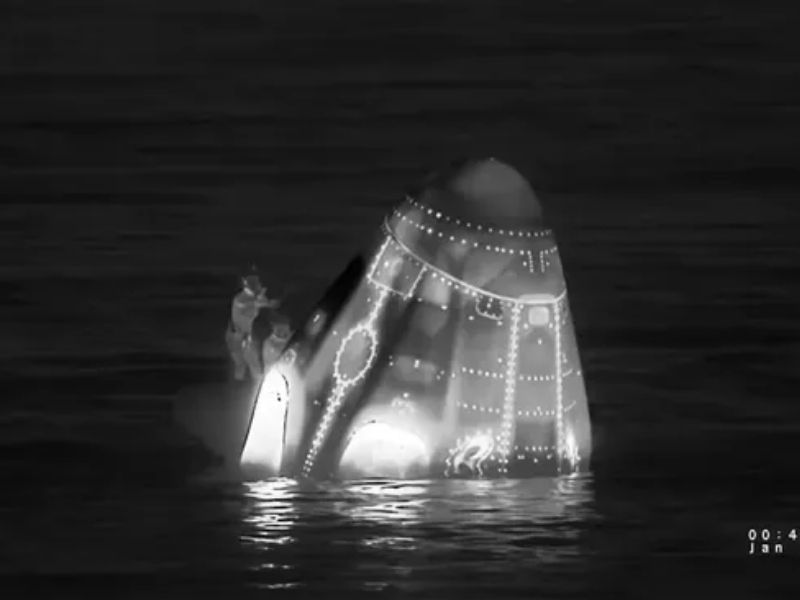
    Four astronauts evacuated from the International Space Station (ISS) safely returned to Earth after a “serious” medical issue cut their mission short by a month.

    The crew’s captain, NASA astronaut Mike Fincke, was the first to leave the spacecraft, smiling and wobbling slightly before lying on a gurney as part of standard procedures.

    NASA’s Zena Cardman, Japan’s Kimiya Yui, and cosmonaut Oleg Platonov followed him, waving and smiling at cameras. “It’s so good to be home!” Cardman said.

    This marks the first time astronauts have been evacuated for health reasons since the ISS began orbiting Earth in 1998.

    Crew-11 to Undergo Medical Checks After California Splashdown

    The Crew-11 team will complete medical evaluations before officials fly them back to land after their splashdown off the California coast.

    At a post-splashdown news conference, NASA administrator Jared Isaacman said the ill astronaut is “fine right now” and in “good spirits.”

    Based on NASA’s usual approach to crew health, officials are unlikely to disclose the astronaut’s identity or details of the illness.

    Russian cosmonaut Sergey Kud-Sverchkov and two other crew members have taken control of the ISS.

    Mission Cut Short After Astronaut Falls Ill, Spacewalk Canceled

    The astronauts had arrived at the ISS on 1 August, expecting a standard six-and-a-half-month mission, with a planned return in mid-February. However, NASA canceled a spacewalk for Fincke and Cardman last week and announced hours later that a crew member had fallen ill.

    It’s bittersweet,” said Fincke as he handed over command of the ISS to Kud-Sverchkov on Monday. In a social media post, he added that all onboard were “stable, safe, and well cared for.”

    Orbiting Earth at 250 miles above the surface, the ISS completes 16 orbits per day at a speed of 17,500 mph. Managed by five space agencies, it conducts a wide range of scientific research on space and the effects of microgravity on humans, animals, and plants.

    ISS Lacks Onboard Doctor Despite Basic Medical Supplies

    Astronauts rely on training and supplies as ISS lacks doctor

    The evacuation served as a serious test of NASA’s procedures for managing medical emergencies. By most accounts, the mission went smoothly, though questions remain about how the agency might have responded if the astronaut’s condition had been more severe.

    The early return leaves the ISS with a reduced crew of just three: NASA’s Chris Williams and cosmonauts Sergey Kud-Sverchkov and Sergei Mikaev, until a new four-person team arrives in February.

    Despite all the changes and challenges, we will continue our work on the ISS, carrying out all scientific and maintenance tasks, no matter what,” Kud-Sverchkov said on Monday, marking his first command with a group hug.

    Image Credits:Oleg Platonov, Mike Fincke, Zena Cardman and Kimiya Yui will end their ISS stay one month early

    The incident is unprecedented in the 26-year history of the permanently crewed ISS.

    Health issues have forced astronauts to cut short space missions only twice before. In 1985, Soviet cosmonaut Vladimir Vasyutin and his team returned from a Salyut 7 mission four months early due to a urological problem. In 1987, Soviet cosmonaut Aleksandr Laveykin left the Mir space station early because of a heart arrhythmia.

    With increasing human space travel—ranging from tourism to potential missions on the Moon or Mars—experts say future missions will likely need to include doctors on board.


    Read the original article on:bbc

    Read more:New Research Reveals a Way to Reactivate T Cells That Destroy Cancer
  • Microgravity Spaceflight Causes Astronauts’ Brains to Shift and Deform

    Microgravity Spaceflight Causes Astronauts’ Brains to Shift and Deform

    Spaceflight places significant physical strain on astronauts, leading to muscle loss, bone thinning, and fluid shifts. A new study in PNAS shows that microgravity also causes the brain to change shape.
    Image Credits: CC0 Public Domain

    Spaceflight places significant physical strain on astronauts, leading to muscle loss, bone thinning, and fluid shifts. A new study in PNAS shows that microgravity also causes the brain to change shape.

    On Earth, gravity helps hold the brain in position, while surrounding cerebrospinal fluid cushions it. Scientists have long known that without gravity the brain shifts upward, but this new research reveals that it is also stretched and compressed in multiple regions.

    Brains in Motion

    A team led by Rachel Seidler at the University of Florida came to this finding by analyzing MRI scans of 26 astronauts taken before and after their stays on the International Space Station. The researchers compared these images with scans from 24 volunteers who took part in a head-down tilt bed rest study, spending 60 days lying at a six-degree angle to simulate the headward shift of fluids and organs seen in weightlessness.

    The researchers observed clear differences between astronauts’ brains and those of the volunteers. Although both groups showed brain shifts, the movement was greater in astronauts, increasing with longer time spent in space. In astronauts on year-long missions, the supplementary motor cortex—responsible for movement control—shifted upward by roughly 2.5 millimeters.

    The brain did not move evenly. As it shifted, some regions became compressed at the top and back, while others were stretched. These changes affected balance and coordination, with astronauts who showed the greatest brain movement having the most difficulty standing steadily after returning to Earth.

    Improving Mission Safety

    Understanding these changes is crucial for the future of space travel, the researchers emphasize. They write, “We show extensive shifts in brain position within the skull after spaceflight and in a simulated environment. These results are essential for grasping how spaceflight affects the human brain and behavior.”

    Although the brain largely returns to its normal position after several months on Earth, more research is needed to ensure safer conditions for long-duration missions, like those to Mars.

    “The impact of these brain shifts and deformations on health and performance requires further investigation to support safer human space exploration.”


    Read the original article on: Phys.Org

    Read more: Rainbow Around Nearby Dead Star Puzzles Scientists

  • They’re Back! Stranded Astronauts Safely Touch Down on Earth

    They’re Back! Stranded Astronauts Safely Touch Down on Earth

    An eight-day mission to the International Space Station (ISS) unexpectedly turned into a nine-month wait for a return to Earth.
    Credit: Pixabay

    An eight-day mission to the International Space Station (ISS) unexpectedly turned into a nine-month wait for a return to Earth.

    Safe Return to Earth

    Now, astronauts Butch Wilmore and Suni Williams have finally felt gravity’s pull again, safely splashing down off the Gulf Coast of Florida on Tuesday evening alongside NASA crewmate Nick Hague and Russian cosmonaut Aleksandr Gorbunov.

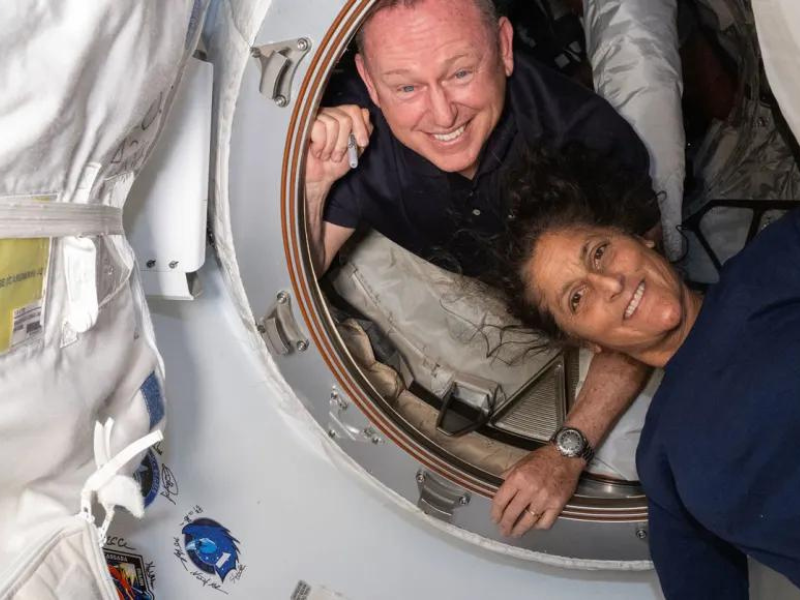
    Suni Williams and Butch Wilmore on board the ISS. (NASA)

    The Boeing Crew Flight Test, launched on June 5, 2024, aimed to transport Wilmore and Williams to the ISS as a demonstration of the Starliner spacecraft’s capabilities.

    Starliner Malfunction Delays Crew’s Return

    However, in a significant setback for Boeing’s commercial space efforts, the spacecraft experienced engine malfunctions while approaching the station. A subsequent review determined that Starliner would return to Earth without passengers, leaving the crew aboard the ISS to await a “rescue” mission.

    The Starliner spacecraft docked to the ISS on NASA’s Boeing Crew Flight Test. (NASA)

    While NASA never officially labeled the astronauts as stranded, their mission stretched from days to weeks and eventually months as plans for their return were finalized.

    Although they missed their friends and family, Williams and Wilmore said they enjoyed their time aboard the station. They stayed engaged with daily routines, took part in over 150 scientific experiments, and even conducted spacewalks.

    Splashdown! SpaceX Dragon spacecraft lands in the water off the coast of Tallahassee, Florida on March 18, 2025. (NASA/Keegan Barber)

    Early Tuesday morning, the crew boarded a SpaceX Crew Dragon capsule for a 17-hour journey back to Earth. Once in orbit, a brief engine burn guided the spacecraft into its final trajectory toward Florida’s Gulf Coast.

    At 5:57 p.m. ET, the capsule safely splashed down, marking the conclusion of a mission that will be remembered in space history.


    Read the original article on: Science Alert

    Read more: SpaceX Launches Astronauts for a Long-Awaited ISS Crew Swap

  • SpaceX Launches Astronauts for a Long-Awaited ISS Crew Swap

    SpaceX Launches Astronauts for a Long-Awaited ISS Crew Swap

    SpaceX successfully launched four astronauts on Friday, kicking off the Crew-10 mission to the International Space Station (ISS). Their arrival will provide enough personnel to allow Suni Williams and Butch Wilmore to return to Earth after a nine-month stay.
    Image Credits: SpaceX

    SpaceX successfully launched four astronauts on Friday, kicking off the Crew-10 mission to the International Space Station (ISS). Their arrival will provide enough personnel to allow Suni Williams and Butch Wilmore to return to Earth after a nine-month stay.

    The Dragon spacecraft is set to dock with the ISS late Saturday, with the new crew overlapping briefly before Williams, Wilmore, and two others depart, possibly as soon as March 19, weather permitting.

    Unusual Circumstances Surrounding Williams and Wilmore’s Stay

    While SpaceX’s ISS missions have become routine, this launch has drawn attention due to how Williams and Wilmore arrived at the station. They were part of Boeing’s first crewed Starliner mission last June, a critical test flight meant to position Boeing as a competitor to SpaceX in crewed spaceflight. Their extended stay has also sparked controversy, with SpaceX CEO Elon Musk blaming the delay on former President Joe Biden.

    Starliner was originally scheduled to dock with the ISS for 10 days before bringing Williams and Wilmore back to Earth. However, leaks and thruster issues delayed its docking.

    Eventually, Starliner connected with the station, allowing the astronauts to board. But after weeks of testing and analysis, Boeing and NASA decided in August to return the spacecraft empty.

    Crew-9 Adjustments to Bring Williams and Wilmore Home

    NASA and SpaceX agreed to bring Williams and Wilmore home on the next ISS crewed mission, Crew-9. To accommodate them, two astronauts were removed from that flight. A return was planned for February 2025, as an earlier departure would have left the ISS understaffed, according to NASA.

    During Williams and Wilmore’s time on the ISS, Musk supported Donald Trump’s re-election and launched his Department of Government Efficiency. He later claimed—both on X and in interviews—that he had offered to bring the astronauts back sooner, but Biden declined for political reasons.

    However, Musk has not provided evidence to back up this claim. NASA’s former administrator and deputy administrator under Biden stated that no such offer ever reached the agency’s headquarters.


    Read the original article on: TechCrunch

    Read more: SpaceX Says Starship Self-Destructed Due to Propellant Leaks, Fires, and a Comms Blackout

  • Unexpected Delay Prevents Astronauts from Leaving the ISS as Scheduled

    Unexpected Delay Prevents Astronauts from Leaving the ISS as Scheduled

    NASA announced on Tuesday that astronauts Butch Wilmore and Suni Williams will remain on the ISS until at least late March due to an unexpected delay in their return mission. Originally arriving in June aboard Boeing's Starliner for an eight-day stay, issues with the Starliner's propulsion system led NASA to alter plans, deciding to return Wilmore and Williams with SpaceX's Crew-9 mission instead.
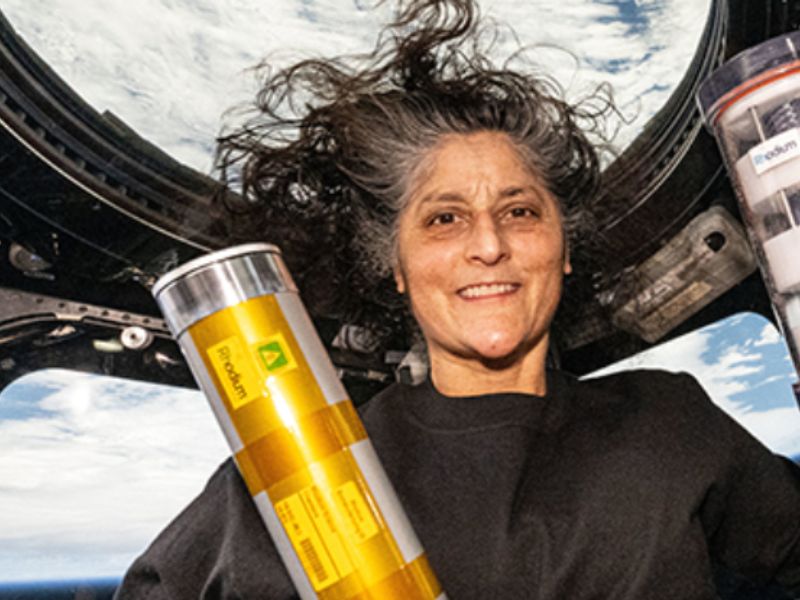
    Astronaut Suni Williams on the ISS. (NASA)

    NASA announced on Tuesday that astronauts Butch Wilmore and Suni Williams will remain on the ISS until at least late March due to an unexpected delay in their return mission. Originally arriving in June aboard Boeing’s Starliner for an eight-day stay, issues with the Starliner’s propulsion system led NASA to alter plans, deciding to return Wilmore and Williams with SpaceX’s Crew-9 mission instead.

    Crew-9’s astronauts arrived at the ISS in late September aboard a Dragon spacecraft, leaving two empty seats for Wilmore and Williams. The plan was for all four to return to Earth in February 2025. However, NASA announced on Tuesday that Crew-10, which would replace Crew-9 and the stranded astronauts, will now launch no earlier than March 2025. As a result, both crews will remain on the ISS for a “handover period.”

    The change gives NASA and SpaceX teams time to complete processing on a new Dragon spacecraft for the mission,” NASA said in a blog post.

    The bottom line is that Wilmore and Williams will spend more than nine months in space, rather than eight days as initially planned.

    SpaceX has been conducting regular missions every six months to rotate ISS crews, ensuring continuous operation of the station.

    Boeing Crew Flight Test astronauts Butch Wilmore and Suni Williams. (NASA)

    Read Original Article: Science Alert

    Read More: Study Finds Jupiter’s Volcanic Moon Io Is Not Powered by a Global Magma Ocean

  • Astronauts Frequently Get Stuck in Space

    Astronauts Frequently Get Stuck in Space

    Credit: NASA

    What began as a weeklong mission for U.S. astronauts Sunita Williams and Butch Wilmore has stretched into a months-long stay on the International Space Station (ISS). Their eight-day mission, which started on June 5, has already lasted over two months and may continue even longer.

    Delayed Return Due to Spacecraft Issues

    Williams and Wilmore launched to the ISS on June 5 as part of a test flight for Boeing’s Starliner spacecraft. Originally, they were set to return just eight days later. “However, hydrogen leaks and thruster issues led NASA and Boeing to postpone their return.”

    If they don’t return on Starliner, they may join a SpaceX Dragon mission launching in September, which is scheduled to stay in space until February 2025. This would extend their stay to eight months.

    Not an Uncommon Situation

    Despite the attention, extended stays in space are not new. Emily A. Margolis from the National Air and Space Museum notes that uncertain return vehicles have stranded astronauts before, and it’s likely to happen again as space missions increase.

    The key challenge is keeping astronauts safe and ensuring a reliable way home. An uncrewed mission delivered supplies to the ISS on August 4, so Williams and Wilmore have essentials, though they’ll face some discomfort without laundry facilities.

    Williams and Wilmore are adjusting well. NASA’s chief flight director, Emily Nelson, said the team welcomed the extra time in space. Williams remains positive, saying, “It feels good to float around, it feels good to be in space and work up here…. I’m not complaining.”

    Engine Failure

    In 1979, a Soyuz spacecraft suffered an engine failure shortly after launch, stranding two cosmonauts on the Salyut space station. The mission was intended to bring a fresh crew and return the cosmonauts home, but the malfunction left them on the station for an unexpected 175 days.

    Despite the prolonged stay, both cosmonauts eventually returned safely to Earth. Their extended time in space set a record for the longest space mission at that time, highlighting both the challenges and resilience of human spaceflight.

    Crew of Soyuz T-13. Credit: Astronomy

    Spaceflight Disaster

    In 2003, the space shuttle Columbia tragically disintegrated during reentry, resulting in the loss of all seven crew members. This disaster had immediate repercussions for the International Space Station (ISS) crew, who suddenly found themselves without a planned return vehicle and had to extend their mission.

    The three astronauts aboard the ISS at the time—Don Pettit, Ken Bowersox, and Nikolai Budarin—ended up staying in space two months longer than expected. Despite the tragic circumstances, they made the most of their extended mission, embracing the additional time for scientific work and exploration.

    One of the astronauts, Don Pettit, demonstrated remarkable resilience and a deep love for space travel. Instead of being deterred, Pettit continued his space career and remains one of NASA’s most experienced astronauts, even expressing enthusiasm for future missions.

    This recovered image of the STS-107 Columbia crew shows (bottom row, from left): Kalpana Chawla, Rick Husband, Laurel Clark, Ilan Ramon, and (top row, from left): David Brown, William McCool, Michael Anderson. Credit: NASA/JSC

    Micrometeorite Impact

    In December 2022, a micrometeorite struck a Soyuz spacecraft docked at the International Space Station, causing a coolant leak and extending the stay of three astronauts by six months. The damaged Soyuz returned to Earth empty, while a replacement spacecraft arrived in February 2023.

    Despite spending 370 days in space due to the incident, NASA astronaut Frank Rubio remained enthusiastic about space travel. After returning to Earth, he expressed a strong desire to go back, highlighting his passion for exploration despite the unexpected challenges.

    Credit: NASA

    Read the Original Article on: Science News

    Read more: Mars-Bound Astronauts Will Undergo Time Dilation Effects

  • The Unique Perspective: Astronauts Photographing Earth from Space

    The Unique Perspective: Astronauts Photographing Earth from Space

    For nearly six decades, astronauts have been gazing down at our planet from the vantage point of space. What they see and capture through their lenses is not just beautiful imagery; it’s a valuable scientific record and a source of profound inspiration.

    The Continuous Record

    Since November 2000, when the International Space Station (ISS) became a permanent habitat for astronauts, they have been diligently photographing Earth on a daily basis. With over 3 million images in their archive, this collection forms one of the longest continuous remote sensing records of Earth’s surface.

    Training and Purpose

    Astronauts are trained not just to take photos for novelty but with a purpose. Their training helps them orient themselves to Earth as they float above it, making the vastness of space more mentally manageable. Capturing Earth also provides psychological benefits, tying astronauts back to their home planet.

    Scientific Value

    Beyond aesthetics, these photos serve a scientific purpose. Astronauts can identify and photograph features of Earth, observe natural events, and capture images with real societal value. They contribute to scientific studies on Earth’s changes over time, from glaciers receding to new discoveries like inland deltas and megafans.

    Real-time Decision Making

    Unlike satellites that capture data indiscriminately, astronauts make real-time decisions about what to photograph, offering different angles, fields of view, times of day, and lighting conditions. This selective approach ensures that even a fraction of images can yield significant insights.

    Contributions to Science

    Astronaut photographs have led to discoveries in various fields, from understanding lightning and auroras to studying atmospheric phenomena and its impact on animal behavior. They provide a unique perspective that complements satellite imagery, enhancing our understanding of Earth’s complex systems.

    Appreciation and Responsibility

    The photos not only showcase Earth’s beauty but also elevate a sense of responsibility to steward its resources and appreciate its uniqueness. They remind us of the interconnectedness of our world and the need to care for it.

    In essence, astronauts’ photographs of Earth from space offer more than just breathtaking views; they provide a valuable dataset for scientific research, inspire wonder and appreciation for our planet, and underscore the importance of environmental stewardship.


    Read more New Experiments Suggest Life Could Endure Venus’ Sulfuric Acid Clouds

  • Gene Expression Modified: Unveiling Vulnerability to Infections in Space Travel

    Gene Expression Modified: Unveiling Vulnerability to Infections in Space Travel

    In the realm beyond Earth, the absence of gravity poses a significant hazard to the well-being of astronauts, particularly during extended missions.
    Astronaut in space. Credit: Unsplash.

    In the realm beyond Earth, the absence of gravity poses a significant hazard to the well-being of astronauts, particularly during extended missions. Gaining insights into the response of the human body to the space environment is essential for long-term space exploration and the development of countermeasures to safeguard astronaut health.

    Previous scientific investigations have provided evidence of the impact of microgravity on various aspects of the human body, including alterations in brain structure and decreased bone density.

    A recent study has shed light on how space travel can induce changes in gene expression within white blood cells (WBCs), which are responsible for combating infections. These modifications have the potential to weaken the immune systems of astronauts, thereby making them more susceptible to infections.

    Infections in space

    The occurrence of infections in space has already been documented through previous studies, highlighting the heightened vulnerability of astronauts to such ailments.

    Astronauts residing aboard the International Space Station (ISS) frequently report experiencing skin rashes, respiratory ailments, and other non-respiratory disorders. Furthermore, it has been observed that astronauts shed a higher number of live virus particles, including Epstein-Barr, varicella-zoster, and herpes-simplex-1 viruses, while in a microgravity environment.

    These infections suggest a compromised immune system as a result of space travel. However, the specific factors contributing to this immunological deficiency in space are still under investigation. Researchers from the University of Ottawa have highlighted that changes in gene expression may be one of the potential causes for such space-related infections.

    According to Odette Laneuville, an associate professor at the University of Ottawa’s Department of Biology and the lead author of the study, they have demonstrated that the expression of numerous genes associated with immune functions rapidly declines when astronauts enter space, while the opposite trend is observed upon their return to Earth following six months aboard the ISS.

    Astronaut gene analysis

    However, what causes these changes in gene expression? It appears that microgravity is the influencing factor. In the absence of normal gravity, leukocytes experience a shift in fluids, with blood plasma moving from the lower to the upper body. This fluid shift can result in a decrease in plasma volume by around 10 percent to 15 percent within the first few days in space.

    However, based on this observation, the research team put forward the hypothesis that this fluid shift might be responsible for the alterations in gene expression. To investigate this, the researchers conducted a study analyzing the gene expression of leukocytes (white blood cells) in 14 astronauts, including three women and eleven men. These astronauts had served on the space station for durations ranging from 4.5 to 6.5 months between 2015 and 2019.

    Throughout the study period, the researchers collected four milliliters of blood from each astronaut at ten different time points: before the flight, four times during the flight, and five times after landing. The leukocytes were isolated from each blood sample to examine any changes in gene expression.

    In fact the findings revealed that as many as 15,410 genes exhibited distinct expression patterns in leukocytes. Among these genes, two clusters—composed of 247 and 29 genes, respectively—showed significant changes in their expression levels that occurred in a synchronized manner across the study period.

    International Space Station

    In the 247-gene cluster, expression levels decreased upon the astronaut’s arrival at the International Space Station (ISS) and then increased again upon their return to Earth. Conversely, the 29-gene cluster demonstrated the opposite pattern of expression, with levels increasing in space and decreasing after landing.

    The study’s results also bring some positive findings. Analysis of the samples revealed that the majority of genes in both gene clusters returned to their pre-flight levels within a year after the astronauts’ return to Earth. In certain cases, gene expression even normalized within a few weeks.

    However, the researchers caution that astronauts may still face an elevated susceptibility to infections for at least a month following their return to Earth.

    These findings will serve as valuable insights for developing effective strategies and countermeasures to address this health concern for future astronauts.

    The study’s outcomes have been published in the journal Frontiers in Immunology.


    Read the original article on Interesting Engineering.

    Read more: Russia Confirms Rescue of Stranded Cosmonauts With a Replacement Mission.