Tag: Balance

  • China Unveils a Humanoid Robot with Smooth, Human-like Balance

    China Unveils a Humanoid Robot with Smooth, Human-like Balance

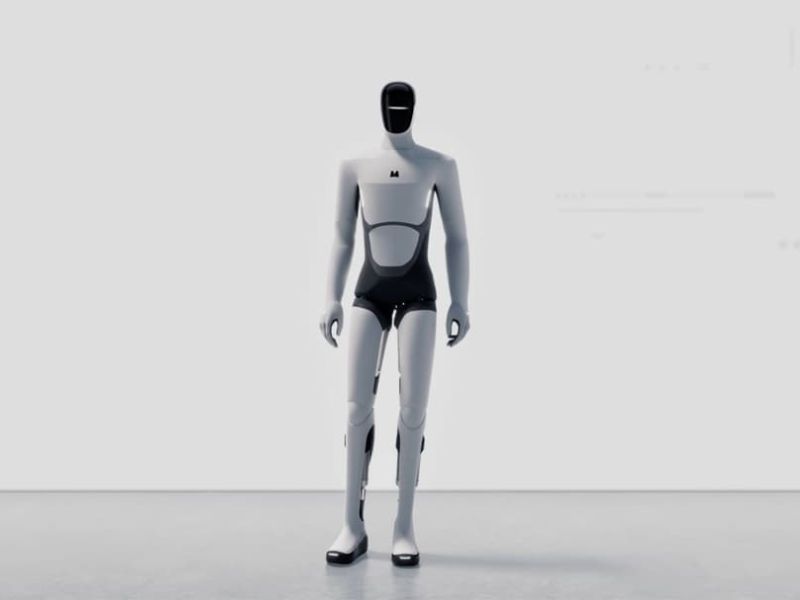
    Chinese startup Matrix Robotics has officially introduced MATRIX-3, its third-generation humanoid robot, representing a significant advance in physical AI.
    Image Credits:MATRIX-3 moves humanoid robots from pre-set tasks to adapting and understanding the real world, ready for everyday life.

    Chinese startup Matrix Robotics has officially introduced MATRIX-3, its third-generation humanoid robot, representing a significant advance in physical AI.

    The platform is a complete from-scratch overhaul of algorithms, hardware, and applications, moving humanoid robots beyond rigid task performance toward flexible, real-world interaction.

    Built to be safe, autonomous, and highly adaptable, MATRIX-3 integrates biomimetic perception, precise manipulation, natural human-like motion, and a new cognitive core that supports zero-shot learning.

    The company says the robot is designed to operate beyond factories, extending into commercial, healthcare, and household environments.

    Advancing Adaptive, Human-Like AI

    MATRIX-3 is framed as a significant step forward in physical artificial intelligence. Designed as a safe, autonomous, and adaptable platform, it handles complex, human-like tasks in real-world conditions.

    Our vision with MATRIX-3 is to bring machine intelligence into human environments in the most natural and secure way possible,” said Allen Zhang, CEO of Matrix Robotics, in a statement.

    MATRIX-3 features a biomimetic interface with “skin” and touch, covered in flexible 3D fabric that houses an underlying sensor network. This design absorbs physical contact and monitors impact forces in real time, enhancing safety during close interactions with people.

    Advanced Visual–Tactile Perception for Precise and Safe Manipulation

    A multimodal perception system combines high-sensitivity fingertip sensors with advanced vision, creating a visual–tactile loop that lets MATRIX-3 safely handle fragile and flexible objects.

    MATRIX-3 also marks a major advance in mobility and manipulation. Its dexterous 27-DOF hand mimics human anatomy with lightweight, cable-driven actuation for fast, precise motion. This allows the robot to handle everyday tools, operate delicate equipment, and manipulate soft materials like fabrics.

    Whole-body movement uses a natural gait generated by a motion control model trained on human motion-capture data. Built-in linear actuators deliver high power density with minimal noise, allowing for stable, agile, and well-coordinated full-body motion.

    Matrix’s intelligence division built a new cognitive core that underpins these abilities. Its neural network enables zero-shot learning, letting MATRIX-3 perform new tasks from natural-language instructions without task-specific training.

    Using universal intelligent manipulation, the robot can autonomously plan its grasps, modulate force in real time, and navigate around obstacles through smooth hand–eye coordination.

    Real-World Performance Yet to Be Verified

    So far, videos show MATRIX-3’s capabilities, but researchers have not yet verified its real-world performance; consistently replicating its hand dexterity would mark a major robotics breakthrough.

    Matrix Robotics has launched an early access program for select industry partners, with pilot deployments of MATRIX-3 expected to begin in mid-2026.


    Read the original article on: Interestingengineering

    Read more:Rainbow Around Nearby Dead Star Puzzles Scientists
  • A Backpack using Aerospace Technology Helps Patients Regain Balance

    A Backpack using Aerospace Technology Helps Patients Regain Balance

    Aerospace technology is showing potential in helping people with ataxia, a movement disorder that affects balance. Researchers led by Bram Sterke from multiple Dutch universities found that a robotic backpack device allows individuals with ataxia to stand and walk more steadily, reducing the need for mobility aids like walkers.
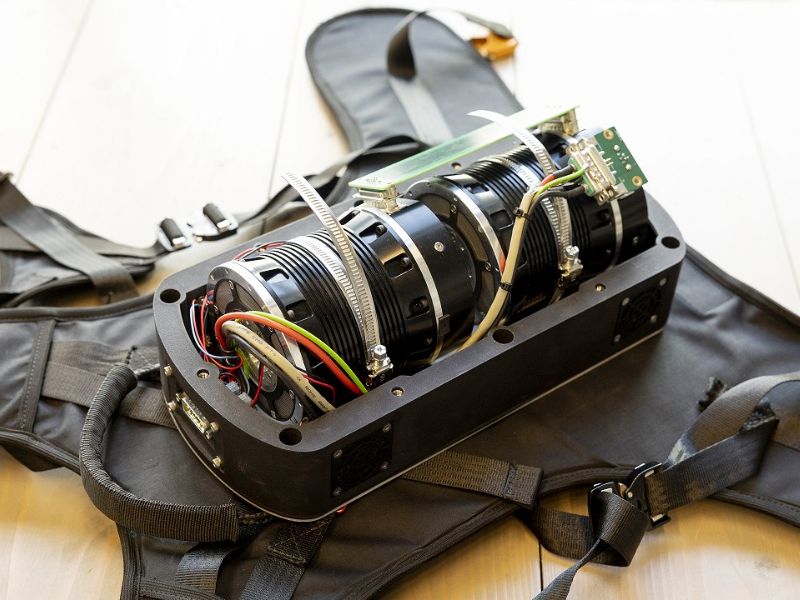
    Image Credits:Delft University of Technology]

    Aerospace technology is showing potential in helping people with ataxia, a movement disorder that affects balance. Researchers led by Bram Sterke from multiple Dutch universities found that a robotic backpack device allows individuals with ataxia to stand and walk more steadily, reducing the need for mobility aids like walkers.

    The backpack, called Gyropack, uses gyroscopic technology similar to that found in space stations and large satellites to help maintain orientation. Designed for medical use, it contains rotating wheels that resist trunk movements, improving posture and stability.

    Understanding Ataxia and Its Challenges

    Ataxia occurs when the cerebellum does not function properly, leading to coordination and balance difficulties and a higher risk of falling. Professor Jorik Nonnekes of Radboud University noted that many patients—often young—depend on walkers, which can be heavy, awkward, and stigmatizing.

    Image Credits:Bram T. Sterke et al. – 10.1038/s44182-025-00041-4]

    The preliminary study included fourteen patients with moderate to severe ataxia. Each participant completed balance and walking tasks in three scenarios: without the backpack, with the backpack fully activated, and with the gyroscopes spinning but providing no stabilizing effect. This final setup served as a control, as it produced the same sound and vibrations as the active mode.

    The greatest improvements occurred when the gyroscopes were fully engaged. According to Nonnekes, patients were clearly more stable and could, for instance, walk in a straight line much more effectively.

    Even when the gyroscopes were inactive, the backpack still offered benefits, likely because its roughly six-kilogram weight helped steady the upper body.

    Future Improvements and Potential Impact on Daily Life

    The researchers plan to further refine the device by improving usability and reducing its weight and noise. While the backpack is not yet practical for everyday use, Nonnekes believes it could eventually allow people with ataxia to move more independently in daily life—such as attending social gatherings—without relying on walkers, which are often seen as heavy and inconvenient, ultimately enhancing mobility and quality of life.


    Read the original article on: Inovacao Tecnologica

    Read more: Research Shows the Brain Creates Mental Maps for Everyday Objects