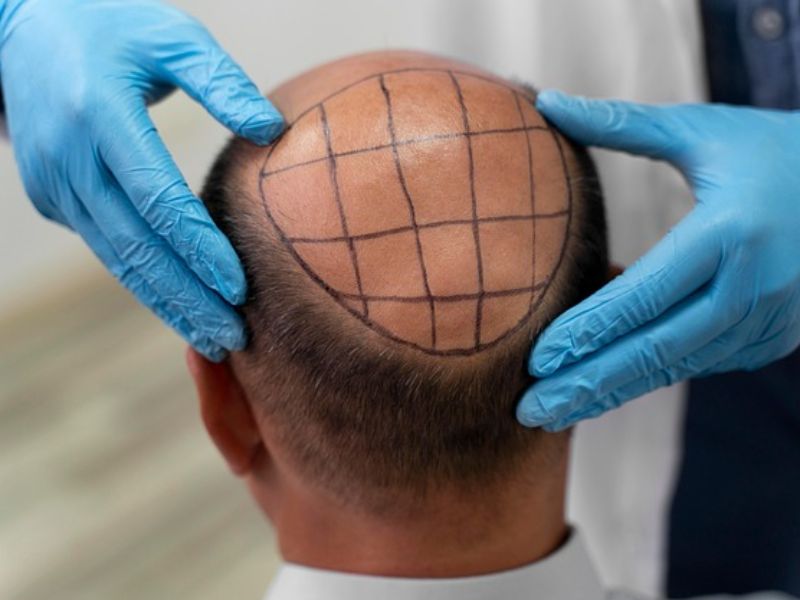

Scientists at UCLA report that the carrier molecule PP045 can generate fully formed hair strands.
UCLA researchers have discovered a small molecule capable of reactivating dormant yet intact hair follicles. In early human tests, applying the carrier molecule PP405 to the scalp nightly for a week showed encouraging outcomes.
“Nearly everyone faces hair loss at some stage, whether due to aging, chemotherapy, illness, or other stressors, and it can take a psychological toll,” says William Lowry, a professor of molecular, cellular, and developmental biology and a co-author of the study. He notes that “no single treatment like this will be effective for all individuals,” but adds that their early human testing in Orange County yielded very positive results, with larger trials involving more participants still to come.
PP405 Reactivates Dormant Hair Follicles via Protein Inhibition
Scientifically, PP405 works by being extracted and delivered to a protein within follicle stem cells that maintains their dormant state. By blocking this protein, the molecule prompts the stem cells to become active again. Researchers have been studying this molecule in the lab for nearly ten years.
In early human testing carried out in 2023, researchers observed encouraging effects after participants applied PP405 to their scalps each night for a week.
Although the UCLA team remains careful in interpreting the data, they described the findings as “statistically significant.” They stressed the treatment should grow full strands, not the fine, downy hair typical of other “miracle” products.
UCLA Researchers Work to Reverse Widespread Pattern Baldness
The UCLA researchers behind the breakthrough—William Lowry, professor of molecular, cellular, and developmental biology; Heather Christofk, professor of biological chemistry; and Michael Jung, distinguished professor of chemistry—are hopeful that the treatment could reverse pattern baldness, a condition affecting over half of men and a quarter of women by age 50.
Lowry admits the team feared PP405 might destroy all hair follicles, but they were relieved to be wrong. The scientists co-founded Pelage Pharmaceuticals through UCLA’s Technology Transfer Group, which turns research into marketable products.
“Getting FDA approval is always a lengthy process,” says Lowry, “but the results will make it worthwhile.”
The Longstanding Battle Against Hair Loss
The quest to treat baldness dates back to ancient times. Egyptians applied a mixture of dates, dog paw, and donkey hoof to their scalps; the Celts used remedies involving rats sealed in jars; and Native Americans turned to yucca juice as a solution.
Hair loss can result from a variety of causes, such as aging, stress, hormonal changes, and genetic predisposition. Even with modern progress, effective solutions have helped fewer than one in three individuals, leaving many to resort to dubious treatments or costly surgical procedures.
Read the original article on: O Globo
Read more: A new Study Says Popular Fitness Apps may Reduce User Motivation