Tag: Big Bang

  • Astronomers Discover Largest Explosions Since the Big Bang

    Astronomers Discover Largest Explosions Since the Big Bang

    An artist’s impression of an ENT. (W. M. Keck Observatory/Adam Makarenko)

    The Gaia space telescope has unexpectedly captured a previously unknown type of enormous cosmic explosion—arguably the biggest bursts since the Big Bang itself.

    Gigantic Flares from Distant Galaxies

    Originating from distant galactic cores, Gaia detected sudden and intense surges in brightness—massive light flares that lasted far longer than any previously documented.

    These explosions release energy equivalent to what 100 Suns would emit over their entire lifetimes combined.

    Studying the light signatures, scientists found a phenomenon both familiar and new: massive stars being torn apart by supermassive black holes, but on a scale never seen before.

    The stars involved were all large—at least three times the mass of our Sun—and each black hole was a supermassive entity at the center of its galaxy.

    These events, typically known as tidal disruption events (TDEs), have now been dubbed “extreme nuclear transients” (ENTs) by researchers.

    ENTs: Brighter and Longer-Lasting Than Typical TDEs

    Astrophysicist Jason Hinkle from the University of Hawaiʻi’s Institute for Astronomy explains, “While we’ve observed stars being destroyed by black holes before, these ENTs are extraordinarily brighter—up to ten times the brightness of typical TDEs—and they remain luminous for years, far outshining even the brightest supernovae.”

    Tidal disruption occurs when a star ventures too close to a black hole, and the black hole’s immense gravitational forces overwhelm the star’s own gravity, ripping it apart in a dramatic burst of light before parts fall beyond the event horizon.

    Astronomers use wide-field telescopes to catch these fleeting events, watching for sudden bright flares in distant galaxies. TDEs usually show a rapid rise in brightness followed by a slow fade over weeks to months, allowing scientists to analyze the mass and nature of the involved objects.

    Although Gaia’s primary mission was to map the Milky Way in 3D by measuring stellar positions, it also captured unusual flares outside its main goals.

    Identifying New, Powerful Flare Events

    Among these, Hinkle and his team identified two peculiar flares—Gaia16aaw (2016) and Gaia18cdj (2018)—which resembled a powerful event recorded in 2020 by the Zwicky Transient Facility, nicknamed “Scary Barbie” due to its extraordinary brightness.

    After thorough analysis, the team ruled out supernovae as the cause, since these flares were at least twice as energetic as any known supernova, whose brightness has an upper limit.

    Unlike supernovae, which shine roughly as much as the Sun does over 10 billion years, ENTs emit energy comparable to the combined lifetime output of 100 Suns.

    Artist’s impression of the brightening spray of debris of an ENT. (W. M. Keck Observatory/Adam Makarenko)

    The characteristics of these ENTs closely match scaled-up tidal disruption events, both in energy and the pattern of their brightening and fading.

    ENTs are extremely rare—about 10 million times less common than supernovae—but they offer valuable clues about how supermassive black holes grow. These black holes, millions to billions times the Sun’s mass, remain somewhat mysterious in their growth processes, and ENTs may represent one way they gain mass.

    Benjamin Shappee, also from the Institute for Astronomy, highlights their significance: “ENTs are brilliant beacons visible across vast cosmic distances, giving us a window into the early universe. Observing these prolonged flares helps us understand black hole growth during cosmic noon, a period when the universe was about half its current age and galaxies were rapidly forming stars and feeding their black holes at rates much higher than today.


    Read the original article on: Science Alert

    Read more: Private Japanese Moon Lander Sets Course for Landing in the Moon’s Remote Northern Region
  • Big Bang May Not Have Been the Beginning of Everything, New Theory Suggests

    Big Bang May Not Have Been the Beginning of Everything, New Theory Suggests

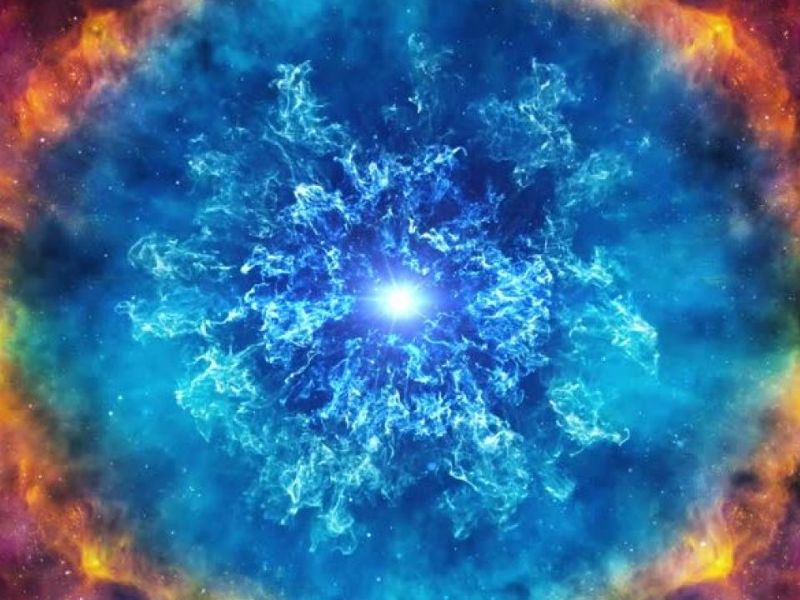
    The Big Bang may be the result of a ‘bounce’ inside a black hole. (Naeblys/Getty Images)

    The Big Bang is often described as the explosive moment that gave rise to the Universe – a singular point where space, time, and matter came into existence.

    But what if that wasn’t truly the beginning? What if our Universe originated from something that came before – something both familiar and revolutionary?

    A Bold Alternative to the Big Bang

    In a recent study published in Physical Review D, my colleagues and I present a bold alternative. Our calculations suggest that the Big Bang may not have marked the start of everything, but was instead the result of a gravitational collapse – similar to what creates a black hole – followed by a kind of bounce within it.

    This hypothesis, which we call the “black hole universe,” presents a new perspective on the cosmos’s origin, yet it is entirely grounded in established physics and observations.

    The standard cosmological model, which combines the Big Bang with the theory of cosmic inflation (a rapid expansion in the Universe’s earliest moments), has been remarkably effective in explaining the structure and evolution of the cosmos. Still, it leaves some foundational questions unanswered.

    For instance, the model begins with a singularity – a point of infinite density where the laws of physics break down. This isn’t merely a technical issue; it reveals a fundamental gap in our understanding of the Universe’s beginning.

    To explain certain features of the cosmos, scientists introduced inflation – driven by an unknown and exotic field – and, later, dark energy to account for the Universe’s current accelerated expansion. In essence, the model works but relies on unverified elements.

    And yet, the most basic questions linger: where did everything come from? Why did it start this way? Why is the Universe so smooth, vast, and flat?

    A new model

    Our new model approaches these questions from a different angle – by looking inward rather than just outward. Instead of starting with an expanding Universe and trying to rewind the clock, we analyze what happens when an extremely dense concentration of matter collapses under gravity.

    This process is familiar: it leads to the formation of black holes – objects that are already well-understood in physics. But what lies inside a black hole, beyond the event horizon, remains unknown.

    In 1965, British physicist Roger Penrose showed that, under very general conditions, gravitational collapse inevitably results in a singularity. This idea, later expanded by Stephen Hawking and others, supports the notion that such singularities are unavoidable. Penrose’s work earned him the 2020 Nobel Prize in Physics and inspired Hawking’s bestseller A Brief History of Time.

    However, there’s an important caveat. These theorems rely on classical physics, which describes large-scale phenomena. When we include the effects of quantum mechanics – essential under extreme densities – the picture may shift.

    In our study, we demonstrate that gravitational collapse does not necessarily end in a singularity. We provide an exact mathematical solution, with no approximations, showing how, as the collapse approaches the supposed singularity, the size of the Universe changes as a hyperbolic function of cosmic time.

    This solution reveals how a collapsing cloud of matter can reach a high-density state and then bounce, reversing into a new phase of expansion.

    But how can this be, if Penrose’s theorems don’t allow it? The key lies in the quantum exclusion principle, which says that no two identical fermions (a type of particle) can occupy the same quantum state.

    We show that this principle prevents matter from being compressed indefinitely. As a result, the collapse halts and reverses. The bounce is not only possible – it becomes inevitable under the right conditions.

    Crucially, this reversal happens entirely within the framework of general relativity, which governs large-scale structures like stars and galaxies, combined with basic quantum principles – without the need for speculative physics, exotic fields, or extra dimensions.

    What emerges on the other side of the bounce is a universe strikingly similar to our own. Even more intriguingly, this bounce naturally gives rise to two distinct phases of accelerated expansion – the early inflation and the current expansion driven by dark energy – not through hypothetical fields, but from the bounce’s own dynamics.

    Testable predictions

    One of the strengths of this model is that it makes testable predictions. It forecasts a small but positive spatial curvature – meaning the Universe isn’t perfectly flat but slightly curved, like the Earth’s surface.

    This curvature would be a leftover trace from the initial over-density that caused the collapse. If future observations, such as those from the Euclid mission, detect this slight curvature, it would strongly support the idea that our Universe emerged from a gravitational bounce.

    The SpaceX Falcon 9 rocket carrying ESA’s Euclid mission on the launch pad in 2023. (ESA/CC BY-SA)

    The model also predicts the current rate of cosmic expansion – which observations have already confirmed – and may help scientists gain insights into other unresolved questions in cosmology, such as how supermassive black holes form, the nature of dark matter, and how galaxies develop hierarchically.

    Future missions like Arrakhis are expected to further explore these issues by studying faint structures such as stellar halos and satellite galaxies – components that are difficult to detect from Earth but crucial for understanding dark matter and galaxy evolution.

    These phenomena may also be linked to compact relics – like black holes – that formed during the collapsing phase and survived the bounce.

    A new cosmic perspective

    The “black hole universe” model also offers a new way to view our place in the cosmos.In this framework, a larger “parent” universe forms a black hole whose interior contains our entire observable Universe.

    This implies that we’re not in a special or central position – much like the Earth wasn’t the center of the Universe in the geocentric model that Galileo famously challenged in the 17th century.

    Rather than witnessing the birth of everything from nothing, we might be observing the continuation of a cosmic cycle – one shaped by gravity, quantum mechanics, and their deep interconnection.


    Read the original article on: Science Alert

    Read more: The Most Intense Solar Storm in History Occurred 14,000 Years Ago

  • Uncovering the Secrets of the Big Bang With Machine Learning

    Uncovering the Secrets of the Big Bang With Machine Learning

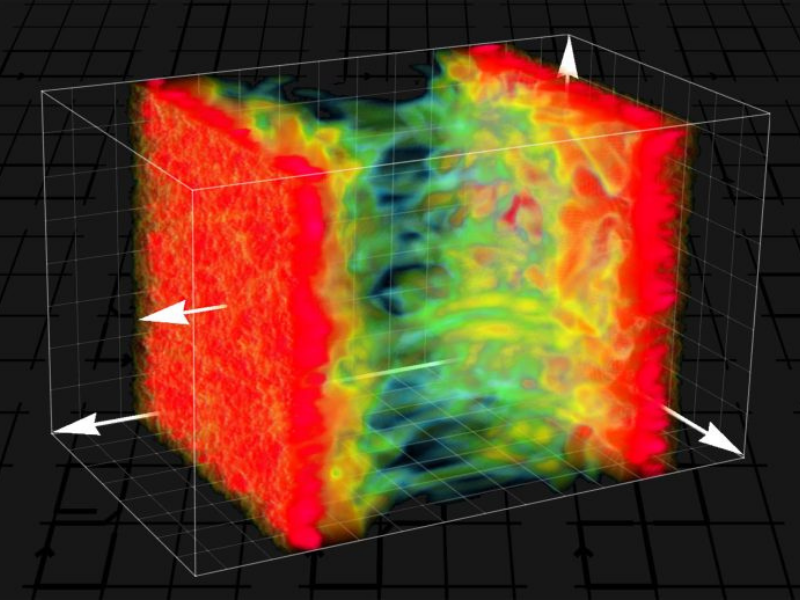
    A quark gluon plasma after the collision of two heavy nuclei. Credit: TU Wien

    Can machine learning be used to reveal the secrets of the quark-gluon plasma?

    Yes, it can. However, only with advanced new methods.

    It can hardly be more complicated. Little particles whir around wildly with extremely high energy, many interactions happen in the matted mess of quantum particles. This leads to a state of matter called “quark-gluon plasma”. Promptly after the Big Bang, the entire universe found itself in this state. Today, it is generated by high-energy atomic nucleus collisions, as an example at CERN.

    Such processes can just be examined using high-performance computers and very complicated computer simulations whose outcomes are difficult to assess. For that reason, utilizing artificial intelligence or machine learning for this goal looks like an obvious idea. Average machine-learning algorithms, however, are not ideal for this task. The mathematical properties of particle physics call for a very special structure of neural networks. At TU Wien (Vienna), it has now been demonstrated how neural networks can be effectively used for these difficult tasks in particle physics.

    Neural networks

    ” Simulating a quark-gluon plasma as realistically as possible calls for an extremely big quantity of computing time,” claims Dr. Andreas Ipp from the Institute for Theoretical Physics at TU Wien. “Even the largest supercomputers on the planet are bewildered by this”. Consequently, it would be preferable not to calculate every detail precisely but to identify and predict specific plasma properties using artificial intelligence.

    Therefore, neural networks are used, similar to those utilized for image recognition. Artificial “neurons” are linked together on the computer similarly to neurons in the brain. This produces a network that can identify, as an example, whether a cat is evident in a specific image.

    However, there is a significant issue when employing this technique to the quark-gluon plasma. The quantum fields utilized to mathematically explain the particles, as well as the forces in between them, can be represented in various different ways. “This is described as gauge symmetries,” states Ipp. “The fundamental principle behind this is something we are acquainted with. If I adjust a measuring device differently, for example, if I utilize the Kelvin scale instead of the Celsius scale for my thermometer, I obtain entirely different numbers, even though I am describing the very same physical state. It is comparable with quantum theories– other than that, and the allowed changes are mathematically much more complex.” Mathematical objects that look totally different at first glimpse might depict the very same physical state.

    Gauge symmetries developed into the structure of the network

    ” If you do not take these gauge symmetries into account, you can not meaningfully interpret the results of the computer simulations,” claims Dr. David I. Müller. “Teaching a neural network to find out these gauge symmetries by itself would certainly be incredibly hard. It is better to begin by designing the structure of the neural network as though the gauge symmetry is immediately considered. This ensures that different depictions of the exact same physical state additionally create the exact same signals in the neural network,” says Müller. “That is exactly what we have actually now prospered in doing. We have actually established totally new network layers that immediately take gauge invariance into account.” In some examination applications, it was revealed that these networks could, in fact, learn better exactly how to manage the simulation data of the quark-gluon plasma.

    ” With such neural networks, it becomes feasible to make predictions about the system– for example, to estimate what the quark-gluon plasma will appear like at a later moment without actually having to calculate every intermediate step in time in detail,” says Andreas Ipp. “And at the same time, it is guaranteed that the system just produces results that do not oppose gauge symmetry– in other words, outcomes which make sense a minimum of in concept.”

    It will be a long time before it is possible to replicate atomic core collisions at CERN with such methods fully. Yet, the new type of neural networks offers a promising as well as totally new device for describing physical phenomena for which all other computational techniques may never ever be effective enough.


    Read the original article on Scitech Daily.

    Related “MIT Magnet Allows Path to Commercial Fusion Power”