Tag: Created

  • A Biologically Inspired AI System is Created by Scientists

    A Biologically Inspired AI System is Created by Scientists

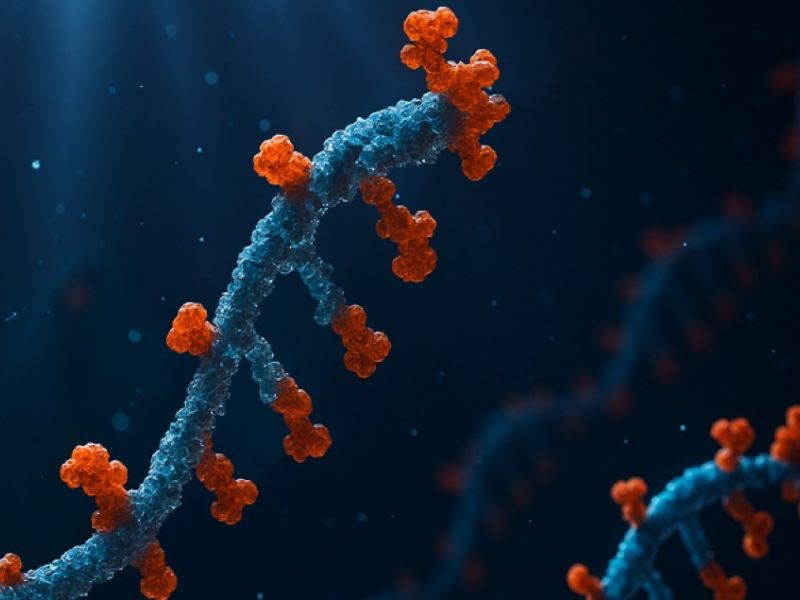
    Australian scientists have developed a research platform called PROTEUS (PROTein Evolution Using Selection) that uses biological artificial intelligence to design and evolve molecules with new or enhanced functions directly within mammalian cells. According to the team, this technology represents a powerful new tool for creating more precise research instruments and gene therapies.
    Image Credits:greensavers.sapo

    Australian scientists have developed a research platform called PROTEUS (PROTein Evolution Using Selection) that uses biological artificial intelligence to design and evolve molecules with new or enhanced functions directly within mammalian cells. According to the team, this technology represents a powerful new tool for creating more precise research instruments and gene therapies.

    PROTEUS employs directed evolution, a lab technique that accelerates the natural process of evolution. While traditional evolution can take years or decades, PROTEUS can generate molecules with novel functions in just weeks. This approach has the potential to advance drug discovery and improve gene-editing technologies like CRISPR.

    Creating Molecules Tailored for the Human Body

    This system allows us to create molecules finely tuned to work in the human body and develop drugs that would be extremely difficult or impossible to make with current methods,” said Professor Greg Neely, senior co-author and Director of the Functional Genomics Laboratory at the University of Sydney. He highlighted that, unlike conventional directed evolution, which primarily works in bacteria, PROTEUS operates in mammalian cells.

    PROTEUS can tackle problems with unknown solutions, similar to how AI platforms respond to user input. For instance, it can explore millions of potential molecular sequences to find ones capable of effectively disabling a gene linked to disease. This dramatically shortens the time needed to identify effective solutions.

    PROTEUS Advances Protein Engineering and Cancer Research

    The team has already used PROTEUS to create improved proteins that respond more easily to drugs, as well as nanobodies that detect DNA damage—a key factor in cancer development. The system, however, is versatile and can enhance the function of a wide range of proteins and molecules.

    The study was published in Nature Communications.

    The original creation of directed evolution in bacteria was honored with the 2018 Nobel Prize in Chemistry.

    The development of directed evolution transformed biochemistry. Now, with PROTEUS, we can introduce a genetic problem into a mammalian cell—even one we don’t fully understand—and let the system work continuously, allowing us to observe how it tackles the challenge,” says lead researcher Christopher Denes from the Charles Perkins Centre and School of Life and Environmental Sciences.

    Ensuring Stability Through Multiple Evolution Cycles

    A major hurdle for Denes and his team was ensuring that mammalian cells could endure multiple cycles of evolution and mutation while remaining stable, without the system “cheating” by producing an easy but irrelevant solution.

    They found the solution in chimeric virus-like particles, which combine the outer shell of one virus with the genetic material of another. This design prevented cheating and allowed the system to explore many possible solutions simultaneously. The best solutions became dominant, while ineffective ones were eliminated.

    PROTEUS is robust, stable, and independently validated. We encourage other labs to adopt this approach. Its use could accelerate the creation of new enzymes, molecular tools, and therapeutics,” says Denes.

    Our aim is to enhance gene-editing technologies and refine mRNA-based drugs for greater precision and potency,” adds Professor Greg Neely.


    Read the original article on:greensavers.sapo
    Read more:Nipah Virus Deaths in India Put Asia on Alert

  • A Supercomputer Builds one of the Most Lifelike Virtual Brains ever Created

    A Supercomputer Builds one of the Most Lifelike Virtual Brains ever Created

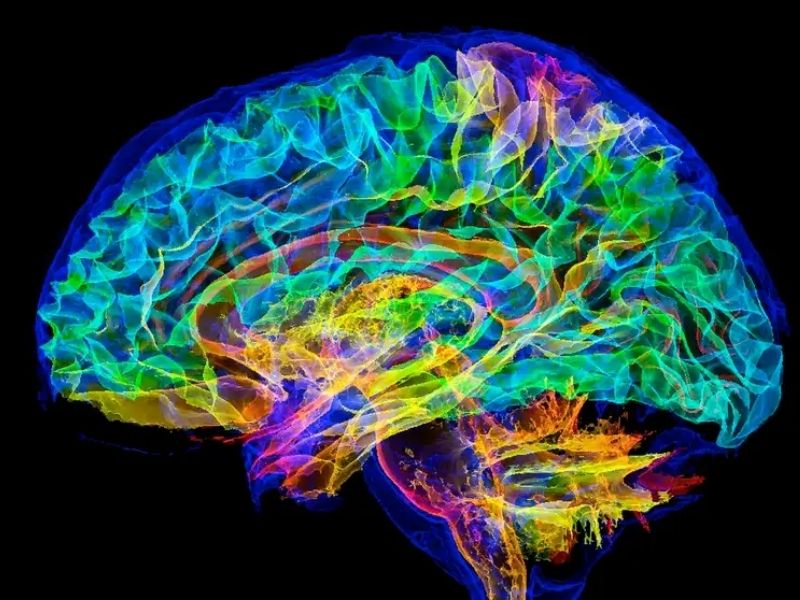
    Understanding how the brain functions is challenging, since living brains are difficult to directly examine. To address this, scientists have developed an advanced simulation of a mouse brain, one of the most detailed models ever created.
    Image Credits:K H FUNG/SCIENCE PHOTO LIBRARY

    Understanding how the brain functions is challenging, since living brains are difficult to directly examine. To address this, scientists have developed an advanced simulation of a mouse brain, one of the most detailed models ever created.

    The project was led by researchers from the Allen Institute in the US and the University of Electro-Communications in Japan, and it could help scientists study neurological disorders like Alzheimer’s in more depth.

    A Complete Mouse Cortex Model With Human-Relevant Insights

    The model represents an entire mouse cortex. Though smaller and simpler than the human brain, it shares key neural similarities, making it a valuable research tool.

    The scale of the simulation is striking. The virtual brain has 9 million neurons, 26 billion synapses, 86 regions, and can perform quadrillions of calculations per second.

    By comparison, an actual mouse brain holds around 70 million neurons packed into a structure roughly the size of an almond.

    This demonstrates that the possibilities are now within reach,” says computational neuroscientist Anton Arkhipov of the Allen Institute. “With sufficient computing power, we can successfully run these types of brain simulations.”

    He adds that the achievement represents a major technical breakthrough, proving researchers can build far larger models accurately and at scale.

    Image Credits:The simulation enables researchers to track the activity of individual neurons. (Kuriyama et al., 2025).

    The detailed simulation lets scientists track cognition, consciousness, and disease in the brain. It functions as a dynamic, three-dimensional map, revealing individual neurons as they fire and form connections.

    Researchers say the model could be used to explore how seizures propagate or how brain waves influence attention, all without relying on repeated or invasive brain scans.

    Fugaku Supercomputer Powers the Brain Simulation

    The massive computational demands were met by Japan’s Fugaku supercomputer, which combined existing cellular data and brain maps to construct the model. In addition, the team created new software to optimize the processing of neural activity and reduce unnecessary calculations.

    Fugaku aids research in fields like astronomy, weather, and drug development, tackling major societal challenges,” says computer scientist Tadashi Yamazaki.. “In this project, we applied Fugaku to simulate neural circuits.”

    The brain plays a vital role in overall physical and mental well-being, as well as healthy aging.Studying virtual and mini brain models is crucial for understanding brain function and decline.

    Early Discoveries From the Virtual Brain Model

    The research team is already using the model to uncover insights into brain wave synchronization and the interaction between the mouse brain’s two hemispheres.

    While the achievement represents a remarkable advance in both computing and biological modeling, the researchers are aiming even higher. Their ultimate objective is to construct a complete virtual model of the human brain.

    Our goal is to build complete brain models, including human, using our institute’s biological data,” says Arkhipov. “We are now transitioning from simulating individual brain regions to modeling the entire mouse brain.”

    The findings were presented at the SC25 supercomputing conference and are available online.


    Read the original article on: Sciencealert

    Read more:China Unveils a Humanoid Robot with Smooth, Human-like Balance

  • Chinese Researchers Created One-Atom-Thick 2D Metals

    Chinese Researchers Created One-Atom-Thick 2D Metals

    Researchers at the Institute of Physics of the Chinese Academy of Sciences have made a major breakthrough by producing metals just one atom thick, a development that could be transformative.
    Image Credits:Cientista clonagem Asia-Pacific Images Studio (Asia-Pacific Images Studio/Getty Images)

    Researchers at the Institute of Physics of the Chinese Academy of Sciences have made a major breakthrough by producing metals just one atom thick, a development that could be transformative.

    Since graphene’s discovery in 2004, 2D materials have reshaped our understanding of matter and advanced physics and materials science. In recent years,

    Why Making Two-Dimensional Metals Is So Challenging

    Zhang Guangyu, the IOP lead scientist, said creating 2D metals is difficult due to strong multi-directional metallic bonds.

    Using the van der Waals compression technique, researchers synthesized several 2D metals, including bismuth.

    These 2D metals are extraordinarily thin—about one millionth the thickness of an A4 sheet of paper and roughly one two-hundred-thousandth the width of a human hair.

    International Recognition for a Major 2D Materials Breakthrough

    The study has received strong acclaim from international reviewers, who regard it as an important breakthrough in two-dimensional materials research.

    Du Luojun of the research team said the work fills a key gap in 2D materials and will speed up scientific and technological progress.

    He noted that, like 3D metals in the past, 2D metals could drive the next stage of human innovation.


    Read the original article on: Exame

    Read more:German Scientists Create Liquid Carbon, a Potential Boost for Nuclear Fusion