
NASA/Kathy Henkel
NASA has successfully tested an advanced cooling system that could be crucial for future human missions to Mars. Without this new cryocooler, spacecraft could arrive on the Red Planet with depleted fuel reserves—jeopardizing the entire journey.
Decades-Old Dream Meets Modern Engineering
Though the concept of sending astronauts to Mars has been around for over 70 years, only recently have serious efforts begun to tackle the technical complexities. Designing a Mars-bound spacecraft involves more than just building engines, life support, and navigation systems. The core challenge lies in securing the necessary propulsion to complete the round trip.
For many robotic missions, propulsion is a minor concern once the craft is in space. Powerful boosters handle the initial launch, and afterward, simple physics carries the spacecraft along. Small thrusters fueled by stable liquids or gases are used for course adjustments. Even ion engines, which have become more common, rely on easily managed propellants like xenon.
NASA/Kathy Henkel
But human missions are a different story. Unlike robotic probes, which can take years to reach their destinations, crewed missions must minimize travel time and maximize onboard resources. This calls for extremely efficient fuels—typically cryogenic liquids like hydrogen, oxygen, or methane.
Cryogenic Fuels: Powerful but Unstable
These cryofuels, however, come with significant challenges. Liquid hydrogen boils at -252.9 °C (-423.2 °F), oxygen at -183 °C (-297.4 °F), and methane at -161.6 °C (-258.9 °F). Even in the cold vacuum of space, these substances tend to boil away. To prevent tank explosions, the vapor must be vented, which leads to fuel loss.
NASA/Kathy Henkel
This isn’t a problem for short missions or rockets sitting on launch pads, but for a Mars mission stretching over two years, it’s a critical issue. For instance, a lightly insulated tank containing 38 tonnes of liquid hydrogen could lose around 16 tonnes annually due to passive boil-off—enough to leave a Mars crew stranded without return fuel.
NASA’s Mission to Eliminate Fuel Loss
While better insulation can reduce these losses, the amounts are still unacceptable. To address this, NASA launched the Cryogenic Fluid Management Portfolio Project, which is developing cutting-edge insulation and active cooling technology aimed at achieving “zero boil-off” over long durations. The project also seeks to improve cryofuel handling and minimize waste.
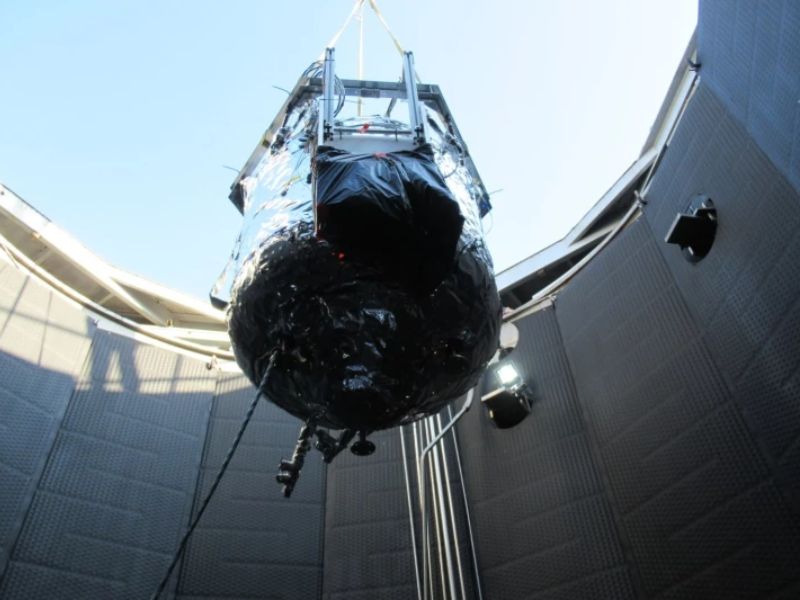
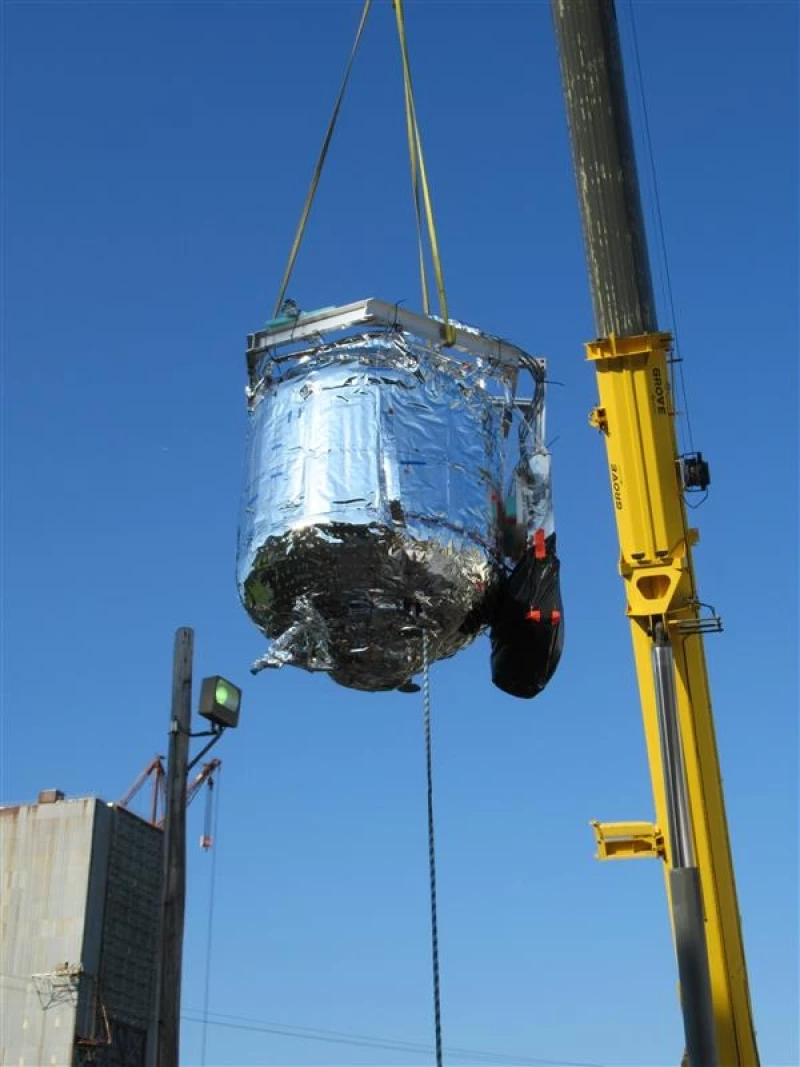
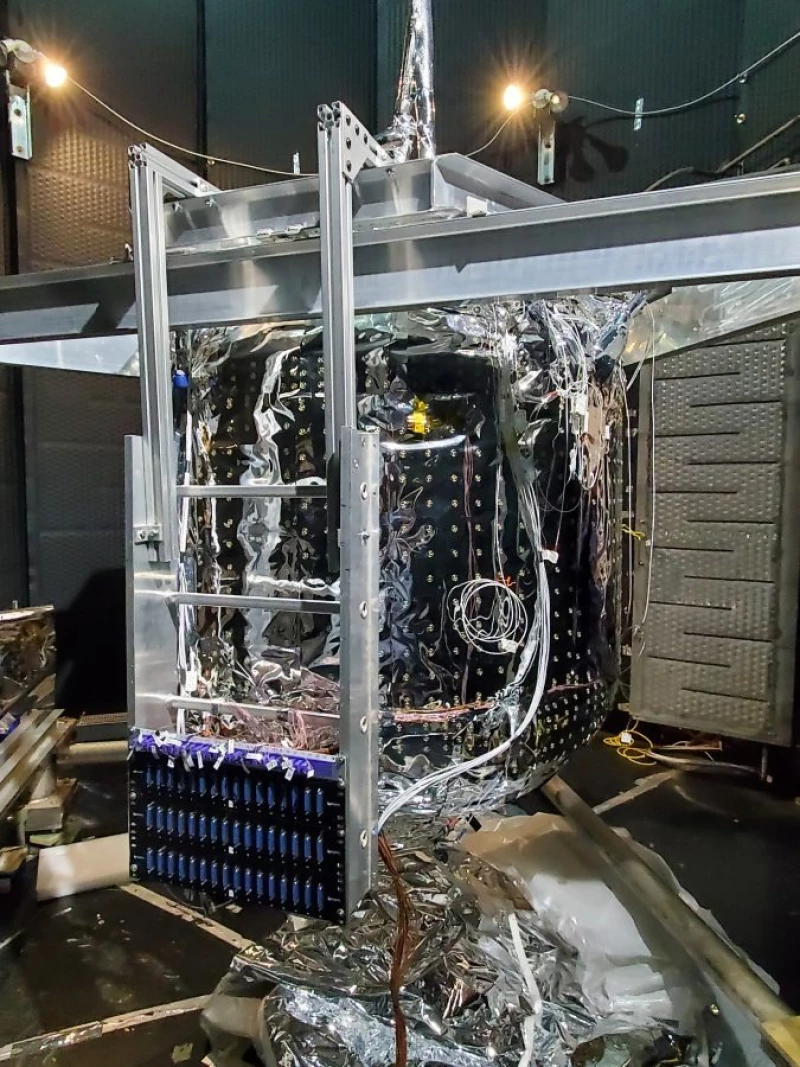
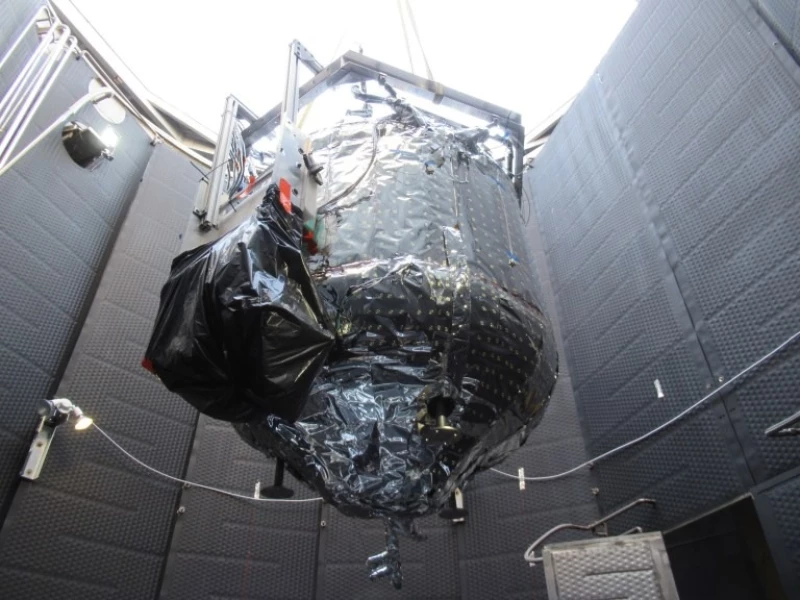
At NASA’s Marshall Space Flight Center in Huntsville, Alabama, engineers recently tested a two-stage cryogenic cooling system over a three-month period. Known as “tube-on-tank” cooling, the setup involves two cooling loops integrated into a thick, metalized insulation layer and shielded by a heat barrier.
NASA/Kathy Henkel
In the primary loop, ultra-cold liquid helium at -253 °C (-424 °F) circulates around the fuel tank, maintaining the necessary temperature. Above that, a secondary loop carries helium at -183 °C (-298 °F), serving as a thermal buffer behind the protective shield to block incoming heat.
A Game-Changer for Deep Space Travel
This innovative system can keep cryogenic fuels ultra-cold indefinitely—so long as electrical power is available to operate the refrigeration unit. The benefits go beyond fuel preservation: the system allows for lighter missions without extra fuel margins and supports longer stays in deep space.
Reducing propellant loss is essential for enabling long-duration exploration missions to places like the Moon and Mars, said Kathy Henkel, acting manager of NASA’s Cryogenic Fluid Management Portfolio Project. “Two-stage cooling systems prevent fuel boil-off and make long-term storage of propellants viable, whether in space or on a planetary surface.
Read the original article on: New Atlas
Read more: This Ancient Comet Might Precede the Birth of Our Solar System