Tag: Earth

  • Earth May Have Had a Ring Like Saturn – and It Caused Havoc

    Earth May Have Had a Ring Like Saturn – and It Caused Havoc

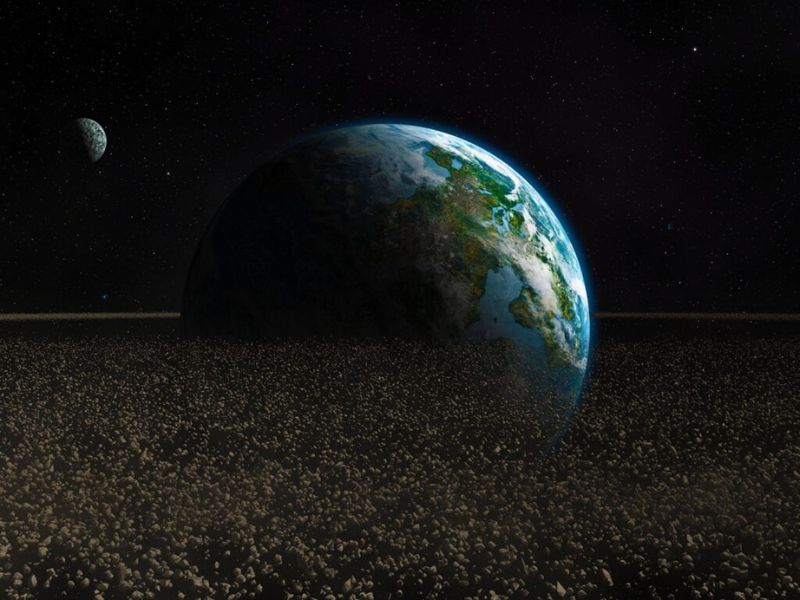
    Saturn's rings are famous, but new evidence suggests that Earth might have also had a ring at some point in its history. This ring would have caused significant impacts on the surface.
    An artist’s impression of Earth with a ring – a phase suggested by new evidence
    Oliver Hull

    New Evidence of Earth’s Potential Ring System

    Saturn’s rings are famous, but new evidence suggests that Earth might have also had a ring at some point in its history. This ring would have caused significant impacts on the surface.

    We know that Earth has gone through many phases throughout its existence. Initially, it was covered in magma oceans, and later it became something of a “giant snowball.” Over hundreds of millions of years, continents formed, separated, and rejoined. The idea that Earth may have had a ring during a certain period is relatively new.

    Researchers from Monash University in Australia have hypothesized that a rocky ring formed around Earth about 466 million years ago, remaining there for several million years. This theory is the result of meticulous geological research.

    During the Ordovician period, there was an increase in the number of impact craters on Earth. Scientists mapped 21 known craters from that time and used models of tectonic plate movements to locate where they were at the time of the impact.

    Unusual Equatorial Meteorite Impact Pattern

    Interestingly, all the impacts occurred within 30 degrees of the equator. Normally, meteorites would strike Earth at random locations, which makes this pattern quite intriguing. However, it could still be a sampling error.

    To verify, researchers calculated which areas of Earth’s surface could preserve these craters for so long. They focused on stable regions, dating back to before the mid-Ordovician, and excluded areas that had been buried, eroded, or affected by tectonic activity. The best-preserved areas were found in Western Australia, Africa, parts of North America, and Europe.

    When they analyzed these areas in the past, tectonic models showed that only 30% of the preserved land was near the equator during the Ordovician. The fact that all the craters were located in this small region is, according to the researchers, a statistical anomaly.

    Hypothesis of Earth’s Rocky Ring Formation

    What could explain the concentration of meteorites in this equatorial zone? One hypothesis is that Earth captured an asteroid around 466 million years ago, which disintegrated, forming a ring. Over time, fragments from this ring would have rained down on the planet, concentrating in the equatorial region.

    This theory could also explain other mysteries from that era. The meteorite fragments found in the craters show signs of having spent little time in space before striking Earth, consistent with the idea that the material came from a ring formed by a recently broken-up asteroid.

    Potential Link Between the Ring and the Hirnantian Ice Age

    About 20 million years later, Earth entered the Hirnantian Ice Age, with extremely low temperatures. A ring around the equator, blocking part of the sunlight, might have contributed to this global cooling.

    The idea that a ring system could have influenced global temperatures adds a new layer to our understanding of how extraterrestrial events might have shaped Earth’s climate,” said Professor Andy Tomkins, lead author of the study.

    This hypothesis raises the possibility that rings are a temporary phase in the life of planets. Saturn’s rings, for example, may only be 10 million years old and could disappear in another 100 million years. Mars, currently tearing apart one of its moons, may form a new ring in 20 to 40 million years.

    The next step in the research is to model how asteroids break up and form rings, as well as investigate how these rings evolve over time and their impact on Earth’s climate.


    Read the original article on: New Atlas

    Read more: Earth’s Internal Core Rotation May Have Paused and Perhaps Reverse

  • NASA Finds New Global Energy Field Around Earth

    NASA Finds New Global Energy Field Around Earth

    NASA/Conceptual Image Lab, Wes Buchanan, and Krystofer Kim

    NASA scientists have confirmed the existence of a third global energy field encircling Earth, known as the ambipolar electric field. This newly discovered field plays a crucial role in propelling charged particles into space from the poles.

    Historical Context and Existing Fields

    Traditionally, Earth’s global energy fields have been understood to consist of the gravity field, created by the planet’s mass, and the electromagnetic field, generated by the movement of molten metals in the core. Although scientists have long speculated about a third field, it was not until a recent NASA study that its presence was conclusively proven.

    Since the 1960s, observations from spacecraft flying over Earth’s poles revealed an unexpected flux of particles escaping the atmosphere. This “polar wind” exhibited supersonic speeds despite remaining cold, which puzzled scientists. They hypothesized the existence of the ambipolar electric field to explain this phenomenon.

    Mechanics of the Ambipolar Electric Field

    The hypothesis posited that this field originates at around 250 kilometers (150 miles) above the poles. At this altitude, electrons are easily stripped from hydrogen and oxygen atoms, leaving behind heavier positively charged ions. While gravity would typically cause these ions to fall, their mutual attraction to the electrons counteracts this, extending the atmospheric density higher up over the poles.

    Despite its weak strength, the ambipolar electric field was detected during NASA’s Endurance mission. Launched on May 11, 2022, from Svalbard, Norway, Endurance carried instruments designed to measure electric potential changes from 250 km to 768 km (477 miles) altitude. The mission successfully detected a voltage change of 0.55 volts, confirming the field’s presence.

    Principal Investigator Glynn Collinson noted, “Although half a volt might seem negligible, it’s sufficient to explain the polar wind phenomena.” For hydrogen ions, this field exerts a force more than ten times stronger than gravity, significantly boosting their speed into space. Additionally, the experiment recorded a 271% increase in the ionosphere’s scale height.

    The confirmation of this ambipolar electric field opens new avenues for understanding its influence on Earth’s atmospheric evolution throughout history.


    Read the Original Article on: New Atlas

    Read more: NASA and SpaceX’s Plans to Deorbit and Dismantle the ISS

  • Monday Broke Sunday’s Record as the Hottest Day on Earth

    Monday Broke Sunday’s Record as the Hottest Day on Earth

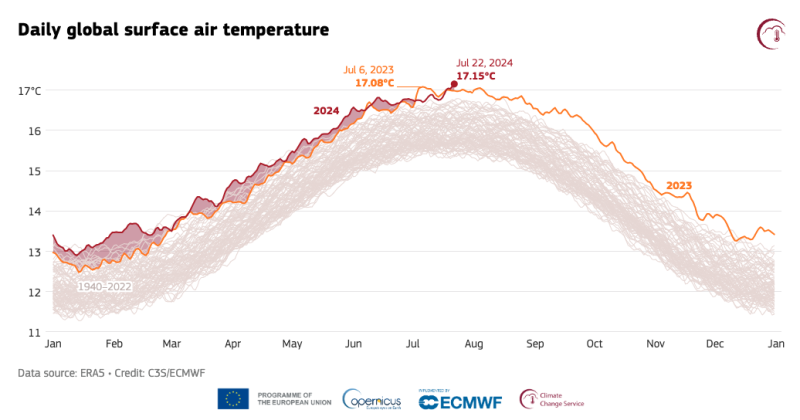
    Earth experienced its hottest day on record twice this week. According to data from the Copernicus Climate Change Service (C3S), Sunday initially set the record for the highest global average temperature since records began in 1940, only to be surpassed by Monday.
    Earth has sweltered through its hottest day on record this week
    Depositphotos

    Earth experienced its hottest day on record twice this week. According to data from the Copernicus Climate Change Service (C3S), Sunday initially set the record for the highest global average temperature since records began in 1940, only for Monday to surpass it.

    On Sunday, July 21, the global average surface air temperature reached 17.09 °C (62.76 °F), just surpassing the previous record of 17.08 °C (62.74 °F) set on July 6 last year. However, this record was short-lived, as the temperature climbed to 17.15 °C (62.87 °F) on Monday, July 22.

    Data Source and Variability

    It’s important to note that these findings are based on preliminary data from the ERA5 dataset, collected by the C3S as part of the European Union’s Copernicus program. Differences between datasets, some of which have recorded even higher temperatures, arise from variations in data collection locations and processing methods.

    Despite these differences, datasets generally agree on broader trends, showing a long-term rise in average temperatures, with 2023 and 2024 leading significantly.

    For example, before last July, the highest daily average temperature record was 16.8 °C (62.24 °F), set on August 13, 2016. However, since mid-2023, this record has been broken nearly 60 times.

    Unprecedented Temperature Records

    This new record of daily global average temperature is noteworthy because it occurred outside of an El Niño warm phase during an extended period of extraordinary heat. June 2024 marked the thirteenth consecutive month of record-breaking global temperatures,” said Chris Hewitt, Director of Climate Services at the World Meteorological Organization (WMO).

    A chart illustrating the daily global average surface air temperatures since 1940, with 2023 and 2024 highlighted
    C3S/ECMWF

    Unsurprisingly, 2024 is on track to potentially become the hottest year on record, a title currently held by 2023

    Unsurprisingly, 2024 is on track to potentially become the hottest year on record, a title currently held by 2023. The first half of this year has consistently been warmer than the same period last year. However, the last four months of 2023 were so unusually warm that it’s uncertain if 2024 will surpass it, especially with a La Niña phase likely. Regardless, this year is expected to comfortably rank in the top 5.

    What is truly staggering is how large the difference is between the temperature of the last 13 months and the previous records,” said Carlo Buontempo, C3S Director. “We are now in truly uncharted territory, and as the climate keeps warming, we are bound to see new records being broken in future months and years.”

    To address a common argument: yes, Earth has been much hotter in the past, and the climate has changed drastically many times before. That’s why these findings are always stated in terms like “on record.”

    Long-term studies suggest we may not have seen sustained periods of temperatures this high in around 125,000 years, and rapid climate change often leads to mass extinctions, as we’re beginning to see now.

    Life on Earth is remarkably resilient, and some form of it will likely persist until the Sun explodes. However, it would be beneficial if we could ensure humans stick around a bit longer.


    Read the original article on: New Atlas

    Read more: China Aims to Deflect a Near-Earth Asteroid by 2030

  • Unraveling Earth’s Cleanest Air Mystery

    Unraveling Earth’s Cleanest Air Mystery

    The Southern Ocean is celebrated for its pristine air quality, long an enigma until recent findings shed light on the mystery.
    Credit: Pixabay

    The Southern Ocean is celebrated for its pristine air quality, long an enigma until recent findings shed light on the mystery.

    The cleanliness isn’t solely due to limited human activity. While the region sees minimal industrial chemical use and fossil fuel burning, natural sources like sea salt from spray or wind-driven dust also contribute.

    Aerosols, which are fine solid particles or liquid droplets in the air, define the cleanliness of the atmosphere, irrespective of their origin—be it natural or industrial.

    Our latest study reveals that clouds and rain are pivotal in purifying the atmosphere.

    Exploring the Impact of Clouds and Rain

    Aerosol concentrations in the Southern Ocean are shaped by various factors, including salt spray levels and seasonal fluctuations in phytoplankton growth, which produce airborne sulphate particles.

    Sulphate production decreases during winter, coinciding with the region’s peak air quality.

    However, this isn’t the entire narrative. The Southern Ocean stands out as the cloudiest area globally, experiencing unique, brief rain showers. Our goal was to elucidate how clouds and rain contribute to air purification.

    Understanding these processes has been challenging due to limited high-quality data on clouds, rainfall, and aerosols in this sparsely monitored region.

    Fortunately, advanced satellite technology now offers detailed cloud imagery. We developed a program to identify various cloud patterns across the expansive Southern Ocean, focusing on distinctive honeycomb formations. These clouds play a significant role in climate regulation.

    When a honeycomb cell is cloud-filled or “closed,” it appears whiter, reflecting more sunlight and cooling the Earth. Conversely, “open” cells allow more sunlight penetration.

    The complexity of these patterns poses challenges in accurately modeling Earth’s climate; hence, it’s crucial to account for open and closed cell balances to avoid significant discrepancies.

    The honeycomb cell status also impacts rainfall potential. These cells, spanning 40-60km in diameter, are visible from space, enabling satellite-based studies.

    Our study aligns well with this month’s launch of a cloud and precipitation experiment at Cape Grim in Tasmania, aiming to gather high-resolution data on clouds, rain, and sunlight.

    A true colour image from Himawari-8 geostationary satellite showing the study area and an example of closed and open honeycomb-like MCC clouds (mesoscale cellular convection) over the Southern Ocean. (Tahereh Alinejadtabrizi / npj Climate and Atmospheric Science)

    Removing Aerosols from the Atmosphere

    We analyzed honeycomb cloud patterns using aerosol data from the Kennaook/Cape Grim observatory and rainfall records from a nearby gauge. Our findings revealed that days with the cleanest air correlated with open honeycomb clouds, likely due to their ability to produce intense rain showers that cleanse aerosol particles.

    Interestingly, open cells, despite appearing less cloudy, hold more moisture and produce six times more rain than the filled, closed cells. This counterintuitive result means less cloud cover by satellite often leads to more effective rain showers for aerosol removal, while cloudier appearances are less effective.

    During the cleanest winter months, open honeycomb patterns were predominant. Additionally, our analysis indicates that large-scale weather systems dictate the cloud field’s appearance, with storm movements creating both open and closed honeycomb cells.

    Cleaner Air and Improved Climate Predictions

    Our study provides a significant insight into the Southern Ocean’s pristine air quality, highlighting rainfall, particularly from clear, open honeycomb clouds, as the key factor in air purification. We were the first to identify these clouds’ pivotal role in cleansing the air passing over the Southern Ocean.

    Similar honeycomb cloud patterns appear in the North Atlantic and North Pacific during winter, suggesting our findings may also explain aerosol removal in these regions, aiding in refining climate models for more accurate predictions.

    Rain effectively removes aerosols from the atmosphere, akin to how a washing machine cleans clothes. Following a cold front passage, the air becomes noticeably cleaner, benefiting those on Australia’s southern coast as fresh air sweeps in from the Southern Ocean.

    We extend our gratitude to CSIRO, ANSTO, and the Bureau of Meteorology for their valuable contributions to this research.


    Read the original article on: Science Alert

    Read more: A Green Living Environment Does Not Protect Children Against Eczema

  • Soil-Powered Fuel Cell Harnesses Earth’s Energy

    Soil-Powered Fuel Cell Harnesses Earth’s Energy

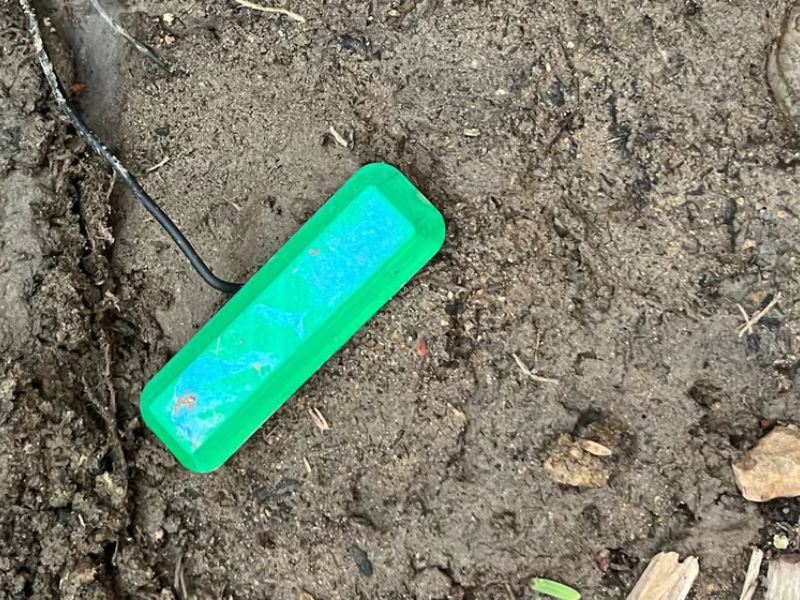
    A groundbreaking innovation from Northwestern University showcases a compact device capable of producing electricity by harnessing the power generated as microbes decompose soil, as long as there is carbon present.
    A microbial fuel cell buried in soil and generating power
    Bill Yen/Northwestern University

    A groundbreaking innovation from Northwestern University showcases a compact device capable of producing electricity by harnessing the power generated as microbes decompose soil, as long as there is carbon present.

    This device, about the size of a paperback book, operates on microbial fuel cell technology, which has existed for over a century. Unlike conventional batteries, it utilizes bacteria to transfer electrons to conductors while they consume soil, mimicking the function of an anode, cathode, and electrolyte in a battery but deriving power from natural microbial processes rather than chemical sources.

    Providing Consistent Water and Oxygen Supply to Microbial Fuel Cells (MFCs)

    Until now, the challenge has been ensuring a consistent supply of water and oxygen to microbial fuel cells (MFCs) while they are buried in soil. Bill Yen, a former student at UNW and the leader of the project, remarked, “Despite being a concept for over a century, the inconsistent performance and limited power output of MFCs have hindered efforts to apply them practically, particularly in environments with low moisture levels.”

    The design places a disc-shaped anode at the bottom, and a vertically-oriented anode poking up towards the surface
    Bill Yen/Northwestern University

    Therefore, the team embarked on developing multiple fresh designs aimed at ensuring constant access to oxygen and water for the cells. They achieved success with a design resembling a cartridge positioned vertically on a horizontal disk. Within this design, a disc-shaped carbon felt anode lies horizontally at the device’s base, deeply embedded in the soil to capture electrons during microbial soil decomposition.

    Optimizing Cathode Design for Efficient Oxygen Supply

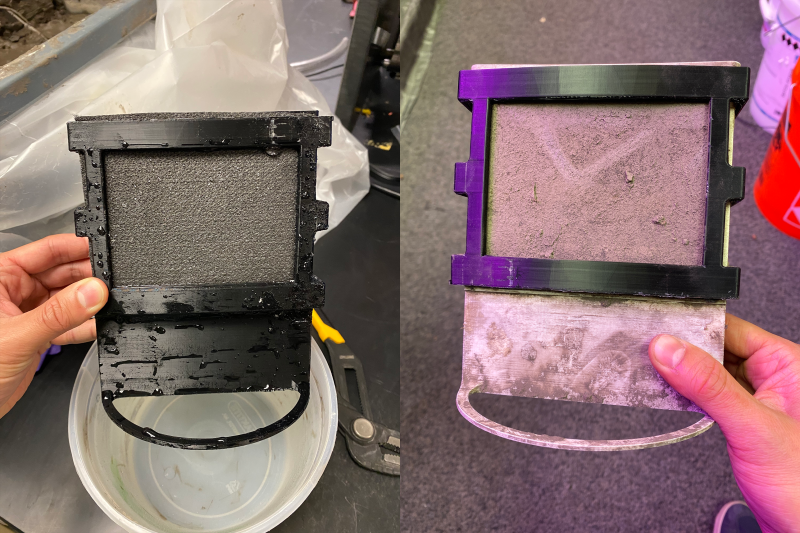
    Meanwhile, the conductive metal cathode is positioned vertically above the anode. The lower portion is sufficiently deep to access moisture from the soil’s depths, while the upper part is level with the surface. An air gap extends along the entire length of the electrode, and a protective cap on the top prevents soil and debris from obstructing the cathode’s oxygen supply. Moreover, a portion of the cathode receives a coating of waterproof material, guaranteeing that in flooded conditions, a hydrophobic segment persists in contact with oxygen, thereby maintaining the fuel cell’s operation.

    During testing, this design consistently performed well across various soil moisture levels, ranging from being completely submerged to “somewhat dry,” with soil moisture at just 41% by volume. On average, it produced power exceeding the requirements for operating its built-in moisture and touch detection systems, as well as transmitting data wirelessly to a nearby base station via a small antenna, by a factor of 68.

    Clean and dirty microbial fuel cells, with the disc-shaped anode at the bottom removed
    Bill Yen/Northwestern University

    The electricity produced by this technology, similar to other enduring sources like betavoltaic diamond batteries, isn’t enough for running devices like dirt-fueled cars or smartphones. Instead, its main purpose is to consistently power small sensors without needing frequent battery replacements.

    Harnessing Soil Microbial Fuel Cells for Long-Term Energy Solutions

    Yen emphasizes the importance of seeking alternatives to environmentally harmful materials such as lithium and heavy metals for future tech advancements. Soil microbial fuel cells offer a promising solution by tapping into the energy released from soil decomposition by microbes. With organic carbon present, these fuel cells could potentially operate indefinitely.

    Thus, sensors driven by this technology could greatly assist farmers in monitoring various soil conditions like moisture levels, nutrient content, and contaminants, enabling precision agriculture. Installing multiple sensors across a property could ensure continuous data collection for many years, possibly even decades.

    Microbial fuel cells in lab-based soil testing
    Bill Yen/Northwestern University

    Highlighting the impressive aspect, the research team underscores that all components of this design are readily available for purchase from a hardware store. Therefore, there are no supply chain or material obstacles preventing the widespread commercialization of this research.


    Read the original article on: New Atlas

    Read more: Semi-transparent Solar Cell Achieves Groundbreaking Energy Conversion rates

  • The Flea Toad May be the Tiniest Vertebrate on Earth

    The Flea Toad May be the Tiniest Vertebrate on Earth

    A group of biologists from Universidade Estadual de Santa Cruz in Brazil has confirmed that the Brachycephalus pulex, commonly known as the Brazilian flea toad, found exclusively in southern Brazil, holds the title of the world's smallest amphibian and vertebrate. Their findings are published in the journal Zoologica Scripta.
    Brachycephalus pulex. Credit: Dias, I/Wikimedia Commons, CC BY-SA

    A group of biologists from Universidade Estadual de Santa Cruz in Brazil has confirmed that the Brachycephalus pulex, commonly known as the Brazilian flea toad, found exclusively in southern Brazil, holds the title of the world’s smallest amphibian and vertebrate. Their findings are published in the journal Zoologica Scripta.

    In 2011, researchers initially encountered the diminutive frog. The team’s exploration indicated that the frog inhabits only a handful of hills in a specific area of Bahia, Brazil’s southern region. At that time, scientists classified the creature as a toad, leading to its name.

    In the recent study, the researchers revisited the original discovery site, capturing and releasing several additional specimens after ensuring they were fully grown by examining their gonads and vocal slits. Once maturity was confirmed, the researchers measured the body length of each specimen.

    Unveiling the Remarkable Size of the Brazilian Flea Toad

    Analysis of 46 specimens revealed that adult males averaged slightly over 7 millimeters in body length, making them smaller than a pea—approximately two could fit comfortably on a pinky fingernail. Females were slightly longer on average by 1 millimeter. Notably, the smallest specimen measured a mere 6.45 millimeters, approximately 30% smaller than the previously known tiniest frog.

    The discovery marks the smallest known vertebrate, although it may not be the absolute smallest. The researchers propose the existence of potentially smaller creatures yet to be discovered and researched. They also highlight the likelihood of inherent limitations—many tiny frogs exhibit peculiar traits, such as reduced toes or underdeveloped ears, indicating that frogs smaller than the observed ones may struggle to survive.


    Read the original article on: Phys Org

    Read more: Frog Grows Mushroom Baffles Scientific Community

  • Earth Doctors Skillfully Operate a Space-Based Surgical Robot

    Earth Doctors Skillfully Operate a Space-Based Surgical Robot

    A team of six doctors in Nebraska has accomplished a surgical robot operation on the International Space Station (ISS). While the procedure was conducted on rubber bands this time, this achievement holds significance for upcoming missions to Mars and for remote operating rooms in rural areas on Earth.
    Virtual Incision co-founder Shane Farritor tries his hand at controlling spaceMIRA
    Craig Chandler, UNL Communication and Marketing

    A team of six doctors in Nebraska has accomplished a surgical robot operation on the International Space Station (ISS). While the procedure was conducted on rubber bands this time, this achievement holds significance for upcoming missions to Mars and for remote operating rooms in rural areas on Earth.

    Robotic Surgical Arm Tested for Space Operations

    In a recent development, a robotic surgical arm called spaceMIRA (miniaturized in vivo robotic assistant) was transported to the International Space Station (ISS) earlier this year via a SpaceX rocket. This arm, a collaboration between the University of Nebraska-Lincoln (UNL) and Virtual Incision, a private company, has now been unpacked and utilized. Earth-based doctors remotely operated the arm to perform a series of cutting and grasping actions, simulating surgical procedures on human tissue.

    The arm, measuring approximately 30 inches (76 cm) in length and weighing around 2 pounds (0.9 kg), is contained within a box resembling the size of a microwave, where the testing took place. Equipped with an integrated camera, surgeons remotely maneuvered the arm to grip and cut through 10 rubber bands, serving as a substitute for human tissue.

    Astronaut and Flight Engineer Loral O’Hara got the spaceMIRA box ready aboard the ISS
    NASA

    The surgeons carried out the testing at Virtual Incision’s headquarters in Lincoln, Nebraska, while mission control was overseen from NASA’s Payload Operations Center at the Marshall Space Flight Center in Huntsville, Alabama. Six surgeons took turns operating the arm during a two-hour testing session.

    Overcoming Latency Challenges in Remote Surgical Operations

    All participants successfully completed the task despite experiencing a latency of between 0.5 to 0.75 of a second. To address this delay, the researchers experimented with different scaling factors. For instance, larger movements on Earth translated into smaller movements aboard the ISS.

    Michael Jobst, a colorectal surgeon based in Lincoln, who was the first to operate the controls, commented, “You have to wait a little bit for the movement to happen; it’s definitely slower movements than you’re used to in the operating room.” Jobst has previously utilized a terrestrial version of the robotic arm, known as MIRA, to perform successful colon surgery on patients on Earth.

    Dr. Michael Jobst, a colorectal surgery specialist in Lincoln, made the first cuts with spaceMIRA
    Craig Chandler, UNL Communication and Marketing

    The surgeons not only had to perform 20 precise cuts on both sides of the rubber bands but also had to ensure they didn’t accidentally hit the arm against its casing. Such an impact could have caused damage and potentially released debris into the ISS, posing a significant risk.

    Exploring Potential Applications of Remote Surgical Procedures

    The successful test not only indicates the feasibility of performing surgeries during longer space missions like those to Mars but also suggests potential applications for remote surgical procedures on Earth, particularly in areas lacking access to onsite surgical teams.

    Shane Farritor, the UNL professor and co-founder of Virtual Incision leading the development of spaceMIRA, remarked, “SpaceMIRA’s achievement aboard the space station, orbiting 250 miles above Earth, underscores its potential value for healthcare facilities on Earth.”

    Virtual Incision described the experiment as a resounding success, with surgeons and researchers encountering minimal issues. The company anticipates that this advancement will revolutionize the future of surgery.


    Read the original article on: New Atlas

    Read more: NASA Shares a Cute Cat Video from Deep Space with Earth

  • CO2 Drop Tied to Earth’s Severe Ice Age

    CO2 Drop Tied to Earth’s Severe Ice Age

    Geologists have provided fresh insights into Earth's natural temperature regulation system. They suggest that the movement of tectonic plates, which resulted in decreased volcanic activity, is the probable cause of the severe ice age that transformed the planet into a massive snow-covered sphere more than 700 million years ago.
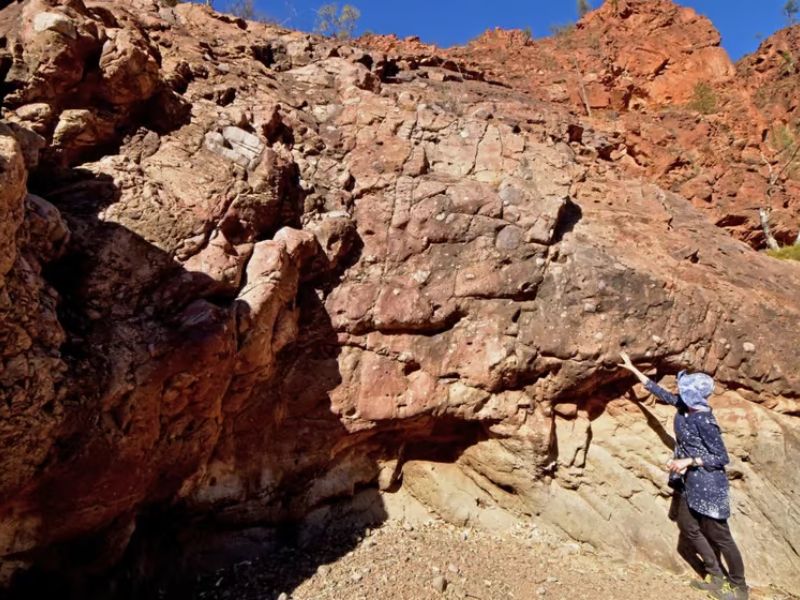
    Lead author Adriana Dutkiewicz points to deposits left behind during the Sturtian glaciation in Australia’s northern Flinders Ranges
    Professor Dietmar Müller/University of Sydney

    Geologists have provided fresh insights into Earth’s natural temperature regulation system. They suggest that the movement of tectonic plates, which resulted in decreased volcanic activity, is the probable cause of the severe ice age that transformed the planet into a massive snow-covered sphere more than 700 million years ago.

    In recent decades, there has been significant focus on atmospheric carbon dioxide. As the most abundant greenhouse gas in our atmosphere, its anthropogenic emissions have led to a substantial and relatively swift increase in global temperatures.

    While contemporary concerns focus on the surplus of CO2 warming our atmosphere, geologists propose that millions of years ago, a deficiency of this gas had the opposite effect. Published in the journal Geology, researchers from the University of Sydney and the University of Adelaide elucidate a period around 700 million years ago when the ancient supercontinent Rodina began fracturing, generating new oceanic crust that curbed CO2 release from underwater volcanoes.

    Volcanic Weathering in Canada

    Concurrently, a substantial mass of volcanic silicate rocks in what is now Canada underwent weathering, further sequestering CO2 from the air. These combined processes, the researchers assert, lowered atmospheric CO2 levels to below 200 parts per million—half of today’s concentrations—ushering in the Sturtian glaciation, a 57-million-year ice age characterized as “the most extreme interval of icehouse climate in Earth’s history,” according to the study.

    Notably, around a decade ago, another group of scientists posited that the Sturtian glaciation stemmed from volcanic activity. However, Harvard researchers at the time suggested that cooling was primarily driven by aerosols ejected into the atmosphere from volcanoes, rather than by diminished volcanic activity.

    Confirming the hypothesis, the commencement of this ice age occurred devoid of any organic life forms on Earth, indicating that only geological processes could have influenced atmospheric carbon levels.

    Geology governed climate during this period,” explained Dietmar Müller, co-author of the study from the University of Sydney. “We propose that the Sturtian ice age was instigated by a dual effect: a reorganization in plate tectonics minimized volcanic degassing, while concurrently, a volcanic province in Canada began weathering away, absorbing atmospheric CO2.”

    Geological Clues to Future Climate

    These findings, according to the geologists, may provide insight into future temperature shifts on Earth. Current trends show that increased continental collisions are again slowing CO2 emissions from volcanic sources, potentially steering the planet toward another ice age in the distant future. However, such a trajectory would unfold over millions of years, contrasting sharply with the rapid climate changes driven by human activities witnessed today.

    Regardless of future scenarios, it’s crucial to recognize that geological climate transformations, like the one examined here, occur at an exceedingly gradual pace,” emphasized Adriana Dutkiewicz, the study’s lead author from the University of Sydney. “NASA reports that human-induced climate change is occurring ten times faster than historical rates.”


    Read the original article on: News Atlas

    Read more: A Computer Science Technique Might Assist Determine When The Pandemic is ‘Over’

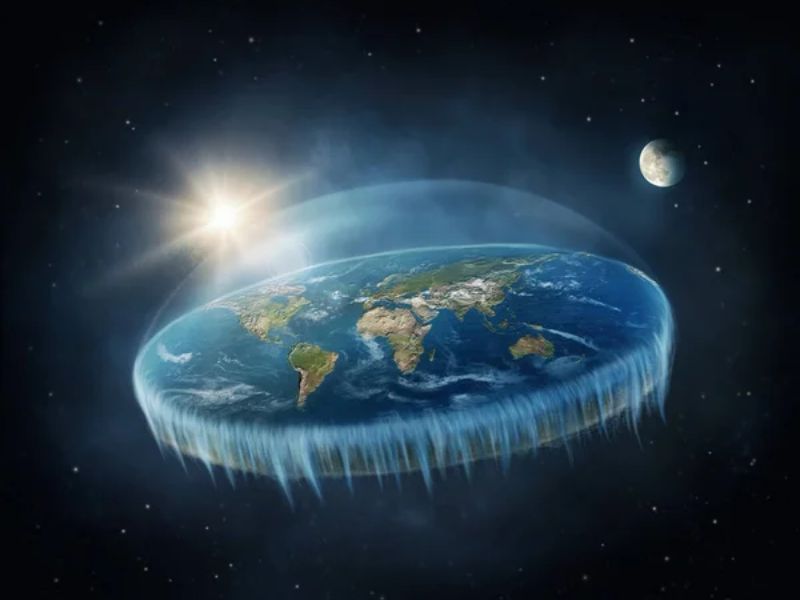
  • Earth Might Have Been Flat in the Distant Past – Sort Of

    Earth Might Have Been Flat in the Distant Past – Sort Of

    Researchers at the University of Central Lancashire (UCLan) have discovered that newly formed planets could initially have a flatter shape before becoming more rounded, suggesting that the concept of a flat Earth might have some validity, albeit billions of years ago.
    Earth may have gone through a bit of a flat phase, early in its development
    Depositphotos

    Researchers at the University of Central Lancashire (UCLan) have discovered that newly formed planets could initially have a flatter shape before becoming more rounded, suggesting that the concept of a flat Earth might have some validity, albeit billions of years ago.

    Planets typically emerge from protoplanetary discs, which are comprised of rings of dust and gas encircling stars. However, the precise process of planetary formation remains a topic of debate. The prevailing theory, core accretion, suggests that dust particles gradually aggregate, forming increasingly larger structures that eventually develop into planets. An alternative model, disc instability, is considered less favored but still viable. It proposes that planets form more rapidly when the protoplanetary disc cools and condenses into clumps that subsequently evolve into planets.

    UCLan’s Supercomputer Simulations

    In their recent research, the UCLan scientists conducted supercomputer simulations to explore an aspect of planet formation that has received little attention thus far – the initial shape of young planets.

    We’ve been delving into planet formation for quite some time, but it never occurred to us to examine the shape of emerging planets in our simulations,” noted Dr. Dimitris Stamatellos, a co-investigator of the study. “Previously, we had simply presumed they would be spherical.”

    Simulated images of a “flat” protoplanet shown from above (left) and side-on (right)
    UCLan

    The researchers discovered that planets formed through disc instability don’t expand uniformly, maintaining a spherical shape throughout their growth process. Instead, they tend to accumulate more material at their poles than at their equators, causing them to stretch into an oblate spheroid, resembling a flattened oval shape. As these nascent planets continue to develop, they would eventually assume their characteristic spherical form.

    Although these findings are based solely on simulations at present, the team suggests that observing young planets to determine if any exhibit this peculiar shape could provide insights into confirming or refuting the disc instability theory of planet formation.

    The study has been approved for publication in the Astronomy and Astrophysics Letters journal (PDF).


    Read the original article on: New Atlas

    Read more: Hubble Space Telescope Detects Water Vapor in Atmosphere of Small Exoplanet

  • Endurance Strategies: Building Blocks of Life Amidst Early Earth’s Intense Radiation

    Endurance Strategies: Building Blocks of Life Amidst Early Earth’s Intense Radiation

    Safeguarding Life's Foundations: Manganese Ions Potentially Shielded Early Building Blocks from Gamma Radiation.
    Safeguarding Life’s Foundations: Manganese Ions Potentially Shielded Early Building Blocks from Gamma Radiation.
    Image Credit: IgorZh/Shutterstock

    The emergence of life on Earth is shrouded in mysteries, and one of the perplexing puzzles is how the essential molecules for life withstand the intense radiation prevalent during the early stages. While space harbors intricate chemistry, including amino acids found in asteroids, radiation poses a significant threat to delicate molecular structures. A recent study led by Professor Bing Tian from Zhejiang University explores a potential safeguard against radiation—manganese ions.

    The Menace of Radiation and the Resilience of Deinococcus radiodurans

    The early Earth was subjected to substantial gamma radiation, a formidable challenge for organic molecules. Deinococcus radiodurans, a bacterium renowned for surviving lethal radiation doses, offers insights into how early life forms might have coped with such hostile conditions.

    The Murchison meteorite demonstrated the presence of essential life-building components on early Earth. However, only recently have we gained insights into the reasons behind their preservation. Image credit: James St. John via Flickr (CC BY 2.0)

    Previous studies revealed the bacterium’s reliance on manganese 3+ ions to shield vulnerable molecules from radiation-induced oxidative stress.

    Polyphosphates and Manganese: A Dynamic Duo in Radiation Defense

    The researchers hypothesized that phosphate residues, specifically polyphosphates, might collaborate with manganese ions in offering protection. Polyphosphates, present on Earth long before the emergence of life, were known to contribute phosphates to crucial molecules like ATP.

    The team constructed model protocells from coacervates liquid droplets to test their theory and exposed them to substantial gamma radiation.

    Manganese-Powered Resilience: A Key Revelation

    The results were striking. Coacervates containing polyphosphate-manganese emerged unscathed, even preserving proteins from the surrounding environment. In contrast, coacervates with polyphosphates paired with a peptide instead of manganese were annihilated.

    Manganese ions, acting as antioxidants, proved highly effective in scavenging reactive oxygen species, leaving proteins undamaged. The experiment, repeated with DNA, showcased similar radiation resistance.

    Bridging the Gap: From Protocells to the Origin of Life

    While the study marks a significant stride in understanding how life’s precursors may have overcome radiation challenges, it acknowledges the complexity involved in the transition from manganese ions and polyphosphates to the intricate process of self-replication.

    Nevertheless, this research addresses a previously insurmountable obstacle to unraveling the mysteries of life arising from non-life.


    Read the original article on  Nature Communications.

    Read more: Ideal Stars for Finding Life.