
Tag: Economics

  • Using Squid Game to Teach Economics

    Using Squid Game to Teach Economics

    Logo of the game host in the hit series squid game

    Teaching with Squid Game

    First-year business and economics students throughout the globe might in the future be using Netflix’s international hit series “Squid Game” to learn intricate economic concepts.

    A new article by the Monash Business School has shown how incorporating the hit dystopian series “Squid Game” techniques can reinvent how students learn Game Theory, one of the most difficult concepts of introductory economics.

    Scientists from the Monash Business School have created a series of ingenious and interactive educating tools based on information from Squid Game to offer professors and students a new approach to teaching and learning, one of the most requiring subjects at introductory level economics.

    From the first term, students studying first-year microeconomics at the Monash Business School will be using the Squid Game ideas.

    Associate Professor Wayne Geerling from the Monash Business School and co-author of the paper “Using ‘Squid Game’ to Teach Game Theory” stated that “Game theory is an essential since it aids in comprehending decision making in strategic scenarios.

    Professor Wayne continues by adding that the players in ‘Squid Game’ are a metaphor for business. The team has analyzed the calculated interactions of ‘Squid Game’ compared to a real-world organization. Exactly how do players, ie business, engage. Game theory has many real-world applications, studying how activities affect others and the strategic ramifications of such.

    Game theory, made a bit easier

    Associate Professor Geerling has detected a variety of scenes from the top-rated television series that can be employed to teach the concepts of game theory. He has created a series of training guides that any professor can use or adjust anywhere globally.

    The economics line of work has been well-known for its ongoing dependence on ‘chalk and talk’ to provide lectures. However, a considerable quantity of research spearheaded by Associate Professor Geerling and his coworkers has concentrated on ingenious ways to teach economic concepts.

    Professor Geerling states that numerous students battle to think strategically when a material is instructed with conventional techniques alone. Pop culture, such as “Squid Game,” can be used as a reliable tool to break down obstacles to learning. It takes advantage of everyday life and enables students to see connections between abstract concepts and real-life applications.

    “Squid Game” focuses on 456 players, all of whom are greatly indebted, risking their lives to play a series of six children’s games (with a lethal spin) versus each other. The reward for the victor is a massive bounty. For everyone else, the consolation prize is death.

    In “Squid Game,” the players make decisions in real-time without complete details, to endure, they need to work out their ideal techniques optimizing their odds of winning, much like the real world of business.

    Associate Professor Wayne Geerling stated that the Netflix series focuses on six games. The team selected three to exemplify the best practical uses of game theory for students.

    Utilizing “Squid Game” to teach game theory mirrors Associate Professor Geerling’s enthusiasm for transforming how we teach economics and encouraging active learning methods in class using pop culture.

    Professor Geerling stated that regardless of the growth in teaching tools and the ability for professors to incorporate creative teaching techniques into their courses more easily, the substantial majority of professors continue to educate using a classic lecture.


    Read the original article on PHYS.

    Related “AI Programmers Typically Ignore Security in Search of Innovation– How Do We Regulate Them Without Obstructing Progression?”
  • Wharton Professor Explains What All the Buzz Around Bitcoin is About

    Wharton Professor Explains What All the Buzz Around Bitcoin is About

    Credit: Alesia Kozik/pexels.com

    The Wharton School’s Mauro Guillén, a professor of international management, responds to inquiries about the increased interest.

    Elon Musk energized the possibilities for Bitcoin stock earlier this month when he promised that Tesla, Inc. will soon accept payment for its electric vehicles in the much-discussed but little-known currency.

    Mauro Guillén, previously the head of the Lauder Institute and the Zandman Endowed Professorship in International Management at the Wharton School, discussed Bitcoin with Penn Today.

    What is Bitcoin?

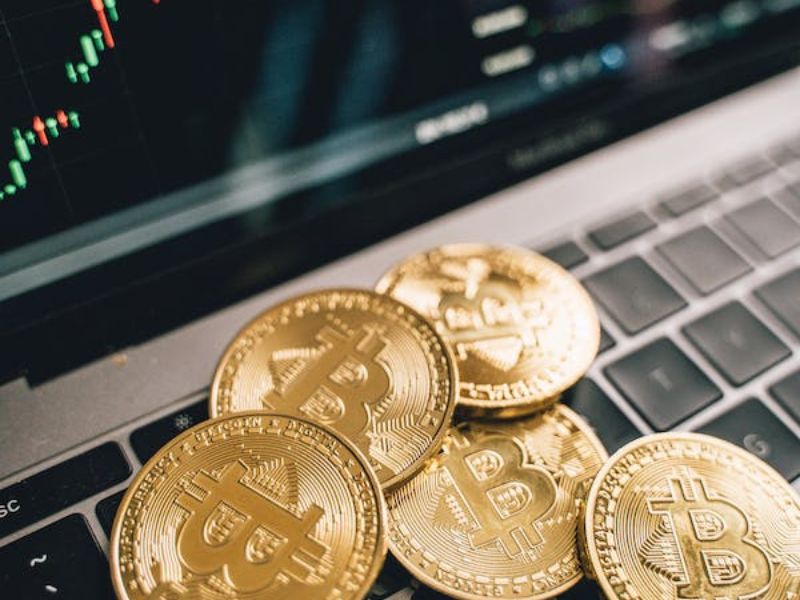
    One of the first and undoubtedly the most well-known cryptocurrencies is Bitcoin. It differs from government-issued fiat money in that there is no centralized authority supporting it. The number of bitcoins in exchange, which can only slowly rise over time, the verification of transactions, and the manner in which ownership is recognized are instead controlled by a set of mathematical rules.

    What distinguishes it from money produced by central banks?

    Money has three functions: first, as a means of exchange for sending and receiving payments; second, as a standard of measurement used to determine the value of various items; and third, as a store of value used to hold savings or surpluses. Due to the fact that only a small number of people, businesses, or governments currently accept Bitcoin as payment, it is currently an extremely limited mode of exchange. Although it has no function as a unit of account, it can be thought of as a store of value because it is an asset that can be bought and whose value may be preserved or even grow over time.

    What is the cause of the price rise?

    Bitcoin’s price is solely governed by supply and demand because, unlike gold, it does not produce a dividend and has no intrinsic worth. Design constraints on the supply mean that the price is a function of demand. Price increases are inversely correlated with demand, as has been the case over the past few months.

    Is it volatile at all?

    Bitcoin is really erratic. The demand determines the price primarily. If present Bitcoin owners foresee or perceive problems, their sales could bring the price down. If it is restrictive, governmental or central bank regulation may also lower its value. For instance, the Fed has vocally opposed unregulated cryptocurrencies on numerous occasions over the past few years, leading to a sharp decline in value. Bitcoin’s price is one of the most erratic.

    How do you exchange it, spend it, and store it?

    To purchase bitcoins, one must open an account on a fintech platform, or increasingly, a financial institution or bank, and use another currency, such as dollars. The so-called blockchain, a computerized database or ledger that keeps track of all operations, is the foundation of the Bitcoin market. This registry is decentralized in the sense that it is present on each computer connected to the network. Given the lack of a centralized authority,’miners,’ who receive a commission for confirming that a transaction has occurred, verify Bitcoin transactions.

    On the same platforms, one can sell bitcoins. Only a small portion of all businesses around the world accept it as a form of payment.

    One key issue with Bitcoin’s design is that, due to the size of the global economy, it is hard for it to become a major participant in payments if the quantity of cryptocurrency in circulation grows extremely slowly. Thus, the alleged objective of developing into a currency that competes with the dollar or the euro is hampered by the goal of achieving stability through a supply restriction. This cryptocurrency cannot potentially function as a medium of exchange for billions of people until additional bitcoins are produced.

    What awaits us in the future?

    Cryptocurrencies like Bitcoin won’t ever be accepted as a stand-alone form of payment by governments or central banks, in my opinion. They don’t want to cede control of the monetary system or the amount of money in circulation. Governments will inevitably create their own virtual money, as China is set to do.

    However, if cryptocurrencies evolve beyond being merely money, they may have a future. They can be a component of a package of services, such as digital tokens that let users sign up for smart contracts, get discount coupons, vote in elections, or as shareholders, etc.


    Read the original article on Scitechdaily.

    Read more: Will Central Bank Digital Currencies Doom Dollar Supremacy?