Tag: Electricity

  • Finland Already Transmits Electricity Wirelessly

    Finland Already Transmits Electricity Wirelessly

    Finnish researchers are advancing wireless power transmission using ultrasonic waves, lasers, and radio frequencies, paving the way for applications in industry, homes, and sensor networks.
    Image Credits:regisandrade

    Finnish researchers are advancing wireless power transmission using ultrasonic waves, lasers, and radio frequencies, paving the way for applications in industry, homes, and sensor networks.

    The project is led by researchers from the Universities of Helsinki and Oulu, aiming to develop safe, efficient, and scalable wireless power solutions for challenging environments.

    One of the most groundbreaking ideas being explored is known as the “acoustic wire.” This technique uses powerful ultrasonic waves projected into the air to form an invisible channel with reduced electrical resistance. The channel temporarily guides electrical flow, enabling controlled discharges between a transmitter and a receiver. Sound waves stabilize electricity by changing air density along the path.

    Early Tests Power Small Devices Wirelessly

    In labs, researchers have directed small currents to power sensors and microcontrollers, hinting at future wireless charging and contactless systems.

    Another advancing method focuses on energy transfer via light. Researchers convert power into a laser beam and direct it to photovoltaic receivers, providing safe, isolated energy for hazardous environments.

    Finnish companies are testing prototypes to power remote equipment, with advances in optics and materials expected to enable commercial use despite distance and atmospheric limits.

    Radio-Frequency Harvesting Enables an Invisible Energy Network

    At the same time, developments in radio-frequency energy harvesting are leading to an “invisible energy network.” Prototype devices can already extract small amounts of power from ambient electromagnetic signals, including radio, television, mobile, and Wi-Fi transmissions. Although the harvested energy remains limited, it powers ultra-low-power IoT sensors, smart labels, and environmental monitoring systems.

    Researchers say this technology could reduce disposable battery use, enabling self-powered devices across smart cities and industries.

    Researchers are developing ultrasonic, laser, and radio-frequency methods as a unified wireless energy system, applying each based on environment, power needs, and safety. Lasers and acoustic pathways may suit industrial settings, while radio-frequency energy could support urban sensor networks and smart infrastructure.

    Key Technical, Safety, and Scalability Challenges Remain

    However, major hurdles still need to be overcome. Key challenges include efficiency over distance, stability in varying conditions, laser safety, and regulating ultrasonic and optical waves. Scaling the technology to higher power levels will also require advanced materials, more complex control systems, and dedicated technical standards.

    Even so, specialists believe Finland is already leading a significant shift in the electricity landscape. If ongoing trials succeed outside the lab, wireless power could power devices, redesign industrial facilities, and protect critical infrastructure.

    The technology could eliminate connectors in electronics, strengthen remote energy systems, cut maintenance costs, and enable new cable-free applications.


    Read the original article on: Regisandrade

    Read more:Electronic Tattoos can Warn of Excessive Workload

  • Finland is Developing Wireless Power Tech that Could Transform the Future of Electricity

    Finland is Developing Wireless Power Tech that Could Transform the Future of Electricity

    Nikola Tesla would be pleased: Finnish researchers are bringing his century-old idea to life, developing systems that transmit energy wirelessly through the air or smart, invisible conductors. This would allow devices and vehicles to charge without cables or direct physical contact.
    Image Credits:regisandrade

    Nikola Tesla would be pleased: Finnish researchers are bringing his century-old idea to life, developing systems that transmit energy wirelessly through the air or smart, invisible conductors. This would allow devices and vehicles to charge without cables or direct physical contact.

    Enhancing Efficiency and Mobility

    Their work brings together advanced research in electromagnetic fields, resonance, and conductive surfaces. The team is exploring how to accurately direct energy waves to nearby devices while ensuring stability, safety, and efficiency.This technology could reduce energy losses, improve mobile systems, and replace bulky infrastructure, aiding automation, robotics, and smart devices.

    O estudo também desenvolve materiais avançados que se incorporam a pisos, paredes e estruturas urbanas, transformando-os em pontos de distribuição de energia. This would enable sensors, autonomous machines, industrial tools, and household devices to operate without traditional power outlets. By integrating energy into the infrastructure itself, it becomes invisible and untethered from wires, supporting adaptive, connected environments.

    Dynamic Charging and Smart Transportation with Electreon

    Collaboration with Electreon further expands possibilities, leveraging the company’s expertise in electrified roads that charge vehicles while in motion. Combining this knowledge allows for dynamic charging applications, where cars, buses, and trucks receive energy via coils beneath the pavement. This approach creates smart transportation routes, reduces battery requirements, extends vehicle range, and promotes sustainability.

    These advancements are driving the creation of invisible energy networks that power homes, industries, and cities.”Devices could run autonomously, vehicles charge on the move, and robots operate freely, creating a wireless energy ecosystem that positions Finland as a global innovation leader.


    Read the original article on: Regisandrade

    Read more:Experts say the Popular Rosemary Skincare Craze Really does Work

  • Researchers Invent Slime Capable of Producing Electricity

    Researchers Invent Slime Capable of Producing Electricity

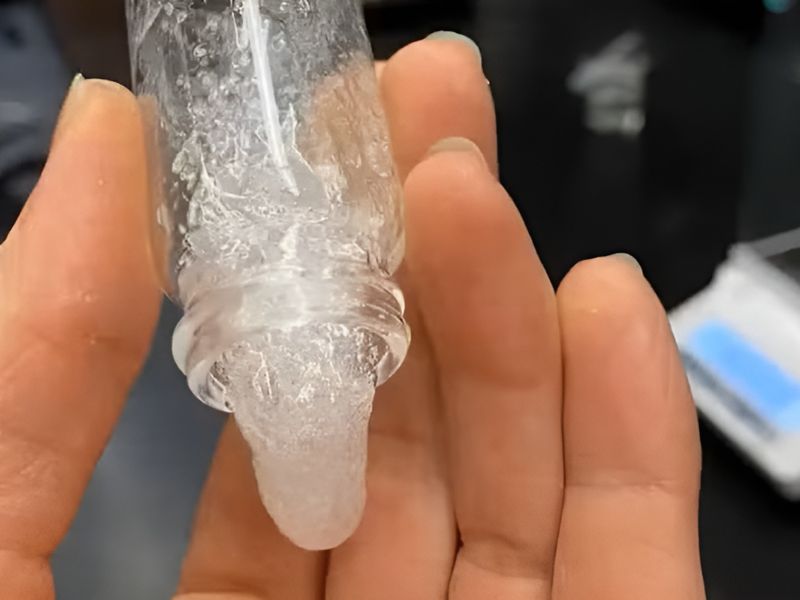
    Scientists at the University of Guelph in Canada have developed a slime that produces electricity when squeezed. Although still in the prototype phase and undergoing early testing, the invention is already receiving praise from its creators. The findings were reported in a scientific article in the journal Science Direct.
    Image Credits:Divulgação/Universidade de Guelph e Canadian Light Source

    Scientists at the University of Guelph in Canada have developed a slime that produces electricity when squeezed. Although still in the prototype phase and undergoing early testing, the invention is already receiving praise from its creators. The findings were reported in a scientific article in the journal Science Direct.

    The Canadian Light Source, the research facility involved in the study, explained that the slime consists of 90% water, along with oleic acid (found in olive oil) and amino acids. This combination makes the material safe to handle and suitable for direct contact with skin.

    Biocompatible Piezoelectric Slime Generates Electricity Under Pressure

    The slime developed by the researchers exhibits a piezoelectric effect, allowing it to produce electrical charges when compressed. “Many materials with this property exist, but most are not biologically based or fully biocompatible,” said Erica Pensini, the lead scientist on the project, in an interview with CTV.

    In a CBC interview, Erica explained that energy-generating materials have dipoles, acting like “tiny batteries” with two poles. In most materials, these dipoles are misaligned, preventing electricity generation. The researchers found a way to align the molecules so compression generates energy.

    Prototype Slime Shows Promise for Clean Energy and Healing Applications

    Erica’s team believes the prototype could provide clean energy and support wound healing. “I apply the material to my hands. Ideally, it could enhance the body’s regeneration, since piezoelectricity plays a key role in many biological processes,” Erica said.

    The practical uses of electric slime are still being explored, but Erica’s team sees its potential for generating energy from floors, enhancing robotic skin, or tracking movement in shoe soles.

    Although it’s too early to know when—or if—this material will become part of everyday life, the potential applications are undeniably exciting.


    Read the original article on: Revista Galileu

    Read more:High-Tech Materials Boost The Efficiency of Flexible Digital Screens

  • Bending Ice Produces Electricity, Possibly Explaining Lightning

    Bending Ice Produces Electricity, Possibly Explaining Lightning

    Researchers at ICN2 have found that bending ice produces electricity, offering new insight into the origin of lightning. Ubiquitous in nearly all cold ecosystems, ice is still unveiling hidden properties.
    Image Credits:http: pplware.sapo.pt

    Researchers at ICN2 have found that bending ice produces electricity, offering new insight into the origin of lightning. Ubiquitous in nearly all cold ecosystems, ice is still unveiling hidden properties.

    Ice Proven to Be Flexoelectric Through International Collaboration

    In a global collaboration with Xi’an Jiaotong University (China) and Stony Brook University (USA), the Catalan Institute of Nanoscience and Nanotechnology (ICN2) has shown that ice is flexoelectric—capable of generating electricity when unevenly deformed.

    Published in Nature Physics, this finding not only paves the way for technological advances but also offers a credible physical explanation for how lightning arises in thunderstorms.

    The study revealed that ice, even near 0 °C, exhibits an electrical response when unevenly bent or stressed.

    In addition, at ultra-low temperatures (below –113 °C or 160 K), researchers identified a thin ferroelectric layer on the surface of ice.

    Dual Electrical Properties Reveal the Hidden Complexity of Ice

    This layer enables reversible electrical polarization, similar to a magnet’s polarity reversal. Together, the coexistence of ferroelectricity in extreme cold and flexoelectricity at higher temperatures reveals ice to be far more intricate and fascinating than once believed.

    Image Credits: pplware.sapo.pt

    A key highlight of this research is its direct link to the natural mechanisms behind lightning.

    While it was already known that storms arise from charge buildup in clouds caused by ice particle collisions, the exact process of charge generation had remained unclear.

    Flexoelectric Ice Explains Charge Generation in Storm Clouds

    The study demonstrates that when ice bends unevenly—something that naturally occurs during collisions in clouds—it produces electric charge through flexoelectricity.

    In experiments, scientists bent an ice sheet placed between two electrodes and measured the resulting voltage, which aligned with the electrical potentials observed in thunderstorm data.

    These findings strengthen the idea that ice flexoelectricity could be the driving force behind cloud electrification, a crucial step in the creation of lightning.

    Image Credits: pplware.sapo.pt

    Surprisingly, ice itself could serve as a functional material in electronic devices. This is particularly relevant in cold environments such as polar regions, high mountains, or even future space missions to icy moons like Europa or Enceladus, where producing conventional materials is impractical.

    Flexoelectric Ice as a Power Source for Next-Generation Sensors

    Thanks to flexoelectricity, ice can generate current without external power, enabling the creation of autonomous sensors, climate monitoring tools, or seismic detectors.

    Amid today’s climate crisis, leveraging low-impact technologies powered by natural processes marks a strategic step forward.

    In places like the Arctic, where harsh conditions hinder the operation of standard equipment, devices that use ice as an active element could enable continuous tracking of ice melt, methane release, or tectonic shifts beneath glaciers.


    Read the original article on: Pplware Sapo Pt

    Read more: The MOTIF Hand: A Step Forward in Robotic Hand Technology

  • Substitute For Cement Sand Made From Seawater, Electricity, And CO2

    Substitute For Cement Sand Made From Seawater, Electricity, And CO2

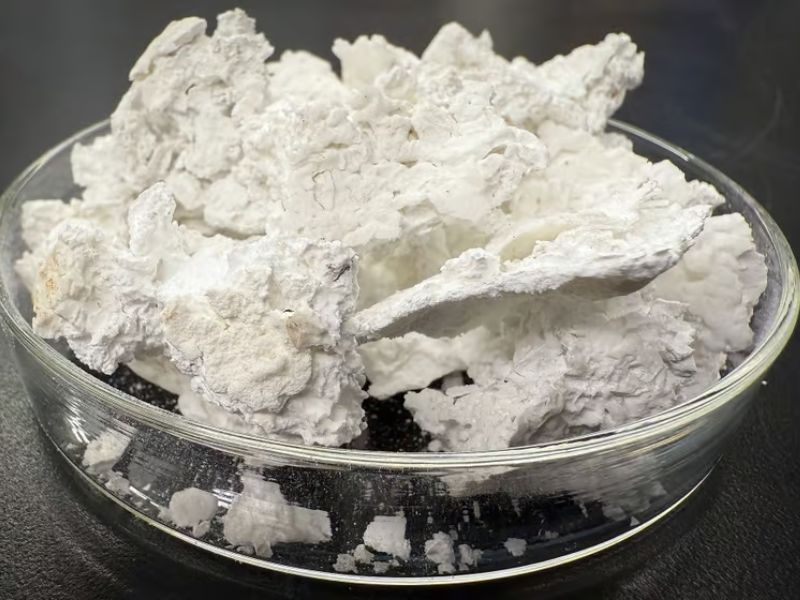
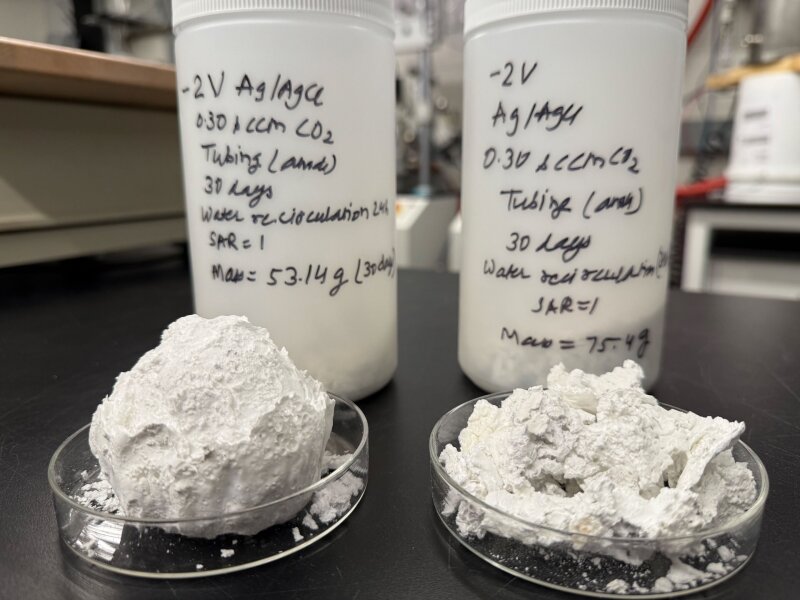
    A sample of the new carbon-negative material, made from seawater, electricity and CO2
    Northwestern University

    This seemingly simple white paste could be key to addressing the global sand shortage while also transforming the cement production process to capture, rather than emit, carbon dioxide. Researchers at Northwestern University have developed this material using seawater, electricity, and CO2.

    Concrete is the most widely used man-made material worldwide, but its production is also one of the most polluting processes. Furthermore, the demand for sand, a crucial ingredient in concrete, is becoming increasingly difficult to meet due to environmental and financial challenges in extracting it from coasts, riverbeds, and seafloors.

    A New Material to Address Both Sand Shortage and Carbon Emissions

    Northwestern’s innovative material could help tackle both issues. Made of calcium carbonate and magnesium hydroxide in various proportions, this material is relatively easy to create—simply combine seawater, apply electricity, and bubble CO2 through it.

    The method mimics how corals and mollusks create their shells, according to the research team.

    Here’s how it works: two electrodes in the solution generate a low electrical current that splits water molecules into hydrogen gas and hydroxide ions. When CO2 is introduced, the chemical composition of the water changes, boosting the levels of bicarbonate ions. These ions then react with other natural elements in seawater to form solid minerals that accumulate at the electrodes.

    A Versatile Material for Construction and Carbon Storage

    The result is a flexible white substance that not only stores carbon but can replace sand or gravel in cement. It can also serve as a base for materials like plaster and paint.

    Interestingly, the team found that they could fine-tune the properties of the material by adjusting the flow rate, CO2 and seawater timing, and the voltage and current applied.

    By tweaking the manufacturing process, the researchers can make the material with different properties for different purposes
    Northwestern University

    Alessandro Rotta Loria, the study’s lead author, explained, “We showed that when we generate these materials, we can fully control their properties, such as the chemical composition, size, shape, and porosity. This gives us the flexibility to develop materials suited to different applications.”

    This process is far more environmentally friendly than traditional methods. Not only does it reduce the need to mine large amounts of sand, but the only gaseous byproduct is hydrogen, which can be captured and used as a clean fuel. Additionally, the CO2 used could come from cement production emissions, potentially making cement manufacturing greener.

    Creating a Circular System for Carbon Capture in Cement Production

    Rotta Loria added, We could create a circular system where we capture CO2 right at the source. If concrete and cement plants are located near shorelines, we could use the nearby ocean to feed reactors that transform CO2 into materials using clean electricity. These materials would then become carbon sinks.

    Seawater, electricity, and CO2 are abundant and inexpensive resources, and although this process still needs to prove its scalability and commercial viability, it shows promising potential.

    If this engineered carbon-capturing sand substitute proves cheaper than transporting natural sand on a large scale, it could significantly contribute to decarbonization. However, it won’t completely solve the problem of green cement by itself. The primary source of carbon emissions occurs during the process of grinding sand with limestone and heating it above 1,400°C (1,670 °K) in a kiln.


    Read the original article on: New Atlas

    Read more: Mass Production of Floating Nuclear Plants for US Coast

  • Guiding Electricity Through the Air Using Ultrasound Pulses

    Guiding Electricity Through the Air Using Ultrasound Pulses

    Electricity is naturally unpredictable, typically requiring wires and circuits for control. However, researchers in Europe and Canada have successfully directed sparks through open air and around obstacles using ultrasound waves.
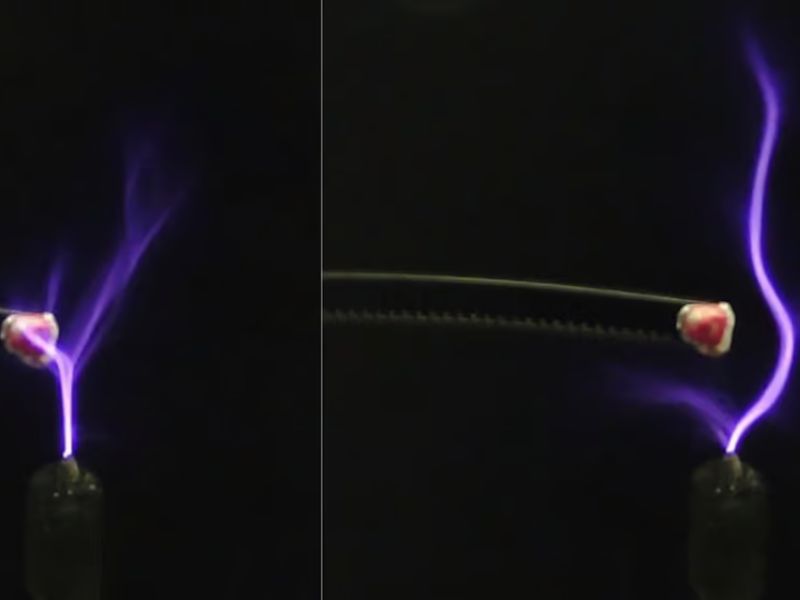
    Plasma sparks naturally (left) and ultrasound-guided (right)
    Josu Irisarri

    Electricity is naturally unpredictable, typically requiring wires and circuits for control. However, researchers in Europe and Canada have successfully directed sparks through open air and around obstacles using ultrasound waves.

    In open air, electricity naturally spreads in unpredictable directions—much like a lightning bolt. Its path is influenced by slight variations in air density, charge distribution, and attraction to metal objects. Managing these factors makes precise control challenging.

    Precision Control of Electric Sparks Through Air

    In a recent study, researchers from the University of Helsinki, Public University of Navarre, and the University of Waterloo developed a technique to steer electric sparks through the air. This method enables sparks to be guided with such precision that they can curve around obstacles and strike targeted points on a material, even if it isn’t conductive.

    We first noticed this phenomenon over a year ago, but it took months to control and even longer to understand,” said Asier Marzo, the study’s lead researcher.

    The key to this technique is ultrasound. Sound waves at these frequencies generate air pressure strong enough to levitate lightweight objects. While they don’t directly push the electricity, they effectively shape its path.

    When a spark forms, it heats the surrounding air, causing it to expand and lower in density. Since electricity naturally favors traveling through lower-density air, the spark moves in that direction. Ultrasound pulses manipulate this warm, less dense air, allowing the spark’s movement to be guided with remarkable precision.

    Ultrasound Emitters Guide Sparks with Precision

    To test the method, the team used two circular arrays of ultrasound emitters positioned around a Tesla coil’s spark point. When activated, the plasma spark shifted from a chaotic, branching pattern into a single controlled line. By tilting the emitter ring or adjusting the intensity of individual emitters, researchers could steer the spark in specific directions.

    This technique enabled the team to direct plasma toward certain electrodes while avoiding others, potentially enabling controlled switching in wireless circuits. It also allowed sparks to strike materials that electricity wouldn’t typically reach. Possible applications include etching patterns into bacterial colonies and creating haptic feedback devices that deliver low-power plasma sensations to the skin.

    I’m excited about the potential of using faint sparks to create controlled tactile sensations in the hand, possibly leading to the first contactless Braille system,” said Josu Irisarri, the study’s first author.

    The research was published in Science Advances.

    Paper | Electric Plasma Guided with Ultrasonic Fields

    Read the original article on: New Atlas

    Read more: Promising New Desalination Method Operates without Electricity

  • Smart Stitches Create Electricity From Movement to Enhance Healing

    Smart Stitches Create Electricity From Movement to Enhance Healing

    While surgical stitches are effective for wound healing, they can sometimes come undone with excessive movement. However, researchers in China have transformed this vulnerability into an advantage by creating stitches that generate an electric charge when stretched, promoting faster healing.
    A microscope image of the new stitches that generate electrical pulses to help heal wounds faster
    Zhouquan Sun and Chengyi Hou

    Transforming Vulnerability into Advantage

    While surgical stitches are effective for wound healing, they can sometimes come undone with excessive movement. However, researchers in China have transformed this vulnerability into an advantage by creating stitches that generate an electric charge when stretched, promoting faster healing.

    Standard sutures commonly treat large and deep skin wounds by aligning the cells on either side of the injury, allowing them to repair the damage. Without these stitches, the healing process can become delayed, resulting in larger scars and an increased risk of infection.

    Despite their benefits, sutures have complications. Movement can cause them to open, and they typically need to be removed by a healthcare professional after they have served their purpose. A recent study from Donghua University in China addresses both of these issues.

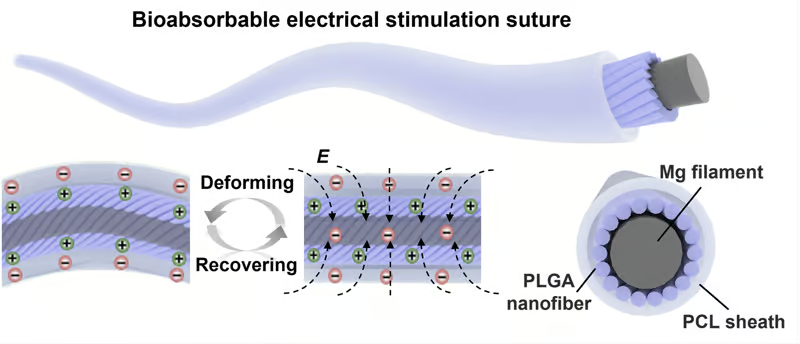
    The unique mechanoelectrical fiber composes the innovative stitches. When movement causes the core and sheath layers of this fiber to come into contact and then separate, they generate electric fields that have been shown to accelerate the healing process.

    A diagram of the new electrical stitches, and how the fibers generate electricity with movement
    Zhouquan Sun and Chengyi Hou

    The research team tested this concept on cell cultures in the lab. They found that a wound covering 69% of the surface area shrank to just 10.8% with the electric sutures after 24 hours, while a control group using standard sutures still covered 32.6% in the same period. The key factor appears to be that the electric signals enhance the movement of fibroblasts, which are essential for forming new connective tissue by producing collagen.

    Effective Testing on Rats

    Next, the scientists conducted tests on rats. After 10 days, the electrical sutures closed wounds by 96.5%, while the control group achieved only 60.4% closure.

    Finally, the researchers examined the infection rates associated with both the electrical and traditional sutures. Regardless of daily disinfection, the electric sutures resulted in significantly lower bacterial levels in the rats compared to those with regular stitches.

    Previous methods of using electricity to aid wound healing have relied on systems involving biosensors, batteries, and electrical stimulators. In contrast, this new approach works passively, relying on the patient’s natural movement.

    Bioabsorbable Materials for Convenience

    Additionally, the researchers believe that the bioabsorbable materials used to construct the electrical sutures will allow them to safely degrade in the body, eliminating the need for invasive surgical removal.

    Although researchers still have much work ahead before testing these stitches in humans and potentially using them in clinical settings, this innovative concept promises to facilitate quicker and safer wound healing.


    Read the original article on: New Atlas

    Read more: Protein “Big Bang” Reveals Molecular Makeup for Medicine as well as Bioengineering Applications

  • Promising New Desalination Method Operates without Electricity

    Promising New Desalination Method Operates without Electricity

    Researchers at The Australian National University have introduced a novel desalination method that mitigates many of the adverse effects associated with traditional techniques and cuts energy consumption by approximately 80%.
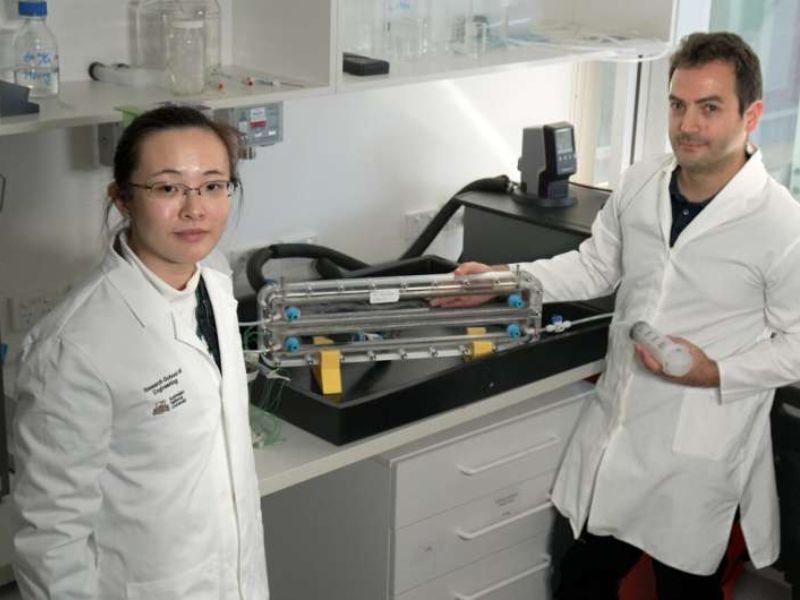
    Shuqi Xu (left) and Professor Juan Felipe Torres with their first prototype of thermodiffusive desalination. Credit: ANU College of Engineering, Computing & Cybernetics

    Researchers at The Australian National University have introduced a novel desalination method that mitigates many of the adverse effects associated with traditional techniques and cuts energy consumption by approximately 80%.

    Freshwater scarcity is becoming a critical issue worldwide, with some regions already relying on desalination to extract freshwater from ocean water. Currently, humans use about one-third of all freshwater discharges, a figure projected to increase to one-half by midcentury, especially in regions such as Israel, Mexico City, India, and Southern California.

    Water availability may become the most significant crisis of this century, exacerbated by climate change, which affects snowpack, surface water evaporation, precipitation patterns, and atmospheric water content.

    A 2018 World Bank Report Highlights Desalination’s Energy Demands

    A 2018 World Bank report indicated that around 300 million people in over 150 countries depend on desalination, which consumes 3 kilowatt-hours per cubic meter (kWh/m3) of energy—ten times less than in 1970. However, desalination still accounts for one-fourth of the energy used for water provision, requiring about 100 billion kilowatt-hours of energy in 2018.

    Current desalination techniques fall into two main categories: material-based methods like reverse osmosis, which uses high pressure to separate molecular species in water, and thermal methods, such as solar-based evaporation or freeze desalination.

    However, these methods can harm marine life; heat, stress, or chemicals may kill small organisms, while larger creatures can be trapped against intake screens.

    Moreover, they produce brine with a high salt content (over 30%) that, when discharged into the ocean, can damage ecosystems by sinking to the seabed.

    Traditional Desalination Systems Require Costly Materials and Regular Maintenance

    Traditional desalination systems also require costly materials that need regular cleaning and maintenance due to issues like membrane fouling, corrosion, and degradation.

    They consume significant amounts of energy, ranging from 3 to 7 kWh/m³ for reverse osmosis and up to 100 kWh/m³ for other methods. While suitable for urban and industrial areas, these systems are often too large and expensive for use in developing countries or rural and remote regions.

    Concept of thermodiffusive desalination and unit design. Credit: Nature Communications (2024). DOI: 10.1038/s41467-024-47313-5

    New Method Utilizes Low-Grade Heat and Thermodiffusion for Desalination

    The new method, detailed in Nature Communications, does not rely on electricity but instead utilizes low-grade heat from sunlight or industrial byproducts. It leverages thermodiffusion, a process where salt migrates towards the colder side of a temperature gradient. In this method, the water remains in its liquid phase throughout.

    The research team, led by Ph.D. candidate Shuqi Xu, passed seawater through a narrow channel positioned between a top plate heated to over 60°C and a bottom plate cooled to 20°C.

    These temperature values can be sourced from the environment. The setup produced low salinity water from the top region of the channel and high salinity water from the bottom.

    In their experiment, the channel was half a meter long and one millimeter high, with flow rates between 1 and 16 milliliters per minute. After a single pass, cooler, saltier water was extracted, and warmer, less saline water was recirculated through the channel.

    Each pass reduced salinity by 3%, allowing repeated cycles to lower seawater salinity from 30,000 ppm to below 500 ppm.

    Thermodiffusive Desalination

    Our goal is to revolutionize desalination technology using low-temperature heat from our surroundings,” said Juan Felipe Torres, a professor at Australian National University and lead chief investigator. “Thermodiffusive desalination is the first thermal method that operates entirely in the liquid phase without requiring membranes or ion-adsorbing materials.”

    Torres highlighted that thermodiffusive desalination is free from fouling, which could significantly impact large-scale desalination. Agriculture, which consumes about 69% of the world’s freshwater, requires water desalinated to about 95% of its original salinity.

    Following their proof-of-concept, the team is developing a larger, multi-channel device to desalinate seawater for the drought-stricken southwestern Pacific island of Tonga, powered by a solar panel the size of a human face.

    To conclude, Torres envisions thermodiffusive desalination as crucial for developing countries facing severe impacts of climate change, as it decentralizes desalination and enhances water security.


    Read the original article on: TechXplore

    Read more: Sea-Bed Air Batteries Offer Affordable, Long-Term Energy Storage

  • Graphite Platform Hovers Without Electricity

    Graphite Platform Hovers Without Electricity

    Scientists in Japan have devised a method to create a floating platform using conventional graphite, eliminating the need for an external power source typically associated with magnetic levitation.
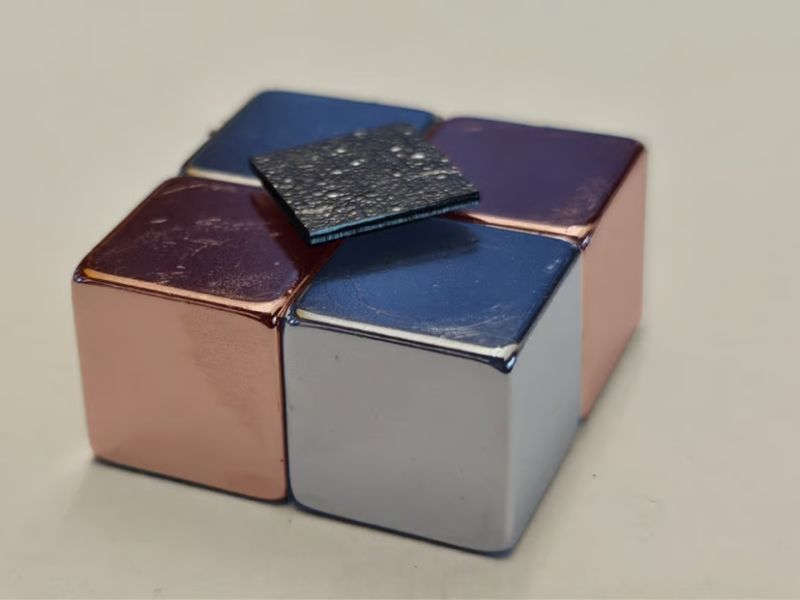
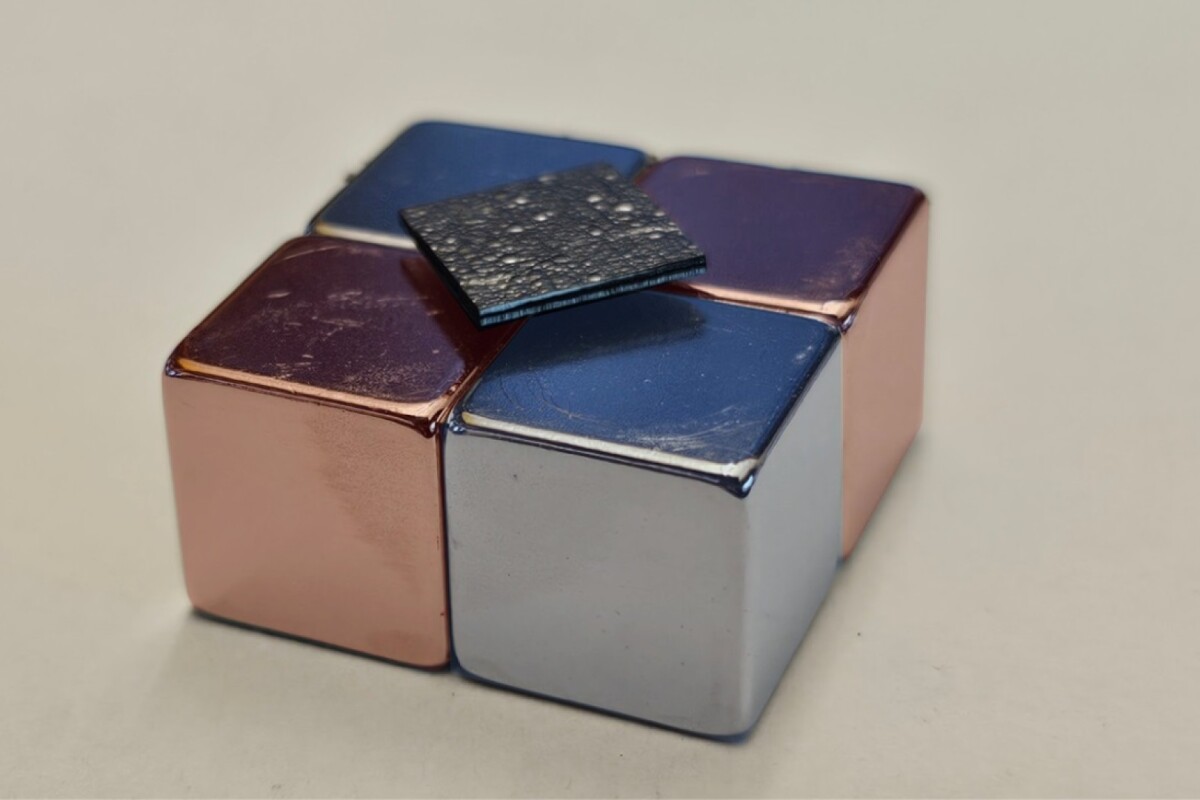
    The silica-coated graphite plate levitates above a magnetic surface, with no need for external power
    OIST

    Scientists in Japan have devised a method to create a floating platform using conventional graphite, eliminating the need for an external power source typically associated with magnetic levitation.

    If you’ve attempted to push together two magnets with the same charge, you’re familiar with the repulsive force they exert. This force can cause objects made of specific materials, termed diamagnetic materials, to levitate above surfaces when subjected to a sufficiently strong magnetic field.

    This phenomenon is often demonstrated in various commercial products, such as clocks, lamps, and speakers. Advanced technology employs superconductors to levitate heavier objects, facilitating the development of high-speed maglev vehicles that experience minimal friction.

    Overcoming Reliance on External Power

    In fact, these existing methods all rely on external power sources, with superconductors even requiring near-cryogenic temperatures. Scientists at the Okinawa Institute of Science and Technology (OIST) developed a low-cost material to address this issue in their recent study.

    Beginning with ordinary graphite, which exhibits high diamagnetism, the material can levitate above magnetic surfaces without requiring any power. However, the flow of electrical currents through the graphite typically causes energy loss, leading to short-lived levitation—a phenomenon known as eddy damping.

    A scanning electron microscope image of the graphite microbeads – green indicates the silica coating
    OIST

    Insulating Graphite for Sustainable Levitation: The Role of Silica Coating

    To address this issue, the team applied a chemical coating of silica onto the graphite particles, which serves as an electrical insulator. These silica-coated graphite particles were then mixed with wax and formed into flat slabs measuring approximately 1 cm^2 (0.2 sq in). By doing so, the graphite retained its diamagnetic properties, while the insulation prevented the energy loss that typically disrupts levitation.

    Remarkably, in experiments, the silica-coated graphite platforms remained levitated above a surface composed of magnets with alternating north and south poles for extended durations.

    According to the team, this levitating platform system has the potential to pave the way for novel sensor technologies capable of measuring force, acceleration, and gravity.

    Additionally, for more precise quantum sensors, an alternative version employs a feedback magnetic force to continually adjust the platform’s vertical movements, thereby cooling it down to reduce its kinetic energy. However, this approach does introduce the requirement for an external power source.


    Read the original article on: New Atlas

    Read more: Graphene is a Nobel Prize-winning “wonder material”

  • The Mars Bot solar Generator Tracks the Sun to Store Electricity

    The Mars Bot solar Generator Tracks the Sun to Store Electricity

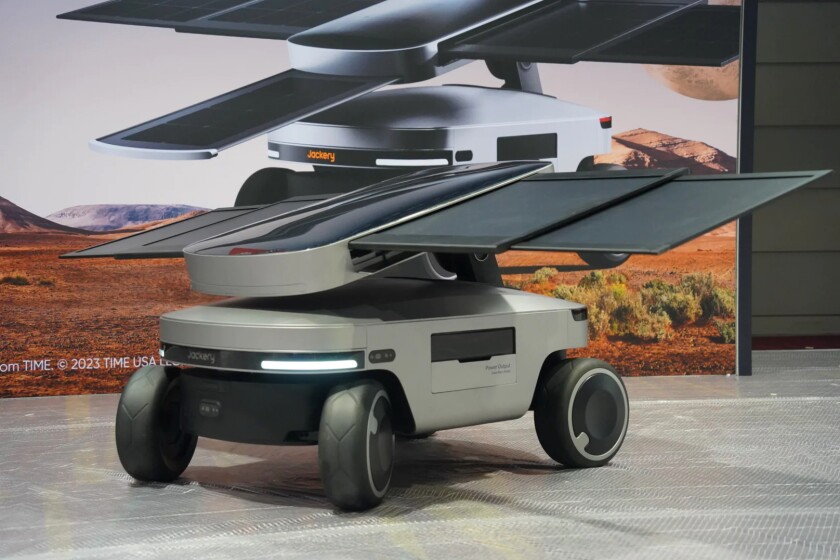
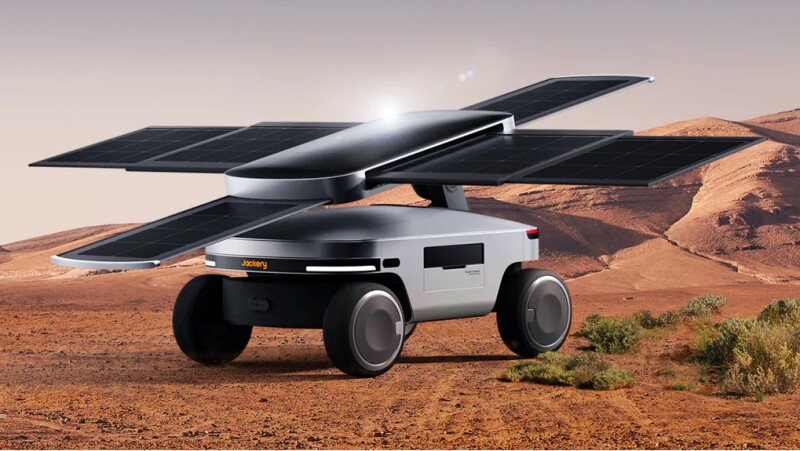
    Portable photovoltaic systems are excellent for producing electricity in remote locations, but the inconvenience of regularly relocating them to stay in sunlight can be burdensome. Jackery's Solar Generator Mars Bot presents a solution to this issue by autonomously repositioning itself.
    Jackery’s Solar Generator Mars Bot is presently being showcased at CES
    Jackery

    Portable photovoltaic systems are excellent for producing electricity in remote locations, but the inconvenience of regularly relocating them to stay in sunlight can be burdensome. Jackery’s Solar Generator Mars Bot presents a solution to this issue by autonomously repositioning itself.

    Presenting itself to the public for the first time at CES 2024, the bot was recently honored with a Best Inventions of 2023 Award by Time magazine. Named after NASA’s Opportunity Mars rover, it draws inspiration from the same.

    Rugged Design and Efficient Solar Power Storage

    The robot, equipped with a sturdy aluminum alloy body that is resistant to impact, waterproof, and dust-proof, has four wheels. In fact, It is outfitted with 600W foldable solar panels, claiming a maximum solar conversion efficiency of 25%. Energy is stored in a built-in 5-kWh lithium battery, and access to it is facilitated through ports situated on one side.

    Possible usages for the Mars Bot include outdoor recreation, home back-up, or field-based rescue operations
    Jackery

    However, employing a light sensing and tracking system, the arrangement of solar panels on the Mars Bot adjusts its tilt and position in relation to the robot’s body to continuously capture the maximum sunlight. In addition, the robot physically moves across the ground to align with the sun’s trajectory, avoiding shadows and optimizing its exposure to light. It’s worth noting that the robot does consume a portion of the electricity it generates while in motion.

    Intelligent Navigation and Pending Features

    The Mars Bot is said to navigate around obstacles using an AI-driven “intelligent movement system,” though confirmation is pending on whether it incorporates a geofencing mechanism to prevent straying too far from the user. As of now, there is no information available regarding pricing or availability for the Solar Generator Mars Bot. The video below provides a detailed overview of the bot’s features.

    Mars Bot? Jackery Solar Generator Mars Bot, winner of the TIME Best Inventions 2023 Award.

    Read the original article on: New atlas

    Read more: A Wood-like Propane Fire Pit Warms the Campsite