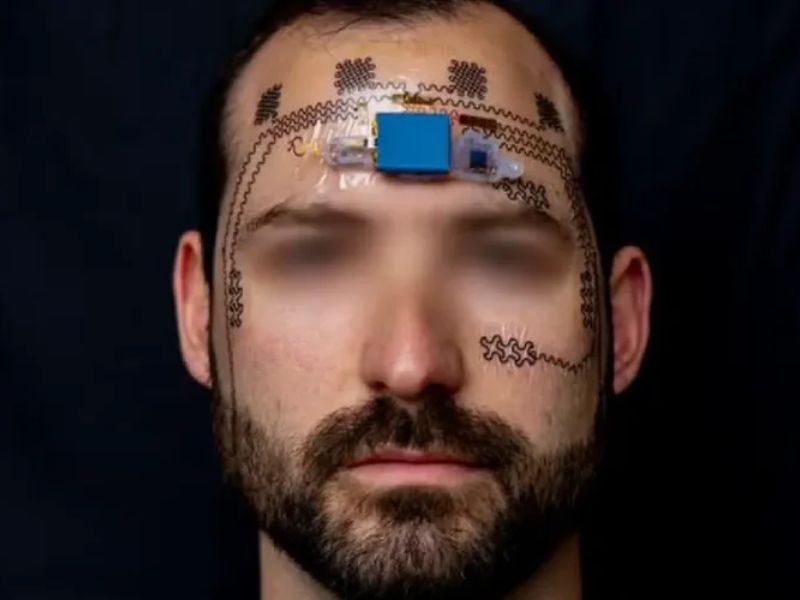

A wireless electronic tattoo created by U.S. researchers may help tackle overwork and reduce illnesses linked to intense mental strain.
The research describing the device was published this Thursday, the 29th, in the journal Device. It explains how the technology—known as an e-tattoo—operates, including its ability to record brainwave activity without the need for traditional equipment.
“Technology is advancing faster than human evolution,” said Professor Nanshu Lu, who led the study at the University of Texas at Austin. “As demands increase, so does mental workload…”
Early Tests Show Brainwave Changes Under Increasing Mental Demand
During early experiments, six volunteers wore the electronic tattoo while completing memory tasks of different difficulty levels. As the tasks became more demanding, changes in their brainwave signals were observed.
Using this data, the researchers trained a computational model that can anticipate levels of mental effort. The e-tattoo was also able to differentiate between varying degrees of cognitive strain.
At present, workload is commonly measured using tools such as NASA’s Task Load Index, which relies on self-reported questionnaires. The e-tattoo is proposed as an alternative approach.
Its sensors are ultra-thin, adhesive, and flexible, allowing them to conform comfortably to the skin. The system uses a lightweight battery and components designed for user comfort, and the tattoos are customized to ensure precise measurements.
Lower-Cost Alternative to Traditional Monitoring Equipment
This solution also offers major cost advantages: disposable sensors cost about US$20, while the chip and battery are around US$200—far less than the equipment that can exceed US$15,000.
According to study co-author Luis Sentis, the aim is to make the e-tattoo affordable and suitable for home use. “One of my goals is to turn the e-tattoo into something people can use at home,” he said.
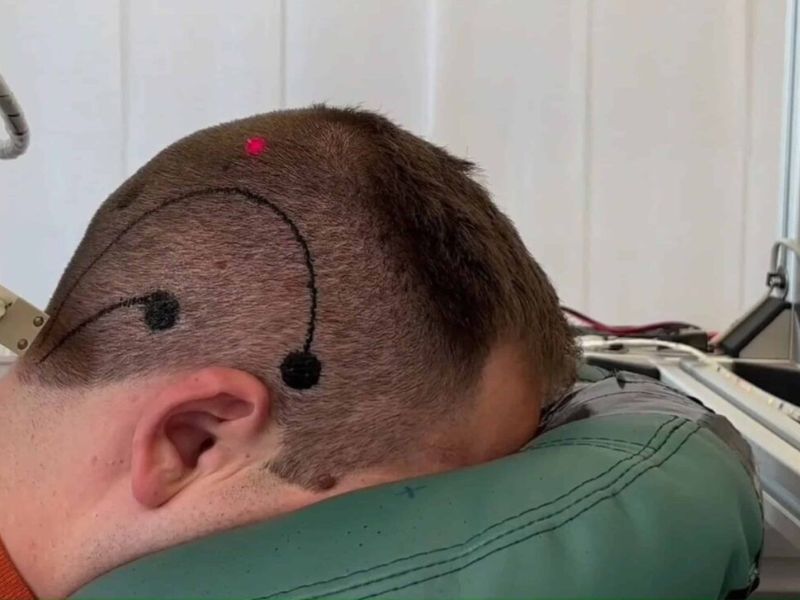
The research team is already advancing to the next phase, developing ink-based sensors that can function on hair, with the intention of extending the technology’s application to a wider range of surfaces.
Read the original article on: Exame
Read more: Scientists Create Wearables that Fool the Brain into Feeling Real Sensations