Tag: Eye

  • Common Eye Bacteria Connected to Alzheimer’s Disease

    Common Eye Bacteria Connected to Alzheimer’s Disease

    A recent study indicates that a common respiratory bacterium could have an unexpected connection to Alzheimer’s disease.
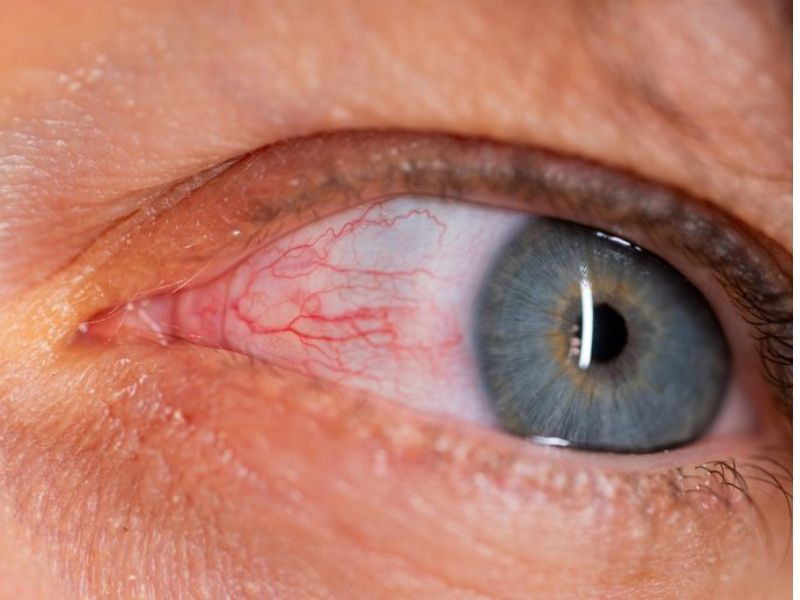
    Chlamydia pneumoniae is an intracellular bacterium that commonly causes respiratory infections such as pneumonia and sinusitis. It can persist in the body by evading immune defenses, leading to chronic, low-level inflammation. Image Credits: Shutterstock

    A recent study indicates that a common respiratory bacterium could have an unexpected connection to Alzheimer’s disease.

    Researchers at Cedars-Sinai are investigating an unexpected source for Alzheimer’s disease clues: the eye. In a study published in Nature Communications, they show that Chlamydia pneumoniae—a bacterium best known for causing pneumonia and sinus infections—can persist in the body for years and may contribute to changes seen in Alzheimer’s disease.

    The findings suggest that a long-term infection could contribute to the inflammation that harms nerve cells and point to potential new interventions, ranging from strategies that limit inflammation to earlier antibiotic treatments.

    The study revealed that the bacterium can appear in the retina, the thin layer of neural tissue at the back of the eye responsible for processing visual signals. Since the retina forms part of the central nervous system and researchers can examine it without surgery, it offers a unique opportunity to observe brain-related processes in real time. The researchers found that when Chlamydia pneumoniae reaches the retina, it is associated with immune responses tied to inflammation, nerve cell damage, and cognitive decline.

    Connecting Infection, Inflammation, and Nerve Cell Damage

    “Observing Chlamydia pneumoniae consistently across human tissues, cell cultures, and animal models allowed us to uncover a previously unrecognized connection between bacterial infection, inflammation, and neurodegeneration,” said Maya Koronyo-Hamaoui, PhD, professor of Neurosurgery, Neurology, and Biomedical Sciences at Cedars-Sinai Health Sciences University and the study’s senior author. “The eye serves as a proxy for the brain, and our findings show that bacterial infection in the retina and ongoing inflammation can mirror brain pathology and indicate disease progression, supporting the use of retinal imaging as a noninvasive tool to identify individuals at risk for Alzheimer’s.”

    To explore this, the team used advanced imaging along with genetic and protein analyses to study retinal tissue from 104 participants, including those with normal cognition, mild cognitive impairment, and Alzheimer’s disease.

    They found significantly higher levels of Chlamydia pneumoniae in the retinas and brains of participants with Alzheimer’s compared with those with normal cognition, and greater bacterial presence correlated with more severe brain changes and cognitive decline.

    Genetics also seemed to play a role, with elevated bacterial levels occurring more frequently in individuals carrying the APOE4 gene variant, a recognized risk factor for Alzheimer’s disease.

    Results from Laboratory and Animal Studies

    Investigators also studied human neurons in the lab and in laboratory mice with Alzheimer’s disease. In both, infection with Chlamydia pneumoniae increased inflammation, nerve cell death and cognitive decline, showing the bacterium can accelerate disease processes. The infection also triggered production of amyloid-beta, the protein that accumulates in the brains of people with Alzheimer’s.

    The findings were driven by co-first authors Bhakta Gaire, PhD, and Yosef Koronyo, MSc.

    “This discovery raises the possibility of targeting the infection-inflammation axis to treat Alzheimer’s,” said Timothy Crother, PhD, co-corresponding author of the study and research professor at Cedars-Sinai Guerin Children’s and the Department of Biomedical Sciences at Cedars‑Sinai.

    Results from Laboratory and Animal Studies

    The results indicate that addressing chronic bacterial infection and the resulting inflammation could offer a novel treatment approach. The study also highlights the retina’s potential as a noninvasive tool for diagnosing and tracking the progression of the disease.


    Read the original article on: SciTechDaily

    Read more: Small Adjustment in Airflow Lowers Indoor Infection Risk by Up to 90%

  • Hidden Eye Feature May Reveal ADHD Risk

    Hidden Eye Feature May Reveal ADHD Risk

    Accurately diagnosing ADHD is essential for providing clarity and appropriate support to those affected, yet current methods are often lengthy and unreliable. A recent study indicates that AI might offer a solution.
    Credit: Pixabay

    In South Korea, researchers developed machine learning models to link features in fundus images—photos of the back of the eye—to clinical ADHD (attention deficit hyperactivity disorder) diagnoses.

    Top Model Hits 96.9% Accuracy in ADHD Detection

    Among the four models tested, the most effective one reached an accuracy rate of 96.9% in identifying ADHD using image analysis alone.

    Key indicators of the condition included increased blood vessel density, variations in vessel shape and width, and specific changes in the optic disc of the eye.

    For years, scientists have suspected that the eye might reflect brain connectivity changes linked to ADHD. Identifying specific visual indicators could lead to a quicker and more dependable way to detect the disorder.

    Our analysis of retinal fundus photographs demonstrated potential as a noninvasive biomarker for ADHD screening and executive function deficit stratification in the visual attention domain,” the research team, led by Yonsei University College of Medicine, noted in their published study.

    “Researchers tested the method on 323 children and teens diagnosed with ADHD and a control group of 323 age- and sex-matched individuals without the condition.”

    The AI model showed strong performance across various evaluation metrics for predicting ADHD, and it was also effective at identifying traits associated with the disorder, such as difficulties with visual selective attention.

    Here’s the sentence with active counterparts:

    “Researchers have recently investigated various machine learning approaches for ADHD screening, including methods that use different types of eye scans and behavioral assessments.” While this new method may not be the top performer in raw accuracy, it’s nearly as effective—and stands out for being fast, easy to evaluate, and highly scalable.

    Reliance on Diverse Variables in Early High-Accuracy Models

    As the researchers note, earlier high-accuracy models usually depended on a broad range of variables, each offering a small but important role in distinguishing individuals.”

    Our method streamlines the analysis by using only retinal images, making our models more straightforward and effective,” the researchers explain.

    They now plan to test the approach on larger and more diverse populations, especially since the current study focused on children with an average age of 9.5—while ADHD can appear quite differently in adults.

    There’s also potential to broaden the system’s capabilities. For instance, individuals with autism spectrum disorder were not included in the main analysis, and additional testing revealed the AI struggled to distinguish between autism and ADHD.

    With around 1 in 20 people affected by ADHD—characterized by difficulties with focus, impulsivity, and hyperactivity—a faster and more precise diagnostic tool could have a significant impact.

    Early detection and timely treatment can enhance social, family, and academic outcomes for those with ADHD,” the researchers note.


    Read the original article on: Sciencealert

    Read more: Many of Us Are Dominantly Right-Handed but Left-Eyed. Here’s the Reason

  • The way Diabetes Hinders the Healing Process in the Eye

    The way Diabetes Hinders the Healing Process in the Eye

    Researchers have presented fresh insights into the mechanism by which diabetes affects the healing of eye wounds. For the first time, they have identified two related disease-associated changes to the cornea.
    Credit: Pixaobay

    Researchers have presented fresh insights into the mechanism by which diabetes affects the healing of eye wounds. For the first time, they have identified two related disease-associated changes to the cornea.

    Investigators at Cedars-Sinai have gained fresh insights into how diabetes hampers wound healing in the eye. For the first time, they have identified two disease-associated changes in the cornea. Published in the journal Diabetologia, the study also revealed three therapeutic pathways capable of reversing these changes and partially restoring wound-healing function to the cornea. This discovery may pave the way for new diabetes treatments.

    Insights from Dr. Alexander Ljubimov’s Research

    Dr. Alexander Ljubimov, the director of the Eye Program at Cedars-Sinai’s Board of Governors Regenerative Medicine Institute and the senior author of the paper, explained that diabetes leads to extensive cellular changes, involving specific DNA modifications known as epigenetic alterations, which alter gene expression.

    With over 37 million people in the United States having diabetes, it’s crucial to find treatments that address not only symptoms but also the underlying molecular and cellular changes associated with the disease’s complications.

    The research also highlighted the significant role of Wnt-5a, a secreted signaling protein responsible for corneal wound healing and the functioning of stem cells. While diabetic eye disease often focuses on the retina, the cornea, which is the transparent, protective exterior surface of the eye, is affected in up to 70% of diabetes patients.

    In advanced diabetes, corneal stem cells become dysfunctional, leading to slower and less complete healing following injuries or procedures like cataract surgery and laser treatment for diabetic retinopathy.

    Understanding these novel epigenetically regulated wound-healing mechanisms could hold promise for developing therapeutic treatments to prevent long-term ocular health issues in patients.

    Comparing Cellular Differences Between Diabetic and Healthy Individuals

    In this study, researchers aimed to identify epigenetic changes, which are modifications introduced later in life and not hard-wired into the genome from birth. In fact, to achieve this, Dr. Ljubimov and his team compared corneal cells from six diabetic patients with those from five healthy donors. They observed that in diabetic corneas, the protein product of the WNT5A gene was suppressed, and there was an increase in the microRNA that inhibits WNT5A.

    Targeting Wnt-5a Protein Expression in Corneal Wounds

    However, to investigate potential therapeutic approaches, the scientists induced wounds in cultured corneal cells and corneal organ cultures. They tested three interventions to normalize Wnt-5a protein expression: direct addition of the Wnt-5a protein, the use of a DNA methylation inhibitor (originally approved for cancer treatment), and a novel gene therapy approach using a nanoscale compound to target microRNA levels. The team developed the nanoscale compound as an alternative to a toxic viral gene therapy that had adverse effects on stem cells.

    All three therapeutic methods showed promising results in the diabetic samples, stimulating the production of stem cell markers and improving tissue regeneration, ultimately accelerating wound healing.

    Dr. Clive Svendsen, study co-author, pointed out that reversing epigenetic effects with novel therapies could not only improve corneal function but also hold significance for other diabetic complications, moving the field forward in terms of treatment options.

    Analyzing Mechanisms of WNT5A and Exploring Combination Therapy for Enhanced Wound Healing

    Moving forward, the investigators will continue analyzing their data to gain a better understanding of the mechanisms of WNT5A and other genes related to wound healing. They are also exploring the potential of a combination therapy to target both microRNA and DNA methylation, aiming to more effectively normalize wound healing by increasing Wnt-5a protein.

    To conclude, the ultimate goal of their research is to develop topical, sustained-release drugs for corneal wound healing. These FDA-approved drugs could be easily applied and offer promising avenues for effective future therapies.


    Read the original article on: Science Daily

    Read more: The Healthiest Rice! White or Brown? From a Nutrition Scientist Perspective.