Italy is emerging as a leader in technological innovation through the development of 3D-printed food. At ENEA’s research laboratory in Oricola, scientists are converting plant cells and food waste into so-called “edible inks,” which are then used to produce nutrient-rich cereal bars, confectionery, and small honey spheres.
Main features of the technology:
Sustainability: The method removes the need for farmland and significantly cuts down on resource waste.
Preservation: The printing process retains the key nutrients found in the original ingredients.
Applications: The technology is designed for use in extreme environments, including disaster relief areas, war zones, and space exploration.
Customization: It enables the production of tailored diets for individuals with specific nutritional needs or restrictions.
Cell-Based Cultivation in Controlled Environments
The approach centers on cultivating cells in carefully controlled conditions. Silvia Massa, head of ENEA’s Agriculture 4.0 laboratory, explains that the aim is not to grow an entire plant, but to extract and multiply its cells within a gel that mimics soil. “The focus is not on cultivating the plant itself, but its cells,” she notes.
Beyond improving production efficiency, the technology also opens the door to precision nutrition. By modifying the composition of the “ink,” specific amounts of proteins and vitamins can be tailored to meet individual dietary requirements.
Acceptance of this innovation is also on the rise. Research carried out by the Italian laboratory found that about 60% of participants would be open to eating food created through 3D printing technology.
Researchers believe orcas offer prey to humans to observe their reactions, and maybe to practice learned cultural behavior and learn about another species Orca Research Trust
Researchers have observed an intriguing behavior in killer whales: they sometimes share their prey with humans. While we can’t ask the whales directly, scientists believe this may be an attempt to form connections with people.
In 34 Cases Over Two Decades, Orcas Offered Food to Humans—Often Watching Closely for a Reaction
A recent study analyzed 34 recorded instances from the past 20 years where orcas offered food—ranging from fish and mammals to invertebrates and seaweed—to humans across various locations. Notably, in most cases, the whales paused to watch how humans responded before either retrieving or abandoning the offering. This suggests a genuine curiosity about human reactions.
Killer whales offering up an ancient murrelet to humans, and then sharing it after people had inspected and returned it to the water Video courtesy of the researchers
Study Finds Orcas’ Food Sharing with Humans May Be Prosocial, Culturally Learned Behavior
The research team, which included marine biologist Jared Towers from British Columbia, Canada, recently published their findings in the Journal of Comparative Psychology. After analyzing nearly three dozen cases of killer whales approaching humans—whether in the water, on boats, or along the shore—the team concluded that these behaviors are likely examples of prosocial, culturally learned actions as the orcas engage in interspecies interaction.
This conclusion aligns with known orca behavior, as they commonly share food to strengthen social bonds within their pods. The researchers suggest that offering items to humans may serve multiple purposes: allowing orcas to practice cultural behaviors, engage in play, satisfy curiosity, or even build relationships with people. Given their high intelligence and social nature, the team believes all these motivations and outcomes are plausible.
To conclude, we appear to be in a wave of remarkable discoveries about these captivating animals. Just last month, researchers found that killer whales use tools as part of a grooming routine. We’ve also recently gained insight into why they’ve been ramming luxury yachts in Europe, and uncovered how they’ve mastered the technique of hunting the world’s largest sharks.
We’ve all struggled with peeling a boiled egg, only to ruin it as the shell clings tightly to the white, often leaving behind annoying bits of membrane.
The internet is full of so-called “hacks” for easier egg peeling, but the real issue lies in the multiple factors that make eggs tough to peel. Fortunately, science offers practical solutions to tackle the problem.
Credit: Vinegar in the boiling water may help detach the membrane from the shell. (Gilson Gomes/Unsplash)
Factors Affecting How Easily Eggs Peel
Eggs are made up of a hard, porous shell, two membranes (inner and outer), the egg white (albumen), and a yolk at the center, all enclosed by a membrane. There’s also an air cell between the inner and outer membranes next to the shell.
Extensive research conducted in the late 1960s and 1970s explored the factors that influence how easily eggs peel after being boiled.
One of these factors is the pH level of the egg white. A 1960s study found that for easier peeling, the pH of the egg white should fall within the range of 8.7 to 8.9, which is relatively alkaline.
Storage temperature also affects how easily eggs peel. A study from 1963 that keeping eggs at around 22°C (72°F) results in better peelability compared to storing them at cooler temperatures, such as 13°C or in the fridge at 3–5°C.
However, storing eggs at higher ambient temperatures carries the risk of spoilage.
The studies found that letting eggs age for a longer period before boiling – by using less fresh eggs – also made them easier to peel.
Step one: steer clear of fresh eggs
It’s widely known that fresh eggs are more difficult to peel, and there are a few reasons for this based on the factors mentioned above.
Firstly, in a fresh egg, the air cell is still small. As the egg ages, it gradually loses moisture through the porous shell, causing the air cell to expand while the rest of the egg contents shrink. A larger air cell makes it easier to begin peeling.
Moreover, while egg whites start off somewhat alkaline, they increase in pH as the eggs age, which also helps make peeling easier.
Some egg boiling enthusiasts argue that starting off with boiling water and then reducing it to a simmer before carefully adding the eggs yields better results. However, it’s important to use eggs at room temperature to prevent them from cracking due to a sudden temperature shift.
The reasoning behind this method is that starting with higher temperatures helps the membrane separate from the shell and egg white more easily.
Additionally, the rapid heat helps the egg white proteins denature (change structure as they cook) and bond to each other instead of to the membrane.
After boiling the eggs for your preferred time (usually 3–5 minutes for runny yolks, 6–7 minutes for jammy yolks, and 12–15 minutes for hard boiled), you can cool them in ice water. This helps the egg white slightly shrink away from the shell, making peeling easier.
Step three : Adding ingredients to the water
Others suggest adding salt to the boiling water to improve peelability, though results vary. One study showed this method did make peeling easier, but the effect faded as the eggs aged.
Both acids and alkalis have also been shown to help with peeling or removing the eggshell. A patent describing this process used more aggressive substances aimed at dissolving the shell.
Building on this idea, you could experiment with adding baking soda or vinegar to the water. The theory behind vinegar is that it reacts with the calcium carbonate in the eggshell, helping to loosen it. As for baking soda, being alkaline, it may assist in separating the membrane from the shell.
Credit: Starting in hot water might help peelability, especially if you plunge the eggs in ice water afterwards. (Alexander Grey/Unsplash)
Bonus: other ways to cook eggs
There are alternative ways to hard-cook eggs, including pressure steaming, air frying, and even using a microwave.
With steamed eggs, some suggest that the water vapor penetrates the shell, helping to loosen the membrane from the egg white, which makes peeling easier.
Although recent studies have explored air frying other foods, researchers still need to study how this cooking method affects eggshells and makes peeling easier.
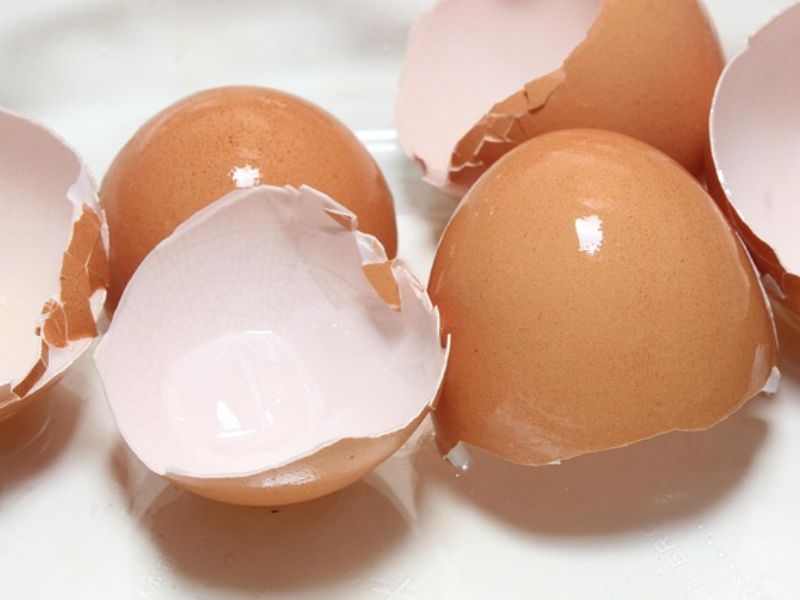
Finally, once you’ve peeled your eggs, don’t toss the shells—there are many ways to reuse them. You can compost them, use them as natural pest deterrents in the garden, turn them into biodegradable seedling pots, or even repurpose them for advanced uses like scaffolds in cancer research.
Recent research has examined whether food waste is more effectively reduced by consumers motivated by sustainability or those focused on nutrition and health. The study’s surprising results emphasize the importance of reevaluating our strategies for tackling food waste.
Dr. Trang Thi Thu Nguyen, lead author of the study, said, “Consumers aware of sustainability tend to waste less food as they seek eco-friendly products. However, those focused on sustainability often prioritize product selection over reducing food waste.”
Survey on Food Consumption Behavior and Waste
The researchers surveyed 1,030 adults online about household food consumption, asking, “It is important to me that the food I consume:”, followed by eight items on nutrition or sustainability. They rated these statements on a seven-point scale ranging from strongly disagree to strongly agree. For example, a nutrition-related statement was, “The food I consume keeps me healthy,” and a sustainability-related statement was, “The food I consume is packaged in an environmentally friendly way.” After defining food waste and listing its categories, participants estimated their total food waste.
Upon analyzing the data, the researchers found that a focus on nutrition was significantly and negatively associated with food waste. “Additionally, individuals who prioritized nutrition showed a positive link to meal planning behaviors and a negative association with over-purchasing.”
Nguyen noted, “Individuals who focus on healthy eating tend to plan meals and avoid over-purchasing, which helps reduce food waste significantly.”
The researchers stated that their findings suggest a shift in perspective is necessary for effectively addressing food waste on a societal scale.
Nguyen suggested, “Future food waste campaigns should link nutrition and waste reduction, as people are more motivated by health benefits than abstract environmental concerns, making it a more convincing part of a healthy lifestyle.”
“However, the researchers also pointed out that their study highlights actions households can take to reduce food waste.”
Nguyen said, “This will help households save money on food waste, especially during a cost-of-living crisis, while promoting healthier eating habits. A sustainable food system is about how we manage, prepare, and consume food, not just choosing the right products.”
The sun and the sea, both bountiful and freely available, are at the heart of a groundbreaking project aiming to create vertical sea farms that float on the ocean. These farms have the potential to produce fresh water for drinking and agriculture in a self-sufficient manner, all without human intervention.
A world-first initiative by researchers at the University of South Australia, this innovative system utilizes solar energy to evaporate seawater and recycle it into freshwater, enabling crop cultivation. The study detailing this experiment is featured in the Chemical Engineering Journal.
Addressing Global Water and Food Challenges
The project promises to mitigate impending global crises in freshwater scarcity and food production. With the world’s population projected to reach 10 billion by 2050, there is a growing urgency to find sustainable solutions.
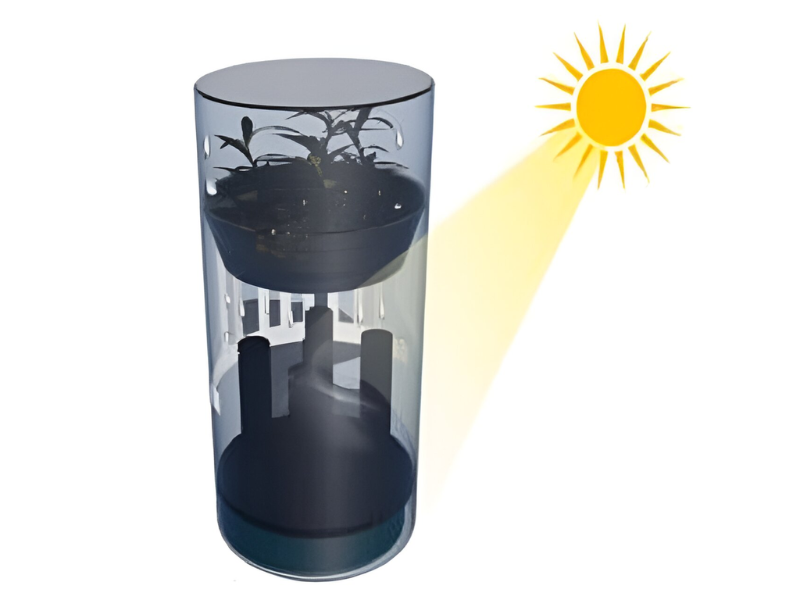
Professor Haolan Xu and Dr. Gary Owens from UniSA’s Future Industries Institute have pioneered a vertical floating sea farm comprising two chambers: an upper layer resembling a greenhouse and a lower chamber for water harvest.
Innovative Water Recycling
The system’s functionality is akin to a wicking bed but with a unique twist. Solar evaporators soak up seawater, extracting and trapping salts while releasing clean water vapor into the air under the sun’s influence.
This vapor condenses on water belts and is channeled to the upper plant growth chamber. This closed-loop process requires no human intervention.
During field tests, the researchers cultivated three common vegetable crops—broccoli, lettuce, and bok choi—on seawater surfaces without needing maintenance or additional clean water irrigation.
Advantages Over Existing Designs
The solar-driven sea farm devised by Professor Xu and Dr. Owens offers several advantages compared to other designs currently under trial.
Unlike systems that place evaporators inside the growth chamber, consuming valuable space, their design maximizes the area for crop cultivation. Additionally, it eliminates the risk of overheating and crop damage.
This innovative system operates solely on solar energy and seawater, making it a green and cost-effective solution. It stands in contrast to floating farms using traditional photovoltaic panels to power energy-intensive desalination units, which are costly to maintain.
Scaling Up for the Future
While currently a proof-of-concept, the researchers plan to scale up their design using various devices to increase crop production. The ultimate goal is to meet larger food supply demands by expanding the size and quantity of devices.
Notably, the recycled water generated through this process meets the purity standards for drinking water, with lower salinity than the World Health Guidelines recommend.
Addressing a Global Crisis
As the United Nations predicts that approximately 2.4 billion people will face water shortages by 2050, and the global water supply for agricultural irrigation is expected to decline by 19%, the need for innovative solutions is paramount.
Freshwater, accounting for a mere 2.5% of the world’s water, is in increasing demand due to population growth and climate change.
Leveraging the vast and untapped resource of ocean water, combined with solar energy, this technology holds the potential to enhance the well-being of billions of people worldwide.
3D printing a piece of meat. Credit: Zinkevych/iStock
According to a news release, researchers from Osaka University have produced the world’s very first 3D-printed Wagyu beef, making use of stem cells extracted from Japanese cattle. The product resembles an authentic steak portion consisting of muscle tissue, blood vessels, and fat.
As a result of its high marble composition, Wagyu (Japanese cow) beef is among one of the most desired and highly-priced meats globally. Marbling, or sashi in Japan, describes the prominent layers of intramuscular fat that provide the beef its rich flavors and unique texture. Since the majority of cultured meats produced so far resemble ground-up meat made up of basic muscle tissue fibers instead of the intricate structure of actual beef steaks, 3D printing Wagyu is an incredibly challenging accomplishment.
The group of scientists has the ability to reproduce this unique property of the meat employing a unique strategy, and their discoveries might lead the way for a more sustainable future with widely accessible cultured meat.
From Candy Making to Bioprinting Meat
According to the paper released in the journal Nature Communications, the scientists used two varieties of stem cells, bovine satellite cells and adipose-derived stem cells, extracted from Wagyu cows. Next, they incubated and coaxed the cells into the different cell types needed to produce distinct fibers for muscle, fat, and blood vessels. These were stacked into a 3D stack to appear like the marbling of Wagyu.
After that, the scientists adjusted a method influenced by the one utilized to produce Japanese Kintaro candy, an old traditional candy formed in a long pipe and cut into pieces. The stacks were cut perpendicularly to form lab-grown beef cuts, which enabled a large level of customization within the complex meat structure.
This process was how they had the ability to imitate the famous texture of Wagyu. According to the scientists, the artificial meat has come to look even more like the real thing, and the procedure can be employed to produce various other complicated structures.
Senior author Michiya Matsusaki mentioned that by boosting the technology, it would be feasible to not just recreate complicated meat structures, such as the gorgeous sashi of Wagyu beef, but to additionally make slight modifications to the fat and muscular tissue components.
The team provided no evidence of how much the steaks might be priced at to produce or how much time it would require to get them to market; however, it definitely seems promising.
The cell-based meat industry might be worth $20 million by 2027, according to Markets and Markets. Suppose this kind of project can disrupt the food supply chain. In that case, the 3D printing revolution might someday eliminate the need to source meat from livestock, leading the way for a new, more sustainable means to appreciate meat in the future.
Originally published on Interestingengineering.com. Read the original article.
We use cookies on our website to give you the most relevant experience by remembering your preferences and repeat visits. By clicking “Accept All”, you consent to the use of ALL the cookies. However, you may visit "Cookie Settings" to provide a controlled consent.
This website uses cookies to improve your experience while you navigate through the website. Out of these, the cookies that are categorized as necessary are stored on your browser as they are essential for the working of basic functionalities of the website. We also use third-party cookies that help us analyze and understand how you use this website. These cookies will be stored in your browser only with your consent. You also have the option to opt-out of these cookies. But opting out of some of these cookies may affect your browsing experience.
Necessary cookies are absolutely essential for the website to function properly. These cookies ensure basic functionalities and security features of the website, anonymously.
Cookie
Duration
Description
cookielawinfo-checkbox-analytics
11 months
This cookie is set by GDPR Cookie Consent plugin. The cookie is used to store the user consent for the cookies in the category "Analytics".
cookielawinfo-checkbox-functional
11 months
The cookie is set by GDPR cookie consent to record the user consent for the cookies in the category "Functional".
cookielawinfo-checkbox-necessary
11 months
This cookie is set by GDPR Cookie Consent plugin. The cookies is used to store the user consent for the cookies in the category "Necessary".
cookielawinfo-checkbox-others
11 months
This cookie is set by GDPR Cookie Consent plugin. The cookie is used to store the user consent for the cookies in the category "Other.
cookielawinfo-checkbox-performance
11 months
This cookie is set by GDPR Cookie Consent plugin. The cookie is used to store the user consent for the cookies in the category "Performance".
viewed_cookie_policy
11 months
The cookie is set by the GDPR Cookie Consent plugin and is used to store whether or not user has consented to the use of cookies. It does not store any personal data.
Functional cookies help to perform certain functionalities like sharing the content of the website on social media platforms, collect feedbacks, and other third-party features.
Performance cookies are used to understand and analyze the key performance indexes of the website which helps in delivering a better user experience for the visitors.
Analytical cookies are used to understand how visitors interact with the website. These cookies help provide information on metrics the number of visitors, bounce rate, traffic source, etc.
Advertisement cookies are used to provide visitors with relevant ads and marketing campaigns. These cookies track visitors across websites and collect information to provide customized ads.