Tag: Fungi

  • Skin Fungi May Create Powerful Antibiotics to Help Combat Infections

    Skin Fungi May Create Powerful Antibiotics to Help Combat Infections

    A dangerous superbug responsible for  more than a million people worldwide each year might have a natural foe living just beneath your nose. Literally so—it plays a major role in your skin microbiome and appears to help fend off staph infections.
    Credit: Pixabay

    A dangerous superbug responsible for  more than a million people worldwide each year might have a natural foe living just beneath your nose. Literally so—it plays a major role in your skin microbiome and appears to help fend off staph infections.

    Malassezia sympodialis: A Common Skin Yeast with Hidden Power Against Staph Infections

    Malassezia sympodialis, a common skin microbe, produces a fatty acid that prevents staph infections and breaks down oils and fats.

    Researchers at the University of Oregon led laboratory experiments that showed M. sympodialis suppresses Staphylococcus aureus by releasing acidic byproducts.

    Scientists believe the yeast-generated acid, commonly found on healthy skin, helps prevent S. aureus from taking over the microbiome. S. aureus is usually on the skin but can cause serious infections if it spreads or enters the bloodstream.

    In the U.S., skin and soft tissue infections caused by S. aureus account for roughly 500,000 hospitalizations each year. Alarmingly, the bacterium can develop resistance to every class of antibiotics currently available.

    This makes the search for new treatment options urgent—and underscores the importance of studying our own skin’s natural defenses. Lead author Caitlin Kowalski says their study is exciting because it highlights a familiar but previously overlooked molecule.

    Credit: Diagram of the production of 10-HP from M. sympodialis. (Kowalski et al., Curr. Biol., 2025)

    10-HP: A Skin-Activated Antimicrobial Compound Hidden in Plain Sight

    10-HP was likely overlooked because it only works in acidic environments like skin, not in typical lab conditions. As a result, researchers overlooked its potential in previous studies.

    By examining skin biopsies from healthy donors, Kowalski and her team discovered that the acid is produced by the naturally occurring Malassezia yeast living on the skin.

    “It was like searching for a needle in a haystack—but with invisible molecules,” says Matthew Barber, a biologist and adviser to lead researcher Caitlin Kowalski.

    In the lab, Barber, Kowalski, and their team tested how M. sympodialis yeast affected different strains of Staphylococcus aureus. After just two hours of exposure, most strains showed over a 100-fold drop in viability.

    However, over time, S. aureus began developing resistance to the yeast’s 10-HP compound—using mechanisms similar to how it adapts to clinical antibiotics.

    Researchers found that less harmful Staphylococcus species had adapted to coexist with M. sympodialis, hinting at a long-standing microbial balance. Given how common Malassezia is, researchers believe we’re just beginning to understand its role in microbial balance and defense.

    Kowalski now plans to explore the genetic pathways behind antibiotic-resistant staph infections to better grasp how these bacteria rapidly evolve to evade various treatments.

    “We still have a great deal to learn about these microorganisms,” Barber adds, “and about how we might develop new strategies to treat or prevent the infections they cause.”


    Read the original article on: Sciencealert

    Read more: Innovative Drug Delivery System Stores Doses as Crystals Beneath the Skin
  • Nasal Fungi May Be Aggravating Your Allergies

    Nasal Fungi May Be Aggravating Your Allergies

    Credit: Pixabay

    Allergic rhinitis and asthma, often linked, can severely impact respiratory health. Searching for better treatments, scientists analyzed the nasal mycobiome—the community of fungi in the nose. Their study revealed that individuals with allergic rhinitis, with or without asthma, have distinct fungal compositions compared to healthy individuals. This suggests chronic respiratory conditions may disrupt nasal fungi balance, potentially opening new avenues for early detection and treatment.

    In Portugal, about one in four adults suffer from allergic rhinitis, a condition that frequently coexists with asthma. An international research team discovered that affected individuals have a more diverse and altered fungal community in their nasal passages than healthy people.

    “We found significantly higher fungal diversity and distinct fungal structures in allergic rhinitis samples,” said Dr. Luís Delgado from the University of Porto. “This suggests allergic rhinitis may alter the nasal microbiome.”

    The Study: Mapping Nasal Fungi

    To investigate, researchers studied 214 participants from an immunology and asthma clinic. Among them, 155 had both allergic rhinitis and asthma, 47 had allergic rhinitis alone, and 12 had only asthma. A control group of 125 healthy individuals provided a baseline comparison.

    Using nasal swabs, scientists extracted fungal DNA and identified species through sequencing. Network analysis helped them understand relationships between fungal communities and their potential roles in disease.

    The study found two dominant fungal families—Ascomycota and Basidiomycota—with 14 genera making up most of the nasal mycobiome. Some of these fungi are known allergens or opportunistic pathogens, suggesting the nasal cavity may harbor fungi linked to allergic rhinitis and asthma.

    Researchers also discovered that individuals with both allergic rhinitis and asthma had stronger fungal interactions than those with allergic rhinitis alone or healthy controls. This could mean that fungi influence the immune environment in the nose.

    A Potential Path to Treatment

    Patients with respiratory diseases showed significantly different fungal profiles than healthy individuals, but no major differences were found between allergic rhinitis and asthma groups. This suggests a shared fungal influence across these conditions.

    Additionally, the study identified an overabundance of metabolic pathways related to 5-aminoimidazole ribonucleotide (AIR) production, essential for DNA and RNA synthesis. If confirmed in further research, targeting AIR could lead to new diagnostic tools or treatments.

    While this study provides valuable insights, limitations exist. Researchers could not control for disease severity, treatment history, or track changes over time. Future longitudinal studies could determine whether fungi actively drive respiratory diseases and pinpoint specific harmful species.

    “Addressing these clinical variables would be a great follow-up if we secure funding,” Delgado noted. “For now, our findings lay the groundwork for others to explore the link between nasal fungi and respiratory health.”


    Read Original Article: Scitechdaily

    Read More: “Shocking”: Record-Breaking January Heat Leaves Scientists Stunned

  • The Last of Us: Could Fungi Trigger a Zombie Apocalypse?

    The Last of Us: Could Fungi Trigger a Zombie Apocalypse?

    Zombies tap into our fears, and once they get in our heads, they stay there. Animals overtaken by "zombies" lose control over their bodies and actions, instead serving the needs of a virus, fungus, or other parasite.
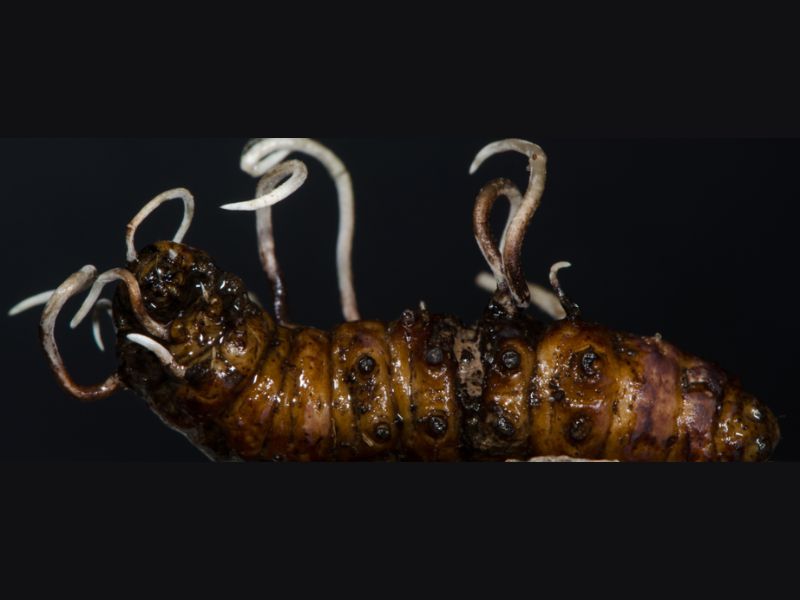
    Cordyceps fungus infecting a longhorn beetle grub. (Ian Redding/Getty Images)

    Zombies tap into our fears, and once they get in our heads, they stay there. Animals overtaken by “zombies” lose control over their bodies and actions, instead serving the needs of a virus, fungus, or other parasite.

    The word “zombi” originates from Vodou, a religion that developed in Haiti. But the modern image of undead, brain-eating zombies comes from movies like Night of the Living Dead, shows like The Walking Dead, and video games like Resident Evil.

    While those examples are fictional, real zombification exists in nature, where one organism can control another’s behavior.

    As a mycologist, I study fungi, a vast kingdom of molds, yeasts, mushrooms, and even zombifying fungi. Luckily, these “mind-controlling organisms” mainly target insects.

    Insect Body Snatchers

    One of the most well-known examples of zombification in nature is the zombie ant fungus, Ophiocordyceps unilateralis, part of the larger Cordyceps fungi group. This fungus inspired The Last of Us video game and series, where a fungal infection turns people into zombie-like creatures and disrupts society.

    In reality, ants encounter this fungus when spores fall onto them from trees or plants above. The spores penetrate the ant’s body without killing it and spread inside as yeast. The infected ant stops interacting with its colony, staggers aimlessly, and becomes hyperactive.

    Finally, the fungus drives the ant to climb a plant and lock its jaws onto a leaf or stem in a behavior known as “summiting.” At this point, the fungus consumes the ant’s organs, including its brain. A stalk then grows from the ant’s head, releasing spores that infect other ants below, restarting the cycle.

    Ophiocordyceps and Zombie Cicada Fungi

    Scientists have documented numerous Ophiocordyceps species, each tiny and highly specialized. Some live in limited areas, like Ophiocordyceps salganeicola, a parasite of social cockroaches found only in Japan’s Ryukyu Islands. Many more species likely await discovery worldwide.

    Another well-known parasite is the zombie cicada fungus, Massospora cicadina, which targets periodical cicadas emerging on 13- or 17-year cycles. The fungus keeps these cicadas active and flying, even as it replaces parts of their bodies, a rare “active host” behavior among fungi.

    Real Fungal Threats

    Dozens of Massospora cicadina-infected 13-year cicadas being prepared for drying and analyzing in Matt Kasson’s mycology lab at West Virginia University. (Matt Kasson, CC BY-ND)

    Massospora relatives infect flies, moths, millipedes, and beetles, often leading hosts to summit and die, much like ants infected by Ophiocordyceps.

    These fungi-host relationships evolved over millions of years and are highly specialized. For a fungus that infects ants or cicadas to even target another insect, let alone humans, would require significant evolutionary changes.

    In my research, I’ve worked with hundreds of infected cicadas, insects, spiders, and millipedes, uncovering intriguing details about their biology—all while retaining full control over my own behavior.

    Some fungi do pose risks to human health. For example, Aspergillus fumigatus and Cryptococcus neoformans can infect lungs, causing severe, pneumonia-like symptoms. Cryptococcus neoformans may even spread to the central nervous system, leading to issues like neck stiffness, vomiting, and light sensitivity.

    Cases of invasive fungal diseases are increasing globally, as are common infections like athlete’s foot and ringworm. Fungi thrive in warm, moist conditions, so showering after getting sweaty and avoiding shared sports gear or towels can help prevent infection.

    Not all fungi are dangerous, and even harmful ones won’t turn you into a zombie. The closest you’ll get to a zombifying fungus is likely through movies or video games. But if you’re intrigued, keep an eye out—zombie ants or flies might be in your own backyard! Or, if you’re inspired, you could become a scientist and study them, just like I do.


    Read the original article: Science Alert

    Read More: Scitke

  • Unveiling the Carnivorous Side of Fungi: Arthrobotrys Oligospora’s Predatory Lifestyle

    Unveiling the Carnivorous Side of Fungi: Arthrobotrys Oligospora’s Predatory Lifestyle

    Radiant Snares of the Predatory Fungus Arthrobotrys Oligospora. Credit: Hung-Che Lin CC-BY 4.0

    Think fungi can’t be carnivorous? Think again. Arthrobotrys oligospora, a worm-eating species of fungus discovered in 1850, has proven capable of sensing, trapping, and consuming small animals, shedding light on the molecular changes facilitating predatory behavior.

    Worms on the Menu

    While A. oligospora isn’t the sole worm-eating fungus globally, it is the most prevalent. Specializing in mini bites, it targets nematode worms like Caenorhabditis elegans, the chosen subject in a recent study exploring the fungus’s feeding strategy.

    Molecular Insights

    Researchers delved into the molecular mechanisms governing A. oligospora’s carnivorous tendencies in laboratory experiments. When the fungus detects nearby worms, DNA replications and ribosome production surge. Subsequently, genes producing essential proteins for trapping worms become highly active. This includes adhesive elements, entangling networks, and a set of “trap-enriched proteins.”

    Trapping is just the beginning; A. oligospora utilizes filamentous hyphae structures to burrow into the worm and initiate digestion. Increased activity in genes coding for proteases, particularly metalloproteases, accompanies the consumption process, indicating their potential significance in worm digestion.

    Ecological Role

    Despite the apparent savagery, nematode-trapping fungi, including A. oligospora, serve a crucial ecological function. By preying on nematodes, they contribute to the balance of microorganism ecosystems and nutrient cycling. In essence, these fungi play a vital role in maintaining the delicate equilibrium of nature.

    In conclusion, comprehensive transcriptomics and functional analyses have deepened our understanding of the intricate processes involved in fungal carnivory. As nematode-trapping fungi continue their peculiar dining habits, they play a significant role in the intricate dance of ecological dynamics.


    Read the original article on PLOS Biology.

    Read more: A newly Identified Protein Regulates the Creation of Cellulose in Plant Cells.