Depositphotos
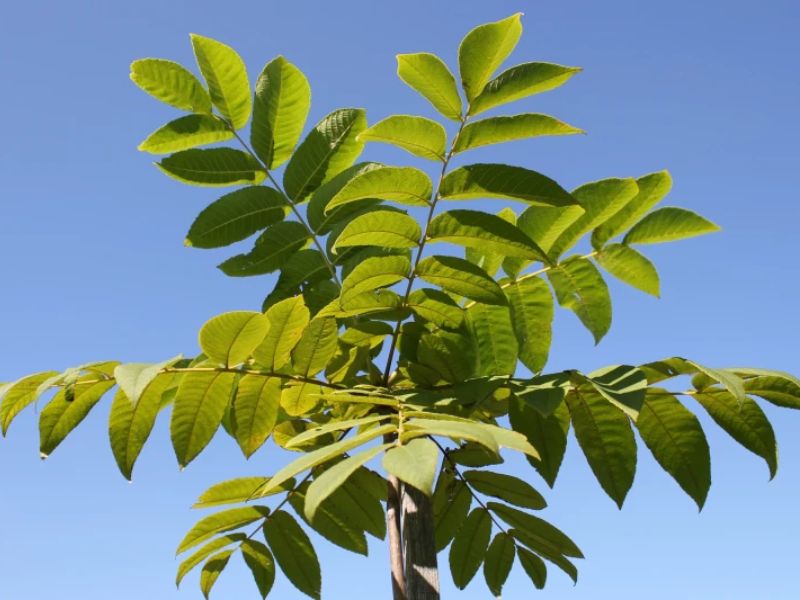
Conventional synthetic herbicides are often harsh and harmful to the environment, making them best avoided whenever possible. In response, a team of Japanese scientists is developing an eco-friendly alternative made from the leaves of the modest walnut tree.
The Allelopathic Power of the Manchurian Walnut Tree
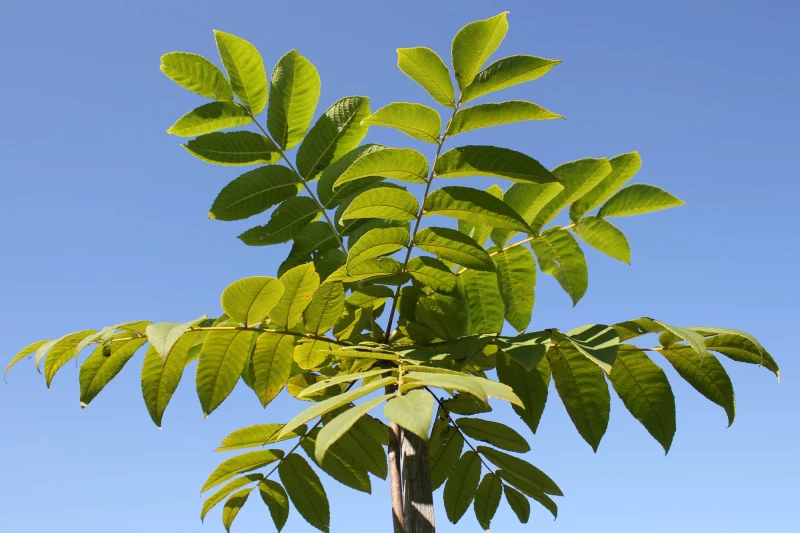
For years, scientists have observed that few large plants grow near the Manchurian walnut tree (Juglans mandshurica). This effect is caused by allelopathy, a defensive strategy in which plants—or other organisms—release biochemicals that suppress or kill nearby competitors.
While other walnut species also use allelopathy through a compound called juglone, the Manchurian walnut appears to rely on a different, more potent chemical—one that has long remained unidentified.
Testing the Manchurian Walnut’s Chemical Arsenal in the Lab
To uncover this mystery, researchers from Kyushu University joined forces with teams at Juntendo University in Japan and Chulalongkorn University in Thailand. In lab simulations mimicking fallen Manchurian walnut leaves releasing their allelochemicals into the soil, the scientists extracted multiple compounds from the leaves. They then applied each chemical to separate filter papers, placed tobacco seeds on the papers atop moist soil, and observed how the seedlings developed when exposed to the different substances.

Associate Professor Seiichi Sakamoto, Kyushu University
Surprisingly, the compound that most strongly inhibited plant growth—2Z-decaprenol—contained no juglone at all. This marks the first discovery of 2Z-decaprenol acting as an allelochemical.
The Next Steps in Developing a Natural Bioherbicide
“To transform 2Z-decaprenol into a practical bioherbicide, we need to carry out comprehensive safety and toxicity assessments for humans and animals, better understand its exact mode of action, and address the difficulties of producing it on a large scale,” explained Assoc. Prof. Seiichi Sakamoto of Kyushu University, the study’s senior author.
“Our ultimate aim is to keep identifying powerful, biodegradable compounds from nature that can support a more sustainable future for agriculture,” he added.
The team’s findings were recently published in the Journal of Agricultural and Food Chemistry.
Read the original article on: New Atlas
Read more: Wheel-Legged Robot Moves More Efficiently Across Environments