
Tag: Human

  • Saudi Arabia’s AI Ambitions may Threaten Human Rights

    Saudi Arabia’s AI Ambitions may Threaten Human Rights

    During his recent Middle East tour, U.S. President Donald Trump announced a series of new deals with Saudi Arabia, claiming they were worth over US$1 trillion (A$1.5 trillion)—though that figure is likely exaggerated. What is clearer is that many of the agreements focus on developing artificial intelligence (AI).
    Credit: Pixabay

    During his recent Middle East tour, U.S. President Donald Trump announced a series of new deals with Saudi Arabia, claiming they were worth over US$1 trillion (A$1.5 trillion)—though that figure is likely exaggerated. What is clearer is that many of the agreements focus on developing artificial intelligence (AI).

    This followed the launch of a new AI company, Humain, by Crown Prince Mohammed bin Salman. Part of Saudi Arabia’s state-run investment arm, Humain aims to build advanced Arabic large language models—potentially impacting over 450 million Arabic speakers globally.

    These moves reflect Saudi Arabia’s broader goal of becoming a global AI leader as it shifts its economy beyond oil. However, the rise of AI in the kingdom may come with serious human rights concerns.

    Authoritarian Rule and Limited Civil Liberties

    Saudi Arabia is an absolute monarchy where the unelected king holds complete control over governance. Freedom House reports that the country severely limits political rights and civil liberties.

    Human Rights Watch has criticized Saudi Arabia for various human rights abuses, including suppressing dissent and targeting critics of the government.

    A notable case occurred in October 2018, when prominent journalist and government critic Jamal Khashoggi was murdered inside the Saudi consulate in Istanbul. A 2021 U.S. intelligence report found that Crown Prince Mohammed bin Salman approved the killing.

    Discrimination against women remains a significant concern, contributing to broader worries about the lack of personal freedoms in the country.

    Saudi Arabia’s Bold Investment in AI Leadership

    Saudi Arabia is ramping up efforts to boost economic growth while establishing itself as a global leader in artificial intelligence. The country’s AI investment plans are ambitious—according to the Global AI Index, Saudi Arabia has pledged over $40 billion in public AI spending over the next decade, surpassing commitments made by both the U.S. and China.

    At the center of this push is Humain, a newly launched state-backed AI company. This week, Humain partnered with NVIDIA, which will supply Saudi Arabia with hundreds of thousands of advanced GPUs over the next five years to build AI data centers. Humain will also use NVIDIA’s platform to develop “digital twins” to enhance efficiency and sustainability.

    Humain also revealed a US$5 billion agreement with Amazon Web Services to support the construction of AI infrastructure across the country.

    AI at the Core of Saudi Arabia’s Urban Transformation

    Saudi Arabia is integrating AI far beyond tech development. The technology is a key component of urban planning efforts, especially in its futuristic megacity project, The Line. AI is also being used to optimize traffic flow and increase energy efficiency.

    Public sentiment around AI in Saudi Arabia is notably positive. A 2022 Ipsos survey found that 76% of Saudi adults believed AI-driven products and services offer more benefits than drawbacks, significantly higher than the global average of 52%.

    Saudi Arabia already employs AI and digital technologies to monitor its population and suppress dissent. Reports indicate that spyware was used on devices belonging to relatives of Jamal Khashoggi before his assassination.

    A Futuristic Vision or a Surveillance City?

    The country’s futuristic megacity, The Line, is expected to include digital tracking systems, prompting some critics to label it a “surveillance city.”

    Given Saudi Arabia’s history, the rapid growth of its AI capabilities raises concerns. Political scientist Nayera Mohamed Hamed Ibrahim called it a “digital authoritarian tool” reinforcing the monarchy’s control.

    As Saudi Arabia advances its AI ambitions, there is a growing risk that the technology could further strengthen its authoritarian grip.


    Read the original article on: Techxplore
    Read more: OpenAI Introduces its GPT-4.1 Models to ChatGPT

  • Goodbye Human Coaches The Future of Tennis May Be in This Robot’s Hands

    Goodbye Human Coaches The Future of Tennis May Be in This Robot’s Hands

    Credit: Futuro prossimo

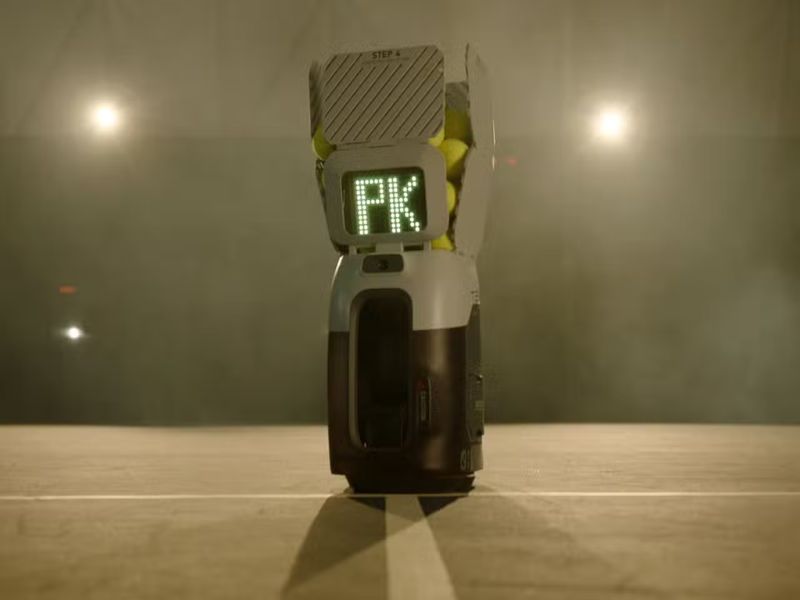
    It weighs just 7 kilograms, but it’s powered by an AI trained with over 8,000 hours of professional tennis experience. The Tenniix robotic tennis coach adjusts to your skill level and reacts to your every move.

    You might remember when Deep Blue beat world chess champion Garry Kasparov — but forget that. In tennis, AI isn’t trying to defeat us; it’s trying to make us better. The Tenniix robot coach, recently launched on Kickstarter by T-Apex, represents a major leap in a field that had long been stagnant. Instead of just firing balls from a fixed point, this mobile robot follows your movements, analyzes your game, and responds intelligently.

    No wonder it hit its crowdfunding goal in just five minutes. This isn’t just a gadget — it’s a training revolution.

    A Robot That Acts Like a Real Tennis Coach

    Unlike the standard ball launchers we’re used to, Tenniix is something entirely different. This compact 7-kg robot is packed with advanced capabilities. Equipped with a 1080p camera, it tracks player movement in real time and adjusts its shots accordingly. It doesn’t just shoot balls in predictable patterns — it adapts shot speed, spin, and trajectory based on where the player is and how they move, mimicking the responses of a real-life tennis coach.

    The AI has been trained on over 8,000 hours of footage from professional coaching sessions and real matches. It uses a gimbal system to rotate horizontally up to 46° and vertically up to 50°, allowing it to simulate a wide range of strokes — from towering lobs to powerful forehands from the baseline.

    Not Quite Like Training With Sinner… But Close

    Top players like Jannik Sinner have full-time teams and expert coaches — but most amateur players don’t have that luxury. Many struggle to find partners or consistent practice sessions. That’s where Tenniix steps in. With a serve speed of up to 120 km/h, it can challenge even experienced players.

    What really sets it apart is the ability to customize it with over 1,000 built-in drills. It may not (yet) have Alcaraz’s signature two-handed backhand or the strategic flexibility of a seasoned human coach, but it offers something no human can: 24/7 availability and unmatched shot consistency. That’s a solid advantage — game point to Tenniix.

    How Much Will It Cost?

    The robot comes in three versions — Basic, Pro, and Ultra — with Kickstarter prices ranging from $699 to $1,499. The most promoted version, the $999 Pro model (because the mid-tier always gets the spotlight — classic marketing), includes a wristband voice control module and an app to track and store session data.

    Imagine what a young Sinner could’ve achieved with access to this kind of technology in the remote valleys of South Tyrol, where high-level training partners aren’t easy to come by. But this is just the beginning. T-Apex, the San Francisco-based company behind the project, has been developing robotic fitness tools since 2018 with the goal of making professional-grade training more accessible to everyone.

    Training’s High-Tech Future

    T-Apex isn’t the only player in this space. At Georgia Tech, researchers have created ESTHER — a wheelchair-mounted robot that can also play tennis. But Tenniix stands out for its portability and ease of use. It holds up to 100 balls, and its battery can last up to four hours — enough for roughly 4,000 serves in one session.

    We’re not quite at the point of replacing human tennis coaches — and that’s a good thing — but the trajectory is clear: tennis training is becoming more and more tech-driven. And maybe one day, when the next Grand Slam champion lifts their trophy, we’ll know a little robot coach played a part in shaping that victory.Anexa


    Read the original article on: Futuro prossimo

    Read more: Tiny self-Powered Robot Breaks Speed, Agility Record with Simple Design

  • Famed AI Researcher Launches Startup to Replace Human Workers

    Famed AI Researcher Launches Startup to Replace Human Workers

    Image Credits:Golden Sikorka / Getty Images

    A new startup, Mechanize, founded by renowned AI researcher Tamay Besiroglu, has sparked significant debate with its bold mission to fully automate all human labor. Besiroglu, also the founder of the nonprofit AI research organization Epoch, announced the venture on X (formerly Twitter), stating the goal is “the full automation of all work” and “the full automation of the economy.” This announcement has drawn both criticism and concern, particularly regarding the potential implications for his research institute’s reputation.​

    Trillion-Dollar Opportunity: The Market of Full Automation

    In his announcement, Besiroglu highlighted the vast financial scope of the project, noting that workers in the U.S. are paid approximately $18 trillion annually, with the global figure exceeding $60 trillion. He emphasized that the startup’s focus is initially on white-collar jobs, aiming to provide the necessary data and digital environments to facilitate the automation of various professions.​

    The response on social media has been largely negative, with many expressing skepticism about the feasibility and ethical considerations of such an endeavor. Critics argue that the widespread replacement of human workers with AI agents could lead to significant economic and social challenges.​

    Despite the controversy, Besiroglu maintains that the automation of labor could lead to “vast abundance” and higher standards of living.He suggests that even if wages decrease, people still determine their economic well-being through other income sources, such as rents, dividends, and government welfare.

    Technical Challenges and the Future of AI in the Workforce

    Besiroglu acknowledges the technical challenges of developing reliable AI agents, but he believes that overcoming these obstacles could pave the way for a future where AI performs all work, potentially reshaping the economic landscape.

    The launch of Mechanize has reignited discussions about the role of AI in the workforce and the potential consequences of widespread automation. As the debate continues, stakeholders from various sectors are closely monitoring the developments of this ambitious project.


    Read the original article on: Techcrunch

    Read mroe: OpenAI’s New AI Models Are Hallucinating More Than Expected

  • New Study Reveals Key Differences Between Human and AI-Generated Text

    New Study Reveals Key Differences Between Human and AI-Generated Text

    Credit: Pixabay

    Carnegie Mellon University researchers set out to test how well large language models (LLMs) can replicate human writing styles. Their findings, recently published in the Proceedings of the National Academy of Sciences, highlight key differences between AI-generated and human-written text.

    “Humans adapt their writing style based on context—sometimes formal, sometimes informal,” explained Alex Reinhart, lead author and associate teaching professor in the Department of Statistics & Data Science. “What we found is that LLMs, like ChatGPT and Llama, tend to write in a fixed style rather than adjusting to different contexts. Their writing remains distinct from human-written text, and we were able to quantify this in a way that hadn’t been done before.”

    To analyze these differences, the researchers prompted LLMs with excerpts from various genres, including TV scripts and academic articles. Using a custom-coded analysis tool developed by co-author David West Brown, an associate teaching professor in the Department of English, they identified significant grammatical, lexical, and stylistic variations between AI and human writing.

    Instruction-tuned models, such as ChatGPT, showed the most pronounced differences. These models, which undergo additional training to improve question-answering and instruction-following abilities, used present participle clauses two to five times more frequently than human writers. For example, GPT-4o produced sentences like, “Bryan, leaning on his agility, dances around the ring, evading Show’s heavy blows.”

    AI Text Structure: Denser, Noun-Heavy, and Less Adaptable

    Additionally, LLMs relied on nominalizations 1.5 to two times more than humans and used agentless passive voice half as often. This suggests that AI-generated text tends to be denser, more noun-heavy, and less adaptable across writing styles.

    Instruction-tuned LLMs overused certain words at striking rates. ChatGPT favored “camaraderie” and “tapestry” 150 times more than human writers, while Llama models frequently used “unease.” Both leaned on words like “palpable” and “intricate.”

    Brown highlighted concerns for writing education, noting that writers revise constantly, whereas LLMs generate one-off responses. He cautioned that AI is fine for tasks like doctor’s notes but may not be suitable for personal writing, such as job applications.

    Reinhart warned about students using LLMs for assignments, arguing they differ from calculators, which perform the same math humans would. LLMs generate writing that isn’t just automated but fundamentally different.

    Ph.D. student Ben Markey is studying whether LLMs provide consistent essay scores. The team aims to expand its research to better understand AI-generated text and its role in writing and education.


    Read Original Article: TechXplore

    Read More: AI Breakthrough Uncovers Hidden Signals in the Universe

  • Caltech Calculates the Surprisingly Slow Speed of Human Thought

    Caltech Calculates the Surprisingly Slow Speed of Human Thought

    Artist’s impression of the brain’s surprisingly slow speed of thought
    Jieyu Zheng

    We like to think of ourselves as quick thinkers, but new research from Caltech reveals that our brains process information at an astonishingly slow rate of about 10 bits per second. Despite our sensory systems gathering data 100 million times faster, this leisurely pace may reflect deep evolutionary roots.

    The human brain, often lauded as nature’s most powerful computer, is incredibly efficient but surprisingly slow in computational terms. Caltech biologists have quantified the speed of human thought in bits—basic units of digital information. For example, one bit represents a 1 or 0, with strings of bits encoding data. To define a bit in human terms, the researchers examined different modes of information processing, such as reading, writing, and listening.

    For instance, a professional typist types at 120 words per minute, translating to about 10 keystrokes—or bits—per second. In spoken language, a recommended speech rate of 160 words per minute equates to roughly 13 bits per second. Similar calculations for specialized tasks, like solving Rubik’s cubes (11.8 bits/sec), professional Tetris (7 bits/sec), and speed card challenges (17.7 bits/sec), suggest an average human thought rate of about 10 bits per second.

    This rate is extraordinarily slow compared to artificial systems like Wi-Fi, which operates at hundreds of millions of bits per second, or even our own sensory hardware. For example, a single cone photoreceptor in the human eye can transmit 270 bits/sec, amounting to 1.6 billion bits/sec for both eyes. The optic nerve compresses this data to about 100 million bits/sec—still far surpassing the brain’s processing speed.

    The Evolutionary Limits of Human Thought: Why Our Brains Process Just 10 Bits Per Second

    Markus Meister, the study’s lead author, explains that despite our sensory systems’ vast data intake, we extract just 10 bits per second to perceive and interact with the world. Individual neurons are capable of faster transmission rates, but in practice, they operate around 10 bits/sec, likely reflecting evolutionary adaptations. Early humans needed to prioritize basic survival tasks like finding food and avoiding predators, leaving little bandwidth for multitasking.

    Our ancestors selected an ecological niche where the world moved slowly enough for survival,” the researchers note. “The 10 bits/sec rate is necessary only in the most demanding situations; most of the time, environmental changes occur at a more relaxed pace.”

    These findings carry intriguing implications for future technologies. Machines, robots, and AI process information far faster than humans, a gap that will only widen. The researchers caution that this disparity could reshape our world. For instance, roads and infrastructure designed for humans operating at 10 bits/sec could eventually evolve to accommodate machines processing at kilobits/sec, making these environments unsuitable for human participation.

    The study also highlights the limitations of enhancing human cognition through AI. No matter how advanced neural interfaces like Elon Musk’s Neuralink become, our biological hardware will remain a bottleneck. “Even with Neuralink, communication between Musk’s brain and a computer would still occur at 10 bits/sec,” the researchers quip. “A telephone might suffice, as it matches human language speed and cognitive processing rates.”

    While the study involves some simplifications—brain bits and computer bits aren’t directly comparable—it raises thought-provoking questions about human cognition and its future. Just don’t think about it too quickly.


    Read Original Article: New Atlas

    Read More: Haunting Historical Photo Reveals Humanity’s Deadly Footprint

  • First Severe Human Case of Bird Flu Reported in the U.S.

    First Severe Human Case of Bird Flu Reported in the U.S.

    Transmission electron micrograph of bird flu virus particles (orange) in kidney cells (green). (NIAID/Flickr/CC BY 2.0)

    An elderly patient in Louisiana is critically ill with severe avian influenza, marking the first serious human case in the United States. This development, announced by U.S. authorities on Wednesday, has intensified concerns about a potential bird flu pandemic.

    The Louisiana case increases the total number of U.S. infections in the current 2024 outbreak to 61. In response to the growing threat, California has declared a state of emergency to strengthen its containment measures.

    While previous U.S. cases involved mild symptoms and home recovery, the critical nature of this case has heightened alarm. Globally, similar severe cases have been reported, including a Canadian teenager hospitalized last month.

    According to the Centers for Disease Control and Prevention (CDC), the Louisiana patient, over 65 years old with underlying health conditions, contracted the H5N1 virus after exposure to sick and dead birds in backyard flocks. The Louisiana health department confirmed the patient is battling severe respiratory illness and remains hospitalized in critical condition.

    Over the past two decades, H5 infections have been linked to severe illness globally, with mortality rates reaching up to 50% in some cases,” stated Demetre Daskalakis, a senior CDC official. “This underscores the importance of the joint U.S. federal response.”

    California Declares Emergency

    California Governor Gavin Newsom declared a state of emergency to ensure state agencies have the resources and flexibility needed to respond swiftly to the outbreak. The declaration includes expanding monitoring systems and supporting the agriculture sector.

    Genetic Insights and Mounting Concerns

    H5N1 avian influenza particles (NIAID/CDC)

    The Louisiana case, confirmed last Friday, involves the D1.1 H5N1 genotype, recently detected in wild birds, poultry, and human cases in Washington and Canada. This contrasts with the B3.13 genotype, linked to dairy cows and milder human cases.

    The CDC noted some U.S. cases, like one in Delaware, lacked an animal source, raising concerns about undetected spillovers or asymptomatic human transmission. Rebecca Christofferson from Louisiana State University emphasized the need for vigilance, while epidemiologist Meg Schaeffer warned that “avian flu could trigger a new pandemic any day.”

    Experimental Vaccines and Federal Actions

    To prepare for potential human transmission, the U.S. has stockpiled bird flu vaccines. A recent study also reported promising results for an experimental mRNA vaccine that successfully protected ferrets from the virus.

    This outbreak of Highly Pathogenic Avian Influenza (H5N1) began in March in dairy cows and has since included cases like a young child in California. Concerns about raw milk as a potential transmission vector have prompted the U.S. Department of Agriculture to mandate raw milk sample testing and federal reporting for any samples testing positive for bird flu.

    The situation underscores the need for comprehensive action, including enhanced surveillance, vaccine readiness, and public health measures, to mitigate the risks posed by avian influenza.


    Read Original Article: Science Alert

    Read More: Researchers Uncover New Deep-Sea Predator, Dubbed Darkness

  • Transgenic Cows Boost Human Insulin Tenfold

    Transgenic Cows Boost Human Insulin Tenfold

    A recent study reveals that a genetically modified cow has successfully produced milk containing human insulin. This breakthrough suggests a potential solution to ensure sufficient insulin production at a reduced cost for all diabetic patients.
    Cash cows: Transgenic cattle could boost insulin production and lower its cost. Credit: Pixaobay

    A recent study reveals that a genetically modified cow has successfully produced milk containing human insulin. This breakthrough suggests a potential solution to ensure sufficient insulin production at a reduced cost for all diabetic patients.

    Type 1 diabetics, unable to produce insulin due to pancreatic damage, rely on injectable insulin for survival, as do some type 2 diabetics. The World Health Organization estimates that only about half of the 150 to 200 million people worldwide who require insulin are currently receiving treatment. Access to insulin remains insufficient in many countries, both wealthy and developing, with documented challenges regarding its cost and availability.

    Harnessing Cows for Insulin Production

    In a recent study conducted by the Department of Animal Sciences in the College of Agricultural, Consumer, and Environmental Sciences at the University of Illinois Urbana-Champaign and the Universidade de São Paulo, researchers propose a potential solution to insulin scarcity and cost reduction utilizing cows. Matt Wheeler, the study’s corresponding author, highlights the efficiency of the mammary gland in producing protein, suggesting it as a viable approach to aid millions worldwide.

    Insulin originates as proinsulin within the body before converting into its active state.Diabetics receive injected insulin synthesized by bacteria containing a synthetic human insulin gene. This gene is cultured in large fermentation tanks to produce insulin, which is later extracted and purified for medical use.

    The human insulin-producing transgenic cow
    Monzani et al.

    In this study, human DNA encoding proinsulin was inserted into cells of ten cow embryos, which were then implanted into normal Brazilian cows, resulting in the birth of a transgenic calf. The term ‘transgenic’ refers to organisms with DNA from another species, here, human DNA aimed at expressing solely in milk-producing mammary tissue.

    Unlike previous methods, researchers used a precise DNA construct tailored for mammary tissue to prevent human insulin from circulating in the cow’s bloodstream or other tissues, capitalizing on the mammary gland’s protein production capabilities.

    Hormone-Induced Lactation in Transgenic Calves

    The mature calf was induced into her first lactation with hormones. Despite lower milk volume than expected, the milk contained both human proinsulin and insulin, with a high ratio of biologically active insulin to proinsulin.

    Expression levels reached a few grams per liter of milk, but uncertainties remain about exact insulin production during typical lactation due to induced lactation and reduced milk volume. Nevertheless, researchers anticipate significant insulin yield if their cautious estimates are accurate.

    Holstein cows are the biggest milk producers
    Pixaobay

    Wheeler emphasized cows’ potential to generate significant insulin volumes. With one gram of insulin per liter of milk and Holstein cows yielding 40 to 50 liters daily, each gram translates to roughly 28,818 insulin units. For a type 1 diabetic needing eight to ten units per lunch, a liter of transgenic cow milk could cover approximately 2,881 lunches, nearly eight years’ worth with a ten-unit dose.

    This advancement mirrors the early stages of insulin therapy when beef insulin was initially used to treat diabetes in humans in January 1922. The discontinuation of bovine insulin production in the US in 1998 and porcine insulin in 2006 marked the shift away from animal-derived insulin.

    Plans for Establishing an Insulin-Producing Herd

    The researchers aim to replicate the cow’s success and breed transgenic bulls to establish a herd capable of insulin production. Wheeler envisions even a small herd could surpass current manufacturing methods, leveraging the dairy industry’s expertise in cattle management.

    Producing insulin in milk requires specialized cattle facilities but aligns with our established dairy practices,” Wheeler remarked. “We have the necessary cow-handling expertise.”

    Current insulin production requires high-tech facilities and infrastructure
    Depositphotos

    Before transgenic cows can provide insulin globally, an efficient harvesting system, FDA approval, and purification are necessary. Despite this, Wheeler remains optimistic.

    I foresee a future where a 100-head herd, akin to a small dairy in Illinois or Wisconsin, could meet the country’s insulin demand,” Wheeler suggested. “With a larger herd, we could supply the entire world’s insulin needs within a year.”


    Read the original article on: New Atlas

    Read more: Artificial Antivenom Counters Various Lethal Snake Venoms