Tag: Hyundai

  • Hyundai’s DAL-e Bot Tackles Morning Coffee Deliveries

    Hyundai’s DAL-e Bot Tackles Morning Coffee Deliveries

    Hyundai and Kia are targeting office mailroom tasks with the launch of the DAL-e Delivery robot, capable of autonomously distributing packages within a building and even handling coffee runs.
    Heading for food/beverage and parcel delivery applications in indoor environments like offices and hotels, the DLA-e can carry up to 16 cups of coffee for distribution to customers identified via AI facial recognition, or up to 10 kg of packages
    Hyundai Motor Group/Kia

    Hyundai and Kia are targeting office mailroom tasks with the launch of the DAL-e Delivery robot, capable of autonomously distributing packages within a building and even handling coffee runs.

    The latest delivery robot from the Hyundai/Kia Robotics Lab is distinct from the humanoid DAL-e model unveiled in 2021. Instead, it is based on a model introduced at the end of 2022, utilizing Hyundai’s Plug & Drive platform, which integrates “intelligent steering, braking, in-wheel electric drive, and suspension hardware” into a single modular unit.

    Enhanced Delivery Features of the DAL-e

    The DAL-e Delivery also incorporates four Plug & Drive modules, with upgraded suspension ensuring that your coffee remains undisturbed during transit. Despite being shorter in stature compared to its predecessor, the new bot boasts an expanded cargo hold capable of accommodating up to 16 cups of coffee or packages weighing up to 10 kg (22 lb).

    Equipped with onboard sensors, the delivery bot can navigate complex or congested environments while safely maneuvering around obstacles. It can also compute optimal routes in real-time to facilitate swift deliveries. Although it achieves top speeds of up to 1.2 m/s (2.7 mph), this is slightly slower than the current model.
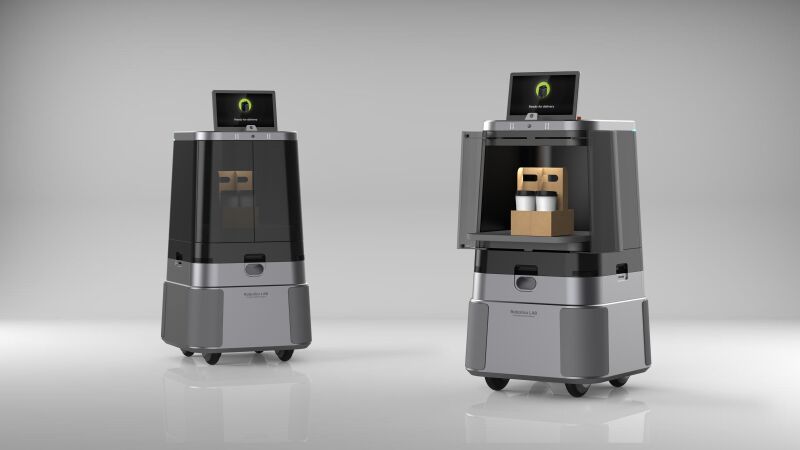
    The DAL-e Delivery robot rolls on four Plug & Drive modules, each featuring an in-wheel motor plus intelligent steering and braking, and enhanced suspension
    Hyundai Motor Group/Kia

    The previous version could connect wirelessly with a building’s smart system servers, enabling it to call for an elevator. Using its camera and AI, it assesses occupancy safety before entering or waits for the next available elevator.

    Afterward, it ascends to the desired floor and navigates to the designated office or room without needing a button press. Hyundai/Kia confirmed its capability to interface with elevator and door control systems in modern smart buildings.

    Efficient Delivery Handling and Recognition

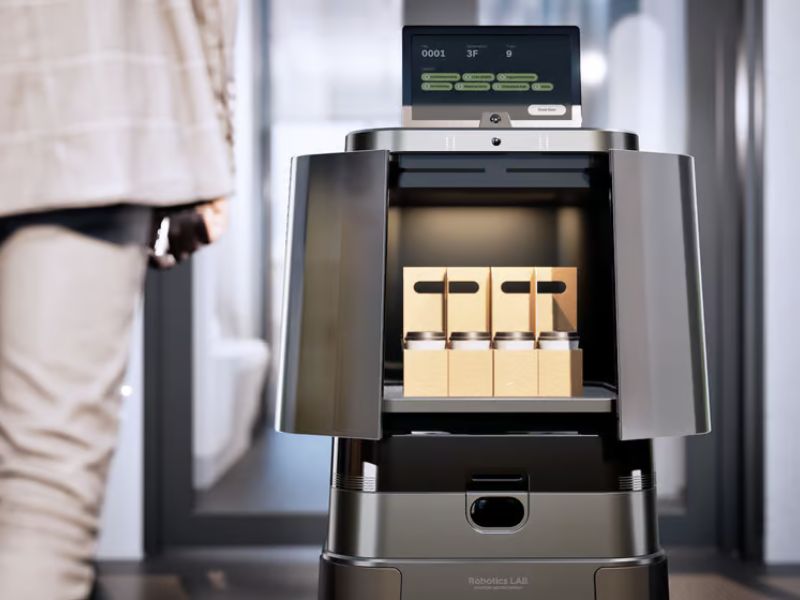
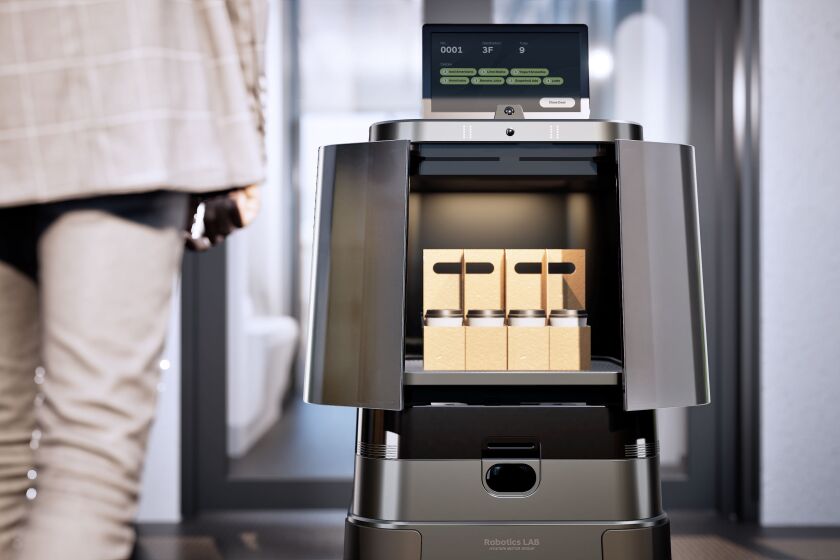
    Upon reaching its destination, the built-in camera facilitates AI facial recognition with 99.9% accuracy. The robot’s cargo doors automatically open to the correct recipient or designated worker without requiring a password or keycode.

    An interior light illuminates contents, and a retractable tray aids in easy access.
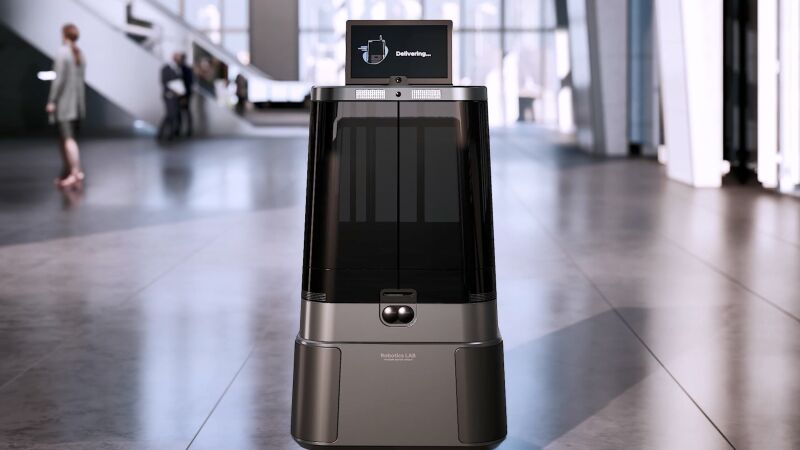
    Onboard sensors cater for autonomous navigation, a built-in camera registers correct recipients via AI facial recognition and the robot’s brains can even interface with a building’s door and elevator control systems
    Hyundai Motor Group/Kia

    Square Column with Rounded Corners

    The cute, curved design of the past has been replaced by a square column design, albeit with rounded corners.

    The animated circular “eyes” have been substituted with a blocky matrix, and the halo-like interface atop the head has been replaced by an 11.6-inch tablet-shaped high-resolution display. This display provides service status information and features face-like animations to “enhance customer intimacy.

    The DAL-e Delivery robot is specifically targeted at indoor food/beverage and parcel delivery services. It is set to debut shortly after the opening of IGIS Asset Management’s Factorial Seongsu smart office in Seoul, South Korea, in the second quarter of this year. You can preview the service bot in action on Hyundai’s YouTube channel.


    Read the original article on: New Atlas

    Read more: ZenRobotics 4.0 Enhances Intelligence in Waste Sorting Automation
  • Hyundai Unveils Tires with Built-in Push-Button Snow Chains

    Hyundai Unveils Tires with Built-in Push-Button Snow Chains

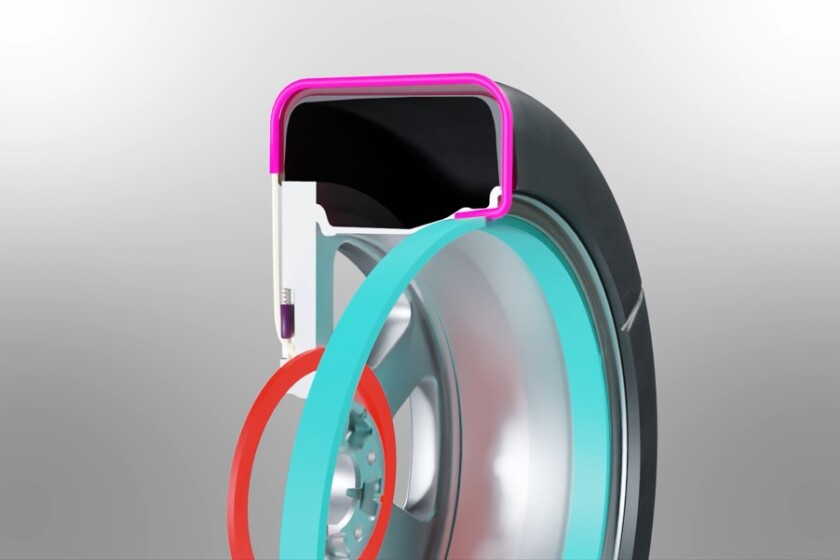
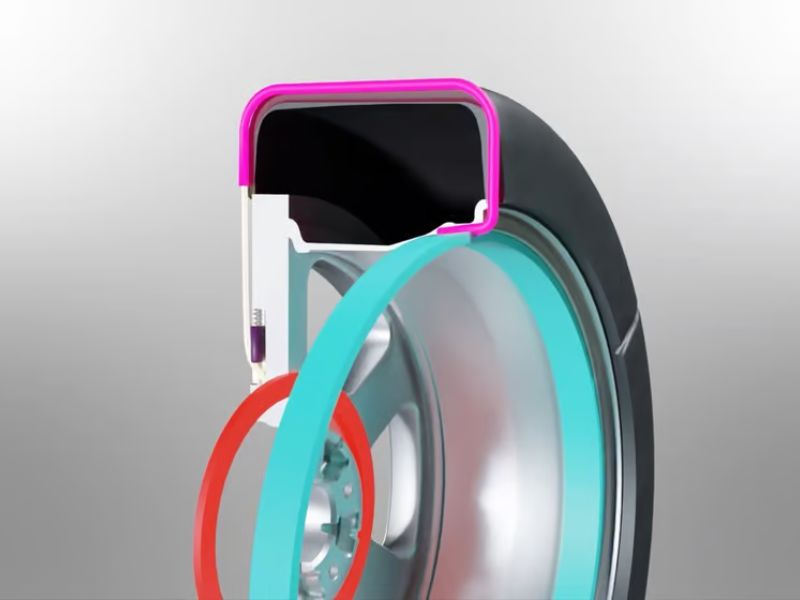
    Hyundai has revealed an innovative wheel and tire design featuring integrated snow chains that can be deployed or retracted with the simple push of a button. This advancement has the potential to eliminate the cumbersome and chilly task of installing and removing conventional snow chains. The tires are designed with six indented grooves, aligned with the wheel's six spokes, housing robust, snow chain-like wires that can be retracted deep into the tread.
    Hyundai’s innovative new wheel/tire system features built-in, push-button snow chains
    Hyundai

    Hyundai has revealed an innovative wheel and tire design featuring integrated snow chains that can be deployed or retracted with the simple push of a button. This advancement has the potential to eliminate the cumbersome and chilly task of installing and removing conventional snow chains. The tires are designed with six indented grooves, aligned with the wheel’s six spokes, housing robust, snow chain-like wires that can be retracted deep into the tread.

    Innovative Design

    These tires incorporate compressed shape memory alloys, capable of activation and expansion through an electric current. When faced with challenging road conditions or legal obligations for snow chains, a straightforward press of a button initiates the shape memory alloy to revert to its original form, raising the wire loop above the tread level. This eliminates the need for hands-on installation, ensuring no wet knees, slushy shoes, or freezing fingers are required.

    Hyundai Motor and Kia Unveil Snow Chain-Integrated Tire Technology Using Shape Memory Alloy

    According to Hyundai, the snow chains offer an additional advantage by serving as a highly visible (and audible) indicator for when it’s time to replace the tires. However, it’s important to note that, at this stage, the concept remains an idea.

    Joon Mo Park, Hyundai’s Head of Advanced Chassis Development Team, expressed optimism about the potential introduction of this innovation on Hyundai and Kia vehicles in the future, emphasizing the company’s commitment to translating advanced technologies into practical solutions for customers.

    Challenges and Prospects

    Given that the implementation requires a redesign of the entire wheel assembly, including electrical connections, achieving this goal will involve specific efforts from both Hyundai and tire manufacturers. Nevertheless, for individuals frequently navigating snowy or icy conditions, this technology could prove to be a significant convenience and a genuine lifesaver.

    Hyundai has announced the patenting of this technology in South Korea and the USA, with plans for Hyundai/Kia to explore the potential for mass-producing the tires following additional technological development, durability and performance tests, and regulatory reviews. It’s an exciting concept, and we eagerly anticipate its potential realization in the near future!


    Read the original article on: New Atlas

    Read more: GAC’s Groundbreaking Ammonia-Powered Engine: A Glimpse into the Future of Automotive Propulsion